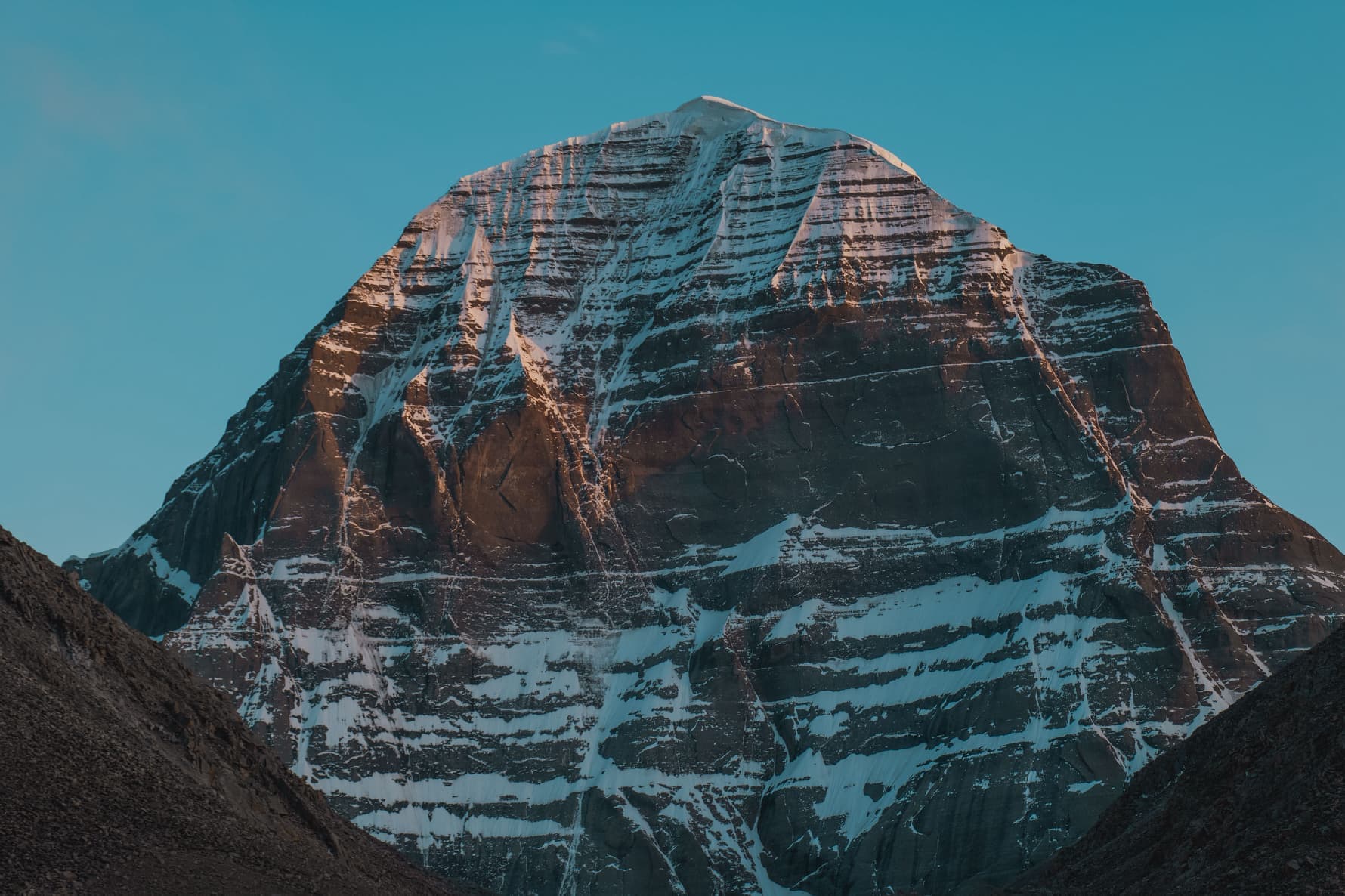
Military Permit for Your Trip to Tibet: Everything You Need to Know

What is a Permit for Traveling to Tibet?

When planning a trip to Tibet, one of the first tasks is to sort out the documentation. A visa for China is just the beginning. A separate pass is required for Tibet, often referred to as a military permit or Tibet Travel Permit.
To be honest: without this document, you simply won’t be allowed beyond Chengdu or Kathmandu. Local checkpoints rigorously check permits — at the airport, train station, and before entering the region.
Definition and Significance of the Military Permit
The Military Permit (Tibet Travel Permit, TTB) is a special document issued to all foreigners planning to enter the Tibet Autonomous Region. It can only be obtained through an accredited tour operator and only for group trips.
Why "military"? Tibet is a border zone, a strategically important area. Chinese authorities control access for foreigners to minimize risks and regulate tourist flows.
In practice, this means: you cannot enter Tibet independently. You won’t be able to buy a ticket for the Lhasa-Chengdu train at the ticket office without the permit. You won't be able to check in for a flight to Lhasa without the operator’s stamp.
The permit is issued for a specific route and dates. If you want to change your plan — say, to visit Samye Monastery instead of Yamdrok Lake — formal agreement with the authorities will be required. In reality, the guide and driver can sometimes adjust the route, but it’s best to discuss this in advance.
Difference Between Travel Permit and Visa for Tibet
Many travelers confuse the two documents. Let’s clarify.
Visa for China — this is a stamp or electronic record that allows you to enter the territory of the PRC. It is obtained through the consulate or visa center. Typically, a tourist visa is valid for 30 days, allowing single or double entry.
Tibet Travel Permit — this is an additional permit specifically for the Tibet Autonomous Region. It does not replace the visa but complements it. Without a visa, the permit is useless; without the permit, the visa won’t help you enter Tibet.
The steps to follow are:
- Obtain a Chinese visa (usually through the consulate in your country or online if an electronic visa is available).
- Provide a copy of your passport and visa to the tour operator.
- The operator will apply for the Tibet Travel Permit on your behalf.
Note: you receive the visa before your trip, while the permit is often handed over at the airport or hotel in Chengdu/Kathmandu before your flight to Lhasa. This is normal — that’s how the system works.
Details on Government Requirements for Foreign Tourists
The Chinese government has strict rules for foreigners in Tibet. Here are the main requirements effective in 2026.
Only group tours. Individual travel without a guide and driver is prohibited. The minimum group is formally one person, but in practice, it's easier to obtain a permit if there are two or more of you.
Accredited operator. The permit is issued only through companies licensed by the Tibet Tourism Administration. You cannot submit documents yourself — the system is closed to private individuals.
Guide accompaniment. You will travel the entire route with a Tibetan guide. They not only provide information about the monasteries but are also responsible for compliance with rules and ensuring your safety at high altitudes.
Fixed itinerary. The permit specifies cities and dates. If you plan to travel beyond Lhasa — to Namco Lake, Shigatse, the Everest Base Camp, or Kailash — additional permits (Alien Travel Permit, Military Permit) will be required. The operator will arrange these together with the main TTB.
Respect for local laws. Participation in political actions, distributing literature that may be deemed separatist is prohibited. Photographing military sites and checkpoints is not allowed. Violations can lead to fines, deportation, and bans on entry to China.
Another nuance: during certain periods (anniversaries of political events, religious holidays), authorities may temporarily close Tibet to foreigners. Usually, this is known a month in advance, but sometimes the decision is made suddenly. In such cases, we immediately contact guests and offer to reschedule.
If you want to see how we organize trips considering all these requirements, check our programs Kailash: Sacred Kora from Lhasa and Kailash through Nepal: Kora with Gosainkund. We take care of all documents, coordination with authorities, and logistics on the ground.
Who Needs a Permit for Traveling to Tibet?

The permit is required for all foreign nationals wishing to enter the Tibet Autonomous Region. There are virtually no exceptions — neither for tourists nor for pilgrims or those traveling for work.
Groups of Tourists Who Need a Permit
All foreigners. Citizens of any country, except mainland China, are required to obtain a TTB. This applies to residents of Hong Kong, Macau, and Taiwan as well — they have separate rules, but a permit is also needed.
Group tours. The classic option is a group of 4–10 people traveling along the same route. The permit is issued for all participants at once. The operator organizes the guide, driver, and transportation.
Small groups and couples. If there are two or three of you, a permit can also be obtained. The cost per person will be higher because the expenses for the guide and vehicle are divided among fewer participants. But it is feasible.
Solo travelers. Formally possible, but practically more challenging. The operator needs to find a group you can join or arrange you as a “group of one” — this is more expensive and requires additional agreements. If your dates are flexible, I recommend looking for travel companions in advance.
Specifics for Individual Travel and Special Cases
Individual travel in the usual sense — with a backpack, hostels, and hitchhiking — is impossible in Tibet. However, there are options where you can travel almost alone.
“Private” group. You book a tour just for yourself (or for your family/friends). The guide and driver accompany only you. The itinerary can be discussed in advance and adapted to your interests — more time in monasteries, a detour around Lake Manasarovar, an extra day for acclimatization. This is more expensive, but comfortable and flexible.
Scientific and educational trips. If you are a researcher, journalist, or working with NGOs, the permit is still obtained through a tour operator. Sometimes, a letter from the host party (university, research organization) is required. This process may take longer.
Pilgrimage. For Buddhists and Hindus traveling to Kailash, the permit is obtained just like for regular tourists. There are no concessions or simplified procedures. However, we understand the importance of the spiritual aspect and help design the itinerary to allow time for practice and contemplation.
Recommendations for Preparing Documents to Obtain a Permit
To ensure a smooth process, gather documents in advance and check each item.
Copy of your passport. The main page with your photo and details, with a validity period of at least 6 months at the time of travel.
Copy of your Chinese visa. If the visa is electronic, print the confirmation. If it’s a stamp in your passport — scan the page.
Photographs. Usually 2 pieces, in color, on a light background, size 3×4 or 3.5×4.5 cm (confirm with the operator).
Completed application form. The operator will send you a template — fill in all fields carefully. Mistakes and typos can cause delays.
Route details. Dates, cities, hotels. You don’t need to know everything in detail — the operator will help you create a plan.
Submission timeline: I recommend submitting documents to the operator 20–30 days before departure. During peak season (April–May, September–October), it’s better to do this 45–60 days in advance, as the volume of applications is high and processing may take longer.
One more point: authorities may request additional documents — for example, a work certificate or flight booking. This is rare, but it happens. The operator will notify you if anything is needed.
If you want to see how we assist guests at all stages — from submitting documents to returning home — check the descriptions of our programs: Kailash: Sacred Kora from Lhasa and Kailash through Nepal: Kora with Gosainkund.
How to Obtain a Permit for Traveling to Tibet?

Obtaining a permit is not something that can be done in a day or through a friend at the embassy. The process is formalized, and it can only be completed through an accredited operator. But if you follow the steps, everything can be accomplished within a reasonable timeframe.
Step-by-Step Instructions for Submitting an Application
Step 1. Choose a tour operator. This is the first and most important decision. The operator should have a license from the Tibet Tourism Administration and experience working with foreign guests. Pay attention to reviews, how the company communicates with you, and how clearly they respond to your questions.
Step 2. Agree on the itinerary and dates. The operator will offer several options — standard tours or a custom itinerary. Discuss what is important to you: acclimatization, time in monasteries, physical exertion. Confirm the dates of entry and exit.**Step 3.
Submit your documents.** Send the operator scans of your passport, visa, photographs, and a completed questionnaire. This is usually done via email. Ensure that all files are legible, without cropped corners or blurriness.
Step 4. Pay for the operator's services. A portion of the amount is paid in advance — this covers the processing of permits, hotel bookings, and transportation. The exact conditions depend on the company, but typically the advance payment is 30–50% of the tour cost.
Step 5. Wait for confirmation. The operator submits the documents to the Tibet Tourism Bureau. Processing takes from 10 to 20 business days. In peak season, it may take longer. You will receive a notification when the permit is ready.
Step 6. Receive the original permit. Usually, the operator hands over the document at the airport or hotel the day before your flight to Lhasa. Sometimes, they send a scan for the airline's verification, while the original is handed over in person. Without the original, you will not be allowed to board.
Where and how to submit documents for the permit
You cannot submit the documents to the Tibet Tourism Bureau on your own — the system is closed to individuals. The only legal way is through an accredited tour operator.
Some operators are based in Lhasa, while others are in Chengdu, Beijing, or Kathmandu. Geography is not that important; the main thing is having a license and experience. We work with trusted partners in Tibet and coordinate the entire process remotely, so you don’t have to travel to China in advance.
Regarding consulates: the Chinese consulate only issues visas to the PRC. Tibet Travel Permits are not issued there. If the consul sees in the application that the "purpose of the trip is Tibet," they may request confirmation from the tour operator, but you will receive the permit through the operator after the visa is approved.
Processing time for requests and possible delays
The standard timeframe is 10–20 business days from the submission of the complete set of documents. However, there are nuances that can prolong the process.
High season. In April-May and September-October, the number of applications is high. The Tourism Bureau processes documents more slowly. I recommend allowing 30 days.
Incomplete documents. If there is an error in the application or a visa scan is missing, the operator will return the application for revision. This adds 5–7 days.
Political situation. Before significant dates (for example, the anniversary of the events of 2008 in March), authorities may temporarily suspend the issuance of permits or increase scrutiny. Usually, this is known in advance, but sometimes decisions are made suddenly.
Additional permits. If you are traveling to restricted areas — to Everest, around Kailash, or western Tibet — you will need an Alien Travel Permit and a Military Permit. These are processed simultaneously with the TTB, but this adds 5–10 days to the overall timeframe.
What to do if time is tight? Honestly — it’s better not to take risks. Rescheduling your trip is easier and cheaper than losing money on tickets and hotels due to an unprepared permit. But if the situation is critical, contact the operator: sometimes the process can be expedited through direct contacts at the Tourism Bureau.
We are always available in such cases and try to find a solution. For example, in one of our groups, a guest submitted documents 12 days before the flight — we had to negotiate directly with officials and track the status daily. The permit was obtained the day before the flight, but it was quite stressful. It’s better to plan ahead.
You can read more about how we organize trips and handle all the paperwork in the descriptions of the programs Kailash: the Sacred Kora from Lhasa and Kailash via Nepal: Kora with Gosainkunda.
How much does it cost to get a permit to travel to Tibet?

The cost of the permit depends on the route, the number of participants, and the time of year. It is not possible to provide a single figure for all cases, but we can outline the approximate expenses.
Approximate rates for permit processing services
Tibet Travel Permit (TTB) — the basic permit for entering Tibet. The government fee for it is usually around 50–70 USD per person. However, additional charges from the tour operator apply: document processing, coordination with the Tourism Bureau, delivery of the original. Total — 100–150 USD per person.
Alien Travel Permit — a permit for visiting restricted areas (e.g., Shigatse, Namco Lake, Sakya Monastery). Cost — about 30–50 USD.
Military Permit — required for trips to border areas: Everest Base Camp, Mount Kailash, Manasarovar Lake, western Tibet. About 50–80 USD.
If you are going to Kailash, you will need all three permits. In total — 180–280 USD per person just for the documents.
Please note: prices may change. In 2026, the authorities in Tibet revised tariffs several times, especially for groups of fewer than four people. Confirm the exact figure with the operator before booking.
Additional expenses that may arise during the process
The permit is only part of the budget. Here’s what else to consider.
Visa to China. The consular fee is about 140 USD (depends on the country and type of visa). If you are processing through a visa center or agency — add 30–50 USD for services.
Guide and driver. Required by law. The cost depends on the duration of the tour and the group size. On average, a guide costs 80–120 USD per day, and a driver with a car costs 150–250 USD per day. If there are four of you, divide it among all; if one, pay the full amount.
Transportation. Renting an SUV (usually a Land Cruiser or similar) for the trip from Lhasa to Kailash — about 200–300 USD per day. The roads are bad, and the distances are long, so a reliable vehicle is needed.
Accommodation. In Lhasa — 30–80 USD per night in a mid-range hotel. In remote areas (Saga, Darche, monastery guesthouses) — 15–40 USD. The conditions are modest but clean.
Food. In cities — 10–20 USD per day per person. In the mountains — 15–30 USD, as the products are delivered, and the selection is limited.
Insurance. Mandatory for high-altitude areas. A policy covering up to 5,000–6,000 meters costs 50–150 USD, depending on the term and limit of payments. Don’t skimp: helicopter evacuation from Tibet can cost tens of thousands of dollars.
Entry tickets. Potala Palace — about 200 yuan (≈ 28 USD), Jokhang Temple — 85 yuan (≈ 12 USD), Everest Base Camp — 180 yuan (≈ 25 USD). Tickets to national parks and reserves range from 60 to 300 yuan.
In total, the actual budget for a two-week trip to Kailash with full support ranges from 2,500 to 4,500 USD per person, depending on the group size and level of comfort.
Tips for optimizing the budget for permit processing
You can save on permits, but not by bypassing the rules — only through smart planning.
Gather a group. The more participants, the lower the cost per person. If you are traveling with two or three people, look for companions on forums or social media. Sometimes operators form group tours themselves — this is cheaper than a private tour.
Plan ahead. Submit documents 30–45 days in advance. Urgent processing costs more (if it's even possible).
Clarify what is included in the cost. Some operators include permits in the overall tour price, while others list them separately. Compare complete packages, not individual elements.
Don’t skimp on the guide and driver. Yes, it’s expensive. But a good guide knows where it's best to stop for the night, how to avoid altitude sickness, and which monasteries are open at the moment. A bad guide or no guide at all poses health risks and wastes time.
Choose a reasonable route. If the budget is limited, focus on key locations: Lhasa, Shigatse, Everest Base Camp, or Kailash. Adding secondary points just for the sake of it incurs unnecessary expenses.
We strive to design routes so that each day makes sense. For example, in the program Kailash: the Sacred Kora from Lhasa, we included days for acclimatization and visits to major shrines, without "filler."
The route Kailash via Nepal: Kora with Gosainkunda combines trekking in the Himalayas and the kora around Kailash — two experiences in one trip, saving time and money on separate visas.
In which places is a permit required to travel in Tibet?

Not all regions of the Tibet Autonomous Region require the same permits. There are areas where you can enter with a basic TTB, and there are restricted areas that require additional documents.
List of areas where a military permit is required
Lhasa and surroundings. The basic Tibet Travel Permit allows you to stay in the capital, visit Potala, Jokhang, Sera, and Drepung monasteries. If you want to visit Namco Lake (4,718 m), you will need an Alien Travel Permit.
Shigatse. The second-largest city in Tibet, the gateway to Kailash and Everest. An Alien Travel Permit is required for entry. It is home to Tashilhunpo Monastery, the residence of the Panchen Lama. The city is a transit point on the way further west.
Everest Base Camp (Rongbuk, 5,200 m). A Military Permit is required. The road goes through Gyatso La Pass (5,248 m), offering stunning views, but the altitude can be challenging. I recommend spending at least three days at an altitude of 3,600–4,000 m beforehand.
Mount Kailash and Manasarovar Lake. All three permits are needed: TTB, Alien Travel Permit, and Military Permit. The journey from Lhasa takes 3–4 days by car, with the altitude on the kora reaching up to 5,630 m (Drolma La Pass). This is the most