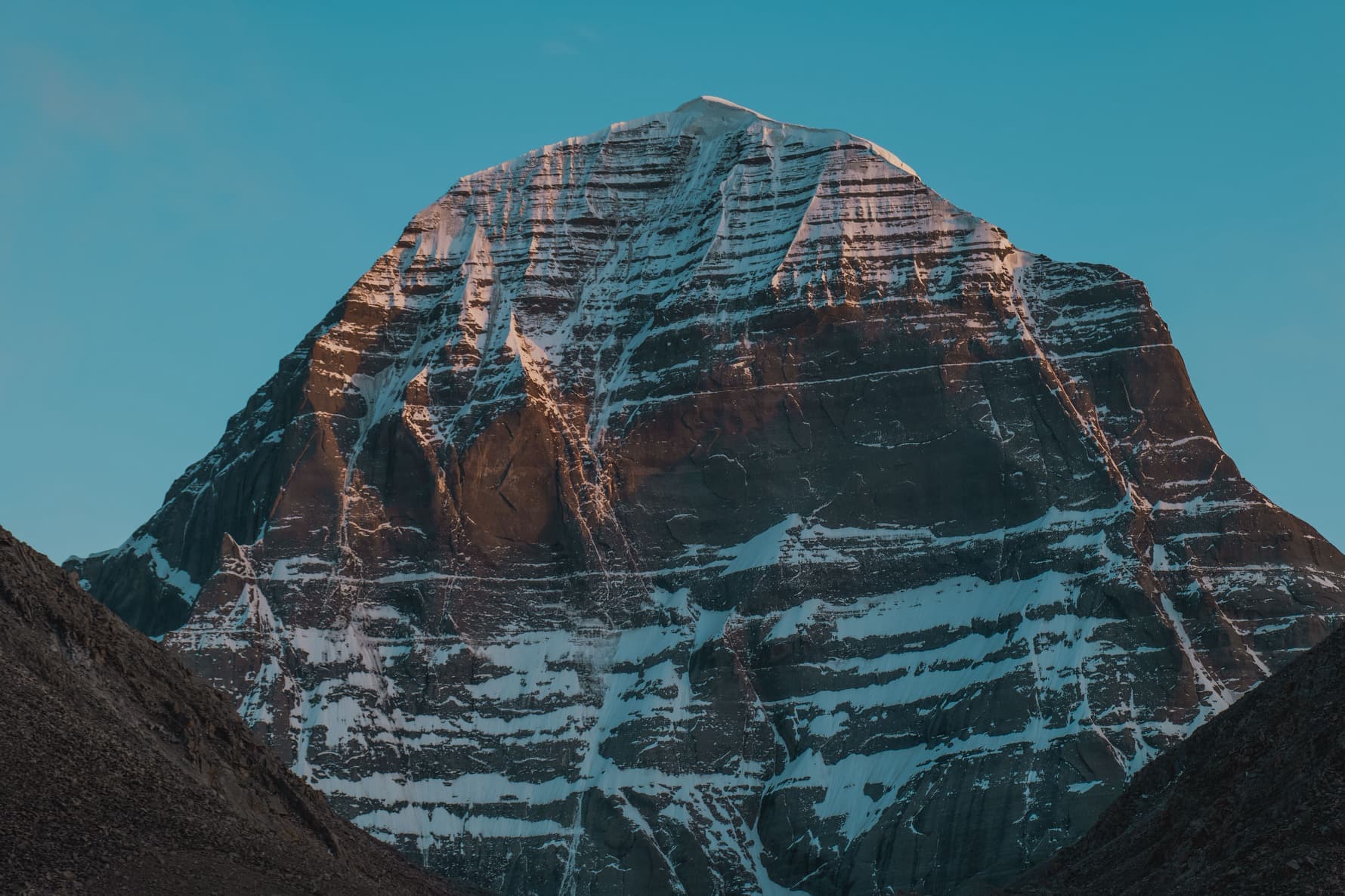
Visa and Permit for Tibet Kailash: Complete Guide for 2027

Tibet is a closed region. To reach Kailash, you need two documents: a Chinese visa and a Tibet Travel Permit. Without the permit, you cannot cross the region's border, neither by air nor by land. This rule applies to all foreigners, including Russian citizens.
I have been leading groups to Kailash since 2027, and every season I encounter the same questions: "Can I go by myself?", "Why does it take so long?", "What if I go through Nepal?". Below is an honest breakdown of all the nuances, timelines, and documents for 2027, without unnecessary words.
Why You Can't Go to Tibet Alone
The Tibetan Autonomous Region (TAR) is officially closed to individual travelers. You cannot: buy a ticket to Lhasa or Ali and simply arrive; rent a car and drive to Kailash; book a hotel in your name; travel without an accredited Tibetan guide and driver.
The permit is issued only for groups of two or more, through a licensed travel agency. The document specifies your full name, route, dates, vehicle numbers, and guides. At each checkpoint (there are dozens along the route to Kailash), they check the permit, passports, and visas. Without these papers, you will be turned away at the first post.
In practice, this means: you travel only as part of an organized group, with a fixed itinerary and accompaniment. Improvisation is excluded.
What is the Tibet Travel Permit and Who Issues It
The Tibet Travel Permit (or simply “permit”) is the permission for entry and movement within the Tibetan Autonomous Region. This document is issued by the Tibet Tourism Bureau in Lhasa. It looks like a colored A4 sheet with photos of participants, seals, and signatures.
Important: The permit can only be issued by a Tibetan agency that has a license. The tourist submits documents through a Russian (or international) operator, which works with a partner in Lhasa. The processing time is from 15 to 25 working days, depending on the season and political situation. Before significant dates (for example, anniversaries of events in March), the region may be closed for several weeks without warning. The permit is tied to specific dates, routes, and group composition. Changing anything after issuance is extremely difficult.
We at Jay Shambo begin collecting documents 2-3 months before the start to ensure you have the permit in hand at least two weeks before departure. This allows you to calmly buy tickets and arrange a Chinese visa.
Chinese Visa: Tourist or Group?
To travel to Kailash, you need a regular Chinese tourist visa (L visa). It can be obtained through a visa center or directly at the Chinese consulate. The validity period is usually 30 days for a single entry, sometimes 60 or 90 days (depending on the consulate's decision).
Documents for Visa
-
Passport, valid for at least 6 months after return.
-
Color photo 3.5 × 4.5 cm on a white background.
-
Completed application form (online on the visa center's website).
-
Copy of air tickets to and from China.
-
Copy of hotel bookings (provided by the operator).
-
Copy of the Tibet Travel Permit (mandatory! without it, the visa may not be issued or may be issued for a shorter duration).
-
Employment certificate or bank statement (not always required but better to have).
-
Processing time: 4-10 working days. Cost: about 4,500-6,000 ₽ (depends on urgency and region of application).
-
Important point: if you fly through Kathmandu and travel to Kailash overland via the Rasuwagadhi–Gyirong border, the consulate may ask for an explanation of your route. In this case, a copy of the permit and a letter from the operator describing the tour are mandatory.
Nepalese Visa (if traveling via Kathmandu)
Many groups fly to Kathmandu, acclimatize in the valley for a few days, then cross the land border and travel to Kailash by jeep. For this, a Nepalese visa is required.
- Good news: Russians can obtain a Nepalese visa upon arrival at Tribhuvan Airport (Kathmandu). Cost $30 for 15 days, $50 for 30 days, $125 for 90 days (multiple entries). Payment can be made in cash dollars or by card. The queue usually takes 20-40 minutes.
- What you need: Passport (valid for at least 6 months). One color photo (often not required, but better to have). Completed immigration card (issued on the plane or in the arrival hall).
The visa is placed in the passport immediately, without waiting in consulates in advance. This is one of the easiest ways to enter Asia.
Military Permit (Alien's Travel Permit) for Kailash
In addition to the Tibet Travel Permit, another document, the Alien's Travel Permit (or Military Permit), is required for traveling to western Tibet (Ngari County, where Kailash is located). It is issued by the Public Security Bureau (PSB) already in Tibet, upon the arrival of the group.
How it works:
- The group arrives in Lhasa (or enters through Gyirong).
- The guide collects passports and the Tibet Travel Permit, submits an application to the local PSB office.
- Within 1-2 days, the Alien's Travel Permit is issued, another colored sheet with seals.
- With this document, the group travels to Ngari (Ali) and Kailash.
The tourist does not have to arrange anything; everything is handled by the Tibetan guide. But it is important to understand: without this permit, you will not be allowed to Kailash. Therefore, itineraries usually include 1-2 days in Lhasa for processing and light acclimatization.
In our tours to Kailash, this day is incorporated into the program; you visit Jokhang, Barkhor, drink Tibetan tea while the guide resolves document issues.
Step-by-Step Algorithm for Document Processing
To get to Kailash, follow this scheme (proven with dozens of groups):
Step 1: Tour Booking (3–4 months before start)
Choose an operator that works with a licensed Tibetan agency. Book a spot in the group, make a deposit. Submit a scan of your passport (main page, valid for at least 7 months at the time of application).
Step 2: Tibet Travel Permit Processing (2–3 months)
The operator submits documents to the Tibetan agency. Processing time is 15-25 working days (up to 30 during peak season). The completed permit will be sent to you as a scan, and the original will be given to the guide in Tibet (or couriered if you are flying to Lhasa).
Step 3: Chinese Visa (1–1.5 months)
After receiving the permit scan, schedule an appointment at the visa center. Submit the documents (list above). In 5-10 days, pick up your passport with the visa.
Important: Do not apply for a visa before receiving the permit. The consulate may request it and deny your application if the documents are missing.
Step 4: Air Tickets Purchase tickets only after receiving the permit (at least the scan). If you are flying through Kathmandu, allow 1-2 days for acclimatization before the border. If flying directly to Lhasa, allocate a day for the military permit processing.
Step 5: Nepalese Visa (if through Kathmandu)
Obtained upon arrival; nothing needs to be done in advance. Bring $50 in cash and one photo.
Step 6: Alien's Travel Permit The guide arranges this in Lhasa within 1-2 days; your involvement is minimal (just hand over the passport).
Timelines and Costs: Summary Table
| Document | Who Issues | Time | Cost (approximately) |
|---|---|---|---|
| Tibet | Travel | Permit | Tibetan agency through operator 15-25 working days Included in the tour |
| Chinese | Visa | (L) | |
| Visa center/consulate | 5-10 working days | 4,500–6,000 ₽ | Nepalese Visa (if needed) |
| Airport Kathmandu | 20-40 minutes | $30–50 | Alien's Travel Permit |
Total time: start 3 months before the departure date to manage everything without stress.
Features of 2027: What Has Changed
Stricter Checks After the Pandemic
As of 2027, Tibet is again open to foreigners, but the rules have become stricter. Now: At the Nepal-Tibet border (Rasuwagadhi-Gyirong), they check not only the permit but also the immunization program (although official COVID vaccination certificates have been canceled, it's better to have a digital certificate just in case). Permits are checked more frequently—every 100-150 km along the road to Kailash, PSB checkpoints are located. Any unauthorized deviations from the route are prohibited. If your permit states "Lhasa-Shigatse-Saga-Manasarovar-Darchen," you cannot detour to a monastery not mentioned in the document.
Digitalization
Some processes have been moved online: the Tibetan agency now uploads tourist data into a unified system of the Tibet Tourism Bureau. This has sped up the processing by 3-5 days but has increased the number of refusals in case of errors in the forms (for example, incorrect transliteration of a name).
Our advice: verify the full name in the permit against your passport before submission. Correcting a typo after issuance is nearly impossible.
Closures in March and August
In March (anniversary of events in 1959 and 2008) and sometimes in August (party congresses), Tibet is closed to foreigners for 2-4 weeks. The dates are fluid and not officially announced. If your tour falls during these periods, the operator will reschedule or offer alternatives.
We are planning June and September tours to avoid closures and the rainy season.
Is it Possible to Reach Kailash Through Nepal Without a Chinese Visa?
No. Even if you cross the Nepal-Tibet border by land (Rasuwagadhi-Gyirong), you need: a Chinese visa (L) in your passport, a Tibet Travel Permit, and an Alien's Travel Permit (issued already in Tibet).
Chinese border guards at Gyirong check the visa first. Without it, you will not be allowed through, even if the permit is perfect.
Myth: "Group visa at the border." This does not exist. Group visas were abolished back in the 2000s. Each tourist enters with their individual visa in their passport.
Common Mistakes When Processing Documents
Mistake 1: Applied for a visa without the permitThe consulate may request a permit. If it’s not available, the visa will be issued for a shorter duration (10–15 days instead of 30), or it may be outright denied. You will then have to reapply, wasting time and money.
Mistake 2: Incorrect Transliteration of Name
The full name on the permit, visa, and airline ticket must match exactly. If the permit shows “Ivanov Ivan,” but your passport states “Ivanov Ioann,” there will be questions at the border. In the best case, you will face long explanations; in the worst, you may be turned back.
Mistake 3: Bought Tickets Before Receiving the Permit
The permit may be delayed (due to political conditions, holidays, or document errors). If you’ve already purchased non-refundable tickets, you risk losing their value. Purchase flight tickets only after you have a scanned copy of the permit.
Mistake 4: Forgot About the Alien's Travel Permit
Some people think that the Tibet Travel Permit equals full access. However, for western Tibet, a military permit is also required. This is arranged by a guide in Lhasa, but you need to allow 1–2 days for it. Without this document, entry beyond Shigatse will be denied.
Mistake 5: Submitted Documents Less Than a Month in Advance
Permit + visa = a minimum of 25–30 working days. If you started the process 3 weeks before your departure, you are unlikely to make it in time. Even expedited processing doesn’t guarantee results, as the Tibet Tourism Bureau does not speed up the process for additional payment.
What to Do If Your Permit is Denied
Denials are rare but do happen. Reasons include: Incomplete documentation (poor quality scans of passports, missing photos). Being caught during a region closure (March, August, anniversary dates). Technical errors (incorrect dates, typos in names). Political reasons (journalists, human rights activists, individuals with a history of violations in China).
What to Do:
-
Find out the exact reason for the denial from the Tibetan agency.
-
If it's a technical error, correct it and resubmit (you'll lose 2–3 weeks).
-
If it's political, consider changing your dates or choosing a different route (for example, Nepal + Mustang, without Tibet).
-
If the region is simply closed for your dates, the operator will offer to reschedule or refund your deposit (conditions as per the contract).
In our experience with Kora Around Kailash, we have not had a single denial due to document errors in 12 years. We work with a reliable partner in Lhasa who knows all the nuances of the system. However, if Tibet is closed for political reasons, we immediately inform and reschedule the group for safer dates.
Checklist: Are You Ready to Submit Documents?
Before booking your tour, check: [ ] Your passport is valid for at least 7 months from the date of permit application. [ ] Your passport has at least two blank pages for visas. [ ] You have 3–4 months until your planned departure date. [ ] You are ready to provide the operator with a scan of your passport and photo in advance (2.5–3 months ahead). [ ] You understand that the itinerary is fixed, without improvisations. [ ] You agree to travel with a group and a guide (independent travel is not allowed). [ ] You are not a journalist, political blogger, or human rights activist (this may raise questions when applying for the permit).
If all points are "yes," you can proceed.
How to Handle Document Preparation Without Stress
Here’s what I recommend based on the experience of 25+ groups to Kailash:
Start 3 Months in Advance, No Later
The ideal scenario: book your tour in January for June, or in April for September 2027. This gives you a buffer for any delays (holidays in China, technical issues, slow consulate processing).
Trust the Operator with the Paperwork
Do not try to contact the Tibetan agency directly, bypassing the tour operator. The Tibet Tourism Bureau only works with licensed companies that have contracts. Direct inquiries from individuals are ignored.
Double-Check the Details
When you receive the scanned permit, verify: Full name (in Latin, every letter). Tour dates. List of participants (if in a group). Itinerary (cities and attractions).
It is easier to fix an error at the scanning stage than at the border.
Keep Copies of All Documents
Before your trip, make: Color copies of your passport (main page + visa). A scan of the China Tibet Travel Permit (the original will be with the guide, but you need a copy). A photo of the Alien's Travel Permit (after issuance in Lhasa). A scan of your Nepalese visa (if you are going through Kathmandu).
Store copies on your phone and in the cloud. If you lose your passport, copies will expedite the recovery process at the consulate.
Don’t Skimp on Insurance
Get travel insurance that covers altitudes up to 6,000 meters and helicopter evacuation. Kailash is at 5,600 meters, and altitude sickness, along with remoteness from hospitals, can be a concern. Insurance costs $30–50 for two weeks but can save you tens of thousands of dollars.
Recommended Companies: Tripinsurance, Cherehapa (choose the “mountaineering / trekking” option).
Alternatives: What to Do If the Permit Isn’t Possible
If for some reason Tibet is closed or the permit cannot be obtained, there are worthy alternatives:
Kailash from the Nepalese Side (Simikot Limi)
You will head to western Nepal, to the Limu Valley region, from where you can see the southern face of Kailash. This is a challenging trek lasting 12–14 days, with an altitude of up to 5,400 m. No permit for Tibet is needed, as it is all within Nepal.
Cons: The kora around Kailash is not possible; you will be viewing it from a distance.
Kora Around Manasarovar (Nepal)
Circumambulating the sacred lake Manasarovar from the Nepalese side. The lake is partially in Tibet and partially in Nepal. No permit is needed for the Nepalese part.
Cons: Kailash is on the horizon, but you cannot get close.
Retreats in Nepal or India
If your goal is practice rather than just the mountain, consider retreats in the Himalayan regions of Nepal (Kathmandu Valley, Mustang) or India (Rishikesh, Dharamsala). We conduct tours in Bali and in India with practices in yoga, meditation, and pilgrimage without the complications of permits.
Conclusion: Documents Are Simple If You Start on Time
Visa and permit for Tibet are not magic or a lottery. They are routine bureaucracy that operates under clear rules. If you start 3 months in advance, gather the correct documents, and trust an experienced operator, the likelihood of success is close to 100%.
The main principles:
- Time: no less than 90 days before departure.
- Accuracy: not a single typo in names and dates.
- Trust: work with an operator who has a real partner in Lhasa.
- Calmness: don’t panic; if something is delayed by 3–5 days, it’s normal for Tibet.
We have been handling documents for guests since 2027. Each season, we lead groups to Kailash through Nepal and directly to Lhasa. Our Tibetan partner has processed over a thousand permits, knows all the inspectors by name, and resolves issues when the system fails.
If you want to go to Kailash, just write to us. We will explain what is needed, take care of all the paperwork, and bring you to the mountain. You can focus on what matters most: preparing your body, mind, and intention.
Kailash awaits those who are ready to traverse not only 53 kilometers of kora but also 90 days of bureaucracy. Both are part of the journey.
Upcoming tours to Kailash: June and September 2027. Document submission starts in February and May 2027, respectively. Details and booking here.
What Are the Visa and Permit for Tibet?

Definition of Visa and Permit: What’s the Difference?
A visa is an official document that allows you to enter and stay in the territory of China. This is not enough for Tibet. Besides a visa, you will need a special permit issued by the Tibetan Bureau of Foreign Tourism Affairs. The permit controls the flow of guests into the region; Tibet has a special status, and Chinese authorities monitor who goes there and when.
In practice, this means: without a permit, you will not be able to purchase a ticket for a flight or train to Lhasa, register at a hotel, or pass checkpoints on the roads. Honestly, even if you have a Chinese visa in hand.
Why Are Documents Required for Traveling in Tibet?
Documents are required for several reasons: Safety and control of tourist flows; authorities want to know who is moving in the autonomous region, where, and when. Protection of cultural and natural heritage: monasteries, lakes, and high-altitude routes are protected by the state. Compliance with Chinese law; laws require foreigners to obtain permission to enter closed areas, which includes the entire Tibetan Autonomous Region.
Specifics of Sacred Places Like Kailash
Kailash is not just a mountain on the map, but a spiritual peak for millions of people. Here are some considerations:
- Cultural Significance: Kailash is revered in four traditions: Buddhism, Hinduism, Jainism, and Bon. The pilgrimage kora around the mountain is a central ritual for believers, and many come here once in their lifetime.
- Time Restrictions: During major religious holidays or by government decision, access to Kailash may be closed. Therefore, it is advisable to plan your trip in advance.
- High Altitude and Climate: The Dolma-La pass is at an altitude of 5,630 meters. Challenging weather conditions, thin air, and physical exertion require serious preparation and attention to well-being.
In our groups, we always conduct an acclimatization day before the kora; this reduces the risk and helps the body adapt.
Checklist for Obtaining Visa and Permit: Step-by-Step Instructions
1. Prepare Documents
A passport valid for at least 6 months from the date of entry. A completed visa application form (provided by the consulate or visa center). Two color photos 3.5×4.5 cm on a white background.
2. Obtain Visa to China
Contact the consulate or visa center of the PRC in your country. Pay the visa fee ranging from $30 to $150, depending on the type of visa and nationality. Processing time is usually 4–10 working days; express visas are more expensive.
3. Request a Permit for Tibet
Contact a tour operator that works with Tibet. For example, processes permits for all its guests, which is included in the program. Provide the exact travel dates and itinerary (Lhasa, Kailash, Manasarovar, etc.). Pay the permit fee of about $50–100, depending on the region and season.#### 4. Obtaining Documents You will collect your visa at the consulate or visa center. Please check the details, as typographical errors can occur. The operator will provide you with the permit before your departure or train ride to Lhasa, usually at the airport or train station of departure. You will need the original for boarding and hotel check-ins.
5. Additional Tips Make copies of your passport, visa, and permit, and keep them separate from the originals. Obtain medical insurance that covers high-altitude routes and evacuation. Standard policies often exclude heights above 4,000 meters. If you are traveling through Nepal to Kailash, you will need a Nepalese visa (available upon arrival in Kathmandu, costing $30 for 15 days) and a group visa for China, which the operator will request in advance. More details can be found in the program Kailash through Nepal: Kora with Gosainkunda.
By following these steps, you will prepare your documents without unnecessary stress and can focus on the journey through the sacred lands of Tibet, where every step is filled with meaning.
How to Get a Visa for Tibet?

To enter Tibet, a Chinese visa alone is not enough; you will also need a permit. The process is a bit more complicated than a typical tourist trip, but if you know the sequence and timelines, everything can be managed calmly. Let's break it down step by step, detailing what you need to gather and when to start.
Necessary Documents for Visa Application Passport valid for at least 6 months from the date of entry into China. Also, ensure there are at least two blank pages for visas and stamps. Completed visa application form can be found on the consulate’s website or obtained on-site. It’s better to fill it out in Latin script, in capital letters or online, if the consulate accepts electronic applications. Photograph standard size 3.5 × 4.5 cm, in color, with a light background, without glasses or head coverings (unless required by religion). Flight tickets confirmation of booking or purchased tickets to and from China. Sometimes a travel itinerary is sufficient. Accommodation confirmation hotel, hostel reservation, or an invitation from a host. If traveling with a tour operator, the agency will provide a confirmation letter.
Tips for Document Submission Timelines
- Start 1.5–2 months before departure. Visas are usually issued within 4–10 working days, but the Tibet permit can take up to three weeks, especially if the itinerary includes restricted areas like Kailash.
- Coordinate dates with the operator. The permit is processed only through an accredited agency in Tibet, and documents are submitted after obtaining the Chinese visa. We at Jay Shambo manage this process step by step: we send a checklist, collect scanned copies, submit documents, and track the status; you only need to provide the passport and application form on time.
- Consider holidays. The Chinese New Year, May Day, and national holidays can extend processing times by a week or more. Plan ahead.
Important Nuances and Potential Challenges
- Visa policies are changing. Requirements for tourists are periodically updated, especially concerning Tibet. Before submitting documents, confirm the current rules on the website of the Chinese consulate in your country.
- Errors in the application = rejection. A single typo in your name or passport number can lead to refusal or delay. Double-check the information, or better yet, ask someone else to verify it.
- The permit is issued only after the visa. First, you obtain the Chinese visa at the consulate, then the agency submits documents for the Tibet Travel Permit. Without it, you will not be allowed on the Chengdu-Lhasa flight or registered at hotels in Tibet.
- Additional costs. Consular fees for the visa, courier delivery of the passport (if not submitted in person), and expedited processing can add $50–100 to your budget. Keep these expenses in mind when planning.
- Medical insurance is mandatory. Choose a policy that covers high altitudes (from 4,000 m) and helicopter evacuation. Some consulates may require the policy to be included in the document package; even if not requested, it’s better to have it, as medical care in Tibet is expensive and hard to access.
- Copies of all documents. Scan your passport, visa, permit, and insurance, and store them in the cloud. Bring paper copies with you in case of loss of the originals; they will simplify contacting the consulate or police.
Honestly, preparing documents for Tibet is not the easiest part of the journey, but if you follow the plan and don’t leave it for the last week, you will avoid problems. If you plan to do the kora around Kailash, take a look at our programs: Kailash: Sacred Kora from Lhasa the classic route through the capital of Tibet, or Kailash through Nepal: Kora with Gosainkunda a variant with gentle acclimatization in the Himalayas and crossing the border via Kyirong. We take care of all visa issues so you can focus on preparing for the journey itself.
How to Obtain a Permit for Tibet?

Obtaining a permit for Tibet is the first practical step towards pilgrimage. Kailash is not open to independent travelers: entry is only possible with a group, through a licensed operator, and with a complete set of documents. Let’s break down how this works in practice.
Permit Application Process: What You Need to Know
Application and operator. The permit can only be processed through a Tibetan agency with an official license. You cannot submit an application independently. You provide your documents to the tour operator, who interacts with partners in Lhasa or Kathmandu and obtains permission from the Bureau of Tourism of the Tibet Autonomous Region.
We at Jay Shambo take care of this process: you just need to send scans, and the rest is our responsibility.
Documents needed: a color scan of the first page of your passport (valid for at least 6 months at the time of entry); a color photo on a white background, 3×4 cm, as for the visa; a completed application form (sent by the operator).
If traveling through Nepal, you will also need a copy of your Nepalese visa or confirmation that the visa will be obtained upon arrival in Kathmandu.
Timelines. Officially, the processing takes 7–14 working days, but in practice, it’s better to allow three weeks. If it is high season (April-May, September), submit documents a month before departure. Expedited processing is possible for an additional fee, but we do not recommend taking risks; there have been cases where systems in Lhasa were "down" during holidays or technical work.
Permit Processing Costs in 2027
Cost of the basic permit (Tibet Travel Permit, TTP): $50–100 per person, depending on the route and season. This is the net cost of the document, excluding agency fees.
- Additional permits: entry permit for restricted areas (Alien's Travel Permit) around $30–50, if the route includes Kailash, Lake Manasarovar, or western regions; military permit (Military Permit) another $20–40, required for sections along the border with Nepal or India; photo/video permits in monasteries $10–20 (not always mandatory, but better to have).
- Additional expenses: expedited processing plus $50–100; courier delivery of originals (if needed) from $30; consular fee for the Chinese visa (if traveling via Lhasa) around $140 for Russians, plus a service fee for the visa center of about $30.
- Total. Budget $200–350 for the entire package of documents: permits, visa, insurance (more on that below). The cost of our tours Kailash: Sacred Kora from Lhasa and Kailash through Nepal: Kora with Gosainkunda includes assistance with the application; you only pay consular and government fees.
How to Avoid Common Mistakes in Document Application
- Check the data in your passport. Your name and surname in the application must match your passport letter-for-letter, including middle names (if transliterated). We have seen refusals due to writing "Sergey" in the application while the passport said "Sergei." Chinese systems are strict about typos.
- Stay updated on visa policies. Entry rules for Tibet change sometimes, occasionally closing the region for several weeks (usually in March, around anniversaries of political events), and sometimes introducing new requirements for groups. We monitor the news and warn in advance, but if you book independently, check the information on the TAR Bureau of Tourism website or with the operator 1-2 months before your trip.
- Obtain the correct insurance. Standard tourist policies do not cover heights above 3,500–4,000 m. For Kailash (Dolma La Pass at 5,630 m), you need insurance with the option "trekking/climbing up to 6,000 m" and coverage for helicopter evacuation. Costs start from €50 for two weeks. Some operators in Lhasa check the policy when obtaining the permit, so this is not just a formality.
- Make copies of all documents. Scan copies of your passport, visa, permits, and insurance, and store them on your phone, tablet, and in the cloud. Keep paper copies in a separate folder, not in the same backpack as the originals. High altitudes can lead to unexpected situations: wind, distraction, wet snow. It is almost impossible to restore the permit on-site.
- Do not leave it to the last moment. If you want to travel in May 2027, start gathering documents in March 2027. Honestly, it’s calmer to prepare in advance than to stress out a week before departure.
By following these simple rules, you will save time, nerves, and money. We have gone through this process with dozens of groups and know where the usual hiccups occur.
How to Get to Tibet and Reach Kailash?
 To realize your dream of traveling to the sacred Mount Kailash, you need to plan your route and prepare the necessary documents in advance. The process can seem confusing, but breaking it down into steps makes it easier. Honestly, the key is not to leave preparations until the last moment.
Different Routes: What Options Are Available?
Through Nepal is the most popular path among pilgrims. You start from Kathmandu, where you also obtain your permit and Chinese visa through an agency, then travel to the border in Kyerung (Gyirong) and continue across the Tibetan plateau to the foot of Kailash. The road is lively, with views of the Himalayas, and acclimatization is smoother. Through China (from Lhasa) is a less common option, but it works well. You arrive in Lhasa, spend a few days to adapt to the altitude, and then head west to Tibet. The route is longer, but you'll see the central Tibetan monasteries of Jokhang, Sera, and Drepung. Transportation and Walking Sections: After receiving your permit, you will always travel accompanied by a guide in SUVs (independent travel in Tibet is prohibited). The kora around Kailash can be completed on foot (the classic three-day route is 52 km) or partially on horses or yaks.
Vehicles: What to Choose for a Comfortable Journey?
4WD SUVs are standard for Tibet. Usually, these are Land Cruisers or Mitsubishi Pajeros, accommodating 4-5 people per vehicle. The roads in the west are unpaved and rocky, with fords that can't be crossed without all-wheel drive. In our groups, we always budget for an additional vehicle in case of breakdowns. Buses are sometimes used on the Kathmandu-border section, but bus transportation within Tibet is virtually unavailable for foreigners. Authorities require a designated guide and vehicle. Walking Sections (Kora): Many pilgrims complete the kora entirely on foot, without horses. This allows for a deeper connection with the atmosphere and one’s own strength. In practice, I recommend physical preparation: the second day of the kora includes the ascent to the Drolma La Pass (5,630 m), and at high altitude, every step becomes more challenging.
Logistics Tips: How to Plan Your Trip
Budget: Plan for the entire tour from $1,500 to $3,000 per person, depending on the route and level of comfort. This amount includes the permit, visa, transportation, accommodation, meals, and guide services. Also, consider personal expenses, souvenirs, and donations at monasteries. Insurance: Medical insurance is mandatory, covering high-altitude areas (above 4,000 m) and helicopter evacuation. Standard policies often exclude mountains, so check the terms. We always ask guests to show a copy of their policy before departure. Document Copies: Make color copies of your passport, visa, and permit, and keep them separately (in your backpack, on your phone). Originals may get lost or wet during the journey, and a copy will expedite any issues. Data Verification: Before applying for the permit, double-check all fields on the application with your passport: name, number, dates. The slightest typo can lead to rejection, requiring you to resubmit documents, which is time-consuming and stressful. Relevance of Requirements: The visa policy of the PRC and entry rules for Tibet change annually (sometimes even more frequently). Before your trip, clarify the current conditions with your operator or on official resources. We monitor updates and immediately inform guests if anything changes.
If you want to avoid headaches with logistics and documents, check out our ready-made programs: Kailash: Sacred Kora from Lhasa or Kailash Through Nepal: Kora with Gosainkunda. All routes, transportation, and permits are included; you just need to pack your backpack and prepare for your encounter with Kailash.
Visa and Permit for Tibet Kailash: Complete Guide for 2027
Trip Budget for Tibet

When planning a trip to Tibet, you are likely thinking about the budget. Honestly, the numbers are not as daunting as they seem at first glance. A sensible approach to calculating expenses helps avoid surprises and allows you to focus on what truly matters—meeting sacred places and connecting with yourself.
Estimated Costs: How Much Does the Trip Cost in 2027?
- Visa and Permit: from $150 to $300. The cost depends on your citizenship and the method of application; going through an agency is faster and more reliable.
- Transportation: about $200-400. This includes domestic flights, SUV rentals on the plateau, and travel along the route.
- Accommodation: from $20 to $100 per night. Budget guesthouses in Lhasa are quite clean, and comfortable hotels are available even in remote areas.
- Meals: around $10-30 per day. Local cuisine such as momo, thukpa, and butter tea is accessible and filling; prices are higher in tourist areas.
- Additional Expenses: $100-300 for excursions, offerings at monasteries, souvenirs, a first-aid kit, and unforeseen costs.
In total, we recommend a budget of $800 to $1,500 for the entire trip, depending on its length and level of comfort.
What Is Included in Jay Shambo Programs?
When you choose our programs, we take care of the main concerns: Transfers throughout the route: SUVs with experienced drivers, domestic flights (if included). Accommodation: pre-booked guesthouses or hotels that we have personally vetted. Meals: breakfasts and lunches (depending on the tour), so you don’t waste time searching for cafes in high-altitude areas. Guide Support: a Russian-speaking guide who knows not only the roads but also rituals and local histories. Visa and Permit Organization: we assist with the paperwork and coordinate the process to ensure you receive your permits on time.
For details, see our programs Kailash: Sacred Kora from Lhasa and Kailash Through Nepal: Kora with Gosainkunda.
How to Save on Your Journey Without Losing Quality?
In practice, I have seen how sensible savings make the trip even more interesting: Plan in advance: early booking of flights and hotels can reduce prices by 20-40%. Choose guesthouses in Lhasa and along the way to Kailash; they are clean, with hot water, but cost significantly less than international chains. Eat local: momo from street vendors or family-run eateries is tastier and cheaper than tourist restaurants. Join group tours: shared SUVs, communal accommodation, and a guide for the group significantly reduce costs without compromising safety. Bring a thermos and snacks: stores are scarce at high altitudes, and prices are steep; having your own supply of tea and nuts will save you money and energy.
By following these recommendations, you can make your journey more accessible and enriching. We invite you to explore the routes Kailash: Sacred Kora from Lhasa and Kailash Through Nepal: Kora with Gosainkunda, where we detail what is included and help you plan your budget more accurately.
FAQ

Do Russians need a visa for Tibet in 2027?
Yes. To travel to Tibet, you will need two documents: a tourist visa for China and a separate permit specifically for the autonomous region. You obtain the Chinese visa through a consulate or visa center, while the permit is only issued through a registered agency; it cannot be obtained independently.
What is the process for obtaining a permit for Kailash?
Honestly, the process looks like this: You provide the agency with a scanned copy of your passport and Chinese visa. You fill out a small questionnaire with personal information and the purpose of your trip. You wait 2-3 weeks: the agency submits the documents to the relevant bureau, they check them, and send you approval. You pay a fee, usually 100-150 yuan (the amount may vary).
The permit is issued only for a group; it cannot be obtained for a single traveler.
Can you visit Tibet independently?
No. Chinese regulations prohibit individual tourism in the Tibet Autonomous Region. You must be part of an official group with a guide and have a valid permit. This applies to both routes to Kailash and regular trips around Lhasa.
What documents are needed for a trip to Tibet?
For your trip, gather the following: a valid passport with at least six months remaining from the date of departure, a tourist visa for China, a personalized permit for Tibet (issued by the agency), and medical insurance including coverage for high altitudes is highly recommended.
Bring printed copies of all documents and keep them separate from the originals in case of loss or checks at checkpoints.
How to avoid issues with visas and permits?
A few working rules: Work with an agency that has a license for Tibetan programs; this eliminates refusals due to formal errors. Double-check the expiration date of your passport and visa; visa officers are meticulous. Specify exact travel dates: the permit is tied to a specific period and cannot be extended retroactively. Fill out applications carefully, without corrections or ambiguities; even minor details can cause delays.
How long does it take to obtain a visa and permit?
Realistic timelines: Visa for China takes 5-10 working days, depending on the consulate and type of visa. Permit for Tibet takes 2-3 weeks after submitting the complete set of documents.
Plan to submit at least a month before departure, or ideally a month and a half: this will provide a buffer for unforeseen delays or additional requests from the bureau.
If you are preparing for a pilgrimage around the sacred mountain, check out our programs Kailash: Sacred Kora from Lhasa and Kailash Through Nepal: Kora with Gosainkunda, where we detail logistics, timelines, and guide you step by step with the documents.