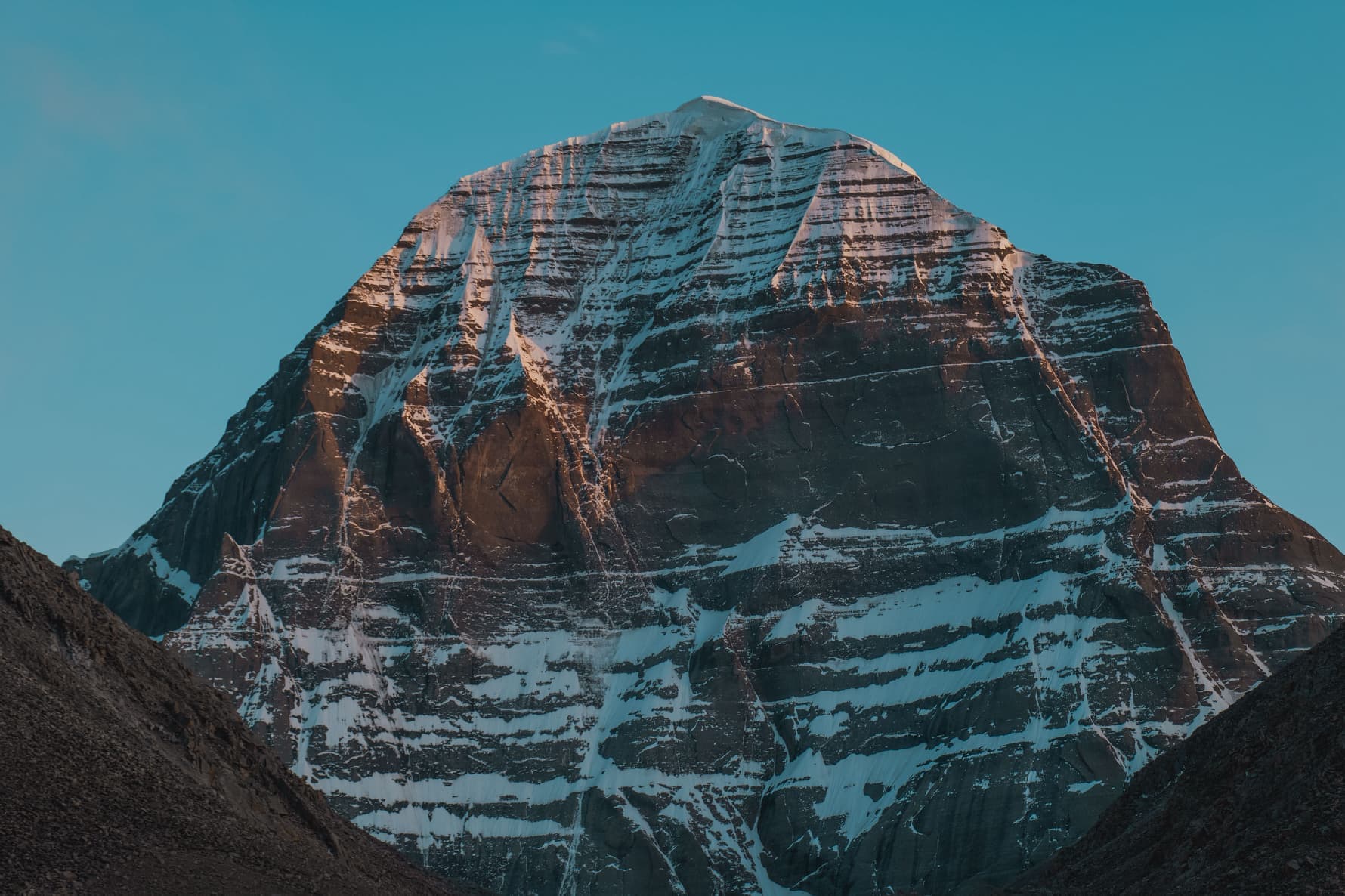
Tibet: Kora Around Mount Kailash. 3-Day Kora Route

Introduction to the Kora Around Kailash

The sacred Mount Kailash, rising to 6,638 meters, is a geographical and spiritual peak for millions of pilgrims. Located in western Tibet, it is revered by followers of Buddhism, Hinduism, Jainism, and Bon. According to legend, Lord Shiva resides here; for Buddhists, it is the dwelling place of Buddha Demchok. Every year, thousands come here to cleanse themselves, find peace, and connect with something greater.
The kora is a ritual circumambulation of the mountain, approximately 52 kilometers long. It usually takes three days, and every step is filled with symbolism. Pilgrims believe that the kora cleanses karma, heals the soul, and brings them closer to the divine. This is a physical challenge, but above all, it is an opportunity to immerse oneself in meditation, let go of everyday thoughts, and focus on inner work.
The route is divided into three stages. The first day covers about 14 kilometers from Darchen to the Lha-Chu Valley, where views of surrounding mountains and sacred lakes such as Manasarovar unfold. The second day is the most challenging: a climb over the Dolma-La Pass at an altitude of 5,630 meters, covering 22 kilometers. The third day involves descending and returning to Darchen, approximately 15 kilometers. Each segment becomes part of an inner transformation.
If you plan to undertake the kora, consider a few points. Physically, start preparing 2-3 months in advance: cardio training, long hikes with elevation gain. Acclimatization is critical—allow your body 3-4 days to adapt in Lhasa (3,640 m) or another high-altitude location. Gear: comfortable trekking boots, layered warm clothing, a sleeping bag rated to –10°C, extra water, and lightweight food. An experienced guide will assist not only with navigation but also with spiritual practice—honestly, in our groups, this always adds more depth.
At Jay Shambo, we organize tours where the kora around Kailash is combined with meditation, yoga, and interactions with locals. You can choose Kailash: Sacred Kora from Lhasa—the classic route through Lhasa, or Kailash via Nepal: Kora with Gosainkunda—an alternative path through the Nepalese Himalayas with additional practice at Gosainkunda Lake.
Traveling around Kailash is not just a walk; it is an opportunity for deep transformation. Prepare with an open heart—and it will become an unforgettable experience for you.
Preparing for the Kora: What You Need to Know

The journey around Mount Kailash is both a physical challenge and a profound spiritual journey. To make it as comfortable and safe as possible, proper preparation is essential. Here’s what to consider.
Physical Fitness and Psycho-Emotional State
Before the kora, we recommend going through a training cycle focused on cardio and endurance. Optimal preparation includes:
- Aerobic training: running, swimming, or cycling 3-4 times a week.
- Strength exercises: strengthening your legs and back will help with the ascents and descents.
- Long hikes: start with short routes, gradually increasing to 10-15 km with a backpack weighing 8-10 kg.
Psycho-emotional preparation is equally important. Practicing meditation or yoga will help you tune in, manage stress, and anxiety about the altitude. Honestly, in the groups I often see that it is the inner readiness that determines how easily a person navigates the route.
Essential Gear
Proper gear is half the battle. Here’s the essential minimum:
- Footwear: trekking boots with good cushioning, ankle support, and non-slip soles. Break them in beforehand.
- Clothing: a layered system—thermal underwear, a fleece jacket, and a waterproof membrane jacket. Warm gloves, a hat, and a buff to protect your face from the wind.
- Sleeping bag: rated for temperatures down to –10°C. Nights in the camps can be cold even in summer.
- Backpack: 50-70 liters, with good back support and a hip belt.
- Essentials: a first-aid kit (including altitude sickness medications like Diamox or analogs—consult your doctor), UV protection sunglasses, SPF 50+ sunscreen, insect repellent, personal utensils, a flashlight, and spare batteries. Food: dried fruits, nuts, energy bars—light and high in calories.
Medical Preparation and Acclimatization
The medical aspect is critical. Be sure to consult with a doctor, especially if you have chronic illnesses (heart, lungs, blood pressure). Vaccinations for hepatitis A and typhoid are recommended. Bring medications for altitude sickness prevention and any personal medications.
Acclimatization is a key point. Upon arriving in Lhasa, spend at least 2-3 days at an altitude of 3,640 meters before moving on. Don’t rush the ascents: in the first days, try not to exceed 3,500-4,000 meters. Drink 3-4 liters of water a day, eat light carbohydrate-rich foods, and avoid alcohol.
In practice, we have had cases in our groups where people skipped acclimatization—and had to drop out on the first day. Give your body time—and it will respond with energy and endurance.
The kora around Kailash is an opportunity for deep personal transformations. If you are ready, we recommend looking into our tours: Kailash: Sacred Kora from Lhasa or Kailash via Nepal: Kora with Gosainkunda. Prepare with an open heart—and let this journey become unforgettable.
Kora Route: Detailed Plan for 3 Days

Day 1: The Start of the Journey, First Kilometers, and Evening Rituals
Your journey begins in the village of Darchen (4,560 m)—the starting point of the kora. This day focuses mainly on acclimatization and smoothly entering the route. You will walk about 14 kilometers to the first camp in the Lha-Chu Valley (Dira Puk, ~5,000 m).
The path goes through a wide valley, surrounded by rocks and prayer flags. The pace is calm—it's important not to overexert yourself on the first day. Along the way, you will encounter shrines: the Chorten Kang Ngi stupa, where pilgrims leave offerings, and a spot for prostrations. Stop at each significant point—you can feel the mountain's energy here and tune into your inner work.
In the evening at camp, hold a ritual of offering—light incense, recite mantras, or simply be in silence. In our groups, this time is for connecting with other pilgrims, sharing impressions, and meditating under the starry sky. Honestly, these evening practices often become the most profound moments of the entire journey.
Day 2: Ascent to Dolma-La, Beauty and Challenges
The second day is the most challenging and significant. You will need to cover about 22 kilometers, including the ascent to the Dolma-La Pass (5,630 m)—the highest point of the kora.
Start early in the morning while the temperature is still comfortable. The ascent takes 3-4 hours: steep switchbacks, thin air, and stones underfoot. Make frequent stops, breathe deeply, and drink water. At the pass, you will be greeted by Gauri Kund Lake and hundreds of prayer flags. Here, pilgrims leave symbolic offerings—personal belongings, hair, pieces of clothing—as a sign of release from the old.
The descent to the Zhutul-Puk camp (~4,760 m) goes down a stony slope. The views are incredible: valleys, mountain peaks, rivers. But be attentive—fatigue accumulates, and maintaining concentration is important.
In the evening at camp, find a quiet place for meditation. In practice, many participants in our tours say that it is here, after the ascent to Dolma-La, that an internal shift occurs—a realization that you are capable of more.
Day 3: Completing the Kora and Spiritual Reflection
The third day is the return to Darchen. About 12 kilometers of gentle descent along the river. The path is physically easy, but filled with reflection on what has been experienced.
You will pass by the Zhutul-Puk monastery, carved into the rock, where, according to legend, Milarepa meditated. Stop, go inside—there is a special atmosphere of peace and concentration here.
Completing the kora in Darchen is a moment of gratitude. Traditionally, pilgrims hold a ceremony: lighting lamps, leaving offerings at the stupa, expressing appreciation to the mountain for the experience. Take time to reflect: what has changed? What have you learned about yourself? What insights will you take with you?
In our groups, this day often ends with a communal dinner, where everyone shares their impressions. The kora around Kailash is not a finish line, but the beginning of a new phase.
If you are ready for this journey, consider our offerings: Kailash: Sacred Kora from Lhasa or Kailash via Nepal: Kora with Gosainkunda. Prepare with an open heart—and allow this experience to change your life.
Challenges and Risks of the Kora Around Kailash

The kora around Mount Kailash is a spiritual journey and a serious physical challenge. Before embarking, it is important to be prepared for the difficulties and risks that may arise along the way.
Altitude and Its Effects: How to Avoid Altitude Sickness
Kailash is located at an altitude of about 4,600 meters, and the Dolma-La Pass is at 5,630 meters. Altitude sickness is not uncommon here. To minimize risks:- Acclimatization: Arrive early and spend 2-3 days in Lhasa (3640 m) or another high-altitude city. Take light walks; avoid sudden ascents.
- Hydration: Drink at least 3-4 liters of water a day — this helps your body cope with the lack of oxygen.
- Nutrition: Eat light carbohydrate foods — rice, pasta, bread. Avoid heavy fatty foods and alcohol.
- Symptoms: Pay attention to headaches, nausea, dizziness, and weakness. At the first signs — stop, rest, inform your guide. If symptoms worsen — descend, do not try to continue at any cost.
Honestly, over the years, I've seen cases where people ignored the first symptoms — and it ended in emergency evacuation. Listen to your body.
Unpredictable Weather: How to Prepare
The weather around Kailash changes rapidly. It can be sunny in the morning, snow or rain by lunchtime, and a biting wind in the evening. To be prepared:
- Clothing: A layered system is essential. Thermal underwear, fleece, a waterproof jacket, and pants. A warm hat, gloves (better to have two pairs: thin and insulated), a buff or scarf to protect your face.
- Footwear: Trekking boots with a waterproof membrane, well-broken in. Spare socks (2-3 pairs) in a waterproof bag.
- Accessories: Sunglasses with UV protection, sunscreen SPF 50+, lip balm. The sun at high altitude is aggressive — you can get sunburned even on a cloudy day.
- Forecast: Keep an eye on the weather, but be ready for surprises. In practice, forecasts often fail — the local climate is unpredictable.
Limited Resources: Food and Water Availability on the Route
On the kora, opportunities to replenish supplies are limited. Take care of this in advance:
- Water: Bring at least 2 liters per day in a reusable bottle or hydration pack. In camps, you can refill your supplies, but not always — it’s better to have a reserve. Use a filter or tablets to purify water from streams.
- Food: Pack light, calorie-dense snacks — nuts, dried fruits, energy bars, chocolate. Camps offer simple food (rice, noodles, tea), but the choice is modest, and portions are small. It’s better to have your own stock in case the kitchen is closed or you miss mealtime.
- Checking Camps: Find out in advance where you can buy food and water. Some camps offer a limited assortment, while others may be closed off-season.
Honestly, in our groups, there have been situations where the weather delayed food deliveries to the camp — and participants with their own food supplies felt much more secure.
The kora around Kailash is a path to self-discovery. Preparation and awareness of risks will help make your journey safe and transformative. If you are ready, consider our programs: Kailash: Sacred Kora from Lhasa or Kailash through Nepal: Kora with Gosainkunda.
Travel Logistics and Budget

Traveling to the sacred mountain Kailash and the kora around it is a spiritual adventure that requires careful preparation. Understanding logistics and budget will help make your journey comfortable and safe.
Estimated Expenses: Transport, Accommodation, Food
Transport: Expenses depend on your departure point. A flight to Lhasa from Moscow or another major city will cost around $500–1000 round-trip (depending on the season and airline). From Lhasa to the start of the kora in Darchen — about $100–200 for organized transport (jeep or bus). If you’re traveling through Nepal, add the flight Kathmandu–Lhasa or ground transfer — another $200–300.
Accommodation: In Lhasa, hotels cost $30–100 per night depending on the level of comfort. In camps on the kora, conditions are basic: shared dormitories, minimal amenities — $10–30 per night. Honestly, this is not a place for comfort, but the atmosphere compensates for any inconveniences.
Food: In Lhasa and on the way — $10–30 per day. On the kora, food in the camps is simple (rice, noodles, tea), but filling. I recommend stocking up on light snacks — nuts, dried fruits, bars — in case the kitchen is closed or you want to have a snack on the route.
In total, for 12–14 days (including acclimatization and the kora): $1500–3000 not including the cost of an organized tour. With a tour — $3000–5000 depending on the level of service and route.
How to Choose the Optimal Route and Tour
When choosing a tour, consider:
-
Guide Experience: Ensure the guide has experience working on Kailash, knows the local conditions, and speaks Russian or English. This is critical for safety and the quality of the journey.
-
Group Size: Small groups (6–10 people) are more flexible, allowing for better interaction with the guide and each other. In practice, larger groups often lose connection, and the experience becomes superficial.
-
Individual Needs: Think about what’s more important to you — more time for meditation and inner work or active exploration of the surroundings? This will help choose the right route.
-
Service Package: Ensure that transfers, accommodation, food, permits (special permits are mandatory for Tibet), and insurance are included in the price. For example, in the program Kailash: Sacred Kora from Lhasa, all these points are covered — you won’t need to worry about organizational matters.
Service Packages and What’s Included in the Tour Price
Most organized tours include:
- Transfers: Transportation Lhasa–Darchen–Lhasa or Kathmandu–Darchen–Kathmandu (depending on the route).
- Accommodation: Overnight stays in hotels in Lhasa and camps on the kora.
- Food: Usually three meals a day. Confirm what dishes are offered — meals can be vegetarian or mixed.
- Permits: Special permits for entering Tibet, visiting restricted areas, and making the kora.
- Guide and Support: An experienced guide who will help not only to overcome physical challenges but also to understand the cultural and spiritual context more deeply.
- Insurance: Basic medical insurance with coverage for altitude risks (check limits and conditions).
If you are interested in unique routes, consider Kailash through Nepal: Kora with Gosainkunda — an alternative path through the Nepalese Himalayas with additional practice at the sacred lake Gosainkunda. This offers an opportunity to immerse yourself more deeply in the local culture and nature, expanding your pilgrimage experience.
Preparing for the kora around Kailash requires careful planning. A proper approach to logistics and budget will help you focus on the spiritual side of this unique experience — and we will take care of the rest.
FAQ

How to Trek to Mount Kailash?
The trek around Mount Kailash is a physical activity and a deep spiritual journey. The standard kora route of 52 kilometers is usually divided into three days. It starts from the village of Darchen, where the base camp is located. The first day — about 14 kilometers to the Dira Puk camp, the second — 22 kilometers over the Dolma-La Pass (5630 m), the third — 12 kilometers back to Darchen. The altitude reaches 5630 meters, so follow the guide’s instructions, take frequent breaks, and drink plenty of water.
How Long Does the Kora Around Kailash Take?
The classic kora takes three days. However, considering acclimatization, preparation, and possible delays on the route, it’s better to allocate 5–7 days. This will allow your body to adapt to the altitude and minimize the risk of altitude sickness. Don’t rush — give yourself time to feel each stage.
What Are the Main Challenges During the Kora?
The main challenges are altitude and weather conditions. Thin air, cold, wind, and possible snowfalls even in summer. Some sections are steep, requiring physical preparation and endurance. Be ready for unpredictable weather changes — sunny in the morning, snow by lunchtime. Honestly, in practice, many participants say the hardest part is the ascent to Dolma-La. But that’s where the inner breakthrough happens.
What Recommendations Are There for Acclimatization Before Starting the Kora?
Before the kora, spend at least 2–3 days in Lhasa (3640 m). Take light walks, avoid sudden ascents, drink 3–4 liters of water a day, eat carbohydrate foods, and avoid alcohol. Full sleep is critical. You might consider taking adaptogens (like ginseng, rhodiola rosea) or medications for altitude sickness (like Diamox) — consult a doctor in advance.
What to Take on the Journey?
Prepare your backpack, considering the following:
- Warm layered clothing: thermal underwear, fleece,