Tibet for Tourists: Permits, Routes, and What to See

Tibet is a region where bureaucracy coexists with mountain passes, and monastery courtyards are only open to those who agree to strict rules. Independent entry is prohibited: Chinese authorities require a group tour, an official guide, and a set of documents known as the Tibet Travel Permit. However, behind this meticulousness lies a high-altitude plateau where the air is so thin that each step is taken slowly, and the silence in the temples is almost tangible.
If you are planning a journey to Kailash or simply wish to see Lhasa and Shigatse, you will need to complete all formalities in advance. Honestly, there will be no unnecessary movements; each requirement is dictated by the logic of the authorities, and the agency simply translates it into specific actions. Below is all the mechanics: how to obtain a permit, the routes to the region, what to see, and how to prepare physically.
Tibet Permit: Why You Can't Do Without It and How to Get It
The Autonomous Region of Tibet (TAR, 西藏自治区) is closed to individual travelers. Entry is only permitted as part of an organized group of at least one person, but it must include an accredited guide, driver, and vehicle. This is not a recommendation but a strict rule: at the checkpoints when entering TAR, the Tibet Travel Permit (TTP) and the list of participants are checked. Without the document, you will be turned away at the provincial border.
Who Issues the Permit
The TTP is issued by the Tibet Tourism Bureau only to tour operators who hold a Chinese license. The tourist cannot apply directly, even if you speak Chinese fluently and live in Beijing. The scheme is as follows: you book a tour with an operator (for example, a pilgrimage tour to Kailash); the operator collects scans of your documents; submits an application to the Tibet Tourism Bureau on behalf of the group; within 15–20 working days, approval comes, and a scan of the TTP is sent to your email; the original permit is handed over by the guide upon meeting in Lhasa or Chengdu; without the original in hand, you will not be allowed beyond the Lhasa airport.
What Documents Are Needed for Submission
The list is standard, but it’s better to gather it two months before departure: passport with at least 6 months validity after the end of the tour; clean pages for visas; Chinese visa regular tourist L-visa (single or double entry, if you plan to exit to Nepal and return); processed at the Chinese embassy in your country; processing time is 4–7 working days; color photo 3×4 cm on a white background, without glasses; for the TTP application; application form filled out by the operator based on your details; itinerary a fixed list of cities and dates; it cannot be changed after the permit is issued.
If you plan to visit restricted areas (for example, the base camp of Everest from the Tibetan side, the Ngari region, or Kailash), the operator additionally requests an Alien's Travel Permit and Military Permit. These documents are issued in Lhasa, through the local PSB (Public Security Bureau) and take 1–2 days. The guide will collect them; you just need to provide your passport.
Timing and Nuances
- Submission: 20–30 days before departure. During the high season (April–May, September–October), it’s better to submit 45 days in advance, as the bureau gets overloaded.
- Cost: usually included in the tour price. The TTP is not sold separately.
- Closure periods: every year from late February to mid-April, Tibet is closed to foreigners (anniversary of the 1959 uprising and other events). Dates may vary, check with the operator.
- Group vs Individual Tour: even if you are traveling alone, it is formally considered a "group of one person." A guide and vehicle are mandatory, the price is higher than in a large group, but the itinerary is more flexible.
How to Get There: Three Routes to Tibet
Geographically, TAR borders the provinces of Qinghai, Sichuan, Yunnan, and Nepal. There are several routes, but for foreigners, three are practical: a flight to Lhasa, a train from Chengdu/Xining, or a land border with Nepal.
1. Flight to Lhasa (Lhasa Gonggar Airport, LXA)
The fastest way. Daily flights from Chengdu, Beijing, Shanghai, Chongqing, and Xining. Travel time from Chengdu is about 2 hours.
In practice: You arrive in Chengdu (international flight), stay overnight in a hotel, and the next morning check in for the domestic flight to Lhasa. When checking in for the LXA flight, the airline's counter requires you to show the TTP (a scan on your phone is usually accepted, but it’s better to print it). In Lhasa, the guide meets you with a sign, hands over the original permit, and accompanies you to the exit. Without a guide, you won’t be allowed out of the arrival area; there’s a passport control check.
- Plus: time-saving.
- Minus: a sudden gain in altitude (Lhasa is 3,650 m), many experience dizziness and nausea on the first day. Acclimatization is harder than with a gradual ascent by train.
2. Train Chengdu/Xining to Lhasa
The Qinghai–Tibet Railway is the highest railway in the world. The section after Golmud goes over permafrost, crosses the Tangla Pass (5,072 m), and within 40 hours elevates you from the plains of Sichuan to Lhasa.
Routes: **Chengdu (Chengdu)
Lhasa**: ~40 hours, trains Z322/Z324; departure in the evening, arrival on the third day in the morning. **Xining (Xining)
Lhasa**: ~22 hours, several trains per day; Xining is the starting point of the Qinghai–Tibet Highway.
-
Carriages and Oxygen: Soft sleeper (软卧): compartment for 4 people, clean bedding, power outlet. Hard sleeper (硬卧): open shelves for 6 in a section, cheaper but less comfortable. After Golmud (~2,800 m), oxygen-enriched air is supplied through ventilation. Each sleeping spot has an individual oxygen tube (like on an airplane). It’s not mandatory to use it, but if you feel short of breath, insert it into your nose. There’s a hot water dispenser (free) in the corridor, toilets, and sinks.
-
Documents: The operator buys the ticket using your passport (self-purchasing on 12306.cn is complicated for foreigners). At boarding, the passport + TTP will be checked. The guide may travel with you on the same train or meet you in Lhasa, depending on the program.
-
Plus: smooth acclimatization, the chance to see the plateau through the window (Lake Qinghai, herds of yaks, snowy ridges).
-
Minus: long, tickets in high season sell out a month in advance.
3. Land Border Nepal-Tibet (Gyirong/Rasuwa Gadhi)
From 2027, the main checkpoint is Gyirong (吉隆, the Nepali side Rasuwa Gadhi), 30 km from the village of Syabrubesi. The old crossing Zhangmu/Kodari has been closed since the 2027 earthquake and is partially restored, but for tourist groups, Gyirong is more reliable.
Scheme: You fly to Kathmandu, and the operator arranges a Chinese group visa (issued at the Chinese consulate in Kathmandu in 3–4 working days) and the TTP. You travel by jeep to the border (~140 km, 6–7 hours along mountain serpentine roads). You pass both Nepali and Chinese customs, switch to Chinese transport (changing vehicles is mandatory), and continue with a Tibetan guide. The first overnight stay is usually in the town of Gyirong (2,800 m) for acclimatization before heading to Lhasa.
- Plus: scenic road, gradual ascent.
- Minus: the checkpoint can sometimes be closed for several days (landslides, holidays) so a time buffer is needed.
What to See: Main Points of Interest
Tibet is vast, and it’s impossible to cover everything in one trip. Below is a classic set that is included in most tours, along with a few points for those ready for long travels.
Lhasa and Surroundings
Potala Palace (布达拉宫)
The former winter residence of the Dalai Lama, 13 stories on the Marpo Ri hill. Inside are thousands of statues, stupas with relics of previous Dalai Lamas, murals, and libraries. Entry is strictly timed (tickets specify the hour), with groups of 100 people per hour. Photography inside is prohibited. The hill's height is approximately 3,750 m, climbing the stairs is slow and requires breaks.
Tip: In the morning, the light beautifully falls on the white walls; arrive at opening time (usually 9:00) to avoid crowds of Chinese tourists.
Jokhang Temple (大昭寺) and Barkhor Street
Jokhang is the heart of Tibetan Buddhism, built in the 7th century. Inside is the statue of Buddha Shakyamuni (Jowo Shakyamuni), brought by Princess Wencheng. Pilgrims perform prostrations in front of the entrance from dawn to dusk. Surrounding the temple is Barkhor Street (a clockwise pilgrimage route), with shops selling incense, prayer wheels, and turquoise.
Atmosphere: oil lamps, the scent of juniper, whispers of mantras. There are fewer tourists here than in the Potala, and you can sit in silence.
Sera Monastery (色拉寺)
Located 5 km from the center of Lhasa. Famous for its monastic debates held every day except Sunday, from 15:00 to 17:00 in the courtyard, where monks argue about Buddhist philosophy, clapping their hands and stomping their feet. The spectacle is theatrical, but it’s a genuine learning practice.
Drepung Monastery (哲蚌寺)
The largest monastery of the Gelug school, on the slope of a mountain 8 km west of Lhasa. Before 1959, around 10,000 monks lived here, now there are several hundred. The white buildings rise terraced, with halls containing huge statues, libraries, and kitchens. The ascent from the gate to the main temple takes 20 minutes on foot uphill; your breath may quicken, so walk slowly.
Namtso Lake (纳木错)
Located 250 km northwest of Lhasa, at an altitude of 4,718 m. The second largest saltwater lake in Tibet, surrounded by the snow-capped peaks of Nyenchen Tanglha. The water changes color from turquoise to dark blue depending on the light. You can stay overnight in guesthouses by the shore (spartan conditions, shared toilets outside, electricity from generators until 22:00).
Physically: the altitude is felt; at night, temperatures drop to −5…−10 °C even in summer. Bring a warm jacket and sleeping bag.
Shigatse and the Road West
Shigatse (日喀则)
The second largest city in TAR, ~280 km from Lhasa (5–6 hours by car). The main point is Tashilhunpo Monastery (扎什伦布寺), the residence of the Panchen Lama. Inside is a 26-meter statue of the Maitreya Buddha, covered in gold; the relics of previous Panchen Lamas are housed in golden stupas. The monastery is active, and the monks are friendly; you can join the circumambulation of the inner courtyards.
Gyantse (江孜)# Between Lhasa and Shigatse
At an altitude of 3,950 m, two attractions await you: the Gyantse Kumbum, a stupa shaped like a mandala with 9 tiers and around 70 chapels featuring frescoes from the 14th to 15th centuries. Its unique architecture symbolizes the steps to enlightenment. The Gyantse Dzong is a fortress on a hill, a ruin from the British expedition of 1904, offering a view of the valley and the Pelkor Chode Monastery.
Everest Base Camp (珠峰大本营, Tibetan side)
Rising to approximately 5,150 m (200 m higher than the Nepalese base camp), the road from Shigatse through the Gyatso La Pass (5,220 m) takes 7–8 hours. Views of the northern face of Everest can be seen from the observation point and the campsite. You can spend the night in a guesthouse near Rongbuk Monastery (the highest monastery in the world, at 4,980 m) or in heated yurts.
Requirements: an additional Alien's Travel Permit, and good physical condition (headaches and shortness of breath are normal at this altitude). It is advisable to spend 3–4 days in Lhasa/Shigatse for acclimatization before going.
Western Tibet: Kailash and Manasarovar
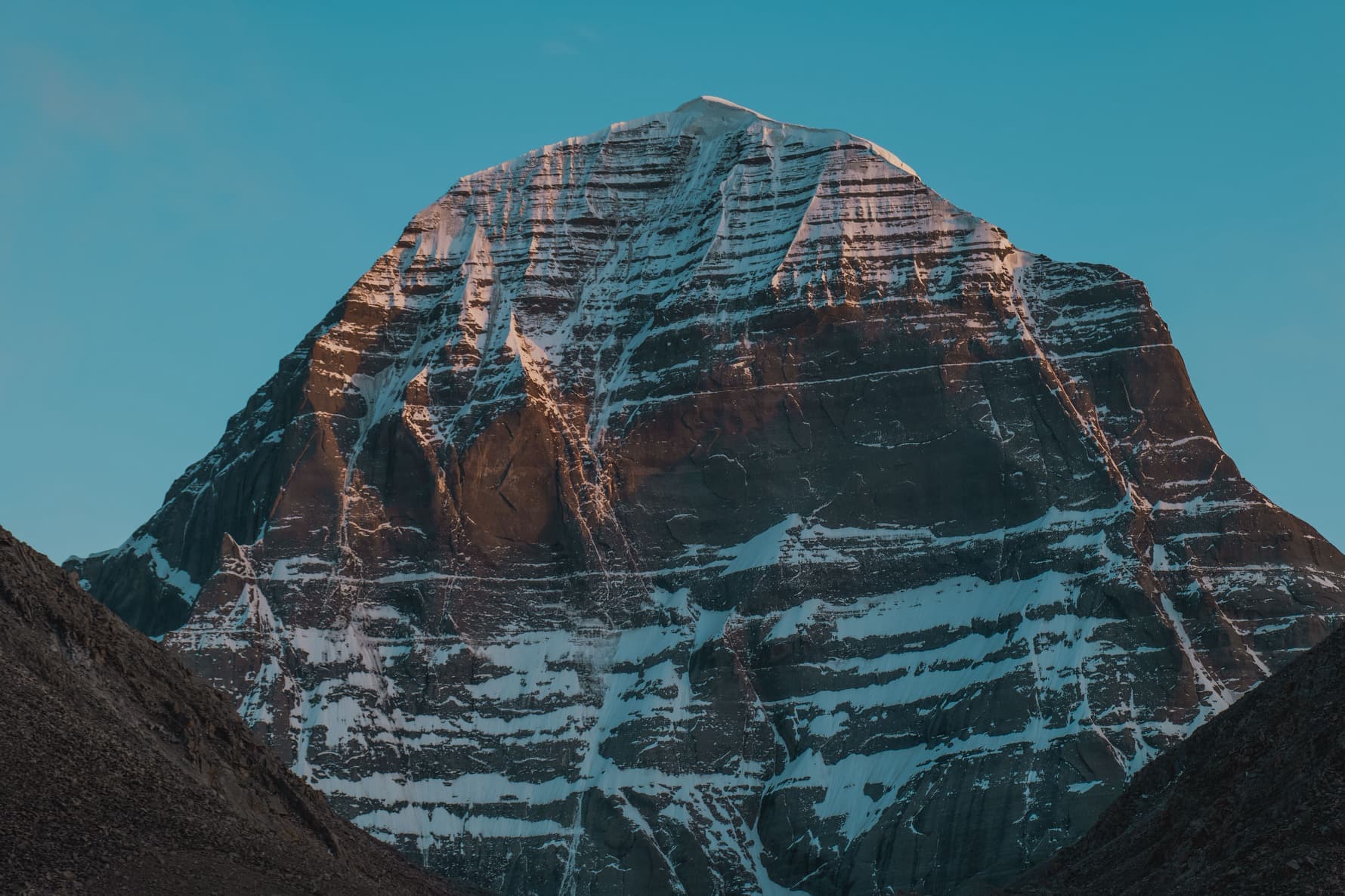
The Ngari region (阿里) is about 1,200 km from Lhasa. The journey takes 3–4 days one way, with altitudes remaining above 4,500 m most of the time. Here you'll find Mount Kailash (冈仁波齐, 6,638 m), a sacred mountain for four religions (Buddhism, Hinduism, Bon, Jainism). Pilgrims perform the kora (circumambulation clockwise, 52 km, usually over 3 days). It is physically demanding, with the Drolma La Pass at an altitude of 5,630 m. For more details, see the article on the pilgrimage tour to Kailash. Lake Manasarovar (玛旁雍错, 4,590 m) is a sacred lake at the foot of Kailash, with clear waters and white sandy shores. Pilgrims bathe and fill bottles with water. Lake Rakshas Tal, known as the lake of demons in legend, is nearby Manasarovar but has salty and lifeless water, providing a stark contrast.
Logistics: only an organized tour with a full package of permits, Land Cruiser jeeps, fuel reserves, and oxygen tanks. Mobile coverage is almost non-existent, and medical facilities are rare. Our groups travel with an experienced Tibetan guide, and having a cook to provide hot meals at stops is critical for recovery.
Climate, Altitude, and What to Bring
Altitude and Acclimatization
The minimum altitude in Lhasa is 3,650 m, with most passes ranging from 4,500 to 5,500 m, and Kailash and the Everest Base Camp above 5,000 m. Typical symptoms of acute mountain sickness (AMS) include headaches that worsen by evening, nausea, loss of appetite, shortness of breath with minimal exertion, insomnia or excessive drowsiness, and dizziness.
- What helps:
- Slow ascent: if possible, take the train instead of flying. The first 2 days in Lhasa should have a light schedule, drink plenty of water, and avoid alcohol.
- Diamox (acetazolamide): a preventative for AMS, taken a day before ascent and for 2–3 days after. It requires a doctor's prescription and has contraindications.
- Water: 3–4 liters per day. Dehydration exacerbates symptoms.
- Breathing: slow, deep breaths through the nose. Don't rush, even if the group is moving faster.
- Sleep: keep your head slightly elevated (place your backpack under your pillow).
Warning signs (requiring immediate descent and medical attention): coughing up pink foam, confusion, inability to walk straight, bluish lips. These are signs of pulmonary or cerebral edema and are life-threatening.
Weather and Seasons
- April–May: end of winter, daytime temperatures in Lhasa reach +10…+15 °C, while nights are around 0 °C. At altitudes >5,000 m, expect snow and wind. The Saga Dawa season (full moon in May/June) marks the peak of pilgrimage to Kailash.
- June–August: rainy season in the south (Lhasa, Shigatse), but western Tibet (Kailash) remains dry. Daytime is warm (+20 °C), while nights are +5…+10 °C. Cloudy with reduced visibility.
- September–October: the best time. Clear skies, stable weather, and comfortable temperatures (+15 °C during the day, -5 °C at night at altitude). Groups are full, and tickets are more expensive.
- November–March: cold (-10…-20 °C at night), with many passes closed due to snow. Monasteries operate, there are few tourists, prices are lower, but physical demands are high.
Packing List (Checklist)
- Clothing (layers): thermal underwear (top + bottom), wool or synthetic materials, no cotton. Fleece jacket or down vest. Windproof and waterproof jacket (Gore-Tex or similar). Warm hat, gloves, neck buff. Trekking shoes (well broken-in!), a spare pair of socks for each day. Sunglasses (UV 400, category 3–4) as the sun at altitude can burn the retina in an hour. SPF 50+ sunscreen, lip balm with SPF.
- First aid kit: Diamox (by prescription). Pain relievers (ibuprofen, paracetamol). Anti-diarrheal (loperamide), activated charcoal. Band-aids, gauze, antiseptic. Personal medications (enough for the entire tour + 3 days).
- Electronics and documents: Power bank (outlets in guesthouses may not work). Headlamp. Photocopies of your passport, Chinese visa, TTP (keep separately from originals). Cash in yuan (ATMs are rare outside Lhasa; Visa/MasterCard often do not work; WeChat Pay/Alipay require a Chinese bank account).
- Miscellaneous: 1–1.5 L bottle (stay hydrated). Wet wipes, antibacterial gel (running water for handwashing is not available everywhere). Thermos for tea (available in Lhasa, but it's more convenient to bring your own). Sleeping bag (comfort -10 °C, if you are going to Kailash or Namco).
Culture, Etiquette, and Safety
In Monasteries
Circumambulating holy sites (stupas, temples, prayer wheels) should always be clockwise (except in Bon monasteries where it is counterclockwise). Remove your headgear when entering a temple. Do not photograph inside without permission. If a monk nods, it is allowed, but turn off the flash. Do not touch statues, thangkas (scrolls), or ritual items. Donations: small bills (1, 5, 10 yuan) should be placed in bowls before the altar or handed to a monk.
With Locals
Tibetans are friendly, but political topics (the Dalai Lama, independence, the events of 2008) are taboo. Authorities monitor conversations, and locals may face issues for candid discussions with foreigners. When taking photos of people, ask with gestures (raise your camera, look questioningly). Older pilgrims usually do not mind, but the youth in cities often feel shy. Do not point at people or sacred objects; use an open palm instead.
Food and Water
- Drinking: only boiled or bottled water. Guesthouses provide thermoses with boiled water for free, fill your bottle.
- Food: in Lhasa and major cities, you can find Sichuan, Chinese, and Tibetan cuisine (momo steamed dumplings, thukpa noodle soup, tsampa barley flour). In remote areas, options are limited: rice, instant noodles, canned foods. Our tours include a cook who prepares hot meals from brought-in supplies in western Tibet.
- Dairy products, raw vegetables: risk of gastrointestinal infections. It’s better to avoid them or wash/peel them yourself.
Communication and Internet
- Mobile communication: China Mobile and China Unicom have coverage in Lhasa, Shigatse, and along main roads. In the mountains (Kailash, Namco, passes), it may drop out occasionally.
- Internet: in Lhasa hotels, Wi-Fi is available (slow). Google, WhatsApp, and Instagram are blocked by the Great Firewall; WeChat works, and sometimes VPNs (but not guaranteed). Telegram may go through without a VPN. Tip: inform your family that you will be unreachable 50–70% of the time while traveling.
Safety
- Crime: low. Thefts are rare, and violence is almost non-existent. Keep documents and money in inner pockets.
- Police: many checkpoints, routine passport and permit checks. Be polite and do not argue.
- Dogs: stray Tibetan mastiffs can be seen in villages and near monasteries. They are calm during the day, but may bark and surround you at night. Do not run or wave your arms; walk slowly, and pick up a stick or stone (just holding it is enough, throwing is unnecessary).
How Much Does a Trip Cost: Estimated Budget
Prices vary greatly depending on group size, season, and itinerary. Below are rough estimates for 2027 (per person, USD):
Permits and Visa
Chinese visa (L, tourist): $30–140 (depending on nationality and consular fees). Tibet Travel Permit: usually included in the tour, the processing cost is $50–100 per person, but the tour agency charges it as part of the package. Permit for Kailash (Alien's Travel Permit, Military Permit): $50–100 if the itinerary includes restricted areas.
Total for documents: $130–340.
Flights and Trains
- Moscow–Beijing–Lhasa: from $500 (economy, with a layover) to $1,500 (direct/business). Beijing–Lhasa by train (Z21, 40 hours): hard sleeper ~$100, soft sleeper ~$150, luxury ~$300.
- Kathmandu–Lhasa: overland transfer by jeep ~$200–400 with a group (visa is processed in Kathmandu).
Accommodation (if traveling independently, outside a tour)
- Lhasa: hostel $10–20/night, 3★ hotel $40–80, 4★ hotel $80–150.
- Shigatse, Gyantse: guesthouse $15–30, hotel $40–100.
- Kailash (Darche), Namco: simple guesthouses $10–25, with shared toilets and cold water. Total for 10 nights (mix of hostels + hotels): $200–600.
Food
- Lhasa: restaurant $5–15/meal, café $3–8.
- On the road: canteens $3–10, snacks (tsampa, tea) $1–3.
- Average budget: $15–25/day, comfortable $30–50/day.
- Total for 12 days: $180–600.
Transport and Guide (independent travel is not possible, only through an agency)
Renting a jeep with a driver (Land Cruiser, 4 passengers): $200–300/day.
- Guide/translator: $50–100/day (mandatory by law).
- Example itinerary Lhasa–Kailash–Lhasa (10 days jeep + guide): $3,000–4,000 for a group of 4 people = $750–1,000/person. Group tour (8–12 days, everything included): $1,500–3,000/person (Lhasa + Kailash); $800–1,500 (only Lhasa + Yamdrok + monasteries).
Additional Expenses
- Entry fees: Potala $40, Jokhang $10, Tashilunpo $8, Samye $8, Milarepa Cave $3, totaling $70–120.
- Kora around Kailash: porter $30–50/day, yak $15–25/day (optional).
- Souvenirs, offerings, donations: $50–200 (optional). Insurance (mandatory!): $30–80 for 2 weeks.
Final Estimate (averaged, 12 days)| Article | Budget | Mid-range | Comfortable |
| -------------------------------------------------------------------------------------------------- | --------- | --------- | ----------- | | Visa + permit | $130 | $200 | $250 | | Flight | $500 | $800 | $1200 | | Tour (Lhasa + Kailash, group) | $1500 | $2000 | $2800 | | Personal meals | $150 | $250 | $400 | | Entrance fees + extras | $100 | $150 | $250 | | Insurance | $30 | $50 | $80 | | TOTAL **** **** **** (Prices are approximate, valid for 2027; please check with the tour operator.) | $2410 | $3450 | $4980 |
Practical Tips: How to Make Your Trip a Success
Preparation Before Departure (2–3 months in advance)
-
Choosing the season and route. April-May / September-October are optimal. Winter is cheaper, but it’s cold and some roads are closed.
-
Booking a tour. Find a reliable agency with experience in Tibet (for example, Jay Shambo tours offers proven routes, acclimatization, 24/7 support). Make sure the package includes permits, a guide, transportation, and some meals.
-
Visa and documents. Apply 1–1.5 months in advance; the agency will send a Letter of Invitation. Make copies of your passport, visa, and insurance, and keep them separate.
-
Medical check-up. Check your blood pressure, heart, and blood. If you have chronic illnesses, a consultation with a doctor is mandatory.
-
Training. Start cardio (running, cycling, swimming) 3–4 times a week for 40–60 minutes, two months in advance. If you plan to trek, practice hiking with a backpack weighing 8–10 kg uphill.
What to Bring: Gear Checklist
Must-Haves
- Documents: passport, visa, printed Tibet Travel Permit, insurance, 3×4 photos (2 spare), cash in USD/CNY.
- Clothing: thermal underwear (2 sets), fleece jacket + down jacket (for temperatures down to -10°C), windproof and waterproof jacket and pants (membrane), trekking boots (broken in!) + sandals. Hat, buff, gloves, UV400 sunglasses. Extra socks (3–4 pairs), underwear.
- First aid kit: Diamox (acetazolamide) prescription from a doctor. Pain relievers (ibuprofen, paracetamol). Broad-spectrum antibiotic (azithromycin). Loperamide, rehydration salts, activated charcoal. Band-aids, gauze, iodine, antiseptic. Sunscreen SPF 50+, lip balm.
- Gadgets: flashlight/headlamp, power bank (20,000 mAh), chargers, adapter (Type A/I for China), camera + spare memory cards.
- Hygiene: wet wipes, sanitizer, toilet paper (rare on the road), toothbrush/toothpaste, soap.
Useful Items Trekking poles (for the kora). Sleeping bag (comfort -5…0°C) if you stay in simple guesthouses at Kailash. Thermos 0.5–1 L (hot tea is a lifesaver on the road). Earplugs, sleep mask (lights in guesthouses). A book, notebook, pen (there will be no internet). Gifts for monks/locals: calendars with views of Russia, ballpoint pens, candies (no chocolate as it melts).
Don’t Bring Extra clothing (there’s nowhere to wash, weight matters). Valuables, jewelry (unnecessary + risk of loss). Political materials, books about the Dalai Lama, Tibetan flags (confiscated at the border, you may not receive your permit).
On the Road: Rules of Conduct
-
Acclimatization is Rule No. 1. Don’t rush, don’t ascend more than 500 m/day in altitude, drink 3–4 liters of water, eat carbohydrates. If you experience severe headaches, nausea, or shortness of breath at rest, inform your guide immediately.
-
Respect for culture: Circumambulate stupas, prayer wheels, and temples clockwise. Don’t step on thresholds, don’t touch altars without permission. Photos of monks and inside halls are only allowed with permission (often prohibited). Dress modestly: shoulders and knees covered in monasteries. Don’t show photos of the Dalai Lama or discuss politics publicly.
-
Photography and video. You cannot film at checkpoints, military locations, or police. Ask locals for permission (a nod is enough).
-
Ecology. Take your trash with you (especially plastics), do not burn it. There’s no recycling in Tibet, take it back to Lhasa / Kathmandu.
-
Communication with family. Inform them that you’ll be offline 50–70% of the time. Agree on checkpoints (Lhasa, Shigatse) for brief messages via WeChat or rare SMS.
Psychological Preparation
- Discomfort is inevitable: cold, fatigue, basic toilets, lack of showers for 3–5 consecutive days. This is part of the experience, not a struggle, but acceptance.
- Loneliness vs group. Traveling in a group means compromises (pace, interests). But mutual support at high altitudes is invaluable.
- Emotional rollercoaster. The first days bring euphoria, by days 3–4, you may feel drained, have headaches, or be irritable. By the end of the week, you find a second wind and deep calm. This is normal.
- Tibet changes you. Many return with a re-evaluation of priorities, inner silence, and new questions. Give yourself time to "digest" after returning; don’t rush back into routine.
Frequently Asked Questions (FAQ)
Can you enter Tibet without a tour, independently?
No. All foreigners are required to travel with an organized tour, a guide, and an official Tibet Travel Permit. There are no exceptions.
Which season is better, spring or autumn?
Both are good. May offers greenery, flowers, and Saga Dawa (full moon); September-October has clear skies, stable weather, and fewer tourists. Avoid July-August (rains, landslides) and winter (cold, closed passes).
Is special physical preparation needed for the kora around Kailash?
Yes. The kora is 52 km, with a height gain of 1200 m, and the maximum point is 5630 m. Without basic stamina (ability to walk 6–8 hours with a backpack), it will be very challenging. Start training 2 months in advance.
Can I travel to Tibet with children?
Technically yes, but it is not recommended for children under 12-14 years old. Altitude, discomfort, and long journeys can be stressful for a child. Teenagers aged 15+ can manage well with good acclimatization.
Is mobile service and internet available there?
In Lhasa and Shigatse, yes (slow). In the mountains (Kailash, Namco, passes), it may drop out periodically. Google and Instagram are blocked; VPN is not guaranteed. WeChat always works.
Is it possible to drink alcohol at altitude?
Not recommended during the first 3–5 days of acclimatization as it increases dehydration and symptoms of altitude sickness. Afterward, in moderation (1 glass of wine/beer). Strong drinks are better avoided.
What should I do if I feel unwell at altitude?
- Stop, sit down, and breathe deeply.
- Drink water, take ibuprofen.
- Inform your guide.
- If you don’t feel better in 30–60 minutes, and shortness of breath worsens, immediate descent or oxygen is required. Don’t be a hero.
Can I bring religious relics from Tibet?
Yes, but: ancient thangkas, statues older than 100 years are prohibited from export without a license. New souvenirs (prayer beads, prayer flags, small figurines) are fine.
How much cash should I bring?
$300–500 for unforeseen expenses, souvenirs, offerings. There are ATMs in Lhasa (UnionPay), but Visa/Mastercard don’t always work. Major expenses (tour, tickets) are paid in advance.
Are yellow fever / other vaccinations needed?
No vaccinations are required for Tibet itself. If flying through Kathmandu / Southeast Asia, check route-specific requirements. Basic vaccinations (tetanus, hepatitis A) are recommended.
Conclusion: Are You Ready for Tibet?
Tibet is not a resort or a checkbox on the “50 countries by 30” list. It is a trial, a pilgrimage, a meeting with oneself at the edge of the world. Here, there is no comfort, fast internet, or simple solutions. But there is a sky that touches the earth, silence that cannot be filled with words, and a strange feeling that you are finally home, even though the language is foreign, the air is thin, and it is 4000 kilometers to your hometown.
Everyone returns from Tibet changed. Some find answers to questions they never asked. Some simply learn to breathe slower and appreciate hot tea in a thermos. Some realize that the most important journeys are within, and the mountains are just a mirror.
If you are ready for cold, altitude, simplicity, and silence, Tibet awaits. If you seek inspiration, strength, or simply want to touch the sanctities that have witnessed a thousand years of prayers, this is the route for you.
Want to travel with an experienced team that knows every pass, every monastery, every detail of acclimatization? Check out our programs – we have been leading groups through Tibet since 2027, assisting with permits, supporting you on the route, and bringing you home whole, with full hearts and a thousand photographs that cannot convey the main thing: the feeling that you have touched eternity.
The next step is to choose your dates, pack your backpack, and say "yes." The rest will follow.
Om mani padme hum. May all beings be happy.
Why Do People Go to Tibet and What to See There?

Tibet is a place where nature and culture are intertwined so tightly that one cannot be separated from the other. High mountains, sacred lakes, and ancient monasteries create an atmosphere that attracts travelers from all over the world. For many, it is a search for spiritual experience and a deep understanding of Buddhist tradition. For others, it is simply a desire to see a world that lives by its own laws.
Unique Nature and Cultural Heritage
Tibet is known for landscapes that literally take your breath away, and it’s not just about the altitude. Here you will find: The Himalayas with Everest and other eight-thousanders visible from the plateau on clear days. Sacred lakes Namco and Manasarovar are considered power spots; people come here for rituals and meditations. Tibetan plateaus are unique ecosystems at altitudes of 4000–5000 meters, home to yaks, kiangs, and rare birds.# Cultural Heritage of Tibet
The cultural heritage of Tibet includes ancient Buddhist monasteries such as Drepung and Sera, where monks still live, engage in debates, and preserve age-old traditions. Within these walls, you can feel the connection from early Buddhism to the present day.
Recommended Places
While traveling in Tibet, you should see: Potala, the former residence of the Dalai Lama, a symbol of Tibetan culture. The palace on the hill impresses with its architecture and history; inside, there are hundreds of halls, statues, and relics. Tashilhunpo Monastery with its 26-meter statue of Maitreya, Ganden with a view of the valley, and Samye, the first Buddhist monastery in Tibet. Sacred Lakes: Namtso (the highest saltwater lake in the world, at 4718 m) and Manasarovar at the foot of Kailash, where pilgrims perform purification rituals.
Honestly, each of these places requires time not only for travel but also to absorb the atmosphere. In our groups, we strive to allow pauses for contemplation rather than rushing to check items off a list.
Program Kailash: Sacred Kora from Lhasa
The kora around the sacred mountain Kailash is both a physical and spiritual journey. This program offers a chance to immerse yourself in Tibetan culture and Buddhist traditions through practice rather than museum displays.
- Duration: 12 days, including acclimatization in Lhasa and time for meditation at Lake Manasarovar.
- Price: from 1200 USD, including accommodation, meals, excursions, and guide support.
- Requirements: a special permit for Tibet is necessary; we arrange it through verified channels, and you only need a passport and a Chinese visa.
- Cost-saving tips: Travel in a group to share transportation and guide expenses. Choose guesthouses instead of hotels (which are simple during the kora). Participate in local pujas and ceremonies, which are free and provide a profound experience.
Visa and Other Expenses
When planning a trip to Tibet, consider:
- Permit: 50–100 USD, depending on the route and season (obtained through a tour operator).
- Transportation: internal flights and jeep rides from 100 USD per person.
- Accommodation: from 20 USD per night in a guesthouse to 200 USD in a comfortable hotel (in Lhasa); simple guesthouses are available around Kailash.
- Meals: 5–20 USD per day, depending on whether you eat in local eateries or tourist restaurants.
Traveling to Tibet is an opportunity to touch ancient culture and gain experiences that are hard to put into words. If this idea appeals to you, take a look at the program Kailash: Sacred Kora from Lhasa or the route Kailash via Nepal: Kora with Gosainkunda, where we start with trekking in the Himalayas of Nepal and approach Kailash from another side.
How to Obtain a Permit for Tibet and Do You Need a Visa?

Traveling to Tibet requires careful preparation, especially regarding permits. Here’s what you should know to avoid surprises at the border.
Permit Acquisition Process: What You Need to Know in Advance
- Permit: A special Tibet Travel Permit is required to visit Tibet, which can only be obtained through a registered tour operator like Jay Shambo. It cannot be obtained independently.
- Timelines: Submit your request at least 2–3 weeks before departure to avoid rescheduling your tickets due to delays.
- Document Copies: You will need scans of your passport and Chinese visa. Check that your passport is valid for at least six months after your return.
Differences Between the Permit and Visa: Who Needs What
- Chinese Visa: Required for entry. It can be tourist, business, or group type; clarify which one suits your itinerary.
- Tibet Permit: Permission to travel within the autonomous region. It is issued only after you have the visa in hand.
- Who Needs What: If you are only going to Tibet, you need a Chinese visa + permit. If you plan to visit Beijing, Sichuan, or other provinces, make sure your visa is not restricted to one region.
Recommendations for Document Preparation and Timelines
- Gather your documents: Passport (valid for at least six months). Chinese visa (depending on your nationality; Russians will need a visa in 2027). A completed application for the permit, usually prepared by the operator.
- Processing Times: Chinese visas take from 5 business days to two weeks, depending on the consulate and season. The permit typically takes 5–10 business days after submitting all documents through the tour operator.
- Practical Tips: Process all documents through one tour operator to avoid overlaps and additional fees. Group trips often reduce the cost of the permit, as operators share administrative expenses among participants. Allow an extra week for unforeseen circumstances, especially if traveling during peak season (April–May, September–October).
Tibet is a territory that changes your perspective on the world and yourself. Honestly, it’s worth making this journey once to understand that no paperwork can compare to what you will see. We have had guests in our groups who postponed their flights twice due to delays with the permit, and they still said it was worth it.
Check out the programs Kailash: Sacred Kora from Lhasa or Kailash via Nepal: Kora with Gosainkunda, where we take care of all document work; all you need to do is pack your backpack.
Can Russians Travel to Tibet and How Does It Work?

Latest Updates on Visa Policy for Russian Citizens
Today, Russians enter Tibet with a Chinese visa and a special permit document; without the permit, even with a visa, you will not be allowed into the autonomous region. The policy changes quickly, so it’s advisable to clarify the current rules with your tour operator one month before your trip.
Three key points: Visa Type: tourist L-category, single or double entry, depending on the itinerary. Validity: your passport must be valid for at least six months after the return date; the visa covers the entire trip. Invitation: the consulate will request an official letter from an accredited Chinese partner; we prepare this as part of the Kora Program around Kailash.
In practice, a visa will not be issued without an invitation, and independent entry into Tibet is impossible; the region is open only for organized groups with a guide.
Permit Acquisition Process: Features and Nuances
The permit is processed by the tour operator after the visa is already in the passport. Here’s the real sequence we encounter in each group:
Step 1: Document Collection Scan of all pages of the passport (valid for at least six months). Scan of the completed Chinese visa. Application form: in English, clear handwriting or typed. A color photo 3.5 × 4.5 cm, strictly on a white background.
Step 2: Timelines Visa at the Chinese consulate takes 7–14 calendar days (Moscow, St. Petersburg, Vladivostok). The permit through Lhasa takes another 5–10 business days after the scans are submitted. In total, plan for a month from submission to receiving the final PDF permit, which we send before departure.
Step 3: Cost Savings and Transparency A group application is cheaper: one permit for five people costs each around 3–4 thousand rubles, while individual processing costs twice as much. Order the visa + permit as a package from one operator to avoid duplicate fees and overpayments to couriers. Check whether the tour price includes the consular fee (around ₽6,000), document translations, and delivery of the original permit to the departure airport, if required.
We handle document preparation within the Kora via Nepal with Gosainkunda program; all you need to do is gather scans and pay the consular fees.
Recommendations for Document Preparation and Timelines
Start 60–90 days before departure. Chinese holidays (New Year, Labor Day, "Golden Week" in October) extend waiting times, and there can be sudden closures of the region for foreigners, which affects timelines.
Check the current requirements on the consulate's website two weeks before submission: the list of documents may sometimes include additional certificates from work, bank statements, hotel bookings. At Jay Shambo, we have up-to-date templates for each season and share them with guests immediately after booking.
Consider hidden budget items: Consular fee ≈ ₽6,000–8,000, depending on the exchange rate. Travel insurance with coverage up to 4,000–5,000 m is necessary; normal tourist insurance does not apply at high altitudes; budget around ₽2,500–4,000 for two weeks. Flights to Lhasa: if you fly through Chengdu or Kathmandu, you’ll need internal tickets; if your layover is shorter than six hours, you might get stuck without your luggage. Agent or visa center fee another ₽2,000–3,000 if you don’t want to go to the consulate in person.
We provide the final estimate before signing the contract, so there are no surprises at the time of departure. If you plan to go to Kailash in spring 2027, start your preparations in January: this way, you’ll have time to gather documents, obtain a visa before the spring holidays, and receive the permit by May.
Tibet requires patience at the paperwork stage but rewards you with the absolute silence of the mountains and the feeling of having touched the edge of the earth. Join us; we will guide you through the entire process from the first scan to the last step of the kora.
How to Get to Tibet from Russia and Reach Kailash?
 # Journey to Tibet: An Adventure Awaits
Traveling to Tibet is always an adventure that begins long before the first step on the mountain trails. To be honest, the logistics here require attention: you need to plan your route, gather documents, and choose transportation. However, it is this preparation that gives meaning to the journey. Let's explore the main options we use in our programs and share experiences on how to make the road to Kailas as simple and safe as possible.
Different Route Options: Through Nepal or China
- Through Nepal. This is the most lively and flexible route, which we recommend to most guests. You fly to Kathmandu, spend a day or two acclimatizing (and if time allows, hike to Gosainkunda Lake), then cross the border and travel across the Tibetan plateau to Kailas. The road passes through Nyalam, Saga, and Lake Manasarovar, where you gradually gain altitude, helping your body adapt. In practice, this route presents fewer acclimatization issues compared to a sudden ascent from Lhasa. Another advantage is that the visa for Nepal is issued upon arrival, with no prior arrangements needed.
- Through China. You can start your journey from Beijing, Chengdu, or Shanghai, fly to Lhasa (or take the train, more on that below), and then head to Kailas from there. This option is suitable for those who want to see the capital of Tibet, Potala, and the Sera and Jokhang monasteries. However, keep in mind: the Chinese visa requires documents to be prepared in advance, an invitation, and the Tibet permit can only be obtained through an accredited operator. Additionally, the steep ascent (Lhasa is already at 3650 m) can be challenging for an unprepared body. We use this route in the program Kailas: Sacred Kora from Lhasa, where we allocate several days for acclimatization in the capital.
Transportation and Logistics: The Easiest Ways to Get There
- Buses and Trains. The train from Chengdu or Xining to Lhasa is a unique experience: oxygen-supplying carriages, panoramic windows, views of passes over 5000 meters. It's romantic, but long (over a day) and physically challenging due to the rapid altitude gain. Buses from Kathmandu to the border run regularly, but they are not very comfortable: narrow winding roads, dust, stops for inspections. Within the Tibetan plateau, public transport is almost nonexistent; everything is handled by private vehicles or tourist buses.
- Private Cars with a Driver. This is standard for any trip to Kailas. We rent reliable SUVs (usually Land Cruisers) with experienced Tibetan drivers who know every pass, every gas station, and every hotel along the route. A car provides freedom: you can stop by a stupa, photograph yaks, or catch your breath at a pass. Without a permit and a guide, you cannot hire such a vehicle due to Chinese authorities' requirements.
- Group Trips. We always organize the journey in the format of a small group (usually 6–12 people), where all logistics are resolved in advance: meetings, transfers, accommodations, permits, and guides. You don’t need to find a driver, negotiate, or explain at the border; everything goes according to a well-established program. This saves energy and nerves, especially at altitude where every little thing can throw you off balance.
Program "Kailas through Nepal: Kora with Gosainkunda" as an Alternative
For those who want to combine pilgrimage with gentle preparation, we have developed the route Kailas through Nepal: Kora with Gosainkunda. First, you trek to the sacred Gosainkunda Lake (4380 m), which is a beautiful, moderately challenging ascent among rhododendrons and prayer flags, gently preparing your body for the altitude. Then you descend to Kathmandu, cross the border, and head to Kailas already acclimatized. This approach reduces the risk of altitude sickness and allows you to experience two worlds: the Nepali Himalayas and the Tibetan plateau in one trip. In practice, guests find the Kora easier if they have trekked Gosainkunda before it.
Recommendations for Document Preparation and Timelines
- Start 2–3 months in advance. The Chinese permit for Tibet is arranged through a tour operator and usually takes 3–4 weeks (sometimes longer if authorities impose restrictions before holidays or political events). The Nepalese visa is issued at Kathmandu airport in 10 minutes, but a group permit is still needed to enter Tibet from Nepal, which we arrange in advance.
- Check current requirements. China's visa policy is changing, especially concerning Russians. Currently (2027), simplified rules apply for group tourist visas, but it's best to confirm 2–3 months before the trip. We monitor all changes and alert guests if anything has changed.
- Consider hidden costs: Consular fees for the Chinese visa (if traveling through China). The permit for Tibet is usually included in the tour price, but confirm in advance. Transportation costs: taxis at the airport, extra services at hotels, porters (if hired). Medical insurance covering altitudes up to 6000 m is mandatory. Standard policies often limit coverage to 4000 m. Additional nights in Kathmandu or Lhasa before/after the program if you want to stay longer.
- Tips for saving: Arrange everything through one operator. Buying a visa separately, a permit separately, and a guide separately will be more expensive and confusing regarding timelines. Join group trips. The permit for a group costs a fixed amount, so the more people, the lower the price per person. Book in advance. Prices for flights to Kathmandu or Beijing are lower 2–3 months before departure, plus we have time to find convenient dates without extra charges for urgency.
The journey to Kailas requires attention to detail, but that's why it becomes a true pilgrimage, both external and internal. We have traveled this route many times, know all the nuances, and will be happy to guide you safely, meaningfully, and without unnecessary fuss. Choose the program that resonates with you: Kailas: Sacred Kora from Lhasa or Kailas through Nepal: Kora with Gosainkunda and prepare for a journey that will stay with you forever.
Common Mistake of Newcomers When Planning a Trip

Every season we have guests who tried to buy a ticket to Lhasa a week before departure and only then learned about the permit. Or they arranged a Chinese visa but forgot to submit documents to the tour operator, resulting in a delayed application, and the group left without them. These mistakes recur year after year, although they can be easily avoided if you understand how entry into Tibet works.
Main Misconceptions
"I will just buy a ticket and go, like to Thailand"
Tibet is not a typical destination. You cannot just arrive at Lhasa airport with only a Chinese visa: you need a Tibet Travel Permit for check-in, which is issued only through a tour operator and only for specific dates. Without it, you will be turned away in Beijing or Chengdu.
"I can obtain the permit myself"
Formally, no. The permit is issued only by a registered Tibetan company, which also adds you to the group list (even if you are traveling alone). Documents are submitted 15–20 days in advance, sometimes longer; the timeline depends on the season and workload of the tourism management.
"A visa to China = admission to Tibet"
A visa is mandatory but not sufficient. In addition, you need a permit, a confirmed itinerary, hotel reservations, and often a guide (especially if the route includes restricted areas like Mount Kailas).
How to Avoid Common Mistakes and Prepare for the Trip
Start three months in advance
Submit a request to the tour operator at least 90 days ahead: visa + permit + tickets + altitude acclimatization. This cushion allows time for readjustment if something changes (for example, if entry is suddenly closed for preventive measures or holidays are moved).
Check requirements before each trip
Rules change without notice. In 2027, the list of documents for the permit and submission deadlines were adjusted several times. Confirm the current requirements with your operator, not on forums from three years ago.
Account for hidden costs
Consular fees for the Chinese visa (around 125–140 USD, depending on the country). Visa center fees (~25–35 USD). Permit fees (~50–90 USD per person, sometimes included in the tour). Additional payment for insurance covering altitudes above 4000 m (regular policies exclude mountains). Transportation within Tibet: private vehicles are mandatory, rental from 200 USD per day for the group.
Simple steps to save
Submit all documents through one tour operator to reduce commissions and simplify coordination. Join group programs: the cost of the permit and vehicle is shared among all participants. Our groups typically consist of 6–10 people, a comfortable size and reasonable budget per person. Take a direct flight to Lhasa (Chengdu–Lhasa) instead of the train if you’re in a hurry: tickets are more expensive, but you save two days and acclimatize more easily.
If you want to understand the route in practice, check out the programs Kailas: Sacred Kora from Lhasa or Kailas through Nepal: Kora with Gosainkunda, where submission deadlines, acclimatization points, and logistics are detailed. Start your preparation early, and you won’t have to pay extra for urgency or reschedule your tickets at the last minute.
FAQ

Planning a Trip to Tibet?
Tibet is a place where nature, culture, and spiritual practice intertwine so closely that the boundary between them blurs. To ensure a smooth trip, allowing you to focus on experiences rather than bureaucracy, it's worth sorting out the details in advance: documents, route, acclimatization.
What are the main requirements for visiting Tibet?For a trip to Tibet, you will need two documents: Chinese Visa which is a regular tourist visa, obtained through a consulate or visa center. Tibet Travel Permit is essential; without it, you simply won't be allowed into the autonomous region. You cannot obtain the permit on your own; it must be arranged through a registered tour operator who submits the documents on your behalf.
How long does it take to get the permit?
Officially, it takes from 10 to 15 working days. In practice, I recommend allowing at least a month before your departure, as there can be delays, especially during the peak season (April–May, September–October). If you plan to do the kora around Kailash, start the arrangements even earlier, as additional approvals may be required for remote areas.
What are the must-visit places in Tibet?
Here are several points that form the "core" of most itineraries: Lhasa, the capital and heart of Tibetan Buddhism. The Potala Palace, Jokhang Temple, and Sera Monastery are here, so it's worth spending at least two to three days for acclimatization and immersion. Kailash is a sacred mountain, around which there is a 52 km kora. For many, this is the main goal of the trip, demanding both physically and spiritually. Namco is a high-altitude lake at 4718 m, a place of power and incredible sunrises. It is suitable for a one-day trip from Lhasa or an overnight stay in a guesthouse by the shore.
If you're interested in the kora around Kailash, check out our programs: Kailash: Sacred Kora from Lhasa (the classic route through Shigatse) or Kailash via Nepal: Kora with Gosainkunda (with trekking in the Himalayas before the kora).
What budget should you plan for a trip to Tibet?
Here is a rough breakdown per person (excluding international flights):
- Visa and permit: 200–300 USD (depends on nationality and how the visa is processed).
- Transportation within Tibet: 30–100 USD per day for jeep rental with a driver, group transfer, or a seat in a shuttle.
- Accommodation: 10–50 USD per night from simple guesthouses to mid-range hotels in Lhasa.
- Food: 10–20 USD per day for Tibetan cuisine, Chinese food, and sometimes Nepalese or Indian in tourist areas.
If you are traveling as part of an organized tour with a guide, accommodation, and transportation included, the total price usually ranges from 1500–3000 USD for 10–14 days (not including airfare).
What are the risks and safety measures when traveling in Tibet?
Tibet is a high-altitude region, and the main risks are related to this: Altitude sickness is the most common problem. Lhasa is at 3650 m, while Kailash is over 5000 m. Be sure to allocate 2–3 days for acclimatization in Lhasa, drink plenty of water, and avoid alcohol and heavy food in the first days. If you experience headaches, nausea, or shortness of breath, do not ascend higher; give your body time to adjust. Weather can be unpredictable with sharp temperature changes, strong sun, wind, and possible precipitation even in summer. Bring warm clothing, sunscreen (SPF 50+), sunglasses, and a hat. Roads and transportation involve mountain serpentine roads, gravel sections, and sometimes floods or landslides. It's better to travel with an experienced driver who knows the route and road conditions.
Honestly, if you prepare in advance, listen to your body, and do not rush, Tibet reveals itself in a calm and safe manner. The key is to respect the altitude and yourself.