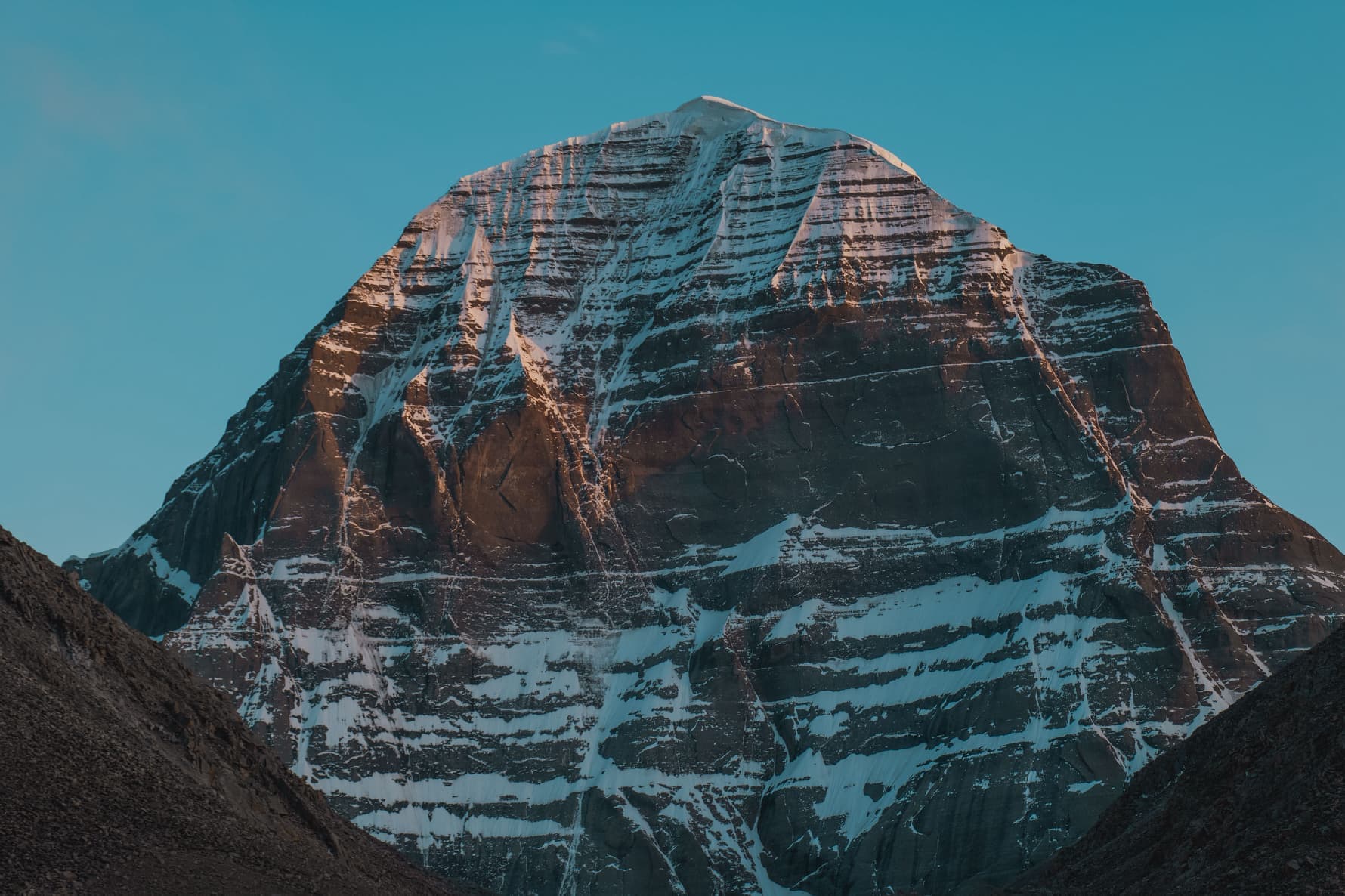
Guide to the Kora Around Kailash: The Traditional Path of Tibetan Pilgrims

Introduction to the Sacred Kora of Kailash

Kailash is the center of the universe for Tibetan Buddhists, a symbol of liberation. The circumambulation of this sacred mountain—kora—purifies karma and brings one closer to enlightenment. Over twelve years, I have witnessed how this 52-kilometer path transforms people: some cry from exhaustion at the Dolma-la Pass, but an hour later, they smile as they witness the first rays of sunlight on the southern face.
The route takes 3–4 days. You will walk through high mountain valleys, past glaciers and Lake Manasarovar, and stop at monasteries where monks live without electricity. Honestly, each step here is a conversation with oneself: the body tires, thoughts quiet down, and silence remains.
What to Bring on the Kora
Footwear
Trekking boots with a stiff sole. Break them in at least a month before the trip—blisters at altitudes of 5000+ meters can become a real problem.
Clothing
Layers: thermal underwear, fleece, waterproof jacket. In the morning, it can be -5°C, while during the day it may reach +15°C in the sun. A warm hat and gloves are essential—the wind at Dolma-la cuts through.
Water and Food
At least 2 liters of water a day (in practice, you will need more). Water purification tablets, light snacks: nuts, dried fruits, energy bars. Hot tea from a thermos at the guesthouse is a little miracle.
First Aid Kit
Altitude sickness medication (Diamox), pain relievers, blister plasters, antiseptic. Sunscreen SPF 50+ and lip balm are a must—the sun at high altitude is merciless.
Spiritual Supplies
Prayer beads, prayer books, anything that supports your practice. In our group, someone carries a stone from their home altar, while another has recorded mantras.
The kora is an inner pilgrimage. Many participants say that here, between the sky and the stones, they first truly heard themselves.
If you are ready for this experience, take a look at our routes: Kailash: Sacred Kora from Lhasa or Kailash via Nepal: Kora with Gosainkunda—where we include acclimatization and time for practices, allowing body and soul to move in harmony.
Preparing for the Journey

The kora requires preparation—physical, logistical, and internal. This is not a sprint; rather, it is a slow ascent to oneself.
Checklist: Clothing, Medications, Documents
Clothing
— Trekking boots (broken in!)
— Thermal underwear (top and bottom)
— Fleece jacket
— Waterproof jacket and pants
— Down vest or jacket for the evenings
— Warm hat, buff, gloves
— Sunglasses (category 3–4), cap
Medications
— Diamox or similar (for altitude sickness)
— Ibuprofen, paracetamol
— Loperamide (in case of upset stomach)
— Plasters, elastic bandage
— Water purification tablets
— Personal medications (if you have chronic conditions)
Documents
— Passport (valid for at least 6 months)
— Copies of passport and visa
— Medical insurance covering up to 6000 m
— Permits (Tibet Travel Permit—arranged through an agency)
Useful Resources
Maps
Offline maps via Maps.me with the Tibet region pre-downloaded. AllTrails also works, but there's almost no signal—download tracks in advance.
Books
"The Way of White Clouds" by Lama Anagarika Govinda—about the spiritual dimension of Kailash. "Tibet: A Traveler's Guide" by Bradley Mayhew—dry facts and logistics.
Apps
Insight Timer for evening meditations in the tent. A simple voice recorder for jotting down thoughts—many in my group keep audio diaries, which they listen to at home and find surprising.
Acclimatization and Physical Preparation
Acclimatization
Starts a week before the kora. If you go via Lhasa—2–3 days in the city (3650 m), then a gradual ascent. Drink 3–4 liters of water a day, avoid alcohol, and get plenty of sleep. Initial symptoms—headache, nausea—can be alleviated by rest and hydration. If they persist for a day, descending is mandatory.
Physical Preparation
For 2–3 months:
— Walking with a backpack weighing 8–10 kg, 2–3 times a week for 10–15 km
— Climbing stairs or hills
— Squats and lunges (to strengthen knees)
— Cardio: running, cycling, swimming
Honestly, on the kora, endurance and the ability to listen to your body will help you more than strength.
Spiritual Preparation
Find your intention. Why are you going? The answer "because it's beautiful" quickly evaporates on the ascent. Meditate, read mantras, and tune into silence. Kailash resonates with those who come with an open heart.
Our programs—Kailash: Sacred Kora from Lhasa and Kailash via Nepal—include acclimatization, guide support, and time for practices. We don’t rush; we walk together.
Travel Logistics

How to Get to Kailash
Via Lhasa (Tibet)
The classic route. Fly to Lhasa (flights from Beijing, Chengdu, Kathmandu), spend 2–3 days acclimatizing, then 2 days by jeep (1200 km) to Darchen—a village at the foot of the mountain. The road is tough: winding paths, passes, dust. But the views are an ocean of mountains and sky.
Via Nepal
Fly to Kathmandu, travel to the border at Kodari or Rasuwagadhi (6–8 hours), cross the border, and then continue by jeep through the Tibetan plateau. This is slightly longer but smoother for acclimatization: you can include Lake Gosainkunda and the Langtang Valley.
Time and Cost
— Bus Lhasa-Darchen: 2–3 days, ~500–800 yuan
— Organized tour by jeep: 10–14 days, $1200–2000 (transport, meals, guide, permits)
— Permits are only arranged through an agency; you won't be allowed into Tibet on your own.
Choosing a Tour: What to Look For
— Group Size: 8–12 people is optimal. Fewer can be expensive, while more make it hard to maintain a consistent pace.
— Acclimatization: Should be included in the program (at least 2 days in Lhasa, gradual ascent).
— Guide Experience: Ask how many times they have led groups to Kailash. The guide should know the symptoms of altitude sickness and be able to make decisions.
— Meals: Clarify what’s included. Good tours provide hot meals three times a day plus snacks.
— Support: Is there communication, a medical kit, backup transport?
Jay Shambo Services
We guide groups of 8–15 people. Meals: breakfast, lunch, dinner—a mix of Tibetan cuisine and vegetarian dishes (momo, thukpa, rice with vegetables). On the kora, we cook over a fire or in guesthouses—simple but satisfying.
Our guides are practitioners who have walked Kailash multiple times. We monitor each participant's condition, adjust the pace, and allow time for meditations and rest. Evening circles—sharing experiences, supporting each other.
Communication is limited (WeChat works in Darchen, but beyond that—silence), but we have a satellite phone for emergencies. A medical kit, oxygen cylinders—all are provided.
If you wish to join, check out the program through Lhasa or via Nepal with Gosainkunda. We create conditions for you to focus on the journey, not the everyday challenges.
Pilgrims' Experiences

Real Stories from Participants
Olga, 2023: "The first day was euphoria, the second—my legs were falling off, I cried from exhaustion at Dolma-la. After descending, I felt reborn. Every prayer at altitude sounded different, as if someone was listening."
Dmitry, 2024: "I’m an experienced traveler and thought it would be easy. The altitude threw me off. I learned to stop every 50 meters, breathe, and look at the stones. It turned out this is meditation—moving slowly, without rushing."
Anna, 2025: "There was a 62-year-old woman in the group. She walked slower than everyone but made it. We supported her, carried some of her things. In the end, she said: 'I realized that age is not a barrier if there is intention.' That inspired me a lot."
Spiritual Practices on the Path
We start the day with a short meditation at the foot of the mountain—15–20 minutes of silence, focusing on the breath. During breaks, we read mantras (Om Mani Padme Hum, if the Buddhist tradition resonates with you, or we simply sit in silence).
In the evening—discussion circles. Some share insights, others listen quietly. There are no right answers; there is honesty before oneself. These circles bring the group closer—you understand that you are not alone in your doubts and discoveries.
At the Dolma-la Pass (5630 m)—a moment for personal prayer or intention. Tibetans leave lungta (prayer flags) here; we suggest writing your wish or gratitude on a piece of cloth and tying it to a pile of stones. This simple ritual solidifies the experience.
How to Overcome Difficulties
Physical
— Listen to your body. Knee pain—slow down, use trekking poles.
— Altitude sickness: if your head is pounding, you feel nauseous or dizzy—stop, drink water, take Diamox. Don’t hesitate to tell your guide.
— Fatigue: break the path into segments. "I’ll reach that boulder," then to the next one.
Mental
— Doubts are normal. "Why did I come here?"—a question everyone asks. The answer doesn’t come immediately; sometimes it arrives after returning.
— Intention: remember why you are here. You can write it down in your phone or notebook and reread it in tough moments.
— Group: don’t isolate yourself. Share your feelings, ask for help. In our groups, there is always someone who will encourage you or simply walk alongside you.Spiritual
Kailash can "open up" old experiences — fears, grievances, unprocessed grief. This is normal. Allow yourself to feel, don’t suppress it. Evening meditations and circles help integrate the experience.
If you are ready for this journey — both external and internal — I invite you to the kora from Lhasa or through Nepal. We walk together, at our own pace, with respect for each participant.
Safety During the Kora

Safety is not just about having a first-aid kit and insurance; it’s about being mindful of yourself and those around you. At an altitude of over 5000 meters, the body operates at its limit, and small things can become critical.
Nutrition
What to Eat
— Carbohydrates: rice, noodles, momo (Tibetan dumplings), tsampa (barley flour). They provide quick energy.
— Protein: nuts, cheese, eggs (if available). At high altitudes, appetite decreases — eat little but regularly.
— Hot drinks: tea (black, herbal), soups. They warm you up and help avoid dehydration.
What to Avoid
— Heavy food (fried meat) — it takes a long time to digest and drains energy.
— Alcohol — it intensifies symptoms of altitude sickness.
— Raw water: only boiled or filtered.
In our tours, we cook ourselves or order from trusted guesthouses. If you have food allergies or strict dietary preferences — let us know in advance, and we will adjust the menu.
Health
Before the Trip
Get a check-up: ECG, general blood test, consultation with a therapist. Contraindications: severe cardiovascular diseases, asthma in an exacerbation stage, recent surgeries.
Vaccinations
None are mandatory, but recommended: Hepatitis A, Tetanus. Check with a travel clinic.
First-Aid Kit (minimum)
— Diacarb (altitude sickness prevention)
— Ibuprofen, Paracetamol
— Loperamide (for diarrhea)
— Band-aids, antiseptic, elastic bandage
— Sunscreen SPF 50+, lip balm
— Personal medications
Altitude Sickness (symptoms)
— Headache that doesn’t go away after resting
— Nausea, vomiting
— Dizziness, weakness
— Shortness of breath at rest
What to Do
— Stop, rest, drink water
— Take Diacarb
— Do not ascend higher until symptoms pass
— If there is no improvement in 12–24 hours — descending is mandatory
Our guides always carry oxygen and have communication for evacuation calls (though in 12 years, it has never been needed — acclimatization works).
Communication with Locals
Tibetans are friendly but reserved. A few rules:
— Photos: ask for permission, especially from monks and elderly people. Many do not like cameras.
— Monasteries: take off your shoes at the entrance, walk around stupas and prayer wheels clockwise, do not touch altars.
— Money: if you buy souvenirs or tea, negotiate gently, without aggression. Prices are usually fair.
— Language: learn a couple of phrases: “Tashi Delek” (hello), “Tudjeche” (thank you). A smile is a universal key.
Unexpected Situations
Feeling Unwell
Inform your guide immediately. Don’t be a hero — it’s better to rest a day than risk descending.
Loss of Orientation
The kora path is well-trodden, but if you fall behind the group:
— Stop, do not leave the path
— Contact via radio (we provide them in groups) or phone (if there is a signal)
— Wait for help — we will find you
Medical Evacuation
There is a basic clinic in Darchen. In emergencies — evacuation to Lhasa or Kathmandu (helicopter, ~$5000–10000; covered by insurance with altitude limits).
Jay Shambo Support
Our guides are available 24/7. Each guide has a first-aid kit, oxygen, and a satellite phone. There is always a backup jeep in the group that can reach a point along the route (where there is a road).
Emergency service numbers (Tibet):
— Police: 110
— Ambulance: 120
— Our hotline: provided before departure
Safety is not paranoia; it is respect for the mountain and for yourself. Prepare, listen to your body, trust the team.
Learn more: Kailash from Lhasa, Kailash through Nepal.
Frequently Asked Questions

How many days does the kora take?
The standard kora takes 3 days (52 km). The first day: Darchen – Lha-chu valley (20 km, overnight at a guesthouse). The second: ascent to Dolma-la pass (5630 m) and descent into Lham-chu-khir valley (22 km, the hardest day). The third: return to Darchen (10 km, easy).
Some Tibetans complete it in one day — this is called the "inner kora," available only to experienced practitioners after 13 external koras. For beginners, I recommend the standard 3 days: you have time to acclimatize, feel the place, and don’t overexert your body.
What level of physical fitness is required?
An average level. If you can walk 15 km with an 8–10 kg backpack over rough terrain — you will manage. The key is endurance and the ability to listen to your body, not sprinting speed.
2–3 months before the trip: walk with a backpack 2–3 times a week, climb hills, do squats to strengthen your knees. Cardio (running, cycling) improves breathing — useful at altitude.
Contraindications: serious heart or lung problems, recent injuries or surgeries. Consult your doctor.
When is the best time to go?
April–May and September–October are the golden times. The weather is stable, daytime temperatures are +10…+15°C, and nighttime around 0°C (at the pass -5…-10°C). The sky is clear, and there is little snow.
June–August is the rainy season; roads can be washed out, and it’s cloudy. You can go, but the risk of bad weather is higher.
November–March is winter, down to -20°C, snow, and the Dolma-la pass may be closed. Suitable for experienced winter travelers, but not for first-timers.
High season (May, September) — more pilgrims, guesthouses are busy. We book in advance.
Cultural Features
Respect for Sacred Places
— In monasteries: take off your shoes, do not touch altars, photograph only with permission.
— Stupas and prayer wheels: walk around clockwise.
— Do not step on the thresholds of temples (considered disrespectful).
Dress Code
Shoulders and knees should be covered in temples. Better to avoid shorts and sleeveless shirts altogether — Tibet is conservative.
Photos
Many Tibetans do not like cameras (especially the elderly and monks). Ask with a gesture, do not insist. For photos inside monasteries, sometimes a donation is requested — 20–50 yuan.
Language
“Tashi Delek” (hello/goodbye), “Tudjeche” (thank you), “Ka-le-pey?” (how are you?). A smile opens more doors than a guidebook.
Do Not
— Do not criticize religion or politics.
— Do not publicly display photos of the Dalai Lama (this is officially banned in Tibet).
— Do not leave trash on the trail — sacred places should remain clean.
How to Register for the Program?
- Go to jayshambo.com and choose a route (through Lhasa or Nepal).
- Fill out the registration form: name, contacts, dates, preferences (diet, fitness level).
- Make a deposit (usually 30% of the tour cost) — details will be sent to your email.
- We will send a detailed program, a packing checklist, and preparation recommendations.
- One month before departure — final briefing via Zoom: we answer questions and introduce the group.
Contacts
— Email: info@jayshambo.com
— Telegram/WhatsApp: provided on the website
— We will respond within 24 hours
Feel free to ask questions — even if they seem "silly." We have been leading groups for 12 years and know: it’s better to ask 10 times than to face surprises at altitude.
The kora around Kailash is not a tourist route; it is a practice.