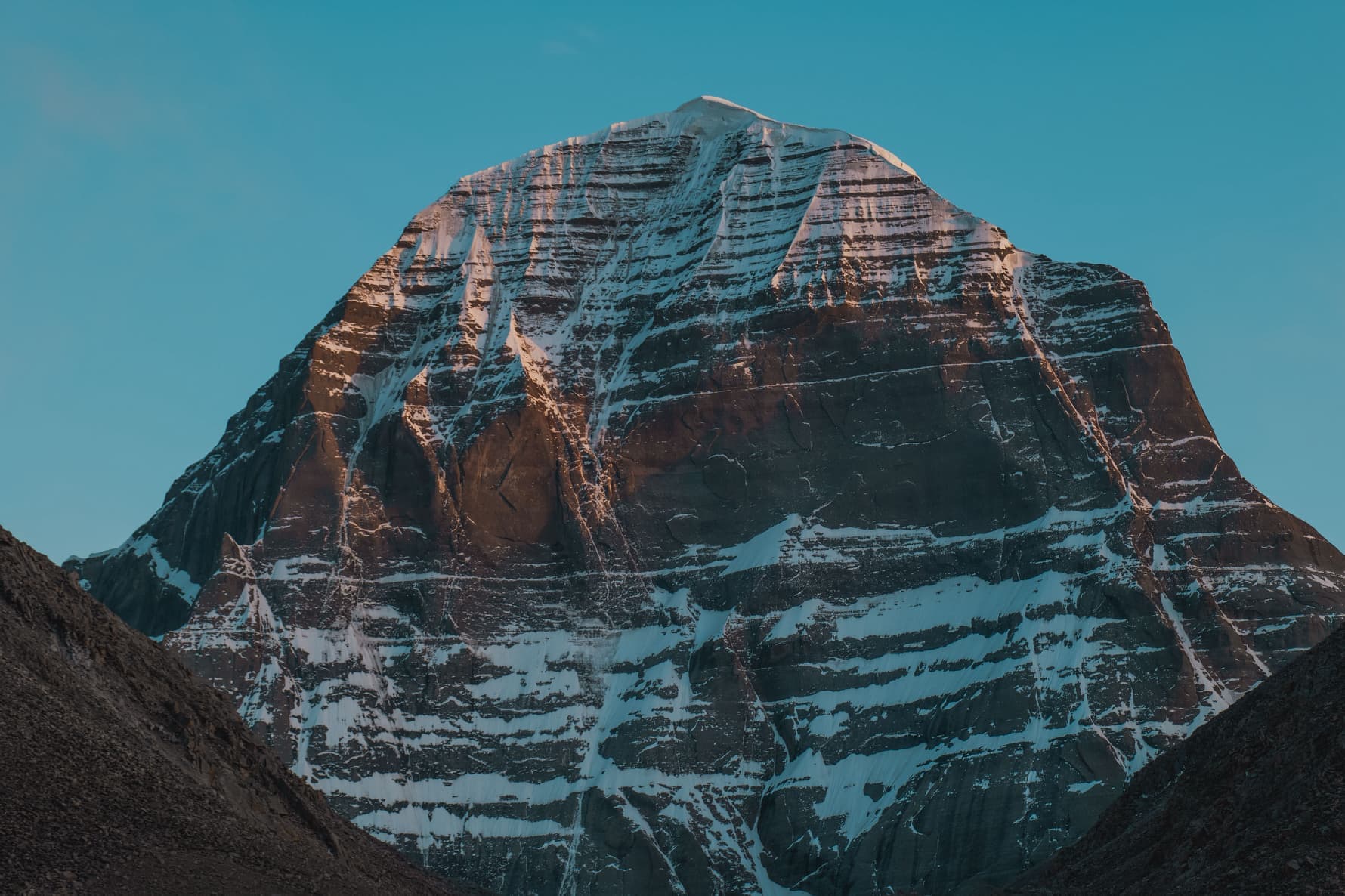
Journey Around Kailash: A Complete Guide to the Kora from Lhasa, Tibet

Introduction to the Sacred Kora of Kailash

Mount Kailash is the sacred heart of several religions, not just a majestic peak in Tibet. For Hindus, it is considered the abode of the god Shiva, for Buddhists it symbolizes the sacred Mount Meru, while Jains and Bonpos see it as the embodiment of the ideal of purity. This place attracts pilgrims and travelers from all over the world who seek to connect with its spiritual heritage.
The kora around Kailash is a 52-kilometer route at an altitude of over 4500 meters, symbolizing deep experiences and personal transformation. The pilgrimage encompasses both physical challenges and inner work, offering a unique opportunity to witness stunning nature and undergo a life-changing experience. Each year, the number of participants grows, and there are good reasons for this.
Why the Kora Attracts More and More People
The kora around Kailash has universal appeal. Honestly, this place is becoming more accessible due to infrastructure development in Tibet, but the main reason is that people are searching for more than just a vacation. They are looking for an experience that will help them find themselves, reassess their values, pause, and hear the silence within.
The journey requires serious preparation. Altitude reaches over 5000 meters at the Drolma La Pass, and this is not just a number. I recommend consulting a doctor about your health condition in advance, especially if you have chronic illnesses, and ensure proper acclimatization.
Practical Tips Before Starting the Kora
Before embarking on the pilgrimage, consider several aspects that will practically determine the success of your journey.
Acclimatization: Spend at least 2-3 days in Lhasa (3650 m) before moving higher. The first day should be without active exertion, drink more water, and eat light meals. Your body needs to adapt to the thin air; otherwise, the risk of altitude sickness significantly increases.
Equipment: Quality trekking shoes with a stiff sole and ankle support, thermal underwear, a waterproof jacket and storm jacket, a sleeping bag rated to -10°C (it gets cold at the pass even in summer), trekking poles, and UV-filter sunglasses. A first aid kit should include Diamox (for altitude sickness), pain relievers, blister plasters, antiseptic, and medications for gastrointestinal issues.
Financial Matters: The budget for a 10-14 day pilgrimage from Lhasa ranges from $1200 to $2000 per person. This includes transportation, permits, accommodation, meals, and guide services. Set aside an additional $100-200 for unforeseen expenses and souvenirs.
Documents: Prepare your passport (valid for at least 6 months), a Chinese visa, a Tibet Travel Permit (arranged through a tour operator 2-4 weeks in advance), and an Alien's Travel Permit for remote areas. Without these documents, you will not be allowed on the route.
The journey around Kailash is both a physical challenge and a deep spiritual experience. If you are ready to embark on this adventure, join our program Kailash: Sacred Kora from Lhasa, which includes everything you need for a comfortable and safe pilgrimage.
Explore the sacred lands and discover your inner world with us.
Preparing for the Journey: What You Need to Know

The journey around the sacred Mount Kailash is both a physical challenge and a deep spiritual experience. To prepare for this adventure, it is important to consider several key aspects that will practically determine the success of the entire route.
Documents and Permits for Visiting Tibet
To travel to Tibet, you will need a special permit — the Tibet Travel Permit, which can only be obtained through registered tour operators. This usually takes 2 to 4 weeks, so make sure to take care of this in advance.
You will need: a valid passport (minimum 6 months until expiration), a Chinese visa, the Tibet Travel Permit, and an Alien's Travel Permit for remote areas, including western Tibet and Kailash. Without these documents, you will not be allowed through checkpoints on the route.
Note: Permitting is only possible through a tour operator working with Chinese partners. Self-obtaining these permits is practically impossible.
Packing List for the Trip
Choosing the right gear is key to a comfortable journey. Here are the essential items based on our field experience with groups:
Footwear and Clothing: Trekking boots with a stiff sole and ankle support (break them in beforehand!), spare trekking shoes, thermal underwear (top and bottom), a fleece jacket, a down jacket, a waterproof storm jacket and rain pants, a warm hat, gloves, and a buff or scarf.
Equipment: A sleeping bag rated to -10°C (it gets cold at the pass even in summer), trekking poles (to relieve knee stress on descents), a headlamp, UV400 sunglasses, sunscreen SPF 50+, and a thermos.
First Aid Kit: Diamox or acetazolamide (for altitude sickness), ibuprofen, blister plasters (lots of them!), antiseptic, activated charcoal, loperamide, and individual medications as prescribed by a doctor.
Documents and Money: Copies of your passport and permits (in case of loss of originals), cash in yuan (cards are not accepted everywhere), a power bank, and chargers.
Don't take extra items — every additional kilogram is felt at altitude. The weight of your backpack should not exceed 10-12 kg.
Acclimatization and Physical Preparation
Acclimatization is not a formality; it is a matter of safety and comfort. We recommend spending at least 2-3 days in Lhasa (3650 m) before starting the kora. Your body needs time to adapt to the thin air; otherwise, the risk of altitude sickness significantly increases.
The first day in Lhasa should be without active exertion, drink plenty of water (3-4 liters per day), eat light carbohydrates, and get a full night's sleep. On the second day, you can take a light stroll around the city, visit monasteries (Jokhang, Sera, Drepung), but avoid climbing.
Physical preparation should begin 2-3 months before the trip. Include regular walks with a backpack (5-7 kg), running or cycling for cardio, squats, and leg exercises in your schedule. The goal is to build endurance, strengthen leg muscles, and get used to prolonged walking.
If you cannot train in the mountains, simulate the load: climb stairs with a backpack, walk briskly for long distances (10-15 km). The key is consistency, not intensity.
If you want to complete the kora around Kailash comfortably and in the company of like-minded individuals, check out our program Kailash through Nepal: Kora with Gosainkund. We will provide everything necessary for your comfort and safety in this remarkable journey.
The journey around Kailash is a sacred adventure that will be remembered for a lifetime. Prepare for it with care for yourself, and it will become a source of strength and inspiration.
Route Logistics: How to Get to Kailash

Traveling to Tibet, especially to the sacred Mount Kailash, requires careful preparation and understanding of logistics. Let’s start with routes from Lhasa — the main departure point for most travelers.
Routes from Lhasa
There are several ways to get from Lhasa to Kailash. In practice, the most reliable and proven options look like this:
Bus via Saga: Direct bus routes depart from Lhasa to Saga, where you can transfer to local transport to Darche, a village at the foot of Kailash. The travel time is about 2 days with overnight stops. The schedule can change depending on the season, so check in advance.
Private Transport with a Driver: If you value comfort and flexibility, consider renting an SUV (usually a Land Cruiser) with an experienced driver. This allows you to make stops at interesting places: at Yamdrok Lake, in Shigatse (Tashilhunpo Monastery), in Saga, and Paryang.
Travel time is 2-3 days, including stops for acclimatization and overnight stays. The cost of renting a car ranges from $150 to $200 per day.
Train to Shigatse: There is no direct train service to Kailash, but you can take a train to Shigatse (the second largest city in Tibet), and from there continue by bus or private transport. This is a convenient option for the first stage of acclimatization.
In practice, most groups choose private transport, as it allows for control over the pace of the journey and the opportunity to adapt to the altitude gradually.
Features of Traveling in Tibet
Traveling in Tibet has its nuances. The altitude at which your journey begins and the varying climatic conditions can significantly affect comfort.
Altitude: The route goes from 3650 m (Lhasa) to 5630 m (Drolma La Pass). Many sections of the road lie above 4500 m. Be sure to monitor how you feel: headache, nausea, or shortness of breath are signs of impending altitude sickness. If necessary, take breaks, drink more water, and do not rush your pace.
Roads: The quality of the roads ranges from well-maintained sections to difficult dirt paths with bumps and washouts. After rains, some roads can become impassable.
We recommend choosing vehicles with good suspension (Land Cruiser, Mitsubishi Pajero) and experienced drivers who know the route.Weather: Even in summer (May to September), conditions can change dramatically.
During the day, it is sunny and warm (+15…+20°C), but at night, temperatures can drop to 0°C or lower. In high-altitude areas, snow, rain, and strong winds are possible at any time of the year. Bring warm and waterproof clothing.
Checkpoints: There are several checkpoints along the route where documents (passport, Tibet Travel Permit, Alien's Travel Permit) are checked. Always keep the originals with you and store copies in your luggage in case of loss.
The Role of Local Guides and Assistance
Having a local guide is not just a formality; it is a matter of safety and quality of experience. Guides know the route, weather conditions, cultural specifics, and can assist in emergencies.
Route Organization: Guides know the best places to stop, can avoid difficult sections, and adjust the pace to be comfortable for the group. This is especially important at altitude, where every extra kilometer requires effort.
Language Barrier: Locals in remote areas do not speak English. A guide will help you interact with the locals, explain customs, and share stories about sacred sites and monasteries. This enriches your experience and allows you to gain a deeper understanding of the culture.
Safety: A guide knows where to turn in emergency situations, has connections with local medical facilities, and can administer first aid. This is critical at high altitudes.
Permits: Without a guide, you will not be able to obtain the necessary permits to visit Tibet and the western regions. This is a mandatory condition for entry.
If you are ready for this amazing journey, check out our program Kailash: Sacred Circumambulation from Lhasa. We organize everything—from documents to transport and assistance—so you can focus on your experience and enjoy the beauty of Tibet.
Safety and Health While Traveling

Traveling in Tibet, especially during the circumambulation around the sacred mountain Kailash, requires special attention to safety and health issues. Altitude, climatic conditions, and the peculiarities of local infrastructure create certain risks that are important to know in advance.
Risks Associated with Altitude and Climate
The altitude in western Tibet reaches 5630 meters at the Drolma La Pass. This is a serious height where many experience symptoms of acute mountain sickness (AMS): headaches, nausea, dizziness, fatigue, and sleep disturbances. In rare cases, more dangerous forms may occur—high-altitude pulmonary edema (HAPE) or cerebral edema (HACE).
To minimize risks, follow proven guidelines:
Gradual Acclimatization: Spend at least 2–3 days in Lhasa (3650 m) before heading to Kailash. Do not try to ascend immediately—your body needs time to adapt. In practice, we have seen people who skipped this stage forced to interrupt their circumambulation on the first day.
Drink Plenty of Water: At altitude, the body loses moisture faster. Drink 3–4 liters of clean water a day, and avoid alcohol and caffeine, which exacerbate dehydration.
Avoid Physical Strain in the First Days: Give your body time to adjust. For the first 2–3 days, take easy walks without climbing or running.
Listen to Your Body: If you experience severe headaches, nausea, or shortness of breath at rest—inform your guide. Do not hesitate to take breaks, slow down, or even descend if symptoms worsen.
The climate in Tibet is sharply continental: it is sunny and warm during the day (+15…+20°C in summer), but at night, temperatures can drop to 0°C or lower. Snow, rain, and strong winds can occur at any time of year at the pass. Bring warm and waterproof clothing, thermal underwear, and a down jacket.
How to Avoid Health Problems During Circumambulation
Preparation for the trip begins long before departure. Here are some factors that practically help maintain health and enjoy the journey:
Vaccinations: Consult a doctor before your trip. Vaccinations against hepatitis A and B, typhoid fever, tetanus, and diphtheria are recommended. They are not mandatory but reduce risks.
First Aid Kit: Be sure to bring along: Diamox or Acetazolamide (for mountain sickness, taken prophylactically), ibuprofen or paracetamol (pain reliever, antipyretic), blister plasters (a lot!), antiseptic, activated charcoal, loperamide (for diarrhea), and individual medications as prescribed by a doctor.
Proper Nutrition: Try to choose fresh and reliable foods. Avoid drinking raw water from sources—only drink bottled or boiled water. Tibetan cuisine can be quite heavy (yak meat, tsampa, butter tea), so for the first few days, eat in small portions and prefer carbohydrates (rice, noodles, bread).
Hygiene: Carry antibacterial hand gel and wet wipes. The toilets along the circumambulation route are basic, and there may not be water for washing hands.
Discussing Health Conditions with Your Guide: Do not hide chronic illnesses, allergies, or medications. Your guide should be aware of your specifics to notice any deterioration in time and take action.
Medical Insurance and Required Vaccinations
When traveling to remote regions like Tibet, having medical insurance is essential. Make sure your insurance covers:
Emergency Medical Assistance at Altitude: treatment for acute mountain sickness, injuries, infections.
Helicopter Evacuation: in case of severe conditions (HAPE, HACE, fractures), evacuation to Lhasa or Kathmandu may be necessary. This is expensive (from $5000 to $20,000), so your insurance should cover this risk.
Possible Trip Cancellation Expenses: if you fall ill before departure or need to interrupt your journey.
Carefully review the terms of your insurance. Some policies exclude coverage at altitudes above 4000–5000 m or for "extreme activities". Choose specialized insurance for trekking and high-altitude travel.
In addition to insurance, review the information on vaccinations that may be required for entry into China and Tibet. This will help avoid delays at the border and protect you from infections.
If you want to learn more about traveling in this amazing region, check out our program Kailash: Sacred Circumambulation from Lhasa. We will help organize a safe and comfortable journey so you can focus on your experiences and enjoy the beauty of Tibet.
Budget: How Much Does the Circumambulation Around Kailash Cost

When planning a trip around Kailash, it is important to consider many factors that affect the overall budget. Honestly, it is not the cheapest destination, but the experience is worth it. Here is a detailed breakdown of the main expense items.
Approximate Budget Calculation per Person
Transport
Flight to Lhasa (usually via Chengdu, Beijing, or Kathmandu): from $500 to $900 depending on the season and route. In summer (June–August), prices are higher due to peak demand.
Ground transportation in Tibet: buses or taxis from Lhasa to Darche (the town at the foot of Kailash) cost about $100–250. Renting an SUV with a driver costs from $150 to $200 a day (totaling $450–600 for 3 days on the road).
Accommodation
Overnight stays in Lhasa: from $20 to $60 per night in hostels, guesthouses, or budget hotels. For comfort, budget for 2–3 nights before starting the circumambulation and 1 night after returning.
On the circumambulation route: simple guesthouses or tents—costing from $10 to $30 per night. The conditions are basic (shared dorms, minimal amenities), but this is part of the experience.
Along the way to Kailash (Shigatse, Saga, Paryang): $15–40 per night depending on the level of the hotel.
Food
A standard lunch in a local café costs about $5–7, dinner—$8–12. Budget approximately $20–30 per day per person. Choices are limited on the circumambulation (rice, noodles, momo, tea), and prices are slightly higher due to remoteness.
Permits and Entrance Fees
Tibet Travel Permit and Alien's Travel Permit: arranged through a tour operator, the cost is included in the tour package (usually $50–100).
Entrance ticket to the territory of the Kailash National Park: about $30.
Excursions around Lhasa and its surroundings (Potala Palace, Jokhang Temple, Sera, Drepung monasteries): from $50 to $150 depending on the program.
Total Budget
The average budget per person for a 10–14 day trip: from $1400 to $2200. This includes transport, accommodation, food, permits, and excursions. If you choose an organized tour, the cost may be higher, but you receive full assistance, transport, a guide, and help with documents.
Hidden Costs to Be Aware Of
In addition to the main budget items, there are several hidden costs that may unexpectedly arise:
Visa for China: about $50–100 depending on the type of visa and the country of application.
Additional Excursions: visiting Lake Manasarovar, monasteries along the route, participating in ceremonies—may require additional fees ($10–50).
Medical Insurance: from $40 to $120 depending on coverage. Be sure to choose insurance that covers high-altitude travel.