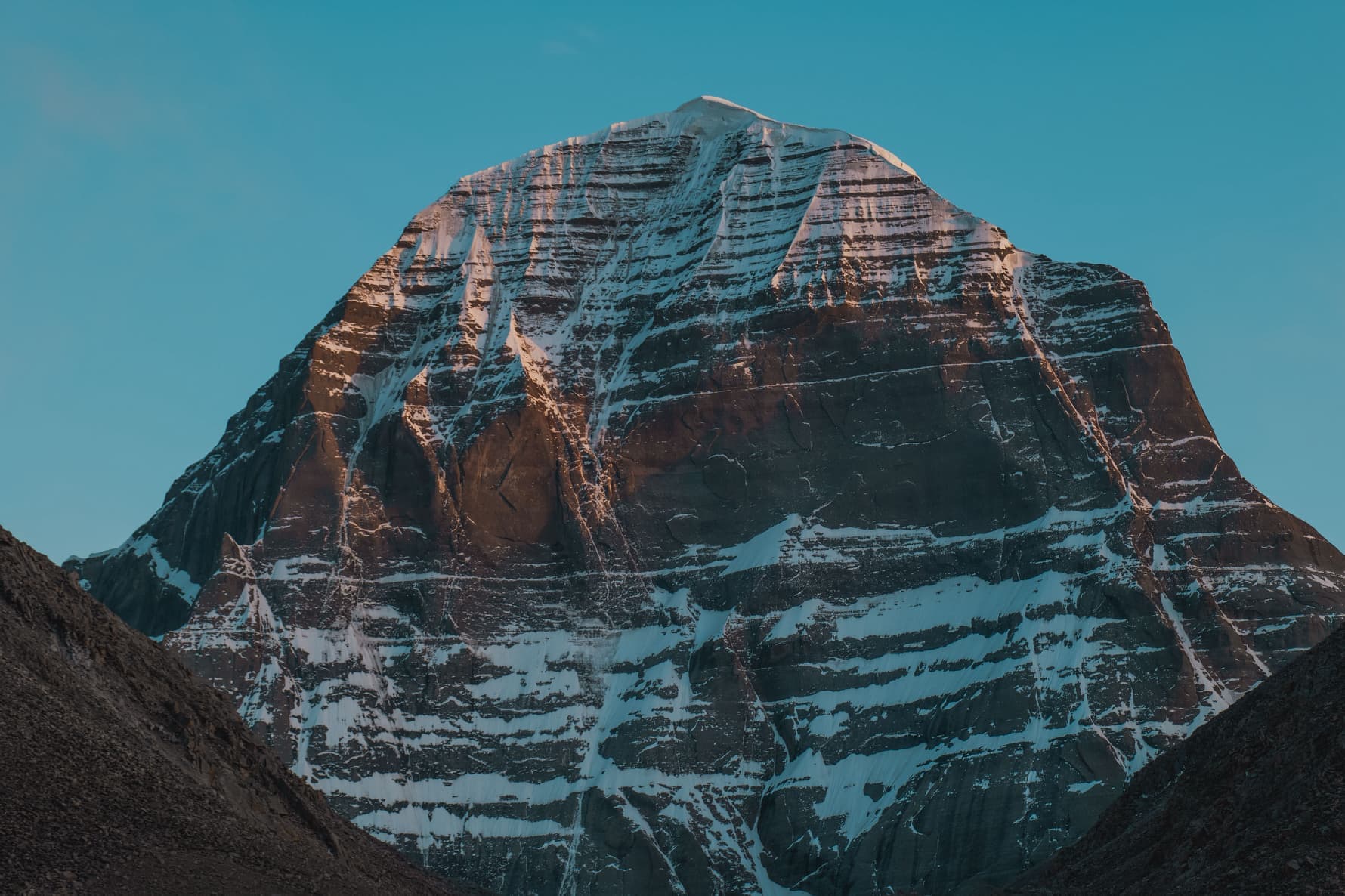
Journey to the Sacred Mountain: Kora Around Kailash and Lhasa in 2026

Introduction to Kora Around Kailash and Lhasa

The Kora around the sacred Mount Kailash is a journey that transforms people. It's not just trekking at an altitude of 5600 meters, but an encounter with something greater than yourself.
Kailash is considered sacred by Buddhists, Hindus, Jains, and followers of the Bon religion. Pilgrims believe that a complete circumambulation around the mountain cleanses the karma of one life, while 108 circuits cleanse all incarnations. In our groups, we have seen monks performing prostrations all the way and Europeans walking silently for three days straight.
Lhasa is the spiritual heart of Tibet. Here stand the Potala and Jokhang, and you can feel history breathing through the stone walls and the scent of juniper smoke. Spending two to three days in Lhasa before starting the Kora is not just a tourist program; it's essential for acclimatization and preparation.
Why
This Journey Attracts Thousands of People Annually
People come here for various reasons. Some seek spiritual experiences and blessings. Others want to test themselves, to walk a route where each step at high altitude requires attention and willpower.
Honestly, Kora does not forgive carelessness. The altitude ranges from 4500 to 5630 meters, weather can change within an hour, and the wind can knock you down at the Dolma La pass. But it’s this honesty of the mountains that draws people in.
Here’s what to understand in advance:
-
Spiritual Practice — walking clockwise (for Buddhists), meditations at dawn, rituals at sacred stones and lakes. This is not mandatory, but the atmosphere encourages it.
-
Nature that Awakens — the turquoise Lake Manasarovar, red cliffs, glaciers on the slopes of Kailash. The landscapes take your breath away (not just from the altitude).
-
Altitude and Acclimatization — most problems on the route stem from underestimating altitude sickness. Headaches, nausea, insomnia are typical in the first few days. We always allow days for adaptation and monitor each participant's condition.
How We Organize This Route
We have been guiding groups to Kailash since 2015. Over this time, we have developed an approach that works: minimal stress, maximum attention to people and conditions.
Here’s what we focus on:
Logistics Without Surprises. All permits, transportation, accommodation, and meals are organized in advance. You will not worry about permits in Lhasa or where to sleep after a 12-hour trek.
Safety and Health. There is always a guide in the group who has done the route many times, a first aid kit with altitude sickness medications, and a pulse oximeter. We monitor pulse and saturation, especially at the passes, and do not hesitate to turn someone back if we see risks.
Pace and Acclimatization. We walk slowly. Groups aiming for records often end in evacuation from Dolma La. Our principle is to give the body time to adapt and the soul to hear the silence.
Cultural Program. Meetings with monks, explanations of rituals, stories of the places. Tibet is not just mountains; it is a living tradition, and we strive to convey it respectfully.
If you are interested in a route focused on spiritual practice and comfortable acclimatization, check our program Kailash: Sacred Kora from Lhasa.
For those who want to combine Kailash with trekking in Nepal and the sacred lakes of Gosainkunda, there is a route Kailash via Nepal: Kora with Gosainkunda.
This journey requires respect — for the mountain, for yourself, and for the altitude. But if you are ready, it will unveil something that is hard to put into words.
Kora Hiking Route Around Kailash + Lhasa Day by Day

How the Route is Structured: Key Points and Distances
The entire route from arrival in Lhasa to the completion of the Kora takes 12–14 days. The first three days are for acclimatization in Lhasa (3650 m), then we move to Lake Manasarovar and the village of Darchen (4560 m), from where the Kora itself begins.
The Kora around Kailash is 52 kilometers over three days. The path goes clockwise (for Buddhists; Bon followers go counterclockwise). Each day covers 10 to 20 kilometers, depending on the section and your readiness.
Day 1 of Kora: Darchen — Dirapuk (20 km, elevation gain ~500 m). We walk along the western slope of Kailash; the valley is wide, and the trail is gentle. We overnight in a guesthouse or tents at an altitude of 5080 m. Here, it’s important not to rush and drink plenty of water.
Day 2 of Kora: Dirapuk — Zutulpuk via Dolma La Pass (22 km, elevation gain ~550 m, descent ~700 m). This is the most challenging day. The ascent to Dolma La (5630 m) is steep and rocky, and at altitude, each step requires effort.
At the pass, there’s a field of prayer flags, a cold wind, and a view that makes all the effort worth it. The descent is long, and you can feel every stone in your knees. We overnight in Zutulpuk (4790 m).
Day 3 of Kora: Zutulpuk — Darchen (10 km, descent ~230 m). A light final section, returning to the village. The body is tired, but the mind is clear.
After the Kora, we have a rest day, then return to Lhasa via Shigatse, monasteries, and panoramic points with views of Everest (weather permitting).
What to Expect at Each Stage: Physical and Inner Work
Physically, Kora is a test. At altitude, the air is half as dense as at sea level. The heart beats faster, breathing becomes irregular, and it's hard to sleep at night. The first two days may bring headaches and nausea — this is a normal reaction to altitude.
The weather is unpredictable. It can be sunny in the morning, with snow and wind by noon. Night temperatures can drop to -10°C even in summer. Clothing must work in layers, and wind protection is essential.
Spiritually, this is a different experience. You walk in silence, past stupas and stones with mantras, past pilgrims who prostrate themselves kilometer after kilometer. It makes you reassess what effort means and why you are here.
I have seen people cry at Dolma La Pass. Not from exhaustion, but because something inside has shifted. Kora is not about beautiful photos (though you will get them), but about meeting yourself without embellishments.
On the route, someone is always more tired than others. We walk as a group, support each other, share chocolate, and remain silent when needed. This is part of the experience.
What to Prepare For: Day-by-Day Checklist
Before Starting Kora (days in Lhasa and on the way):
- Drink 3–4 liters of water a day.
- Avoid alcohol and smoking.
- Walk around the city, don’t stay lying in your room.
- If you have a slight headache — that’s normal. If it’s severe and doesn’t go away — tell the guide.
Day 1 of Kora:
- Slow pace, take breaks every 40–50 minutes.
- Have a hearty breakfast, snack every 2 hours (nuts, dried fruits, bars).
- Nighttime may bring insomnia at altitude — take earplugs and an eye mask.
Day 2 of Kora (Dolma La Pass):
- Start at 5–6 AM to cross the pass before noon (often windy and snowy after lunch).
- Ascend slowly, breathe deeply, take a break every 10 steps.
- Don’t linger at the pass: perform the ritual, take a photo — and head down.
- The descent puts pressure on the knees, trekking poles are mandatory.
Day 3 of Kora:
- A light section, but the body is tired. Don’t relax: stones are slippery, and it’s easy to twist an ankle.
- After returning to Darchen — a shower (if available), hot tea, sleep.
Overall:
- Always tell the guide if you feel unwell. Altitude sickness does not go away from heroism.
- Keep your phone and battery warm — in the cold, technology dies quickly.
- Carry cash (yuan) — cards don’t work in the villages.
If you want to learn more about the program and see a detailed schedule, check our route Kailash: Sacred Kora from Lhasa. For those planning to enter through Kathmandu with trekking in the Himalayas, there’s the option Kailash via Nepal: Kora with Gosainkunda.
This journey requires preparation, but it’s worth it. Every time a group returns, people say, “I didn’t know I could do this.” That’s what makes it worthwhile.
Cost and Conditions of the Kora Hike Around Kailash + Lhasa

What the Budget Includes: What's Included and What's Not
Honestly, traveling to Kailash is not cheap. But it's important to understand what exactly you are paying for and what expenses should be budgeted separately.
What is included in the program price:
- All internal transfers in Tibet (Lhasa — Shigatse — Manasarovar — Darchen and back), in comfortable SUVs with a driver.
- Accommodation: hotels in Lhasa (usually 3*), guesthouses along the route, tents or basic guesthouses on the Kora.
- Three meals a day throughout the route (breakfast, lunch-box, dinner). The food is simple: rice, noodles, vegetables, tea. In Lhasa, you can dine at restaurants at your own expense.
- Services of a guide who knows the route, speaks English (or Russian, depending on the program), and handles all local issues.
- All necessary permits: Tibet Travel Permit, Alien's Travel Permit, military passes for border zones. We take care of the paperwork, which can be a headache.
- Porters or yaks to carry shared luggage (tents, food, gas). You carry your personal backpack of 5–7 kg; if you need a porter for your belongings — this is paid separately (about $100–150 for three days of Kora).
What is NOT included and paid separately:- International flight to Kathmandu or Beijing/Chengdu, domestic flight Kathmandu–Lhasa (if entering through Nepal).
-
Visa for China (~$140–180, depending on the country) and consular fees.
-
Medical insurance covering altitudes up to 6000 m is mandatory. Cost is approximately ~$50–100 for 14 days.
-
Personal expenses: souvenirs, extra drinks, communication (SIM card in Tibet ~$10, internet is unreliable).
-
Tips for the guide, driver, porters (not mandatory, but customary; a guideline is $50–100 per group for the entire trip).
Budget estimate per person (excluding flights): $2000–3000, depending on the season, group size, and comfort level.
Route Conditions: Accommodation, Food, Transportation
Accommodation:
In Lhasa, you will stay in a hotel with hot water, Wi-Fi (slow), and relative comfort. Conditions worsen as you move further.
On the road to Kailash — guesthouses: clean but spartan. Outdoor toilet, usually no shower, electricity on a schedule. At the Kora — either tents (we set them up ourselves) or overnight in pilgrim huts: bunks, communal space, no privacy. Bring a warm sleeping bag (comfortable down to -10°C).
Food:
Breakfast: porridge, tea, biscuits, sometimes eggs. Lunch on the route — lunch boxes (bread, cheese, chocolate, fruits, nuts). Dinner is prepared by cooks: soup, rice or noodles, vegetables, tea. Meat is rare, as the body struggles to digest it at altitude.
If you have a special diet (vegan, allergies), be sure to inform us in advance. We will notify the cooks, but the options will still be limited. Bring your favorite snacks: bars, dried fruits, electrolytes.
Water: drink only boiled or bottled. We carry filters, but it's better to be safe with purification tablets.
Transportation:
The entire journey to Darchen and back will be in Toyota Land Cruiser SUVs or similar. The roads are bumpy, dusty, with some unpaved sections. The trip takes 8–10 hours a day with stops. Get motion sickness? Bring pills.
During the Kora, you will walk. Yaks or porters carry communal loads, but your backpack is your responsibility. If you're unsure about your strength, you can hire a personal porter for an extra fee.
Hidden Costs: What Else to Budget For
In addition to the main program, consider budgeting for:
-
Rental of equipment (if you don't have your own): sleeping bag ~$30–50, trekking poles ~$10, down jacket ~$30. Available for rent in Kathmandu or Lhasa.
-
Altitude sickness medication: Diamox (prescription, buy at home), Ibuprofen, Rehydron. There are few pharmacies in Tibet, and prices are higher.
-
Oxygen canisters: sold in Lhasa (~$10 each). Some take them for the Dolma La pass as a precaution. We don't insist, but if it makes you feel safer — take them.
-
Additional day in Lhasa in case of flight delays or feeling unwell. Hotel ~$30–50 per night.
-
Communication and internet: local SIM cards have poor reception in the mountains, but they will be useful in Lhasa. Roaming is expensive.
A honest suggestion: set aside a reserve budget of $300–500. At altitude, things don’t always go as planned: weather, health, closed roads. It's better to return with a surplus than to face a shortage.
If you want to know the program details and exact cost for your dates, check out Kailash: The Sacred Kora from Lhasa. There’s an option to enter through Nepal and trek to sacred lakes — Kailash via Nepal: Kora with Gosainkunda.
Kailash is not just an investment of money, but also of time, effort, and attention. But if you are ready, this journey will pay off many times over — not in currency, but in what will stay with you forever.
Is This Journey Right for You?

Who Can Handle It: Physical Readiness and Mindset
Kailash is not Everest; you don’t need climbing experience. But it’s not a walk in the park either. 52 kilometers at altitudes of 4500–5630 meters, with a backpack, over rocky terrain, in any weather.
If you can walk 15–20 kilometers a day with a 5–7 kg backpack and still feel good the next morning — you can handle it physically. Age is not the main factor: we’ve had participants in their 60s, and 25-year-olds who struggled on the first ascent. Regular activity and a willingness to endure discomfort are more important.
Ideally, 2–3 months before the trip, start to:
-
Walk 10–15 km 2–3 times a week, preferably on hills or with a backpack.
-
Add cardio: running, cycling, swimming — anything to help your heart get used to working.
-
If possible, go to the mountains for a weekend and ascend to 2000–3000 meters to feel how your body reacts to altitude.
But physical readiness is only part of the equation. The mindset is more important.
The Kora is not a competition or an Instagram challenge. It’s a slow, mindful journey. You’ll be walking in a group; some will be faster, some slower. Learn to listen to yourself and don’t hesitate to ask for a break if it gets tough.
I’ve seen strong individuals break down mentally at the pass — not physically, but emotionally. And I’ve seen fragile-looking girls walk steadily, step by step, and arrive first. Respect for the mountain and for yourself — that’s what you need.
Risks and Challenges: Altitude, Weather, Health
The main risk is altitude sickness (acute mountain sickness, AMS). It doesn't discriminate based on fitness level: it can hit an athlete and spare someone who has never run.
Symptoms of AMS:
-
Headache (especially at night and in the morning).
-
Nausea, loss of appetite.
-
Insomnia, dizziness, weakness.
A mild form is common at altitudes above 4000 meters. Severe cases (lung or brain edema) are life-threatening and require immediate descent.
How to Reduce Risk:
-
Acclimatization. We allocate 3 days in Lhasa and a day at Lake Manasarovar for your body to adjust. Don’t ignore this.
-
Drink 3–4 liters of water a day. Dehydration worsens symptoms.
-
Walk slowly. “Slow and steady wins the race” is not a joke at altitude.
-
Avoid alcohol and sleeping pills (they depress breathing).
-
Diamox (acetazolamide) is a preventive measure for AMS. Take it according to the scheme provided by your doctor BEFORE the trip.
If you start feeling unwell — tell the guide immediately. We carry a pulse oximeter to measure oxygen saturation. If the readings are critical — we will turn back. It's not shameful; it’s sensible.
Weather:
Even in summer (June–September), it can snow on Kailash. Night temperatures can drop to -10°C, while daytime temperatures in the sun can reach +15°C, or -5°C in the wind. Weather can change in an hour.
Dress in layers, with wind and water protection. Hypothermia is a direct path to illness.
Health:
If you have chronic illnesses (heart, lungs, blood pressure, diabetes) — consult a doctor BEFORE the trip. Obtain a certificate of fitness for high altitude. Insurance must cover altitudes up to 6000 m and helicopter evacuation (though helicopter access in Tibet is complicated — you will likely be taken by car).
Pregnancy, recent surgeries, exacerbation of chronic illnesses — contraindications.
Honest Downsides of the Route: What to Expect
We don’t sell a pretty picture. Here’s what you can definitely expect:
Discomfort. Cold nights in tents or on bunks. Outdoor toilets (sometimes just behind a rock). No shower. You will smell like everyone else around you. This is normal.
Fatigue. Your body will ache after each day. Knees, back, legs. Trekking poles are not for show.
Boredom and Monotony. Walking over rocks for 6–8 hours is not action-packed. Sometimes in your head, it’s only: “One more step. One more.” Listening to music is not advised — at altitude, it’s important to hear your breath and not zone out.
Food. Don’t expect variety. Rice, noodles, tea. Lots of tea. If you’re a gourmet used to delicacies — it will be challenging.
Group. You’ll be with the same people for two weeks. Someone snores, someone walks slowly, someone philosophizes the whole way. Learn to be tolerant.
Communication. There’s almost no signal. Internet only works in Lhasa. It’s both a blessing and a curse.
Unpredictability. The road may close due to landslides. Weather can turn bad. Someone in the group may fall ill, requiring a change in plans. Flexibility is your friend.
But here’s what’s important: all of this is part of the experience. Kailash doesn’t forgive expectations of “like in a hotel.” It demands presence in the here and now, with all the discomfort and beauty.
If you’re ready for this — check out our program Kailash: The Sacred Kora from Lhasa. For those who want to add trekking in Nepal before T.