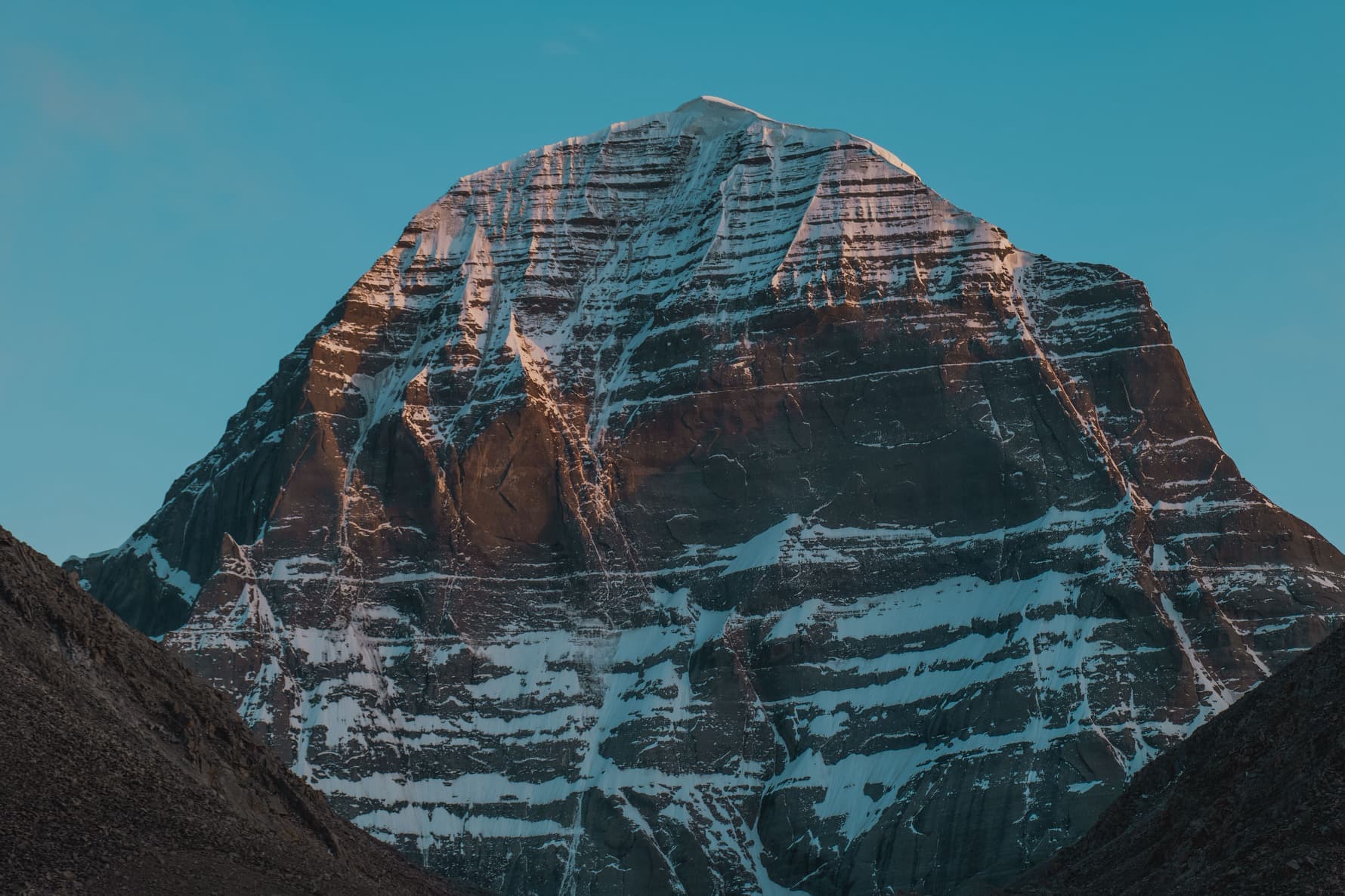
Nepal and Tibet: Kora around Kailash

Introduction to the Journey: Nepal and Tibet

Traveling through Nepal and Tibet, especially with a focus on the sacred kora around Mount Kailash, is both a physical journey and a spiritual experience. This route leaves a mark on the soul that is hard to put into words. You will encounter cultures and traditions that have been shaped over centuries in these high-altitude regions, alive and genuine.
Overview of the Route and Its Significance
The route around Kailash, approximately 52 kilometers long, is one of the most revered pilgrimage paths in the world. For many, it symbolizes physical purification and spiritual rebirth. With each step through the picturesque landscapes of Tibet, pilgrims accumulate strength and wisdom that has been passed down through generations.
On the way to Kailash, you will enjoy not only the beauty of nature but also unique cultural moments: encounters with locals who will share their lives and beliefs. The kora is both a physical challenge and a path to inner peace. Many pilgrims note that this experience has changed their perception of life.
Brief Information about Kailash and
Its Sacredness Across Cultures
Mount Kailash, standing at 6,638 meters, is considered sacred by Buddhists, Hindus, Jains, and followers of the Bon tradition. For Hindus, it is associated with the god Shiva, while for Buddhists, it relates to the teachings of Buddha. This unique blend of cultures and beliefs creates an atmosphere filled with sanctity and tranquility.
Locals believe that by performing the kora around Kailash, one can purify the soul and gain the opportunity for rebirth in a higher state. Pilgrims typically begin their journey in the early dawn hours to fully enjoy the silence and majesty of the surrounding world.
Program Kailash through Nepal: Kora with Gosainkunda
If you want to experience this unique journey, I recommend considering the program Kailash through Nepal: Kora with Gosainkunda. It combines accessibility, comfort, and the opportunity to explore the natural beauty of Nepal. During the tour, you will trek around Kailash and enjoy the picturesque Gosainkunda lakes, which are sacred sites for local pilgrims.
This journey is an opportunity for deep self-reflection and inner harmony. Think about what might change your perception of the world and give yourself a chance for this amazing adventure.
Preparing for the Kora: What You Need to Know

Traveling to the sacred Mount Kailash and performing the kora is a physical test and a profound spiritual experience. To ensure that your adventure is as comfortable and safe as possible, it is essential to prepare in advance. Here are a few key points to help you with this.
List of Required Documents for Traveling to Tibet
-
Passport: Ensure that your passport is valid for at least six months from the date of entry into Tibet.
-
Visa to China: You will need a Chinese visa to visit Tibet, which should be arranged in advance.
-
Tibet Entry Permit: This is a special document that you will receive through a tour operator. Be sure to confirm its availability before your trip.
-
Additional Documents: If you plan to travel to other regions of China, additional permits may be required.
Equipment and Gear for the Trek
Having the right gear is the key to a comfortable journey. Here’s what you should definitely take with you:
-
Footwear: Comfortable and sturdy trekking boots that provide support to your feet.
-
Clothing: Lightweight, breathable layers that can be worn on top of each other. Keep in mind that temperatures can vary significantly at altitude.
-
Sleeping Bag: It is best to choose a 3-season sleeping bag to stay warm during cold nights.
-
Backpack: A lightweight but spacious backpack to comfortably carry all your essentials.
-
Medical Kit: Be sure to bring headache relief, anti-inflammatory medications, and acclimatization drugs.
Recommendations for Physical Preparation and Acclimatization
Physical preparation before the trip will help you avoid unpleasant consequences at altitude. Here are some tips:
-
Start Training Early: Begin regular physical training 1-2 months before your trip. Activities like running, swimming, and hiking in the mountains are suitable.
-
Acclimatization: Upon arrival in Tibet, give your body time to adapt. It’s best to spend a few days at altitude before starting the kora.
-
Listen to Your Body: If you feel dizzy or very tired, don't hesitate to take breaks.
We invite you to discover this amazing place through the program Kailash through Nepal: Kora with Gosainkunda. This journey will provide you with comfort and the opportunity to enjoy the magnificence of nature, as well as immerse you in an atmosphere of sanctity and tranquility.
You can also explore the program Kailash: Sacred Kora from Lhasa to choose the option that best suits your desires and expectations.
Route Details: Kora Around Kailash

The kora around the sacred Mount Kailash is both a physical challenge and a spiritual journey that will allow you to touch ancient traditions and cultural values. During this trekking program, you will visit key points along the route, enjoy picturesque landscapes, and gain a unique experience that will stay with you for a lifetime.
Key Stages of the Route
The journey begins with an ascent to an altitude of 4,600 meters in the Sakya Valley, where you will see majestic monasteries and ancient shrines. The route continues through the Dolma-La Pass (5,630 meters), the highest point of your kora, from where you will have breathtaking views of Kailash and the surrounding mountains. Your path will also include places such as Lake Manasarovar and the Tirthapuri temple, where you can immerse yourself in sacred waters and honor your ancestors.
Daily Program
-
Day 1: Arrival in Nepal, transfer to Lhasa, acclimatization.
-
Day 2: Travel to the Sakya Valley (4,600 m), visit Sakya Monastery.
-
Day 3: Travel to Lake Manasarovar (4,588 m), overnight by the lake.
-
Day 4: Begin the kora, first trek to the Dolma-La Pass (5,630 m).
-
Day 5: Descent from the pass, visit Tirthapuri temple, overnight in camps.
-
Day 6: Complete the kora, return to Lhasa.
-
Day 7: Free day in Lhasa, visit Potala and other sacred sites.
Each day you will cover an average of 15-20 kilometers, allowing you to gradually acclimatize to the altitude and enjoy the surrounding landscapes.
Alternative Options
If you are looking for a more relaxed route, the program Kailash: Sacred Kora from Lhasa offers a unique opportunity to enjoy the beauty of Kailash without excessive physical strain. This tour focuses on deep immersion in the culture and traditions of Tibet.
We also recommend considering the program Kailash through Nepal: Kora with Gosainkunda, which combines elements of trekking and cultural exchange, allowing you to learn more about the lives and customs of local people.
The journey to Kailash is an opportunity for inner transformation. We invite you to be part of this amazing expedition and discover the sacred expanses of Tibet.
Safety and Health During the Journey

Traveling in Nepal and Tibet, especially on the kora around the sacred Mount Kailash, requires careful attention to health and safety issues. Here are some recommendations to help you prepare for this unique experience.
Information on Medical Recommendations and Necessary Medical Kit
Before your trip, consult with your doctor. It is recommended to get vaccinated against hepatitis A and B, typhoid, and to discuss the possibility of taking antimalarial medications.
Your medical kit should include:
Headache Medications (paracetamol or ibuprofen).
Digestive Aids (activated charcoal, enzymes).
Altitude Sickness Medications (acetazolamide).
Bandages, plasters, and antiseptics for treating wounds.
Personal Medications that you take regularly.
Don’t forget to bring sunscreen, moisturizing creams, and insect repellents.
Safety Tips During the Trek
Trekking around Kailash requires following a number of precautionary measures:
-
Hydration: Drink enough water to avoid dehydration. It is recommended to consume at least 3 liters of water per day.
-
Clothing: Dress in layers. Temperatures can change, so it is important to have both lightweight and warm clothing on hand.
-
Stick to the Route: Follow only marked paths and do not stray from the group. Familiarize yourself with the route in advance.
-
Communication: Have a way to contact your guide or group in case of need. Mobile coverage may be limited, so it is helpful to have a satellite phone or radio.
How to Avoid Altitude Sickness and What to Do in Emergencies
High-altitude sickness can occur at elevations above 2500 meters, so pay attention to how you feel. Here are some tips for its prevention:
-
Gradual acclimatization: do not ascend too quickly. Take time to adapt at high altitudes.
-
Symptoms: be aware of symptoms such as headaches, nausea, or fatigue. If you experience any of these, inform your guide and consider descending to a lower altitude.
-
Emergency measures: if symptoms persist, it is necessary to descend to a lower elevation. Always have an emergency action plan on hand.
The journey to Kailash is an opportunity for inner transformation. We invite you to be part of this amazing expedition and discover the sacred spaces of Tibet. If you are looking for a quieter route, consider the program Kailash: Sacred Kora from Lhasa or Kailash via Nepal: Kora with Gosainkunda.
Travel Budget and Logistics

Traveling to Nepal and Tibet, especially around the sacred mountain Kailash, requires careful preparation. Let's look at the key aspects of budgeting and logistics that will help make your journey comfortable and memorable.
Estimated trip budget: transport, accommodation, meals
-
Transport: A flight to Kathmandu ranges from 20,000 to 40,000 rubles, depending on the season and airline. Bus routes from Kathmandu to Nepal and then to Tibet cost around 5,000 to 10,000 rubles. Local transport (e.g., jeeps or minibuses) may cost between 1,500 and 3,500 rubles per day, depending on the route.
-
Accommodation: In Kathmandu, expect to pay between 1,000 and 3,000 rubles per night, depending on the comfort level. In Tibet, prices range from 1,500 to 4,000 rubles per night. Note that in remote areas, conditions may be more modest.
-
Meals: In Nepal, an average meal at a cafe will cost around 300 to 700 rubles. In Tibet, prices can be higher, ranging from 500 to 1,200 rubles per meal, especially in tourist areas.
Overall, the total budget for a 10-14 day trip can range from 70,000 to 150,000 rubles, depending on your preferences.
How to organize logistics: transport, transitions, and stops
Organizing logistics is key to a successful journey. I recommend planning routes and stops in advance:
-
Transport: choose jeeps for mountain routes, as they provide the necessary reliability and comfort. Ensure you have an experienced driver who is familiar with local conditions.
-
Transitions: plan transitions at high altitudes with acclimatization in mind. It is advisable to take breaks every 3-4 hours to avoid overexertion.
-
Stops: select places with good conditions for rest. For example, in Nepal, you can stop in Lauribina or Nyalam, and in Tibet in the Gurung Valley, to enjoy the local culture and nature.
Recommendations for choosing the right time to travel to Nepal and Tibet
The best times to travel to Nepal and Tibet are spring (from March to May) and autumn (from September to November 2026). During these periods, the weather is more stable, and the landscapes are particularly beautiful.
Summer months may be less ideal as the monsoon season begins in Nepal, which can complicate travel. Honestly, it’s better to postpone your trip to autumn 2026 or spring 2026, when nature is vibrant and reveals all its beauty.
If you are ready for this unique adventure, I recommend considering the program Kailash via Nepal: Kora with Gosainkunda or Kailash: Sacred Kora from Lhasa. These routes will provide you with unforgettable experiences and help you immerse yourself in the amazing world of Nepal and Tibet.
FAQ

What documents are needed for a trip to Tibet?
To visit Tibet, you will need the following documents:
-
Passport: valid for at least 6 months from the date of entry.
-
Visa for China: this must be obtained in advance at a consulate or embassy.
-
Entry permit for Tibet: this is arranged through a tour operator, as individual trips to Tibet are restricted.
What physical preparation is required for the kora around Kailash?
Physical preparation plays a key role in successfully completing the kora. It is recommended to:
-
Aerobic activities: engage in running, swimming, or cycling 2-3 months before the trip.
-
Mountain hiking: undertake treks at altitude (from 2000 meters) to get accustomed to the conditions.
-
Strength training: strengthen the muscles of your legs and back to better handle the load during the kora.
What places should you visit in Nepal before the trek?
Before starting the kora, consider visiting:
-
Kathmandu: the capital of Nepal, filled with historical monuments and cultural attractions.
-
Pokhara: a picturesque lakeside city with views of the Himalayas.
-
Lauribina: a place for acclimatization and getting to know the local culture.
How can I avoid altitude sickness at Kailash?
To minimize the risks of altitude sickness, consider the following tips:
-
Gradual acclimatization: at altitudes above 3000 meters, take breaks and do not ascend too quickly.
-
Hydration: drink plenty of water to avoid dehydration.
-
Rest: avoid excessive physical exertion in the first few days at high altitude.
How long does it take to complete the kora around Kailash?
The kora around Kailash usually takes about 3 days. The distance is approximately 52 kilometers. This journey requires good physical fitness and the ability to adapt to altitude.
What is the cost of the tour for the kora around Kailash?
The cost of the tour for the kora around Kailash varies depending on the program and level of service. On average, it ranges from 1,000 to 1,500 US dollars per person. This amount includes transport, meals, guide services, and accommodation. For detailed information on prices and included services, you can review our programs, such as Kailash via Nepal: Kora with Gosainkunda and Kailash: Sacred Kora from Lhasa.
If you are ready for this unique adventure, we will be happy to assist you in organizing an unforgettable journey.