Kora Around Kailash with a Guide or Independently: What to Choose in 2026

Introduction to the Kora Around Kailash

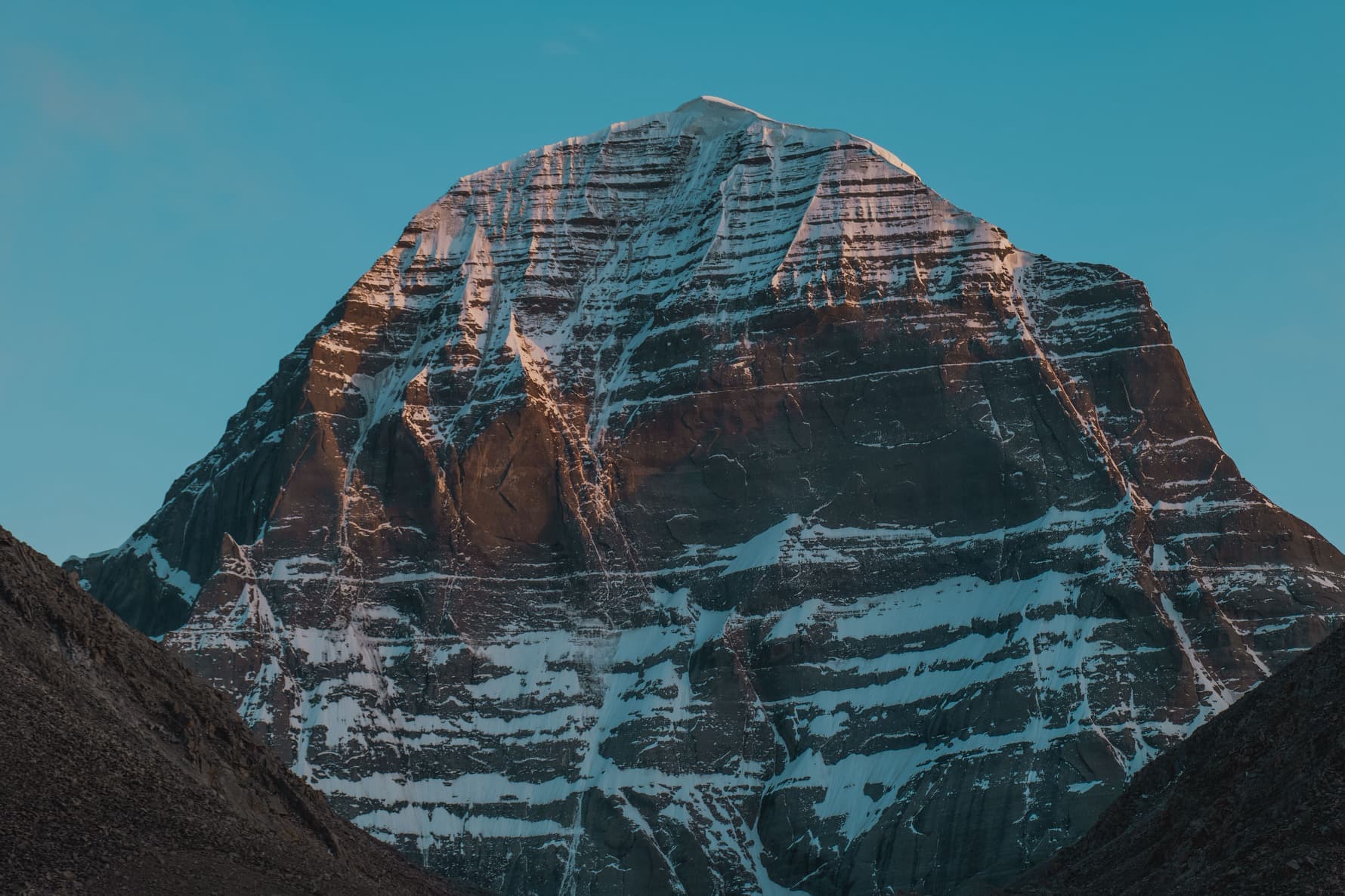
Kailash is a mountain that has drawn the hearts of pilgrims for thousands of years. For Buddhists, Hindus, Jains, and followers of the ancient Bon religion, it is a place of power, purification, and spiritual renewal. Every year, thousands of people undertake the kora — a circumambulation around this peak, seeking to free themselves from the burdens of the past and come closer to understanding themselves.
The kora route is 52 kilometers at an altitude ranging from 4500 to 5630 meters above sea level. Typically, the journey takes 2–3 days, although much depends on your preparation and how your body adapts to the altitude. During the day, the sun can warm the air to +20°C, while at night, temperatures can drop to −10°C or lower. Wind, thin air, and unexpected snowfalls — nature here does not forgive carelessness.
Altitude sickness is a real risk. Proper acclimatization, attention to your condition, and readiness to stop if something goes wrong are not over-cautiousness but common sense.
Choosing between an independent kora and a guided trek is one of the first questions you will face. If you have experience in high-altitude trekking, are confident in navigating the mountains, and are ready to handle all organizational matters — you can try to complete the route on your own. But honestly: in practice, even experienced travelers encounter unforeseen difficulties — from bureaucratic (permits, permissions) to practical (where to spend the night, how to find a guide-carrying porter).
If you value safety, comfort, and want to focus on the inner experience rather than logistics, an organized group with a guide will be your support. The guide knows the route, understands how the weather behaves, can adjust the pace in time, and will share knowledge about the spiritual tradition of Kailash, which cannot be found in any guidebook.
At Jay Shambo tours, we have several programs for those who want to complete the kora in comfort and with support. For example, the route Kailash Sacred Kora from Lhasa is designed so that you can acclimatize gradually, without worrying about transport, food, and accommodation — while fully immersing yourself in the atmosphere of pilgrimage.
If you want to combine Kailash with visits to the sacred lakes of Nepal, check out the program Kailash through Nepal: Kora with Gosainkunda. This route reveals not only the power of Kailash but also the beauty of the Himalayas with their monasteries, trails, and the silence of high-altitude lakes.
Ultimately, your choice depends on your experience, physical condition, and how you want to experience this journey. Kailash does not require perfect preparation from you. It requires sincerity, respect — and a willingness to meet yourself.
Route Options:
With a Guide or Independently

When planning the kora around Kailash, the question "with a guide or alone?" arises as one of the first. The right answer is the one that takes into account your experience, goals, and willingness to take risks.
Comparison: Pros and Cons of Both Options
With a Guide:
-
Pros:
Safety — the guide knows the route, the weather, places to stay overnight, and can timely notice signs of altitude sickness. They will handle practical matters: transport, food, accommodation. You can focus on the pilgrimage itself. The guide will tell you about Tibetan culture, explain the symbolism of rituals, and show places that are easy to miss if you go alone. -
Cons:
Less freedom: you move according to the group's schedule. The cost is higher than if you organized everything yourself. But in practice, savings often turn out to be illusory — you will still pay for transport, food, and a guide, only you will do it along the way and with less confidence in quality.
Independently:
-
Pros:
Complete freedom of the route. You go at your own pace, stop wherever you want, change plans on the go. A deep immersion in solitude and silence — no one distracts you, just you and the mountain. -
Cons:
All responsibility is on you: from obtaining permits to finding accommodation. Language barrier. Risks: getting lost, misjudging your condition, being without help in a critical situation. At altitude, mistakes are costlier than on flat land. If you have no experience in high-altitude trekking — this option can turn into stress instead of a spiritual experience.
Popular Routes: Lhasa and Kathmandu
From Lhasa:
This is the classic route. You start in the capital of Tibet, spend a few days acclimatizing — visiting Potala, Jokhang, and the Sera and Drepung monasteries. Then you head west to Kailash. The journey takes 2–3 days, and you can stop by Lake Manasarovar along the way. This route is convenient as it gives your body time to adjust to the altitude and sets the right internal mood — you gradually immerse yourself in the atmosphere of Tibet without haste.
From Kathmandu:
The route through Nepal is suitable for those who want to see more. You cross the border into Tibet, visit monasteries along the way, and can combine the kora with a trek to the sacred lakes of Gosainkunda. The route is logistically more complex but offers additional experiences — Nepal and Tibet reveal themselves to you from different sides.
Recommendations for Choosing
-
For Beginners: Go with a group and a guide. This is not only safer but will also provide you with support — both moral and physical. Kailash is not a place for experiments if you have not trekked at altitudes above 3000 meters before.
-
For Experienced Travelers: If you have high-altitude treks under your belt, know how your body works at altitude, can navigate, and are ready to handle all organizational matters — you can try to go independently. But consider the bureaucracy: permits, passes, approvals — all of this is easier to resolve through a tour operator.
-
For Groups: Definitely with a guide. Logistics for a group is a separate story, and it’s better to leave it to professionals.
If you want to complete the kora around Kailash with support, acclimatization, and without unnecessary headaches — check out the program Kailash Sacred Kora from Lhasa. We have designed the route so that each day is comfortable and meaningful.
Preparing for the Journey: What You Need to Know

Kailash is not a walk in the park. It involves altitude, cold, wind, and your body must cope with the load. Preparation begins several months before departure.
Checklist of Necessary Items
Clothing:
-
Thermal underwear (top and bottom) — the foundation of the layering system, wicking moisture away from the body.
-
Fleece jacket or vest — a lightweight, warm intermediate layer.
-
Membrane jacket and pants — protection from wind, rain, and snow.
-
Trekking boots — with a stiff sole, water-repellent, broken in beforehand.
-
Warm hat, gloves (better two pairs: thin and thick).
-
Buff or scarf — for wind, dust, and cold.
-
Sunglasses (category 3–4) — at altitude, the sun can burn the retina.
Medications:
-
Altitude sickness medication (like Diamox) — consult your doctor in advance.
-
Pain relievers (ibuprofen, paracetamol).
-
Blister plasters, elastic bandage.
-
Antiseptic, bandaging material.
-
Your personal medications — bring enough for the entire trip.
Equipment:
-
Backpack 50–60 liters — if you are going with porters, you can go smaller.
-
Sleeping bag (comfortable to −10°C, better to −15°C).
-
Trekking poles — relieve knee strain on descents.
-
Headlamp with spare batteries.
-
Thermos or hydration pack — you need to drink often and plenty.
-
Sunscreen (SPF 50+), lip balm.
Acclimatization and Physical Preparation
Acclimatization is not just a recommendation but a mandatory condition for safety. At altitudes above 4500 meters, the body operates in stress mode: less oxygen, the heart beats faster, breathing becomes more rapid.
How to Prepare:
-
2–3 months before the trip, start training: running, swimming, cycling, hiking with a backpack. The goal is endurance, not strength.
-
If possible, go to the mountains at an altitude of 2500–3000 meters a few weeks before Kailash. Let your body "remember" the altitude.
-
Do not smoke, limit alcohol — your lungs need to work at maximum capacity.
On Site:
-
Ascend slowly. If the route includes Lhasa — spend 2–3 days there for acclimatization, walk around, but do not overload yourself.
-
Drink water — at least 3–4 liters a day. Dehydration exacerbates symptoms of altitude sickness.
-
Avoid alcohol and heavy food in the first few days.
-
Listen to your body. Headache, nausea, dizziness — stop signals. Don’t be a hero.
Insurance and Safety
Medical insurance for high-altitude trekking is not an option but a mandatory item. Standard travel insurance does not cover risks at altitudes above 3500–4000 meters. Make sure that your policy includes evacuation from altitude.
Safety on the Route:
-
If you are going with a group — listen to the guide. They know when to slow down or take an unscheduled break.
-
Always carry a minimal first aid kit with you.
-
Inform someone close about your route and dates — even if you are going with a group.
If you want to prepare for Kailash without unnecessary stress and with professional support — check out the program Kailash through Nepal: Kora with Gosainkunda. We take acclimatization into account, adjust the pace to the group, and are always ready to help in difficult situations.
Logistics of the Trip Around Kailash
Kailash is not only a spiritual experience but also a serious logistical challenge. Getting there, finding accommodation, organizing meals—all of this requires planning. Let’s figure out how to build a route to focus on what matters most.
How to get to the starting point of the route
From Lhasa:
The standard way is to leave Lhasa in off-road vehicles or minibuses. The journey to the starting point of the kora (the village of Darchen) takes 2–3 days. Along the way, you stop in the towns of Shigatse, Saga, and you can visit Lake Manasarovar. The roads vary in quality: some parts are asphalt, others are dirt, and sometimes you have to drive through the beds of dried rivers. Leave early in the morning—this way you’ll arrive before dark and can take your time to explore your accommodation for the night.
From Nepal:
If your route starts in Kathmandu, you drive to the border (Kodari or Rasuwagadhi), go through customs, and continue your journey in Tibet. It’s another 1–2 days of driving to Lhasa, and from there, you follow the route described above. Keep in mind the time needed to cross the border: sometimes queues, checks, and paperwork can take several hours.
Tip: If you are organizing the trip yourself, arrange with drivers in advance and check the road conditions—some sections may be washed out after rains.
Where to stay along the route
In cities (Lhasa, Shigatse, Saga):
There are hotels of various levels—from simple guesthouses to quite comfortable hotels. In Lhasa, there is a wide selection; in Saga and Shigatse, the options are more modest, but you can find clean rooms with hot water. Book in advance, especially during the season (May–September).
Approaching Kailash and during the kora:
The options are simpler. In Darchen (the starting point of the kora), there are small guesthouses and hotels—basic amenities, but warm and with a roof over your head. Along the kora route, there are tourist camps and monastery guesthouses. The conditions are spartan: shared rooms, bunks, minimal furniture. Showers are rare. However, the atmosphere is authentic: you sleep where pilgrims have rested for centuries.
Camping:
If you are ready for camping conditions, you can set up your own camp. Tent, sleeping bag, stove for cooking. Freedom and solitude, but you have to carry everything yourself (or hire porters).
Practical advice: In organized tours, such as Kailash Sacred Kora from Lhasa, all accommodation is booked in advance, transport is arranged, and meals are organized. You simply walk and live this journey—without searching for accommodation in unfamiliar towns and haggling with drivers in broken English.
Logistics is that part of the preparation that either frees your mind for inner work or consumes all your energy. Choose what works best for you.
Pilgrims' Experience: Impressions and Tips

The kora around Kailash is a journey that transforms. Not always in the way you expect, but always profoundly. I have seen people ascend the Dolma-La Pass in tears—from exhaustion, from overwhelming emotions, from encountering something greater than themselves. And they returned changed.
Real stories from those who completed the kora
One participant in our group said on the third day: “Every step here is like a conversation with myself. I thought I was testing my physical strength, but I tested my spiritual strength.” Another participant admitted that at the pass, she felt the weight of old grievances lift—just like that, effortlessly, as if the mountain took it away itself.
The kora is not just a physical challenge. It’s a time when there’s no rush, nothing to distract you. Just you, the road, and silence (not counting the rustle of prayer flags and the footsteps of other pilgrims). Many experience a sense that the mountain is “speaking”—through the weather, through encounters, through inner insights.
In practice, this means: be prepared for unexpected experiences. Kailash brings to the surface what you may not have noticed in the hustle of everyday life.
What to consider to make the journey comfortable
Go at your own pace.
Don’t rush to keep up with those who walk faster. The kora is not a competition. If you need to stop, rest, or sit by a stream—do it. Listen to your body.
Take the minimum of things.
Every extra kilogram in your backpack feels twice as heavy at altitude. If you’re going with a group, you can usually hire a porter or yak to carry the main luggage. Leave only the essentials with you.
Take care of the little things.
Blisters, chafed shoulders, chapped lips—on the route, these “little things” can spoil the entire experience. Band-aids, lip balm, comfortable shoes—these are necessities, not luxuries.
Food.
The food on the route is simple: rice, noodles, vegetables, tea. If you’re used to a varied diet, bring snacks: nuts, dried fruits, energy bars. They will help when you need to quickly regain strength.
Communication in the group.
If you’re going with a group—support each other. Sometimes a simple “how are you?” or a helping hand on the ascent means more than it seems. In our groups, there is always a special atmosphere of mutual assistance—this is one of the most valuable parts of the experience.
Safety: group support, guide assistance
At altitude, mistakes can be costly. A guide is not just someone who knows the way. They are the one who will notice the signs of altitude sickness in time, suggest changing the pace, and provide moral support when things get tough. Honestly, even experienced travelers admit that they felt calmer with a guide nearby on Kailash.
In a group, you are not alone. If someone feels unwell—help is nearby. If the weather changes—a decision is made collectively, taking the guide’s experience into account. If you need to stop—everyone stops, without haste or panic.
When I lead groups, I try to create an atmosphere where everyone feels heard, their pace respected, and their experience valued. Kailash is a place where you don’t need to prove anything. You came here for yourself. And the guide’s task is to help you experience this journey in the way that is right for you.
If you want to complete the kora with support, in an atmosphere of attention and respect for each participant—check out the program Kailash Sacred Kora from Lhasa. This journey offers room for both physical challenge and spiritual search, as well as simple human warmth.
Frequently Asked Questions about the Kora around Kailash

What is the height of Mount Kailash and the difficulties of the route?
Mount Kailash rises to 6,638 meters above sea level. The kora route runs at its base—from 4,500 to 5,630 meters (Dolma-La Pass). This is a serious altitude. The main difficulties are thin air, temperature fluctuations, wind, and the length of the route (52 km over 2–3 days). If you have not been above 3,000 meters before—prepare for the fact that your body will take the first few days to adapt. Acclimatization is essential.
What documents are needed for a trip to Tibet?
For the trip, you will need:
-
A passport (valid for at least 6 months after the end of the trip).
-
A visa for China (tourist, obtained through the consulate or visa center).
-
A permit to visit Tibet (Tibet Travel Permit)—this can only be obtained through a tour operator; you cannot get it independently.
-
Additional permits for closed areas (if the route passes through them).
Honestly, the paperwork is one of the reasons why many choose organized tours. Jay Shambo tours takes care of all the permits—you just send a copy of your passport and a photo, and we handle the rest.
Can you do the kora with children?
Technically—yes, but with caveats. We recommend taking children no younger than 12–14 years, who are physically fit and accustomed to hiking. Altitude, cold, long transitions—this is a burden even for adults. If the child is not ready—the journey will turn into a stress for the whole family.
If you do decide to go—choose a route with a guide and medical support. For example, Kailash Sacred Kora from Lhasa includes gradual acclimatization and the possibility to adjust the pace for the specific group.
How to choose a reliable guide?
Pay attention to:
-
Experience working in Tibet. The guide should know not only the route but also the culture, traditions, climate, and altitude specifics.
-
License. In Tibet, the work of guides is strictly regulated—check for official permits.
-
Reviews. Read what real participants say. Pay attention not only to the praises but also to how the guide acted in difficult situations.
-
**Ability