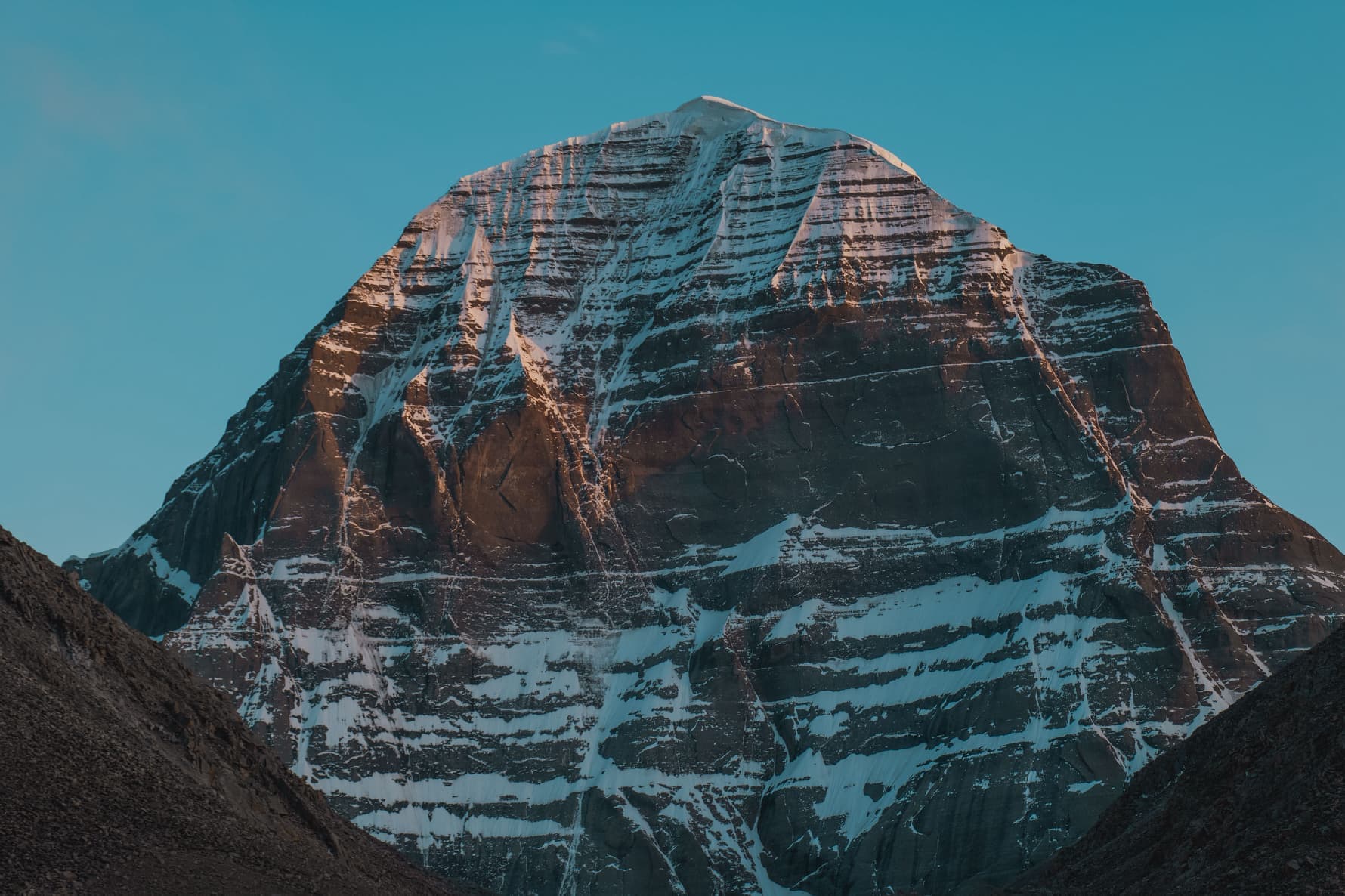
Circumambulation around Kailash: a complete guide for pilgrims

Introduction to the circumambulation around Kailash

The circumambulation around Mount Kailash is both a physical journey and a profound spiritual experience that attracts pilgrims from all over the world. This sacred practice holds immense significance for Buddhists, Hindus, Bonpos, and Jains. The pilgrimage to Kailash symbolizes a quest for purification, self-discovery, and inner peace.
Every step on this land is filled with history and living faith. The circumambulation becomes not only a physical challenge but also an opportunity for spiritual growth. Pilgrims believe that walking around the mountain cleanses the soul, brings blessings, and helps to eliminate karmic debts—honestly, many share that it has been a turning point in their lives.
General information about Mount Kailash and its sanctity
Mount Kailash, standing at 6,638 meters, is located in the Tibet Autonomous Region of China and is considered sacred by several religions. For Buddhists, it represents the dwelling place of Buddha Demchog, while Hindus believe it to be the home of the god Shiva. Bonpos venerate the mountain as the center of the ancient Bon religion, and Jains regard it as the place where their first Tirthankara attained liberation.
Kailash is surrounded by four sacred lakes—Manasarovar, Rakshas Tal, Karola, and Gungyul. Each of these lakes holds its significance within religious traditions. Pilgrims believe that bathing in Manasarovar aids in purification and spiritual rebirth. This place, where various religions and cultures converge, remains unique and attracts many seekers of spirituality.
How circumambulation combines physical and spiritual journeys
The circumambulation around Kailash is a route of approximately 52 kilometers, typically taking 2 to 3 days. The path traverses picturesque mountain landscapes and challenging sections that require good physical fitness. Despite the physical difficulties, pilgrims feel that each step brings them closer to inner purification and self-understanding.
Throughout the circumambulation, you will encounter numerous sacred objects—prayer wheels, chortens, stupas, and stone piles called lungta. Each of these symbolizes the spiritual path and serves as inspiration for pilgrims.
The altitude in this region presents certain challenges: acclimatization must be considered, and one should be prepared for changes in weather—this is a serious factor that cannot be underestimated.
When planning your journey, it's helpful to highlight a few key points:
-
Physical preparation: Regular training for 2-3 months prior to the trip will help you cope with the physical demands at altitudes of 4,500–5,600 meters.
-
Budget planning: Consider expenses for food, accommodation in guesthouses ($10–30/night), permits (~$200–300), and transportation. It's advisable to have extra funds for unforeseen situations.
-
Acclimatization: Allow yourself at least 2-3 days in Lhasa or Kathmandu to adapt to the altitude, in order to avoid health issues.
-
Document preparation: Ensure you have all necessary permits and visas for entering the region—this process can take up to a month.
If you are ready for this journey, we recommend checking out our programs, such as Kailash: Sacred Circumambulation from Lhasa and Kailash through Nepal: circumambulation with Gosainkunda, to make your pilgrimage as comfortable and spiritual as possible.
Spiritual significance of the circumambulation around Kailash

The pilgrimage around Mount Kailash is one of the most significant spiritual paths for both Buddhists and Hindus. This mountain is considered sacred, and every year thousands of pilgrims from various corners of the world embark on this journey to renew their souls and find harmony.
History of the pilgrimage around Kailash
The circumambulation around Kailash has deep historical roots. In ancient times, local inhabitants undertook this path, believing it cleansed sins and facilitated enlightenment. According to Tibetan traditions, one circumambulation of the mountain cleanses the sins of one lifetime, while 108 circumambulations cleanse all previous lives.
Each year, the number of pilgrims increases. This is not only due to spiritual quests but also a desire to connect with the culture and traditions of the Tibetan people. The approximately 52-kilometer route is typically completed in 3 days by foreign pilgrims, though I have seen experienced Tibetan monks accomplish it in one day—beginning their journey at midnight and finishing by sunset.
Symbolism of the mountain in Buddhism and Hinduism
Kailash is considered the home of many gods and saints. In Buddhism, it is associated with Buddha Demchog, while in Hinduism, it is linked to Shiva and his wife Parvati. Each part of the mountain holds its spiritual significance: for example, its shape resembles a giant crystal or lotus, which in Eastern culture symbolizes purity and enlightenment.
An important aspect of the circumambulation is that it is not just a physical journey but also an inner transformation. Pilgrims often share how, during their walk around the mountain, they confront their own fears and doubts, which becomes a catalyst for personal growth.
In our groups, there have been moments when people at the Dolma La Pass experienced real breakthroughs—some cried, while others stood silently, embracing the mountain with their gaze.
Personal experiences of pilgrims and their transformations
Many pilgrims note that the circumambulation around Kailash became not just a physical challenge but also a spiritual revelation for them. Throughout the journey, they experience moments of deep realization that help them change their perception of life and priorities.
Feedback from participants in our tours shows that many feel something more than just satisfaction from completing the route. It is a sense of unity with nature, with others, and with oneself. One participant from our group in 2024 confessed that on the third day of the circumambulation, she realized what she truly wanted in life—and six months later, she completely changed her profession.
Pilgrimage requires preparation—not only physical but also spiritual. It is recommended to familiarize yourself in advance with the opportunities offered by our tour. For example, Kailash: Sacred Circumambulation from Lhasa will allow you to spend this time surrounded by like-minded individuals and with the support of experienced guides.
Preparing for the journey: what to take with you

The circumambulation around Kailash is both a physical challenge and a spiritual path. To ensure that your journey is as comfortable as possible, it is important to prepare properly and gather the necessary gear.
Gear checklist for circumambulation
Here are some key items you should take with you:
Clothing
- Lightweight and breathable layers made of merino wool or synthetic materials to regulate temperature (avoid cotton—it dries slowly).
- Windproof and waterproof jacket with taped seams.
- Warm down jacket for cold nights and morning treks (temperatures can drop to -10°C even in summer).
- Comfortable trekking boots with a good Vibram sole, well-broken in—blisters at altitude heal poorly.
- Thermal underwear (2 sets), trekking socks (3-4 pairs), hat, gloves, buff.
Food
- Lightweight snacks: nuts, dried fruits, energy bars, chocolate.
- Ready meals that don’t require long cooking (dehydrated foods, instant porridge).
- Electrolytes in powder or tablet form—dehydration sets in quickly at altitude.
Water
- Convenient bottle or hydration system with a capacity of 2-3 liters.
- Water purification tablets (Aquatabs) or a portable filter—water from streams is not always safe.
First Aid Kit
- Pain relievers (ibuprofen, paracetamol) and anti-inflammatory medications.
- Diamox (acetazolamide) for altitude sickness prevention—consult with your doctor.
- Medications for stomach upset (loperamide, smecta).
- Blister plasters (Compeed), bandages, antiseptic, elastic bandage.
- Sufficient personal medications.
Also, don’t forget UV-filter sunglasses (category 3-4) and sunscreen with SPF 50+—at altitude, sunlight is much stronger, and burns can occur within an hour.
Recommendations for acclimatization and physical preparation
To avoid unpleasant surprises at altitude, it is worthwhile to prepare your body in advance. It is recommended to start training 2-3 months prior to the trip:
- Regular cardio workouts: running, swimming, cycling—3-4 times a week for 40-60 minutes.
- Hiking in the mountains with an elevation gain of 600-1000 meters, preferably with a backpack weighing 6-8 kg.
- Functional training to strengthen legs and core—squats, lunges, planks.
As for acclimatization, give yourself time to adjust. At altitudes over 4000 meters, it is advisable to follow the rule "climb high—sleep low." Drink plenty of water (3-4 liters a day), and avoid alcohol and sedatives in the first few days. If you experience headaches, nausea, or shortness of breath—immediately inform your guide, don't be a hero.
Personal advice on choosing necessary items
Every pilgrim is unique, and your personal preferences are important too. Here are a few recommendations that may help:
-
Keep a journal: Write down your thoughts and experiences during the pilgrimage. This can become an important part of your journey—many participants say they reread their entries years later.
-
Minimize weight: Every extra item can become a burden. Use multifunctional items—for example, a lightweight buff can be used as a scarf, headband, dust mask, or even a towel.- Warm sleeping bag: Sleeping at high altitudes requires a good night's sleep. Choose a sleeping bag with a comfortable temperature rating down to -10°C (down is better — it’s lighter and warmer than synthetic ones at the same weight).
-
Trekking poles: They relieve stress on the knees during descents and help maintain rhythm — especially on the Dolma La pass.
Honestly, the pilgrimage around Kailash is both a physical challenge and a spiritual journey. Proper preparation and the right gear will help you focus on your inner path rather than on practical inconveniences.
We invite you to join the Kailash: Sacred Kora from Lhasa or Kailash via Nepal: Kora with Gosainkunda and discover this unique experience.
Route of the Kora around Kailash

The kora around the sacred mountain Kailash is a pilgrimage filled with spiritual meaning and physical challenge. The main route is about 52 kilometers long and usually takes 2 to 3 days, depending on the physical fitness of the group and the pace of movement.
At an altitude of over 4500 meters, near the Dolma La pass (5630 m), pilgrims will face the most difficult section, where the altitude can cause discomfort. It is recommended to listen to your body carefully and take frequent breaks — practically, we stop every 30-40 minutes for breathing and acclimatization.
Description of the Main Stages of the Route
Day 1: Darchen → Dirapuk (20 km, 6–8 hours)
The kora begins in the village of Darchen (4560 m). The route goes through a relatively flat valley along the western slope of Kailash. The first kilometers follow a wide road, then the trail narrows and ascends. The elevation gain is about 300 meters.
By evening, arrival at the Dirapuk camp (4890 m), where simple guesthouses are located. From here, there is a stunning view of the northern wall of Kailash — many pilgrims rise before dawn to greet the first rays of the sun on the mountain.
Day 2: Dirapuk → Dolma La → Zutulpuk (22 km, 8–10 hours)
The most challenging day of the kora. In the morning, a steep ascent to Dolma La pass (5630 m) — around 4 hours. Here is the sacred Gauri Kund lake, which is covered with ice for most of the year. Pilgrims leave offerings — stones, prayer flags, personal items as a symbol of letting go of the past.
Then a long descent (~1000 m elevation loss over 3–4 hours) into the valley of the Lhamchu Khyir river to the Zutulpuk camp (4790 m). The knees and ankles experience serious strain — trekking poles are especially needed here.
Day 3: Zutulpuk → Darchen (10 km, 3–4 hours)
The final stage is a gentle descent through the valley back to Darchen. Despite the short distance, fatigue accumulated over the previous days may be felt. Many pilgrims walk in silence this day, immersed in their thoughts and experiences. By noon — return to Darchen and completion of the kora.
Each of these stages has its difficulties and requires good physical preparation. We recommend undertaking several training hikes in the mountains in advance to adapt to prolonged walking and altitude.
Route Options
There are several route options around Kailash that may suit various groups.
Standard three-day route
The classic option described above. Ideal for most pilgrims with moderate physical fitness. It allows for altitude acclimatization and appreciation of the scenery.
Two-day accelerated kora
More experienced trekkers complete the kora in 2 days: the first day to Dirapuk, the second — over Dolma La and then to Darchen in one long stretch (32 km, 10–12 hours). Requires excellent physical condition and good acclimatization.
One-day kora
Tibetan pilgrims and very experienced trekkers sometimes complete the entire kora in one day (starting at midnight). This is an exceptionally challenging option that requires perfect preparation — not recommended for most foreigners.
Inner kora
A lesser-known route around the inner part of Kailash (about 30 km). Considered more sacred, but allowed only to those who have completed the outer kora at least 13 times. Requires special permission and an experienced guide.
It is important to consider the fitness level of group members and the possibility of quick descent to lower altitudes in case of altitude sickness symptoms.
Logistics: How to Get There and Where to Stay
There are several ways to reach the start of the kora. The most convenient is to travel from Lhasa by jeep or bus. The journey will take 2-3 days with stops in Shigatse and Saga for acclimatization. The distance is about 1200 km, and the road is partly unpaved and difficult — be prepared for bumps and dust.
An alternative route is through Nepal from Kathmandu via the Kerung border crossing. This option is often chosen by those who want to combine Kailash with trekking in the Himalayas.
Along the kora route, there are simple guesthouses in Dirapuk and Zutulpuk. The conditions are basic: shared dormitories with bunks (6–12 people in a room), bring your own sleeping bags, electricity is not always available. Toilets are outdoors, and there are no showers. The cost of accommodation is $10–20 per person.
Meals consist of simple Tibetan food (thukpa, momo, tsampa) and tea with milk. In the high season (July-August), spots may be scarce — we recommend booking in advance through a guide.
Additionally, keep in mind that a special permit (Tibet Travel Permit + Alien's Travel Permit + Military Permit) is required for the pilgrimage around Kailash. Ensure you obtain it in advance through a tour operator to avoid issues on-site — self-application for foreigners is impossible.
The kora around Kailash is a physical challenge and an opportunity to understand yourself and your spiritual aspirations more deeply. We invite you to join the Kailash: Sacred Kora from Lhasa or Kailash via Nepal: Kora with Gosainkunda and become part of this unique journey.
Kora with a Guide or Independently in 2026

Choosing between a guided pilgrimage and an independent kora around Kailash is a decision that requires careful consideration. Both options have their pros and cons, and it's important to realize what you need for a comfortable and safe journey.
Pros and Cons of Traveling with a Guide
Traveling with an experienced guide can be not only convenient but also a safe option.
Advantages
-
Support at altitude: A guide will help you acclimatize to the high-altitude environment, providing necessary support during difficult moments. This is especially important if you have no experience with such journeys — we’ve had cases in our group where a guide recognized altitude sickness symptoms in time and took action.
-
Safety: Knowledge of local conditions, weather, and routes allows you to avoid dangerous situations. A guide will also assist with proper acclimatization, which significantly reduces risks.
-
Cultural experience: Professionals can share stories, cultural aspects, and deep knowledge about sacred places that will enrich your journey. You will learn the significance of prayer flags, chortens, and understand why pilgrims prostrate.
-
Logistical issues resolved: Booking guesthouses, organizing meals, transportation — all of this is handled by the guide and the team.
Disadvantages
-
Limited freedom: You are tied to the group’s schedule and may not always be able to go at your own pace.
-
Cost: A guided tour is usually more expensive than an independent trip — prices range from $1500 to $3000 depending on the program and level of comfort.
Independent Kora: Challenges and Risks
Independent pilgrimage requires a high degree of preparation and self-discipline.
Challenges
-
Planning: You will have to independently create the itinerary, including choosing overnight spots and all stops. This can be a challenging task, especially considering unpredictable weather conditions and language barriers.
-
Document processing: It is practically impossible to obtain all necessary permits (Tibet Travel Permit, Alien's Travel Permit, Military Permit) for foreigners independently — they can only be arranged through accredited agencies.
-
Navigation: In some areas, the trail is not obvious, especially in fog or snowfall. GPS and maps can help, but there is no connection, and locals speak only Tibetan.
Risks
-
Altitude sickness: Without an experienced guide, you risk not recognizing serious symptoms (pulmonary or cerebral edema) in time, which can lead to critical consequences. At altitudes above 5000 meters, the body's reaction is unpredictable even for experienced trekkers.
-
Lack of support: If health issues arise or you get lost, help may arrive late. Helicopter evacuation in this region is practically unavailable.
-
Bureaucracy: Without a guide, it’s more challenging to resolve issues with authorities, guesthouses, and transportation — especially if you don't know the language.
Freedom
On the other hand, independent pilgrimage allows you to feel free and enjoy every moment. You can make decisions based on your desires and mood, go at your own pace, and stop wherever you want.
Honestly, for most and...