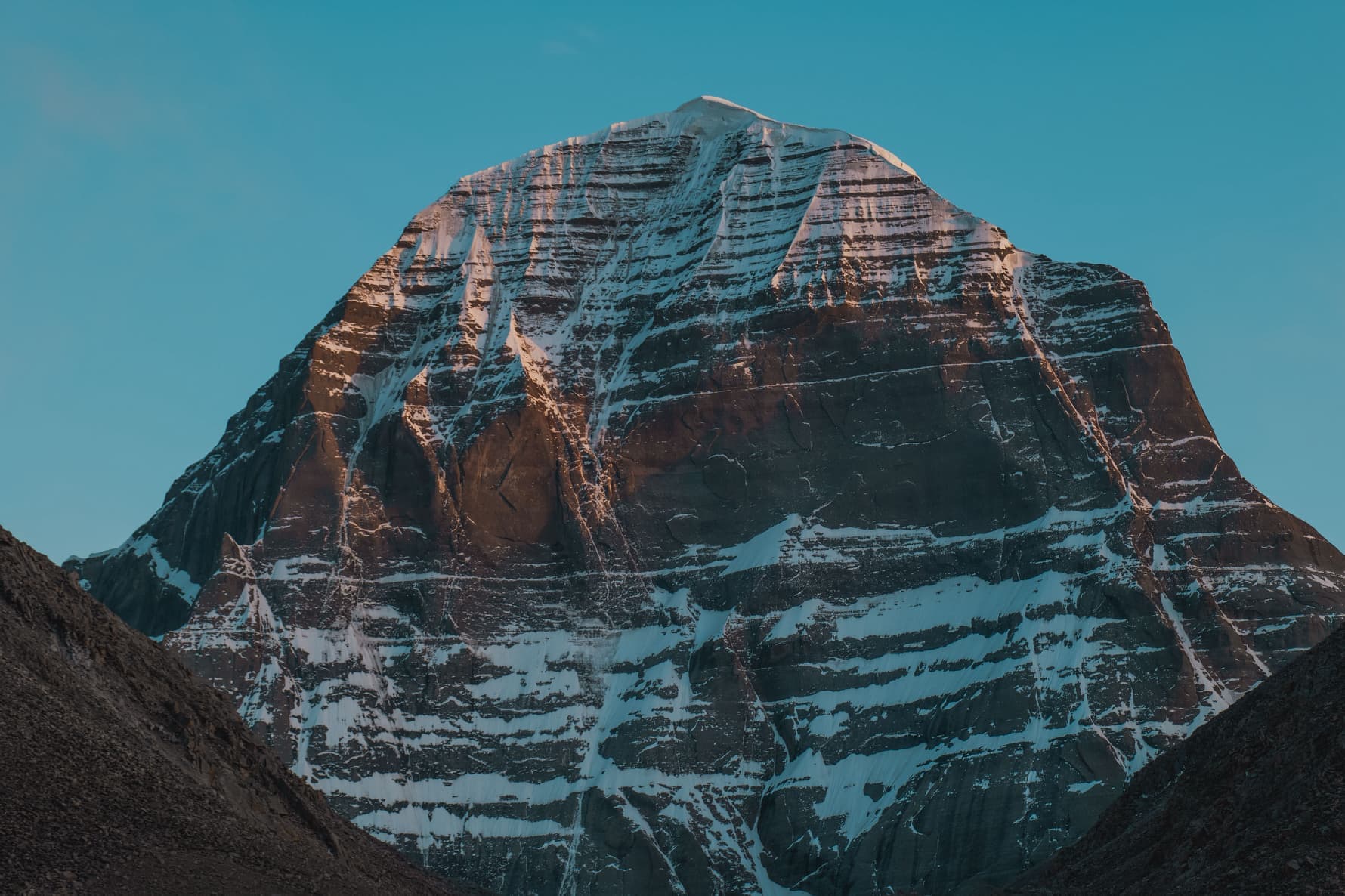
Kora Around Kailash: Complete Guide to the Route 2026  will help strengthen your cardiovascular system. Pay attention to endurance. Try climbing stairs or taking long hikes with a backpack weighing 7–10 kg.
- Psycho-Emotional Readiness: Learn about the significance of Kailash and its cultural context. This will help you understand and feel the meaning of your pilgrimage on a deeper level. Practice meditation and mindfulness; this will not only help you cope with challenges on the trail but also deepen your spiritual perception. ### Tips for Choosing Gear 1. Footwear: Choose comfortable, waterproof boots with good ankle support. Ensure they are "broken in" before the trip to avoid blisters.
- Clothing: A layered clothing system is key to success. Bring thermal underwear, a fleece jacket, and warm outerwear (down jacket or membrane jacket). Don't forget a hat, warm gloves, and a buff.
- Additional Items: A multitool, first aid kit, flashlight, and spare batteries. High UV protection sunglasses. All of this can be indispensable on the trail. ### Recommendations for Medical Preparation and Vaccination 1. Medical Examination: Be sure to consult a doctor, especially if you have chronic illnesses. You may need individual recommendations for preparation.
- Vaccination and Medications: Ensure that all your vaccinations are up-to-date. Depending on the region, you may need vaccinations for hepatitis, typhoid, or other diseases. Equip your first aid kit with altitude sickness medications (Diamox or its analogs) and other necessary medications (painkillers, allergy medications, anti-diarrheal drugs). ### Immersing into Pilgrimage If you feel ready to accept the challenge and want to deepen your practice, we recommend looking into the program [Kailash: Sacred Kora from Lhasa]( This route offers a unique opportunity not only to physically traverse sacred places but also to spiritually rise, immersing yourself in the atmosphere of the holy sites of Tibet. Careful preparation is the key to a successful pilgrimage. Make sure you have worked through each of the points mentioned, and your journey will become a true spiritual revelation. ## Route Characteristics: Overall Length and Elevation  is a critical point where many pilgrims may experience symptoms of altitude sickness: headaches, nausea, shortness of breath. Every body reacts to altitude differently. Therefore, before starting the Kora, it is worth spending time in lower areas, such as Lhasa (3650 m) or Nepal, to prepare your body for the reduced oxygen level. ### Recommendations for Acclimatization Before Starting the Route 1. Spend at least 2–3 days at altitude this will give your body time to adapt to the changing conditions. In Lhasa or other intermediate points, do not rush into activity.
- Avoid sudden exertion in the first few days, try to avoid intense physical exercises. It's better to just take walks outdoors and breathe deeply.
- Drink plenty of water hydration helps avoid altitude sickness symptoms. It is recommended to drink at least 3–4 liters of water a day.
- Listen to your body if you feel dizzy, nauseous, or extremely fatigued, it is worth taking a break and resting. Do not ignore your body's signals.
- Use adaptogens and medications some travelers recommend taking adaptogens like ginseng or altitude sickness medications (Diamox), but always consult a doctor before use. These recommendations will help you not only prepare for physical exertion but also enjoy every moment of the pilgrimage around the sacred Kailash. If you want to learn more about the route, be sure to check out the program [Kailash: Sacred Kora from Lhasa]( or [Kailash via Nepal: Kora with Gosainkunda]( ## Conditions and Physical Preparation : this time is needed for acclimatization, as Lhasa is located at about 3650 meters above sea level. You will visit Potala, Jokhang, and monasteries—this is not only cultural enrichment but also a gentle start to the journey. 2. Trip to Syangdrik (about 8 hours by car): a small town from which the Kora begins. The road passes through picturesque Tibetan landscapes, and you will feel the atmosphere of the highlands. 3. Kora around Kailash (2–3 days): the route includes overcoming an elevation of up to 5630 meters at Dolma-La Pass. Be prepared both physically and mentally; this is the most challenging part of the journey. 4. Return to Lhasa: after completing the Kora, you will return to Lhasa, where you can spend time resting and recovering. This route is suitable for those who want to enjoy not only the Kora itself but also the culture of Tibet. Learn more on the program page [Kailash: Sacred Kora from Lhasa]( ### Alternative Route through Nepal with Gosainkunda: Advantages and Disadvantages The alternative route through Nepal offers a unique opportunity to pass by the sacred lakes of Gosainkunda. This path is suitable for those who want to diversify their experience and enjoy the nature of Nepal. Key Stages: 1. Starting in Kathmandu: here you can visit many historical and cultural attractions before starting the trek.
- Trek to Gosainkunda (3–4 days): this is a physically less challenging route in the initial stages but spiritually rich. The lakes are considered sacred, and many pilgrims come here for purification.
- Onwards to Kailash: after Gosainkunda, you will head to the sacred mountain. However, this path may take more time and require greater physical preparation. Advantages of this route: the opportunity to enjoy the nature of Nepal and lower elevation in the initial stages. Disadvantages: the route may be less organized, and you may need to solve some issues independently. ### Comparing Options: What to Choose Depending on Experience and Goals The choice of route depends on your goals and level of preparation. If you are looking for a traditional pilgrimage with immersion in Tibetan culture, it is better to choose the route from Lhasa. It is more structured and offers more opportunities for acclimatization. If your goal is to explore new places and enjoy the beauty of Nepal, then the route through Gosainkunda will be an excellent choice. However, it may require more independence and good physical preparation. Each path to Kailash is unique and offers its own advantages. Evaluate your strengths and desires in advance to choose the most suitable option. If you want to learn more about our programs, check out [Kailash: Sacred Kora from Lhasa]( and [Kailash via Nepal: Kora with Gosainkunda]( ## FAQ . Inform us in advance about your dietary preferences and restrictions to make your journey as comfortable as possible. In our groups, we provide cooking services, preparing meals right on site. ### What is the likelihood of altitude sickness during the Kora? Acclimatization is a critical aspect of any high-altitude journey, especially around Kailash, where the altitude reaches 5630 meters at Dolma-La Pass. To minimize the risk of altitude sickness, it is recommended to prepare in advance and pay attention to the acclimatization process. This may include gradually increasing altitude, drinking sufficient fluids, and using special acclimatization aids (such as Diamox, but only after consulting with a doctor). Most pilgrims successfully adapt if they follow these recommendations and do not rush along the way. We also recommend checking out our programs [Kailash: Sacred Kora from Lhasa]( and [Kailash via Nepal: Kora with Gosainkunda]( to choose the optimal route that suits you.