Kora Around Kailash: How to Walk the Main Pilgrimage Route of Tibet

Understanding the Kora Route Around Kailash

The Sacred Mountain Kailash
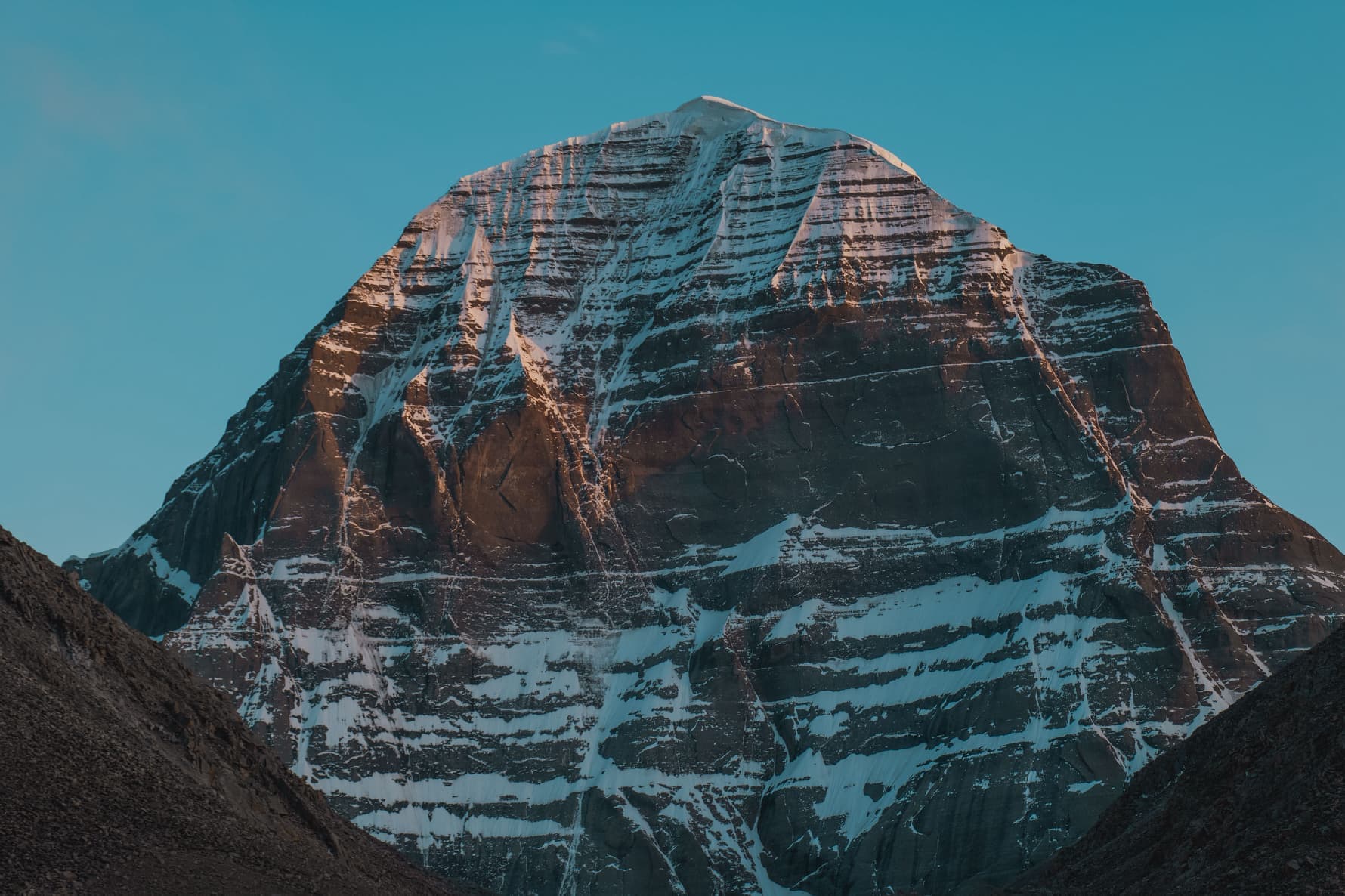
Mount Kailash, rising to an altitude of 6,638 meters, is the heart of Tibetan pilgrimage and a spiritual center for millions. For Buddhists, it is a place of enlightenment; Hindus revere it as the abode of Shiva, while Jains believe that the first Tirthankara, Rishabha, attained liberation here.
This mountain is not only a religious symbol but also a powerful energy hub. I have witnessed people from various countries and traditions embarking on this journey with a singular purpose: to purify themselves, slow down, and listen to their inner selves.
Each step on this path is not merely a physical effort, but a movement towards inner clarity.
General Information About the Route
The Kora around Kailash spans 52 kilometers, typically completed in three days (sometimes in 1-2 days for those who are very fit, or over 4-5 days for a more relaxed pace). The route is diverse: high-altitude valleys, rocky paths, snowy slopes, wide meadows, and prayer flags at every turn.
The highest point is the Drolma La Pass at an elevation of 5,630 meters. Here, the air is thin, breathing becomes more difficult, and your body honestly reveals whether you are prepared or not.
The difficulty of the route is moderate in terms of technique, but the altitude plays its part. Therefore, acclimatization is not optional but a mandatory condition. If you have never been above 4,000 meters, give yourself time to adjust.
Logistics and Planning
Before setting out, it’s worth considering a few important points.
Acclimatization. We always recommend spending at least 3-4 days at an altitude of 3,500 to 4,000 meters— for example, in Lhasa or around Lake Manasarovar. This is not a formality. In practice, those who ascend too quickly often suffer from headaches, nausea, and weakness.
Documents. A special permit is required for the Kailash area—the Tibet Travel Permit, as well as a permit for visiting restricted zones. We handle the paperwork within our programs, but it is important to submit documents in advance—at least a month ahead.
Budget. Approximate figures: an organized kora with accommodation, transport, a guide, and permits will cost between $1,200 and $2,000, depending on the route, duration, and service level. If you are going independently, budget around $600 to $1,000, but keep in mind the complexities with documents and logistics.
Gear. Good trekking boots, warm layered clothing (from thermal underwear to a down jacket), sunglasses, sunscreen, a first-aid kit with altitude sickness medications, a water supply, and energy bars.
If you want to complete the kora with an experienced team and full support, check out our program Kailash: Sacred Kora from Lhasa— we have been leading groups for many years and know the route inside and out.
Preparing for the Pilgrimage: What to Bring

Before heading out on the kora, it's crucial to carefully pack your backpack. This is not a casual weekend hike—every item matters.
List of Essential Items
Clothing. Layering system: thermal underwear (top and bottom), fleece jacket, windproof jacket, lightweight down jacket or insulated vest. It can be hot during the day, cold in the morning and evening, and windy and frosty at the pass. Bring spare socks, a hat, gloves, and a buff.
Footwear. Trekking boots with good ankle support and a rugged sole. Break them in beforehand—new boots will definitely cause blisters on the route. Bring sandals or lightweight sneakers for evening relaxation at camp.
First-Aid Kit. Pain relievers (ibuprofen), stomach upset medications, altitude sickness medications (such as Diamox—but only after consulting a doctor), antiseptic, bandages, and plasters. If you have chronic illnesses, bring a sufficient supply of your medications.
Documents. Passport, copies of all permits, insurance (including coverage for high-altitude routes), printed contacts of the organizer.
Miscellaneous. Sunglasses (UV 400), sunscreen SPF 50+, thermos, headlamp, power bank, trekking poles (very helpful on descents and ascents).
Don’t take extra items. Every kilogram on your back feels heavier at altitude.
Recommendations for Acclimatization and Physical Preparation
Acclimatization is not about "toughing it out for a few days." It's about giving your body time to adjust its metabolism, increase the number of red blood cells, and learn to function in conditions of lower oxygen levels.
We advise spending at least 3 nights in Lhasa (3,650 m) before starting the route. Then, another day or two at Lake Manasarovar (4,590 m). This gentle approach works for most people.
Physical Preparation. Start training 2-3 months before your trip. Hiking with a backpack weighing 5-10 kg, climbing stairs, light jogging, swimming. The goal is not to build muscles but to develop endurance and get used to prolonged exertion.
Honestly: if you lead a sedentary lifestyle and haven’t exercised in recent years, preparation is essential. Otherwise, the route will turn into suffering rather than a spiritual practice.
Packing Checklist
- Trekking boots (broken in)
- Thermal underwear, fleece, jacket, down jacket
- Hat, gloves, buff
- Sunglasses and SPF 50 sunscreen
- First-aid kit (pain relievers, altitude medication, antiseptic, plasters)
- Trekking poles
- Thermos, flashlight, power bank
- Documents and their copies
- Water supply (filter or purification tablets)
- Energy bars, dried fruits, nuts
Check your backpack twice before setting out. A forgotten item can become a major issue at altitude.
If you are interested in an organized kora with support and experienced guides, join our program from Lhasa— we provide detailed advice on gear and assistance at every stage.
Travel Logistics: How to Get to Kailash

Getting to Kailash is an adventure in itself. There are no direct flights or scheduled buses. Planning ahead is essential.
Overview of Possible Routes: Through Nepal or Lhasa
Through Lhasa (the most popular option). You fly to Lhasa, spend a few days acclimatizing, then travel by off-road vehicle or bus through Shigatse and Saga to Lake Manasarovar, and from there to the start of the kora in Darche. The journey takes 3-4 days with stops.
This route is convenient: you gradually gain altitude, see monasteries, lakes, and meet local pilgrims. Plus, there’s less bureaucracy with permits if you are traveling with an organizer.
Through Nepal. From Kathmandu, you drive to the border of Nepal and Tibet (Gyrwa/Rasuwagadhi), cross the border, and then drive to Kailash. This path is shorter in distance but requires Nepali and Tibetan visas, as well as additional permits. In practice, it is less predictable due to weather conditions and road conditions.
We lead groups on both routes, but for first-timers, we recommend the route through Lhasa—it’s calmer and logistically simpler.
Information About Transportation and Its Features
In Tibet, you will be traveling in off-road vehicles (Land Cruiser, Mitsubishi Pajero) or tourist buses. The roads are often unpaved, rocky, and have fords and passes. Comfort is not the focus of this journey, but the vehicles are reliable.
An important point: at altitudes above 4,500 meters, drivers make frequent stops—not only for rest but also to give passengers a chance to acclimatize. Take your time. This is normal.
In Nepal, there are jeeps and buses, but the roads can be even more challenging, especially during the rainy season (June-August).
Alternative Route: Kailash Through Nepal
If you want to combine the kora around Kailash with visits to the sacred lakes of Nepal, consider the program Kailash Through Nepal: Kora with Gosainkunda. This route adds a trek to the Gosainkunda lakes— a pilgrimage site for Hindus and Buddhists— and then leads to Kailash itself.
This option is more intense but requires more time and endurance.
Helpful Tips for Planning
Documents. Start processing visas and permits 1.5 to 2 months in advance. For Tibet, you need the Tibet Travel Permit, and for some areas, the Alien Travel Permit. We handle this within organized tours, but if you’re going independently— be prepared for bureaucracy.
Finances. Bring cash in yuan. There are no ATMs in remote areas, and cards are not accepted. Small bills will be useful for tips, purchases in villages, and donations in monasteries.
Acclimatization. Don't try to "rush through" quickly. It’s better to spend an extra day resting than to suffer from altitude sickness and not make it to the pass.
Communication. Internet and mobile signals only work in major cities. On the route— silence. Inform your loved ones ahead of time.
If you are ready for this journey, join our program from Lhasa— we take care of logistics, documents, and support.
Pilgrims' Experience: What to Expect on the Route

Personal Experiences of Participants: Impressions, Emotions, Challenges
The kora around Kailash is always about the inner journey, not just the outer one. I remember the group from 2024: one woman walked silently for three days, and at the Drolma La Pass, she cried—from exhaustion, relief, and some deep sense of liberation.
She later said, "I let go of what I had been carrying for ten years."Physically, the route is not easy. It spans 52 kilometers at high altitude, with rocky trails and elevation changes from 4600 to 5630 meters.
Your legs will tire, your breath may quicken, and you might experience headaches. But this is not a speed marathon. It’s a slow movement, where every step is part of the practice.
Emotionally, experiences vary. Some feel inspiration, others find inner silence, and some confront their fears and resistance. All of this is normal. The kora is not entertainment; it's a journey of self-discovery.
What challenges lie ahead? Altitude, of course. Cold mornings. Basic conditions in guesthouses (no showers, outdoor toilets). But this is part of the experience. If you are expecting comfort, this is not the route for you.
Description of Key Points on the Route and Their Significance
Lake Manasarovar. Sacred for Hindus and Buddhists. Many pilgrims perform the kora around the lake (110 km) before the main kora. The water here is considered purifying. We usually stop for a day for acclimatization and rituals.
Darchen. A small village at the foot of Kailash, the starting point of the kora. Here, you can buy equipment, hire a yak to carry your belongings, and meet other pilgrims.
Drolma La Pass (5630 m). The highest point of the route. It is always windy and cold here, with little oxygen. But many feel a turning point here—a symbolic crossing of a barrier. Buddhists leave personal items as a sign of renunciation of the past.
Dira-Puk Monastery. The first overnight stop on the route. View of the northern face of Kailash. In the morning, if the weather permits, you can see the mountain illuminated by the sunrise—a sight worth all the effort.
Gauri Kund Lake. A small icy lake just below the pass. Hindu pilgrims perform ritual ablutions here, even if the water is freezing. This requires determination but is considered especially blessed.
Risks: Altitude, Weather Conditions, Health
Altitude. The main risk is acute mountain sickness (AMS). Symptoms include headache, nausea, dizziness, and weakness. If they worsen, you must descend immediately. Don’t try to be a hero. We always carry oxygen tanks and a first-aid kit.
Prevention: ascend slowly, drink plenty of water (3–4 liters a day), avoid alcohol and heavy food, and consider medications like Diamox (but only under a doctor’s supervision).
Weather. Even in summer, there can be snow and wind at the pass, with temperatures dropping to -10°C. Weather can change within an hour. Always carry warm clothing and a waterproof jacket.
Health. It is essential to undergo a medical check-up before the trip. If you have heart, lung, or blood pressure issues, consult a doctor. The kora is a serious physical challenge, and you should not take risks.
There are no hospitals along the route. The nearest help is in Darchen or Saga, which are several hours away. Therefore, it's crucial to listen to your body and not ignore its signals.
If you want to complete the kora safely and with the support of an experienced team, join our program from Lhasa—we know the route, monitor participants' conditions, and are always ready to help.
Travel Budget: How Much Does the Kora Around Kailash Cost

When planning a pilgrimage, it's important to understand the cost in advance. The figures below are estimates for 2026 and may vary.
Approximate Budget Calculation: Transportation, Accommodation, Food, Permits
Transportation. A flight to Lhasa from Moscow or another major city costs between $600 and $1200 (round trip, depending on the season and airline). Internal transportation in Tibet (SUV or bus Lhasa – Kailash – Lhasa) costs $300–500 per person in a group.
Accommodation. In Lhasa—$20 to $60 per night (guesthouse or mid-range hotel). Along the kora route—simple guesthouses or tents: $10–20 per night. At Lake Manasarovar—the same.
Food. In Lhasa—$15–25 per day (cafes, restaurants). On the route—it’s simpler and cheaper: $10–15 (rice, noodles, tea, simple dishes in tea houses).
Permits. Tibet Travel Permit and Alien Travel Permit—about $100–150 (processed through a tour operator). If traveling independently, you will need to find a local partner—permits are not issued without one.
Additional Costs. Yaks for carrying backpacks (if needed)—$30–50 for the entire route. Tipping guides and drivers is optional but customary ($10–15).
Total: An organized kora with accommodation, transport, permits, and support costs $1200–2000 (excluding flights). Independently—starting from $600, but with risks regarding logistics and documentation.
Tips for Saving Money and Choices That Can Reduce Expenses
Travel in the Off-Season. May and September are high season, with higher prices. June and August (rainy season) or April (still cold) are cheaper, but the weather is less predictable.
Group Trips. Sharing transport and a guide among 6–8 people is more economical than traveling with just one or two companions. We form groups in advance, which helps reduce the cost per person.
Simple Food. Don’t expect restaurants. Local tea houses offer simple meals for $3–5. Bring energy bars and dried fruits with you—it’s cheaper and more convenient.
Give Up Unnecessary Comfort. If you are willing to sleep in a tent and carry your own backpack, you can save on accommodation and yaks. But assess your strength honestly.
Price Comparison for Various Stages of the Journey
Lhasa (3–4 days):
- Accommodation: $60–180
- Food: $45–100
- Excursions (monasteries, palaces): $50–80
Road Lhasa – Kailash – Lhasa (6–7 days):
- Transport: $300–500 (in a group)
- Accommodation: $60–140
- Food: $60–105
Kora around Kailash (3 days):
- Accommodation: $30–60
- Food: $30–45
- Yaks (optional): $30–50
Permits and Support: $100–200.
Total (excluding flights): $735–1380. With a buffer and comfort—up to $2000.
When planning your budget, set aside funds for unforeseen expenses (medications, extra nights, souvenirs, tips). It’s better to return with a surplus than to run out of money in the mountains.
If you want to avoid the headaches of organization and get a transparent budget, join our program from Lhasa—we include everything necessary, with no hidden costs.
FAQ

What level of physical fitness is required for the kora?
The route does not require mountaineering skills, but endurance is essential. You will be walking 15–20 km a day at altitudes ranging from 4600 to 5630 meters, often over rocky terrain and uphill.
Start preparing 2–3 months in advance: hiking with a 7–10 kg backpack, climbing stairs, light jogging, or swimming. The goal is to build endurance and strengthen your legs. If you can comfortably walk 10–12 km with a backpack over uneven terrain, you are ready.
If physical activity is rare for you, start earlier and gradually increase your load. The kora is not a sprint, but a marathon, and preparation will make it more enjoyable.
What documents are required for traveling around Kailash?
For the pilgrimage, you need:
- A passport with a valid Chinese visa (or a group visa if traveling with a tour operator)
- Tibet Travel Permit (processed through a tour operator, not issued independently)
- Alien Travel Permit for restricted areas (also through the operator)
Make several copies of all documents and keep them separate from the originals. There may be checks along the route, so always have your passport and permits with you.
We handle all permit arrangements for our groups—you just need to provide scans of your passport and a photo 1.5–2 months before the trip.
What are the altitude-related risks on the route?
The main risk is acute mountain sickness (AMS). Symptoms include headache, nausea, dizziness, weakness, and loss of appetite. If they worsen, descend immediately.
How to reduce the risk:
- Slow acclimatization (minimum of 3 days in Lhasa)
- Drink plenty of water (3–4 liters a day)
- Eat light food, avoid alcohol
- Altitude sickness medications (Diamox, ginkgo biloba—only after consulting a doctor)
We always carry oxygen tanks and a first-aid kit. If someone in the group feels unwell, we stop, assess the situation, and organize help if needed.