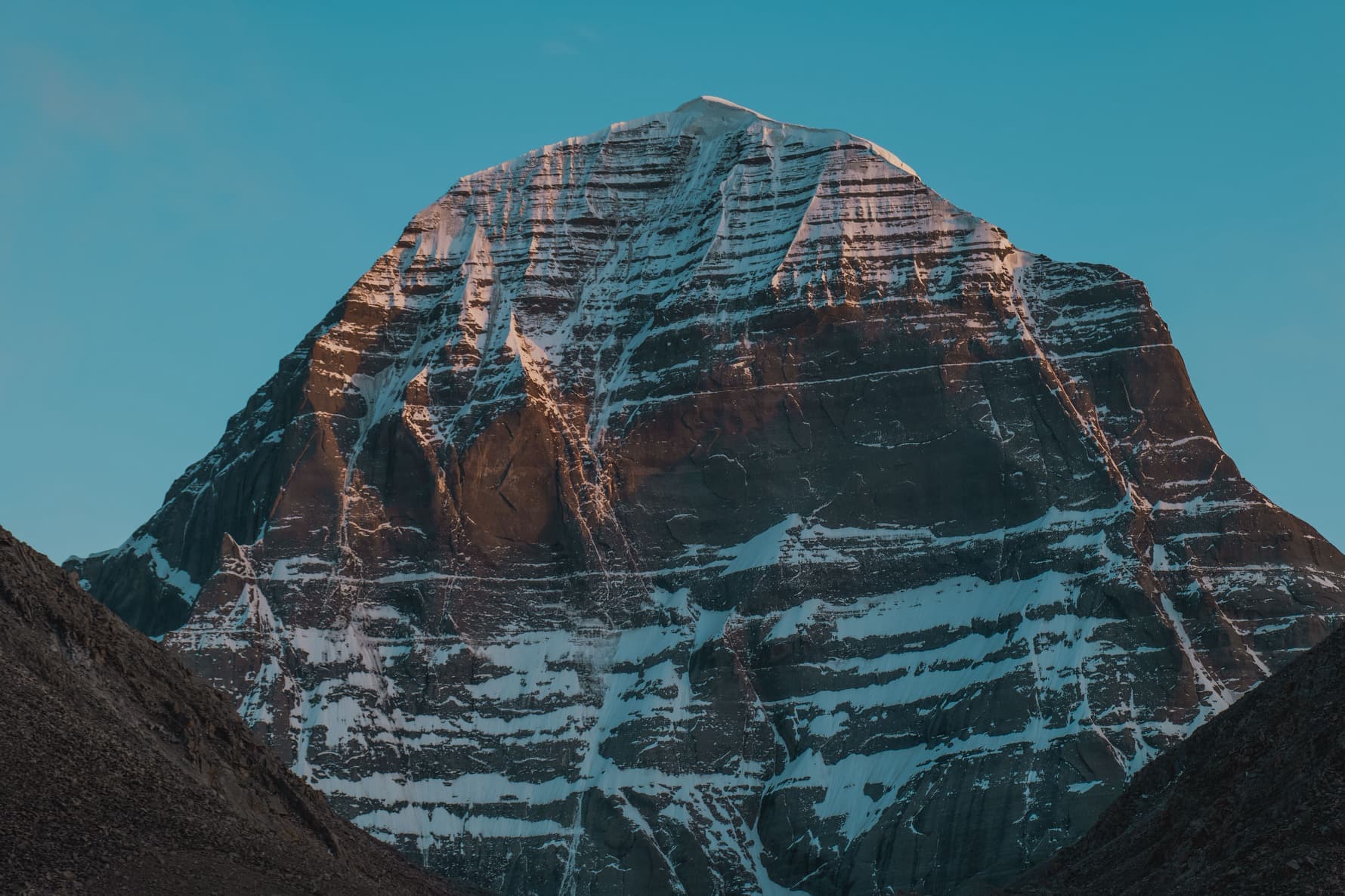
Kora Around Kailash: Dolma La Pass, the Heart of Pilgrimage

Dolma La Pass (5,630 m) is the highest point of the kora around Mount Kailash and the most challenging section of the route. You will traverse it on the second day of the circuit when your body has started to acclimatize to the altitude, but your reserves of energy are not yet depleted. It is here, among hundreds of prayer flags and stones left by pilgrims over the centuries, that you feel the weight of the journey, both physical and internal.
The climb to Dolma La takes about four hours from the Dirapuk Monastery; the descent into the Lha-Chu valley adds another three. The pass demands respect: the weather can change in minutes, the wind hits your face, and breathing becomes noticeably more difficult. But it is this boundary between effort and surrender that makes Dolma La the heart of the kora, a place where pilgrimage ceases to be a walk and becomes a meeting with oneself.
Below is an honest map of the ascent, the altitude risks our groups face, and how we help navigate this section without unnecessary stress.
What is Dolma La Pass and Why is it a Key Moment of the Kora
Dolma La is named after the bodhisattva Tara (Dolma in Tibetan), the embodiment of compassion and protector of travelers. Pilgrims believe that at the top of the pass, Tara accepts the symbolic death of old karma and grants rebirth. Therefore, many leave a stone or a piece of clothing at the foot of the pass as a sign that the old is released.
- Altitude. At 5,630 meters, it is higher than the base camp of Everest. If you haven't ascended above 4,500 meters before, your body will feel a lack of oxygen: your breath quickens, your heart beats louder, and every step requires attention. Practically, this is not scary if you walk slowly, drink water, and do not hesitate to stop. In our groups, the pace is set by the slowest participant; this is the rule.
- Symbolism. For Tibetans and Hindus, crossing Dolma La is a stage of purification. They prostrate, leave offerings, and recite mantras. You don’t have to follow the ritual, but witnessing this process up close is a powerful experience. The silent concentration of people walking for their faith changes the optics: the kora ceases to be a trek and transforms into something greater.
- Geography. The pass lies between the northern and eastern faces of Kailash. From the summit, you can see glaciers and the frozen Gauri Kund Lake (5,608 m), which pilgrims circle for blessings. The landscape is harsh: stones, moraines, and snowfields even in summer; there are no trees or shelters. The weather is the master here and is rarely kind to the unprepared.
Day Two of the Kora: Route from Dirapuk to Zutulpuk via the Pass
The second day starts early, usually around 6:00-7:00 AM, to complete the ascent by noon while the wind is still tolerable. You leave the guesthouse in Dirapuk (5,080 m), have a hearty breakfast of porridge or Tibetan tea with butter (po cha is filling but an acquired taste), check your backpack and trekking poles.
Section 1: Dirapuk, Start of the Ascent (1.5–2 hours, ~3 km)
The trail runs along the Lha-Chu river valley, gradually gaining altitude. Kailash remains on your left, its northern face sparkling in the sun if the weather is favorable. It is still relatively comfortable here: the slope is gentle, the stones underfoot are stable, and conversation is possible.
About an hour in, you pass the Shiva-Tsal field, a place where pilgrims leave personal belongings or strands of hair as a sign of "death of the ego." The field is strewn with clothing, shoes, and stones with names. The atmosphere is heavy but not gloomy; rather, it is solemn. It’s worth stopping here for five minutes, just to sit in silence.
Section 2: Ascent to Dolma La (2.5–3 hours, ~4 km, ascent 550 m)
After Shiva-Tsal, the trail sharply ascends. The stones get larger, and there are scree slopes; in some places, you will need to use your hands for support. Breathing becomes more difficult, which is normal at 5,300–5,500 meters. The main rule is to take shorter steps than you want and breathe deeper than seems necessary. Taking breaks every 10–15 minutes is not a weakness but a safety technique.
In the last 200 vertical meters, the slope is covered with prayer flags, hundreds of thousands of lungta tied to ropes, stones, and sticks. The wind flutters them with a sound that makes it seem as if the mountain is breathing. Pilgrims leave notes, photos of loved ones, and coins here. You can bring your flag or simply stand among this sea of color and whispers of fabric.
At the summit of the pass stands a stone stupa adorned with katags (white scarves). Around it are chaotic pyramids of stones, each representing someone's prayer. If you feel up to it, you can descend to Gauri Kund Lake (5,608 m), a 15-minute walk down the glacier, but the trail is slippery, and not everyone dares. We usually advise: if you feel dizzy or your blood pressure fluctuates, skip the lake and save your energy for the descent.
Section 3: Descent into the Lha-Chu Valley and Zutulpuk (3–4 hours, ~10 km, descent 630 m)
The descent is steep and quick; the stones are loose, and your knees bear the load, making trekking poles a support. For the first hour and a half, you walk over moraines, and then the trail flattens out, revealing grass, streams, and the first bushes. The air noticeably thickens at 5,000 meters, making breathing easier, and your body feels this as a gift.
By evening, you arrive in Zutulpuk (4,790 m), the last guesthouse on the kora. There is a monastery with a cave where, according to legend, Milarepa meditated. In the evening, we usually gather for dinner, sharing impressions; some remain silent, others cry from exhaustion and relief. Both options are normal.
Altitude and Acclimatization: How the Body Reacts at 5,630 Meters
At Dolma La, the oxygen concentration is about 50% lower than at sea level. This is not Everest, but it is serious stress for an unprepared body.
Typical Symptoms of Mild Altitude Sickness During Ascent
- Shortness of breath. You feel breathless even at a slow pace, and your heart beats faster to pump more blood.
- Headache. A dull, pressing pain, often in the temples or the back of the head. Ibuprofen (200 mg) and water help.
- Nausea. Appetite decreases, and sometimes mild queasiness sets in. Don't force yourself to eat; a snack of nuts or chocolate is sufficient.
- Fatigue. Your legs feel heavy, and you want to sit down every five minutes. This will pass after the descent.
If symptoms worsen (severe headache, vomiting, loss of coordination, confusion), this is a signal to descend immediately. We always have a guide and porters who can help organize an evacuation on horseback or on foot. Honestly, in ten years, I have seen two serious cases of altitude sickness, both ended well because we acted promptly.
How We Prepare You for Dolma La
-
Stepwise Acclimatization. Before the kora, we spend 3–4 days in Darchen (4,560 m) and the surrounding areas: trips to Lake Manasarovar (4,590 m), short walks, overnight stays at altitude. This gives the body time to produce red blood cells.
-
Altitude Lectures. Before heading onto the kora, we explain how to breathe, drink, and recognize alarming symptoms. It sounds trivial, but in practice, people forget to drink water, and this is the main mistake.
-
Flexible Pace. If someone in the group feels unwell, we make an unscheduled stop or offer to rent a horse (70–100 USD for the section from Dirapuk to Dolma La). No one should heroically suffer for the sake of the schedule.
Preparation Checklist for Altitude (Start 2 Months Before Departure)
- Cardio Workouts: Running, cycling, swimming 3 times a week for 40–60 minutes.
- Hiking with a Backpack: 5–7 kg, ascents in hills or stairs to simulate the load of the kora.
- Breathing Practices: Pranayama, slow breaths through the nose strengthen the diaphragm. Avoid smoking for at least a month; nicotine constricts blood vessels and worsens oxygen exchange.
If you have chronic heart, lung, or vascular conditions, a consultation with a doctor is mandatory. The kora is not extreme mountaineering, but it’s also not a stroll in the park.
Weather at the Pass: Wind, Snow, and How to Dress in Layers
Even in summer (June to September), temperatures at Dolma La range from +5 to -5 °C during the day, and at night can drop to -15 °C. The wind can be gusty, up to 20 m/s, penetrating through if your clothing is not windproof. Snow can start at any moment, turning the stones into a skating rink.
Weather Scenarios (From Our Groups' Experience)
- Sunny Day (30% of cases). Warm sun, light wind, visibility to the horizon. On such days, you can linger at the pass for half an hour, take photos, and sit in silence. But even in the sun, it’s cold at the summit; a down jacket is essential.
- Cloudy with Clearings (50%). Classic Tibetan weather: clouds roll in waves, sometimes obscuring, sometimes revealing Kailash. The wind is moderate, without snow. Comfortable for the ascent, but wind protection is needed.
- Snow and Blizzard (20%). Visibility drops to 20–30 meters, stones become covered with a layer of ice, and temperatures feel like -10 to -15 °C. On such days, we leave earlier (5:30-6:00) to cross the pass before the peak of the storm. If caught in a blizzard on the ascent, the group huddles together, and the guide leads the way, checking the trail.
Three-Layer System: What to Wear for the Ascent
-
Base Layer (Thermal Underwear). Synthetic or merino wool wicks moisture away from the body. No cotton! It absorbs sweat and chills.
-
Insulating Layer (Fleece or Light Down Jacket). Retains heat while being breathable. You’ll sweat on the ascent, so you can take off the fleece and put it in your backpack.
-
Outer Layer (Membrane Jacket and Pants). Protection from wind and snow. Gore-Tex or an equivalent is essential.
At the summit, wear a down jacket (800 fill power, lightweight), a hat, a face buff, and gloves. Stand for 10-15 minutes; that’s enough to freeze if your clothing is thin.
Footwear and Accessories
Trekking Boots with a sturdy sole and ankle support are preferable. Waterproof (with a membrane) is ideal. Gaiters protect boots from snow and stones. Trekking Poles reduce 20-30% of the load on the knees during descent. Sunglasses category 3-4 (UV400) are essential; at altitude, the sun burns the cornea. SPF 50+ Cream for your face and lips can burn in an hour.
We send a complete list of equipment to participants two months before departure; if something is missing, you can buy it in Kathmandu (cheaper than in Moscow) or rent it from us.
What to Take in Your Backpack for the Day of the Pass: Minimum KitOn the second day of the Kora, your large backpack is carried by yaks from guesthouse to guesthouse, and you only carry a daypack (20–30 liters). Every extra kilogram at altitude feels twice as heavy, so pack wisely.
Essential Minimum
- Water: 2 liters in a thermos (hot tea) + 1 liter in a bottle. Drink a few sips every 20–30 minutes.
- Snacks: nuts, dried fruits, chocolate, energy bars. Consume 300–400 kcal during the ascent.
- Personal first aid kit: ibuprofen, blister plasters, anti-nausea medication (Motilium), Diamox (as prescribed by a doctor).
- Down jacket: lightweight, compact, in a compression sack.
- Rain jacket or poncho: even if the forecast is good, the weather can change in 15 minutes.
- Spare gloves and socks: wet hands and feet can lead to frostbite. Headlamp (if setting out early or delayed on the descent).
Optional, but Useful
0.5L thermos with broth or sweet tea at the pass—a sip of something warm lifts the spirit. Power bank—in the cold, phone batteries drain quickly. Prayer flag or kata if you wish to leave something at the pass. Earplugs in case your neighbors in the guesthouse snore at night (and they will).
We always check backpacks before departure; it takes five minutes but prevents the situation of "forgot the water" at an altitude of 5,400 meters.
Risks and How We Mitigate Them
The Kora around Kailash is not an expedition to an eight-thousander, but risks exist, and we discuss them openly.
Main Risks at Dolma La Pass
-
Acute Mountain Sickness (AMS). Symptoms: severe headache, vomiting, ataxia (loss of coordination), confusion. If one does not descend, it can lead to cerebral or pulmonary edema. Our solution: the group always has a medical kit with dexamethasone and a portable oxygen tank (2 liters); the guide has completed a Wilderness First Responder course. At the first signs of distress, we organize an immediate descent.
-
Injuries (sprains, strains, fractures). Rocks are slippery, and the trail is uneven; it’s easy to twist an ankle. Our solution: trekking poles are mandatory; porters follow behind the group to assist those who tire. If the injury is serious, we call for a horse or stretcher (we have arrangements with locals).
-
Frostbite. At -5 °C with wind, exposed areas of skin (cheeks, fingers) can freeze in 10–15 minutes. Our solution: we check each person’s gear before departure; if gloves are thin, we provide spares. We do not linger at the pass for more than 20 minutes.
-
Emotional Breakdown. Fatigue, fear, tears at altitude can make the psyche fragile. I’ve seen people sit on rocks and say, "I can’t go on." Our solution: the guide talks, offers support, sometimes just walks silently beside them. The group is a strength: when you see others struggling but still moving, it helps you find your own resources.
Kora Protocol
- Guide-to-participants ratio: 1 guide for 8–10 people + 1 assistant. Plus porters (1 for every 3–4 participants).
- Satellite communication: the guide has a Thuraya satellite phone; if evacuation is needed, we contact the base in Darchen.
- Medical check before the Kora: a day before departure, we measure blood pressure, pulse, and oxygen saturation (pulse oximeter). If saturation is below 85% at rest, we recommend a day of rest.
- Flexible schedule: if the weather is critical (snowstorm, hurricane winds), we postpone the departure by a day. Safety is more important than the schedule.
Spiritual Significance of Dolma La: What Pilgrims Leave Behind and Why
For Tibetans and Hindus, Dolma La is not just a geographical point but a portal between the old and the new. The ascent symbolizes the accumulation of karmic burden, the summit is the moment of ego death, and the descent represents rebirth.
Rituals at the Pass
- Prostrations (nambai). Pilgrims lie flat on the stones, stretch their arms forward, stand up, take a step, and then go back down. This is how they complete the entire Kora. At Dolma La, many do 108 prostrations in a row, which can take an hour.
- Offerings. They leave money (small yuan), food, alcohol, hair, and clothing. It is believed that items left here carry away diseases and sins.
- Prayer flags (lungta). They are tied to ropes or stones; the wind carries the prayers printed on the fabric in all directions. The colors are not random: blue (sky), white (clouds), red (fire), green (water), yellow (earth).
You are not obliged to participate in the rituals, but if you wish, no one will stop you. I have seen Europeans tie a flag with the name of a deceased relative; others simply sat silently, looking at Kailash. Both approaches are respected.
Gauri Kund Lake: Is It Worth Going Down?
Gauri Kund (5,608 m) is a glacial lake 200 meters below the pass vertically. Hindu pilgrims circle it clockwise (15 minutes), sometimes dipping their hands in the water, which is believed to grant blessings from Parvati, Shiva’s wife.
- Pros: beautiful place, few people, a sense of additional effort (descended and ascended back to the pass).
- Cons: the trail is slippery (ice under stones), adds 30–40 minutes of time, risk of exacerbating altitude sickness symptoms.
We usually suggest: if you feel good and the weather is tolerable, go down, but don’t linger. If you feel dizzy or have pressure in your temples, skip it and save your energy for the main descent.
Common Mistakes at Dolma La (and How to Avoid Them)
Over the years, I have seen the same mistakes repeatedly, and I share them so you don’t repeat them.
1. Too Fast a Pace on the Ascent
- Mistake: a person walks at their usual pace, as on flat terrain. After an hour, they are out of breath, sit down, and can’t get up anymore.
- Solution: the pace should be 30–40% slower than usual. Short steps, steady breathing: two steps in, two steps out. This seems silly until you try it.
2. Not Enough Water
- Mistake: took 1 liter for the day, finished it by lunchtime, and continues dehydrated. Result: headache, nausea, increased risk of AMS.
- Solution: at least 3 liters of water per day. Drink every 20–30 minutes, even if you don’t feel thirsty. At altitude, thirst is dulled—don’t wait for it.
3. Incorrect Clothing
- Mistake: wore everything at once (thermal underwear + fleece + down jacket), sweated on the ascent, took off the jacket, and froze in the wind.
- Solution: start at base + thin fleece. When stopped at the pass, put on the down jacket. On the descent, remove excess clothing, leaving the membrane.
4. Ignoring Symptoms
- Mistake: has a headache, feels nauseous, but a person endures and doesn’t tell the guide, "I don’t want to let the group down."
- Solution: any discomfort at altitude is a reason to speak up. The guide will assess the situation, provide a tablet, or suggest a pause. Heroism is inappropriate here; health is more important.
5. Forgetting About the Sun
- Mistake: didn’t apply sunscreen, didn’t wear sunglasses; by evening, the face is red, eyes are watering (early stages of snow blindness).
- Solution: SPF 50+ cream on the face, lips, and ears. Sunglasses rated 3–4. Even if it’s cloudy, UV radiation at altitude is 2–3 times higher.
Photos and Videos at the Pass: How to Shoot at Altitude
At Dolma La, you want to capture everything—the flags, Kailash, people’s faces, your tired but happy reflection in a selfie camera. But shooting at 5,630 meters has its nuances.
Technical Points
- Batteries drain quickly. Cold kills the charge in 20–30 minutes of active shooting. Carry spare batteries in your chest pocket (closer to the body) and warm them with your hands before installing.
- Condensation. If you bring the camera from the cold into a warm guesthouse, wait 15 minutes before turning it on. Otherwise, the lens will fog up from the inside.
- Shaky hands. At altitude, fine motor skills suffer, and frames can be blurry. Use short exposures (1/250 and faster) or a tripod (compact, up to 500 g).
Ethics of Shooting
- Take pictures of pilgrims with permission. Many don’t mind, but some consider photos an intrusion into their practice. Ask with a gesture (show the camera, nod questioningly); if they shake their heads, put the camera away.
- Do not photograph those prostrating up close. This is an intimate moment; it’s better to shoot from a distance, in a wide shot.
- Take selfies quickly. It’s cold and windy at the summit; five minutes is the maximum for a shot. Take group photos in turns to avoid holding up others (during the season, there can be 50–100 people at the pass at the same time).
What to Shoot
Overview panoramic shot: the entire pass, flags, a chain of people on the slope. Details: tattered flags, stones with mantras, faces of pilgrims, your hands against the sky. Process: ascent, break, first sip of tea after the descent. Kailash from the pass: if you are lucky with the weather, the southern face can be seen in all its glory. Shoot with a wide-angle lens (16–35 mm) or a phone in panorama mode.
Tip: don’t spend all your energy on shooting. Take 10–15 shots but ensure you have enough strength left for the descent and memories in your mind, not just on your memory card.
What to Do After the Pass: Descent and Recovery
The pass is behind you, the flags left behind, but the day is not over. The descent from Dolma La to Zutulpuk (the overnight stop) is another 8–9 kilometers, with an elevation drop of about 600 meters. This part requires just as much attention as the ascent.
Descent: How Not to Kill Your Knees
Why is descent dangerous? Body weight presses on the kneecaps, and ligaments stretch. Fatigue accumulates, attention wanes; it’s easy to twist an ankle on the rocks.
How to Descend Safely:
-
Don’t rush. Speed causes heel strikes against the ground; the knee absorbs all the impact. Walk with small steps, placing your foot gently.
-
Use poles. Transfer some weight to your arms, reducing the load on your legs.
-
Elastic bandages or knee pads. Did you put them on this morning? Great. If not, it’s too late now, but for the future, they are insurance for your ligaments.
-
Take short breaks every 30 minutes. Sit down, remove your backpack, stretch your feet. Your knees will thank you.
Gauri Kund: A Place of Power for Women
An hour into the descent, you will see the emerald Gauri Kund Lake (5,608 m) on the right, a sacred place associated with the goddess Parvati. Female pilgrims immerse themselves in the water (even in winter!) to wash away karma and gain fertility.
Is it worth swimming? The water temperature is +2…+5 °C. If your health allows, strip down to your underwear, dip yourself up to your waist, and come out after 10–15 seconds. Tibetans believe this enhances the effect of the Kora. If in doubt, just touch the water with your hand or wash your face. The energy of the place is strong even without swimming.Important: After the lake, the path goes steeply down loose scree. Be especially careful, your knees are already tired.
Zutulpuk: Overnight after the Pass
By evening, you reach Zutulpuk, a small inn and monastery at an altitude of 4,790 m. Almost all groups stay here after the day of the pass.
What to expect: Rooms like in Dirapuk: bunks, mattresses, bring your own sleeping bags. Dinner (usually soup, rice, vegetables) feels like a feast after a day at high altitude. The toilet is outside, and the washbasin is shared (the water is icy).
- How to recover:
- Electrolytes. Drink rehydration solution or a sports drink, as you lost a lot of salts during the day.
- Foot and calf massage. 10 minutes of self-massage improve blood circulation and reduce swelling.
- Sleep. Here, at 800 meters lower than the pass, it's easier to breathe, and sleep is deeper. Go to bed early; tomorrow you have another 14 km to Darchen.
Day After the Pass: Zutulpuk to Darchen
The third day of the circumambulation is the easiest physically, but sometimes the most challenging mentally. The body is tired, emotions are on edge, and there’s a desire for a shower and a bed with a mattress.
Route: 14 km, 3–4 hours
-
Elevation change: descent from 4,790 to 4,560 m (Darchen).
-
Terrain: gentle valley of the Lham Chu-Khir River, grassy slopes, sparse stupas.
-
Pace: relaxed. Groups often walk in silence, each lost in their own thoughts.
-
What’s important:
-
Don’t relax completely. Rocks, streams, and uneven trails require your attention until the end of the path.
-
Record your feelings. These are the last kilometers of the circumambulation. Remember the smell of wormwood, the sound of the river, and the creaking of your own boots; you’ll recall them later.
Completion Rituals
When you reach the stupa at the entrance to Darchen (the same place where you started), it’s customary to: Circumambulate the stupa clockwise three times. Prostrate (if you have the strength) at its base as a sign of gratitude. Leave an offering of some food, coins, or kata (white scarf).
Some cry, some laugh, and some just sit in silence. All is well. The circumambulation is not a tourist route, but an inner journey, and the finish line is unique for each person.
Frequently Asked Questions (FAQ)
Is it possible to complete the circumambulation without acclimatization? Theoretically yes, but practically it’s dangerous. Without preparation, the risk of altitude sickness at Dolma La is close to 80%. At least 3 days in Lhasa, and 2 days in the Kailash region are necessary.
How much does the circumambulation cost? The permit to enter the Kailash area is about $20. Overnight stays in guesthouses are $10–15 per spot. A porter (if desired) costs $30–50 per day. A complete tour with acclimatization, transfers, and a guide starts from $1,500–2,500 per person (depending on the season and group size).
Do I need a guide? Yes, it’s mandatory for foreigners in Tibet. You cannot legally go independently. A guide organizes permits, transport, and addresses issues along the route.
What to do if you don’t reach the pass? Stop, turn around, and descend. It’s not a failure; it’s the right decision. Kailash isn’t going anywhere; you can return another time prepared.
Is it possible to complete the circumambulation in winter? Yes, but it’s extreme. Temperatures can drop to −30 °C, with snow and the risk of frostbite. In winter, only experienced pilgrims and climbers go. Beginners should choose summer or autumn.
Conclusion: What Remains After the Circumambulation
The circumambulation around Kailash is not a checkmark on a list of achievements. It’s a transformative experience. Some find clarity on life’s questions, while others gain confidence that they can do more than they thought. Some return with an understanding of what is truly important and what is noise.
Dolma La is the highest point, not just in meters but in internal tension. But it is there, in the wind, in the thin air, among colorful flags and silent stones, that many find what they came for, even if they couldn’t articulate it in words.
If you feel ready, come. Pilgrimage and tour programs to Kailash include acclimatization, preparation, support on the route, and space for internal work. This is not mass tourism; it’s a journey for those seeking not just beautiful photos, but a meeting with themselves.
Kailash is waiting. The only question is when you will be ready to answer its call.
Circumambulation Around Kailash: Dolma La
Introduction to the Circumambulation Around Kailash

The circumambulation around the sacred mountain Kailash is a 52-kilometer journey through the highlands of Tibet, which pilgrims of four religions have traversed for centuries. This route transforms physical effort into a part of spiritual work: each ascent, each turn of the path is a step towards rethinking oneself.
You walk in the footsteps of Tibetan monks, Hindu sadhus, and Bon practitioners. Prayer flags surround you, stupas dot the landscape, and the silence is broken only by the wind and the crunch of stones underfoot. This is a place where nature and faith merge without words.
Overview of the Sacred Route
Kailash is considered sacred by Buddhists, Hindus, Jains, and followers of Bon. The circumambulation, performed clockwise (Bon practitioners go counterclockwise), cleanses karma and brings one closer to enlightenment. At least, this is what pilgrims believe. For you, it may be a path to yourself, to silence, to the limits of your body’s capabilities.
Key figures: 52 km total length of the route 2–3 days standard completion time 5,630 m altitude of the Dolma La pass, the most challenging point of the journey
On the route, you will encounter stone piles, mantras on rocks, tea houses, and camping sites. The landscapes are harsh: gray slopes, glaciers, turquoise lakes. Nothing extra, just you, the mountain, and space for contemplation.
Significance of the Circumambulation for Pilgrims and Tourists
For Tibetans, the circumambulation is a way to accumulate merit and cleanse negative karma. Completing one circuit is believed to wash away the sins of a lifetime. 108 circumambulations signify liberation from samsara. It sounds symbolic, but at over 5,000 meters, each circuit is a true test of will.
For guests, the circumambulation offers something different: Immersion in practice as you walk alongside pilgrims who prostrate every few meters; their devotion becomes part of your experience. Contact with nature as the thin air, abrupt weather changes, and icy winds at the pass teach you to be present in the here and now. Cultural depth through encounters with monks, overnight stays in simple lodgings where hosts share buttery tea and stories.
One of our guests said after Dolma La: “I came to test myself physically. I left with questions that I will seek answers to for a long time.” The circumambulation does not provide ready-made solutions; it opens up space for them.
Mention of the Kailash Program: Sacred Circumambulation from Lhasa
We organize pilgrimages along the route Kailash: Sacred Circumambulation from Lhasa with acclimatization, transfers, and experienced guides who know the trail and its pitfalls. The program includes: Route from Lhasa gradual altitude gain through Shigatse, Lake Manasarovar, so the body has time to adapt. Overnight stays in guesthouses simple but warm rooms; at high altitude, this is more important than it seems. Guide support a person who has completed the circumambulation dozens of times, knows where to slow down, where to get water, and how to recognize the first signs of altitude sickness.
Useful Tips for Travelers
The circumambulation involves altitude, cold, and physical exertion. Here’s what to consider if you plan to go:
- Documents and Visas: A visa for Tibet must be arranged through a travel agency; independent entry is prohibited. We handle this part for you. You will need a passport (valid for at least 6 months) and a Chinese visa.
- Budget:
The average cost of an organized pilgrimage with circumambulation is $1,200–1,800 per person (depending on the season, group size, and comfort level). This amount includes transfers, accommodation, meals, permits, and a guide.
- Hidden Expenses: Insurance is mandatory, covering high-altitude routes (about $50–80). Porters/yaks if you plan not to carry your backpack yourself: $30–50 per day. Additional oxygen $50–100, in case of acute mountain sickness.
- Cost-saving Tips: Join group departures, which are cheaper than individual tours. Book 3–4 months in advance: prices are higher in summer (June–August 2027), and spots are limited. Bring energy bars and tea in a thermos, as the food selection in guesthouses is modest and prices are inflated.
The circumambulation around Kailash is not a tourist attraction. It is a journey that requires respect for the mountain, for yourself, and for tradition. If you are ready for the cold, fatigue, and the encounter with what lies beneath everyday hustle, this route will truly reveal itself to you.
Characteristics of the Circumambulation Route Around Kailash

The circumambulation around Kailash is a transformative route. 52 kilometers through highlands, sacred passes, and silence where each step feels different. Below are the key characteristics that will help you understand what to expect on your journey.
Length of the Route: 52 Kilometers Over 2–3 Days
The complete circle around the mountain is 52 km. Most groups complete the circumambulation in two full days with an overnight stay in a guesthouse at an altitude of 5,000 meters (Dirapuk or Zutulpuk, depending on pace). Prepared pilgrims can finish in one daylight, while those who go slower or make prostrations stretch it over three days.
The path is not paved. It consists of rocks, sand, icy streams, and steep ascents. The views compensate for everything: the north face of Kailash, the Lha-chu valley, turquoise lakes at its base. But this is not a walk; it’s a pilgrimage where the body works, and the mind quiets down.
Difficulty Level: Altitude, Acclimatization, Equipment
The circumambulation is physically demanding. Honestly: even trained individuals can experience shortness of breath, headaches, and weakness at Dolma La (5,630 m). Three factors determine success:- Acclimatization. Before the circumambulation, you need to spend at least 3–4 days at an altitude of 3,500–4,500 m (Lhasa, Shigatse, Saga). A sudden ascent without preparation is a direct path to altitude sickness. Our groups always include acclimatization days; neglecting them may require you to interrupt the circumambulation.
- Physical fitness. You should comfortably walk 10–12 km a day with a 5–7 kg backpack over rugged terrain. Start hiking a month before the trip (stairs, hills, treadmill with an incline). Cardiovascular exercises and strengthening your legs are essential. Yoga and breathing practices are a bonus that helps at the passes.
- Equipment. Trekking boots with a rigid sole (not sneakers), thermal underwear, down jacket, moisture-wicking layers, hat, gloves, sunglasses (UV 400), SPF 50+ cream, trekking poles. The weather can change within an hour: sun in the morning, snow at noon, wind up to 20 m/s by evening. Lightweight gear increases the risk of frostbite or overheating.
Points of Interest: Sacred Sites and Nature
The circumambulation is not only a physical challenge but also a series of sacred stops, each with its own story: Choku Gompa (the monastery at the start of the circumambulation) is where pilgrims receive blessings before their journey. Here, you also get the first view of the southern face of Kailash. Dirapuk is a guesthouse and monastery on the northern side of the mountain, at 5,000 m. From here, you have a direct view of the northern face, characterized by a vertical crack (Buddhists call it "the ladder to heaven"). The sunrise here is a separate experience. Dolma La Pass (5,630 m) is the highest point of the circumambulation. Tibetans leave clothing, strands of hair, and drops of blood here as symbols of letting go of the old. Hundreds of lungta flags, stones, offerings. The air is thin, but the ascent is worth it: a view of the valley and the Gaurikund Lake (according to legend, Shiva created it for the bathing of Parvati). Gaurikund Lake is emerald and icy, at an altitude of 5,608 m. Buddhists and Hindus consider the water sacred; some pilgrims immerse themselves (we do not recommend risking hypothermia). Zultripuk is another guesthouse at the end of the route, at an altitude of 4,790 m. Inside, there is a cave where, according to legend, Milarepa meditated. You can stay here if you split the circumambulation into three days. Lha-chu Valley is the final section, a gentle descent along the river. Breathing becomes easier here, and you regain your strength.
Useful Tips for First-Time Pilgrims
A few practical points that are often overlooked:
- Visa and permits. For Tibet, you need a Chinese visa + Tibet Travel Permit + Alien's Travel Permit (if you are going to closed areas, including Kailash). We arrange this through a tour operator; you cannot do it independently. The processing time is 3–4 weeks, sometimes longer.
- Budget. The full program with circumambulation (including flights, visas, accommodation, meals, guide, transport, permits) ranges from 1,500 to 2,500 USD per person, depending on the route and comfort level. Kailash: Sacred Circumambulation from Lhasa and Kailash via Nepal: Circumambulation with Gosainkunda are two reliable options with detailed budgets included in the program.
- Hidden costs: medical insurance covering high-altitude trekking (regular insurance is not suitable), vaccinations (Hepatitis A, typhoid are recommended), tips for guides and drivers (50–100 USD per group for the entire trip), additional hotel nights if your flight is rescheduled.
- How to save without compromising quality: Book flights 4–6 months in advance for cheaper prices and more date options. Join a group (4–8 people) to share the cost of transport, guides, and permits. Choose programs with guesthouses instead of hotels on the circumambulation route; the price difference is significant, and the experience is more authentic.
The circumambulation around Kailash is a journey where physical effort opens up inner space. If you are ready for altitude, stones, and silence, this route will become one of the most powerful experiences of your life.
Circumambulation around Kailash: Dolma La Pass is the Highest Point of the Journey

Dolma La Pass, at an altitude of 5,630 meters, is the most challenging and, honestly, the most intense part of the circumambulation around Kailash. Here, the air is thin, the wind is strong, and there is an inner silence that can only be found on the edge of the possible. In our groups, this section is traversed in different ways: some walk in silence, others with tears of relief on the descent. But everyone remembers it forever.
Below are some things to know in advance to ensure that Dolma La becomes a meeting rather than a trial.
Altitude, Weather, and Landscape of the Pass
Numbers and Reality 5,630 meters above sea level is higher than the base camp of Everest. The oxygen level is about half that of the plains. The ascent takes 3–5 hours from the last stop (Dirapuk), and the descent to the next camp takes another 2–3 hours. The elevation gain for the day is about 600 m up, then nearly 800 m down. Your knees and breathing will be working at their limits.
Weather: What to Prepare For
The climate at the pass can change within 15 minutes. In the morning, it may be sunny and calm, but by noon there could be snow, winds up to 20 m/s, and visibility of just a few meters.
- Temperature: from −5°C to −15°C during the day (in May and June); it gets even colder at night.
- Wind: almost always; at the crest, it feels like −20°C.
- Precipitation: snow is possible even in summer, especially after lunch.
In practice, the best time to cross is early morning (start at 5–6 AM). There is less wind, fewer other groups, and a greater chance of crossing the pass by noon before the weather deteriorates.
Views from the Pass
From Dolma La, you can see the northern face of Kailash, steep, icy, and absolutely vertical. Nearby are the Himalayas, and Gaurikund Lake is slightly lower on the trail (frozen until June), with lungta flags on the rocks. The landscape is harsh, but just as a sacred place should be: unadorned, without comfort—only you, the stones, and the sky.
Spiritual Significance of Dolma La for Buddhists
Why It Is a "Place of Death and Rebirth"
In Tibetan tradition, Dolma La Pass is a symbolic point of death for old karma. It is believed that here, a pilgrim leaves behind past mistakes, attachments, and fears. The descent from the pass signifies a new birth, a cleansed life.
- Rituals: Tibetans leave a strand of hair, a piece of clothing, and a drop of blood at the pass as a sign of letting go of the old.
- Prostrations: some pilgrims traverse the entire pass in full prostration, lying on the stones. This takes the whole day, but for them, it is the essence of pilgrimage.
- Prayers: the mantra "Om mani padme hum" is almost continuously recited; lungta flags carry them in the wind.
For you as a traveler, this is not mandatory. But if you wish, you can leave a symbolic item (a scarf, a note) at the stupa at the summit. Many do so intuitively and later say that something inside them "let go" at that moment.
Atmosphere
At the pass, there is almost no conversation. People walk in silence, each at their own pace and in their own thoughts. Even if you are not a Buddhist, this silence and concentration are contagious. I have never had a group where someone joked or complained at Dolma La; only breathing, footsteps, and gratitude when you see the stupa at the summit.
Preparation for the Ascent: What to Take with You
Clothing and Gear
The pass involves cold, wind, and physical exertion all at once. The layering system works best:
- Base layer: thermal underwear made of synthetic materials or merino wool (cotton is excluded as it gets wet and does not warm).
- Middle layer: fleece jacket or vest; you can take it off while climbing and put it on at the summit.
- Outer layer: windproof and waterproof membrane jacket (Gore-Tex or similar), insulated down jacket in your backpack for stops.
- Bottom: trekking pants + thermal leggings underneath; at the pass, you can add windproof layers.
- Head and hands: a hat that covers your ears; a balaclava or buff for your face against the wind; gloves (better to have two pairs, thin + warm).
Footwear Trekking boots with high ankle support, rigid soles, and a membrane. Break them in before the trip because blisters at high altitude can be torturous. Gaiters protect against snow and stones; they are very helpful on the descent. Trekking socks (bring two pairs).
Equipment and Essentials
- Trekking poles: they reduce up to 30% of the load on your knees and help maintain balance on the rocks at the pass. Backpack (25–35 L): the main luggage is carried by yaks or vehicles; you only carry your daily supplies.
- Water: 1.5–2 liters in a thermos (regular bottles freeze in the cold). You need to drink often, even if you don't feel thirsty, as dehydration worsens altitude sickness symptoms.
- Snacks: nuts, dried fruits, chocolate, energy bars. Hot tea from a thermos is a lifesaver at the summit.
- Sun protection: SPF 50+ cream, lip balm, sunglasses (category 3–4); ultraviolet rays at high altitude are intense, and snow reflects them doubly.
- Personal first aid kit: adhesive bandages (mandatory!), pain relievers, altitude sickness tablets (Diamox, if approved by a doctor), antiseptic.
Documents Passport (original). Chinese visa and Tibet permit (we arrange these for you in advance, but keep copies with you). Insurance policy (check that it covers heights up to 6,000 m and evacuation).
Practical Advice: Visa, Budget, Hidden Costs
Visa and Documents
For the trip to Kailash, you need a group Chinese visa + special Tibet permit (Tibet Travel Permit) + Kailash permit (Alien's Travel Permit). You cannot obtain these independently; they can only be arranged through an accredited tour agency.
We handle all the paperwork for you; you need to: Submit documents for the Chinese visa 3–4 weeks before departure. Send a scan of your passport and a photo for the permits.
Important: entry to Tibet is only possible as part of an organized group with a guide. Individual trekking is prohibited.
Budget for the Circumambulation (Approximate)
Prices for 2027 (from Lhasa or via Nepal): Organized tour (Jay Shambo): from $1,200 to $2,500 per person, depending on the route and group size. Includes transport, guide, permits, accommodation, and some meals. Additional costs: Visa for China: ~$140–180. Flights to Lhasa or Kathmandu: from $500 (depends on the departure city). Insurance: $50–100 (mandatory, covering altitude). Personal expenses (souvenirs, extra meals, tips for porters): $100–200.Total: ~$2000–3500 per person "all-inclusive."
Hidden Costs and How to Save
-
Hidden items: Gear rental (sleeping bag, trekking poles, down jacket), if you don't have your own: $5–10/day. Porters or horse/yak for personal belongings on the trek: $30–50/day (optional, not necessary). Oxygen cylinder in case of altitude sickness: $30–50 (better to have at least one in the group).
-
Tips: For the guide, driver, and cooks, traditionally $50–100 per group.
-
Saving tips:
- Book 4–6 months in advance: Early prices are 10–15% lower, plus more date options. Group tours are 1.5–2 times cheaper than individual ones.
- Bring your own gear: Renting for two weeks is more expensive than buying. Insurance can often be cheaper through aggregators (Cherehapa, Sravni.ru) than directly.
How We Cross Dolma La with Jay Shambo Groups
On our routes Kailash: Sacred Trek from Lhasa and Kailash via Nepal: Trek with Gosainkunda, the Dolma La pass is the climax, but not a sprint.
- Acclimatization: Before the trek, we spend at least 3–4 days at an altitude of 3500–4500 meters (Lhasa, monasteries, Lake Manasarovar) to help the body adapt.
- Pace: We walk slowly on the pass, with stops every 15–20 minutes. "Slow and steady wins the race" applies literally here.
- Support: Guide, cook, porters; first aid kit, oxygen, communication with rescuers. If someone feels unwell, we descend; health is more important.
- Flexibility: If the weather is dangerous (storm, icing), we postpone the start or change the route. The pass will wait.
The trek around Kailash is not just tourist hiking. It is a meeting with oneself at altitude, where the body and mind work at their limits, and everything unnecessary falls away. Dolma La is the brightest point of this encounter. We do everything to ensure you pass it safely, mindfully, and with the feeling that this was your journey.
Climbing Experience: What to Expect and How to Prepare

The trek around Kailash Dolma La is a physical test and an opportunity to understand yourself more deeply, to hear the silence, to feel how your breath changes at altitude. To make the journey without unnecessary losses and to gain what you came for, it is worth preparing in advance. I share what works in practice.
Logistics: How to Get to the Start of the Route
- Main departure points: Lhasa or Nepal. From Lhasa via Shigatse and Saga, the road will take two days with stops for acclimatization. Through Nepal, the route goes from Kathmandu to the border, then by jeep to Darche, the starting point of the trek.
- Transport: Most often minibuses or land cruisers. In organized groups, logistics are already sorted: transfers, stops, overnight stays. If you are traveling alone, book your seats a month in advance, especially from April to October.
- Plan in advance: During the season, transport gets booked quickly. It's better to secure your route and places before flying.
Equipment and Gear Tips
- Footwear: Trekking boots with a stiff sole and ankle support. Break them in before the trip; blisters on Dolma La turn the ascent into torture.
- Clothing: Layers. Thermal underwear, fleece, down vest, waterproof jacket. Weather changes in an hour: minus five in the morning, plus fifteen in the sun during the day, and cold again by evening. A hat, gloves, and a buff are a must.
- Gear: A 30–50 liter backpack if you carry it yourself. If with porters or yaks, a daypack will suffice. A sleeping bag rated for -10°C minimum (it can get cold in guesthouses). First aid kit: diamox for altitude sickness, pain relievers, band-aids, antiseptic. SPF 50+ cream, lip balm—sun at altitude burns. Trekking poles will thank your knees on the descent from Dolma La.
Safety During the Trek: What to Pay Attention To
- Acclimatization: At least two days in Lhasa or a week with a gradual altitude gain through Nepal. If you go straight to 5000 m, there is a risk of pulmonary or cerebral edema.
- Guide and group: An experienced guide can spot symptoms of altitude sickness earlier than you. In our groups, the guide always has a radio and oxygen. Honestly, going alone is dangerous—help may not arrive in time.
- Health: Headache, nausea, shortness of breath at rest are signs. Don't be a hero: descending 500 m often resolves the issue. We are always ready to turn the group around or call for transport.
- Water and food: Drink 3–4 liters a day. Boil or filter water in streams—giardia lives there. Food in guesthouses is simple: rice, noodles, momo. Bring energy bars and electrolytes along; they will sustain you on the Dolma La pass.
Useful Tips for Travelers
A few points to help avoid unnecessary questions and expenses:
- Visa and permits: A Chinese group permit is required for Tibet and cannot be obtained independently. We handle all the paperwork along with the tour. Your passport must be valid for another six months.
- Budget: An organized tour from Lhasa or Nepal ranges from $1200 to $2000 per person (transport, guide, permits, basic accommodation and meals). Personal expenses will be an additional $200–300: souvenirs, tips, extra drinks.
- Hidden costs: Medical insurance covering high altitude trekking (regular insurance does not work above 3000 m). Vaccinations for hepatitis A and typhoid are recommended. Renting a sleeping bag or oxygen cylinder on-site costs $10–30.
- How to save: Book 3–4 months in advance; early prices are 15–20% lower. Group tours are cheaper than individual ones: share the jeep, guide, and cook. Don't bring extra gear—there's rental in Kathmandu and Lhasa.
The trek around Kailash is a path to oneself through stones, wind, and silence. It is not a race, but a meeting with what is inside. Join us on this journey: Kailash: Sacred Trek from Lhasa or Kailash via Nepal: Trek with Gosainkunda.
Budget and Planning

Planning the trek is not just about the route and acclimatization. Honestly, many arrive with a vague idea of the costs, only to face unexpected expenses in Lhasa or on the road. Below are real estimates based on our groups' experiences, along with some tips to help you prepare calmly.
Expense Estimates for the Trip
- Overall budget: For the trek around Kailash, budget from $1000 to $1500 per person (excluding international flights). This amount includes transportation within Tibet, accommodation, food, visa fees, and guide services.
- Transport: A round trip flight from Kathmandu to Lhasa will cost approximately $400–600; land transfer from Lhasa to Darche and back is about $100–150 per person on a group option. If you plan a private jeep, the price will double.
- Food: In Lhasa and on the way, expect to spend $20–30 per day. In monastery guesthouses on the trek, it's simpler and cheaper, but the choices are limited to thukpa, momo, and butter tea.
- Accommodation: In Lhasa, expect $15–20 per night in a budget hostel to $50–100 in a three-star hotel. On the trek, you will stay in simple guesthouses, costing $10–20 per spot; sometimes in shared rooms with bunks.
Accommodation and Food in Practice
In our groups, we stay in trusted places: in Lhasa, small hotels with oxygen cylinders at the reception, clean rooms, and hot water (not always available around the clock). On the trek, the monastery shelters Dirapuk and Zutulpuk: Spartan conditions, wooden bunks, yak blankets, and shared outdoor toilets. This simplicity and silence are part of the experience.
Food: In Lhasa, eat at local Tibetan canteens—delicious, fresh, and safe. Avoid raw vegetables and ice in drinks at altitude. The menu on the trek is monotonous: momo (dumplings), thukpa (noodles), fried rice, butter tea. We always recommend bringing bars, nuts, and dried fruits; they will help maintain energy on the Dolma La pass.
Routes that Combine the Trek with Other Sacred Sites
If you want to deepen your journey, check out the program Kailash via Nepal: Trek with Gosainkunda. It starts with a trek to the sacred lakes of Gosainkunda in the Himalayas of Nepal—gentle acclimatization, beautiful views, fewer tourists—followed by a flight to Lhasa and the trek itself. This approach allows the body to adapt gradually and see two facets of the Himalayan tradition.
The classic option Kailash: Sacred Trek from Lhasa is suitable for those who have been at altitude before or are ready for quick acclimatization in Lhasa before heading west.
Useful Tips
- Visa and permits: For Tibet, you need a Chinese group permit (processed by an agency, not issued independently), plus a tourist visa for China. We take care of this; you just send us a scan of your passport.
- Medical insurance: Choose a policy that covers heights above 4000 meters and helicopter evacuation. Read the fine print; some insurances exclude Tibet.
- Hidden costs: Budget $100–200 for souvenirs, donations in monasteries, extra snacks, and unforeseen situations (e.g., renting a horse on the ascent to Dolma La if you feel weak).
- Savings: Join a group to share transport and guide costs. Book three to four months before flying: spots fill quickly from March to May 2027. Buy gear in advance at home, not in Kathmandu—there's a markup on trekking clothes there.
The trek around Kailash is a journey inward, not a race for comfort. The simplicity of life, the silence of the mountains, and the rhythm of your steps teach you to appreciate the little things. If the numbers and logistics are daunting, remember: we have done this route dozens of times, and our job is to lift the organizational burden from you, so you can walk easily and with an open heart.
FAQ

How to Prepare for the Trek Around Kailash?# Physical Preparation
Start preparing one and a half to two months in advance. Cardio and endurance are your main allies: walking 5–7 km, running, or cycling. If you live in a flat area, add stair climbing to mimic working at altitude. In practice, we find that those who simply walk regularly and aren’t afraid of a challenge feel the best in our groups.
Equipment
Trekking boots (must be well broken in!), thermal underwear, a rain jacket, and a backpack with a capacity of 30–40 liters. Bring a first aid kit: pain relievers, blister plasters, and altitude sickness medication (like Diamox or similar—consult with your doctor). Sunscreen with SPF 50+ and lip balm are essential, as the sun in the mountains is unforgiving.
What documents are needed for the trip?
Visa and Permit
For Tibet, a Chinese visa plus a special Tibet Travel Permit is required, which is arranged by a tour operator (you cannot obtain it independently). We take care of the entire package of permits; you just need to send a scanned copy of your passport and a filled-out application form on time. Allow 3–4 weeks for processing before departure.
Insurance
Medical insurance covering high-altitude trekking (up to 5,600 m) is mandatory. Make sure the policy includes helicopter evacuation and emergency hospitalization; this is critical for Kailash.
What is the budget for the trip?
Tour Cost
Programs lasting 10–12 days usually cost between $1,200 and $2,000 per person, depending on the route, accommodation level, and group size. This amount includes permits, transportation within Tibet, most overnight stays, and guide services.
Additional Expenses
Budget for meals, souvenirs, and tips for guides and drivers at around $15–25 per day. If you hire a porter or a yak at Dolma La Pass, add another $50–80 for the entire route. Honestly: many manage without them, but if you feel it might be tough, this is a reasonable safety net.
How to minimize expenses?
Group Tours
Join a group tour to share the cost of jeep rental, guide services, and permits among all participants. The savings can be significant: an individual tour can cost one and a half times more.
Booking in Advance
Tickets from Moscow/St. Petersburg to Kathmandu or Chengdu are cheaper when booked 2–3 months before departure. Early registration for the tour can also sometimes provide discounts. Plus, you’ll have more time to gather your gear without rushing.
How to best plan the itinerary?
Choosing the Season
The optimal window is from April to October 2027. May and September are considered ideal: there’s less snow and more comfortable temperatures. In summer (July–August), rain is possible, but everything is green, and there are fewer pilgrims.
Combining with Other Routes
If you want to see more, combine the kora with trekking in Nepal, for example, Kailash via Nepal: kora with Gosainkunda. This way, you will acclimatize smoothly in the Himalayas and then approach Kailash well-prepared. Another option is to start from Lhasa, visiting monasteries and Manasarovar Lake: Kailash: sacred kora from Lhasa.
The kora around Kailash is a physical effort that opens up inner space. We invite you to embark on this journey with us and touch the sacred silence of Tibet.