Circumambulation Around Kailash: Route Details

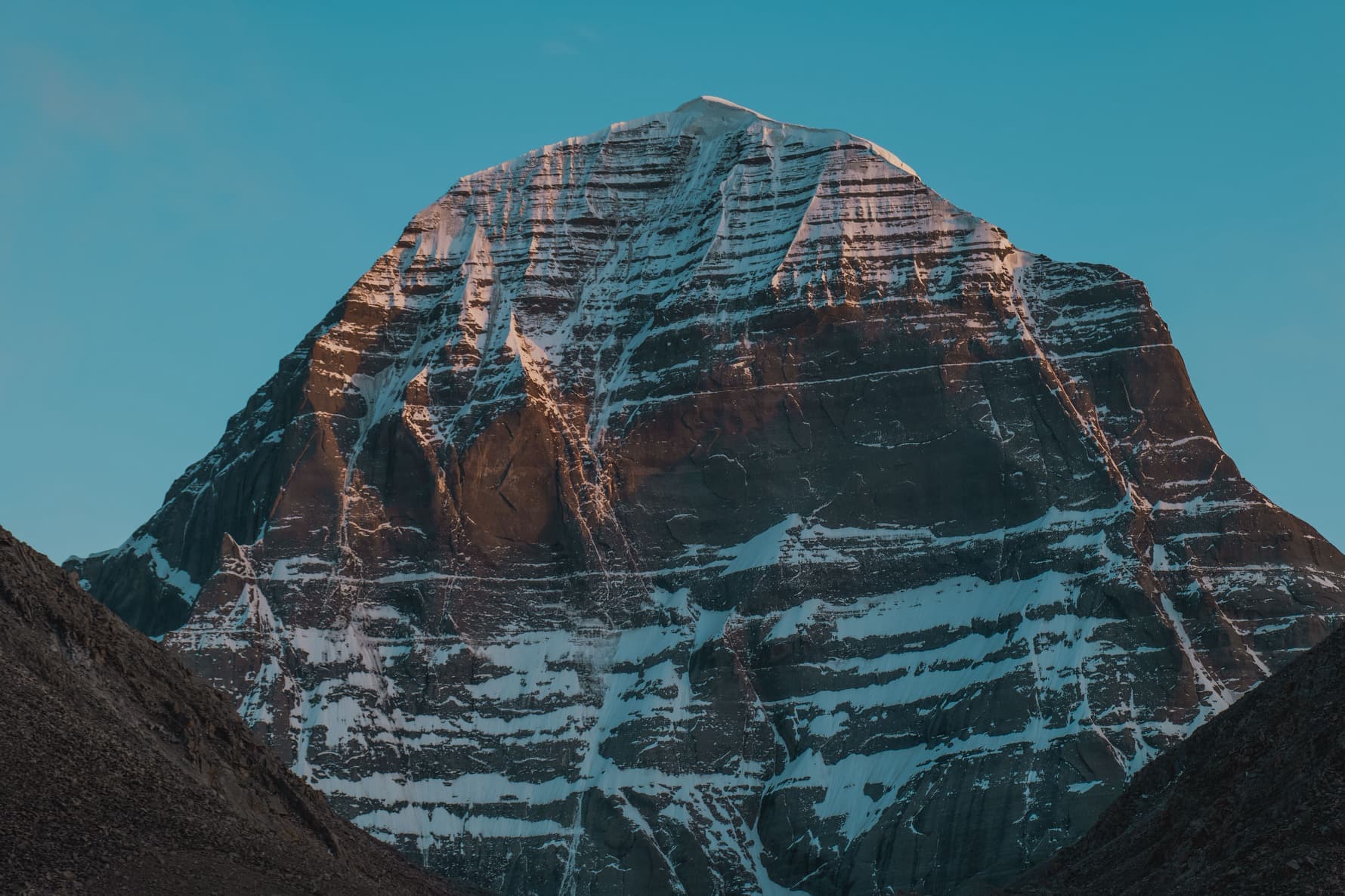
The circumambulation around the sacred mountain Kailash remains one of the most powerful pilgrimage routes in Tibet. The journey typically takes three days, ascending to altitudes ranging from 4600 to 5630 meters, and requires not so much athletic preparation as patience and respect for your own body. In this text, you will find practical details about the route: daily transitions, overnight stays, altitudes, what to bring with you, and what to pay attention to if you are going for the first time.
General Route Overview
The traditional circumambulation around Kailash covers approximately 52–56 kilometers (depending on the starting point and options for circling monasteries). The route begins in the village of Darchen (4560 m), passes through the La-Chu valley, ascends to the Drolma-La pass (5630 m), and descends through the Lham-Chu valley back to Darchen.
Most pilgrims and travelers divide the journey into three stages:
- Day 1: Darchen → La-Chu valley → Dira-Puk (monastery at the northern wall of Kailash) about 18–20 km, +600 m elevation gain.
- Day 2: Dira-Puk → Drolma-La pass → Zutul-Puk (or Dzultripuk) 18–22 km, +1000 m to the pass, then descent -1200 m.
- Day 3: Zutul-Puk → Darchen 12–14 km, mostly a gentle descent.
The physically toughest day is the second: the ascent to Drolma-La begins at four in the morning, with little oxygen and a slow pace. In practice, many take breaks every 50–100 meters. This is normal.
Day One: Darchen to Dira-Puk
The start from Darchen usually happens after breakfast, around 8–9 AM. The first kilometers are along a wide valley beside a river, with a gentle incline and a gradual increase in altitude. On the left and right are reddish-brown slopes, and ahead, the western wall of Kailash gradually comes into view.
About 8 km in is the Chuku Gompa monastery (4800 m). Here, you can rest, fill your water bottles from the stream (boil or filter it), and have a snack with cookies. The trail becomes slightly steeper ahead: you enter a gorge, and the northern wall of Kailash begins to dominate the landscape.
By lunchtime, there’s another resting point, Dira-Puk Guest House (a small guesthouse, often closed, but there are nearby tea houses for pilgrims). From here, it takes about an hour to walk to the Dira-Puk monastery, which stands at 5070 meters, directly opposite the northern wall offering an impressive view, especially at sunset.
- Overnight: in the guesthouse at the monastery (shared rooms, bunks, bring your sleeping bags) or in tents nearby. There is usually no electricity or it is available for a couple of hours in the evening. Toilets are outside, and the water is cold. Dinner consists of thermos tea, instant noodles, and biscuits; sometimes monks or locals offer momo (Tibetan dumplings) and butter tea; if your stomach can handle it, take some: you will need the calories.
- What’s important: Keep a slow walking pace, with your heart rate not exceeding 120–130. If you start to feel breathless, stop and breathe. Drink water every 20–30 minutes, even if you don’t want to. Dehydration at altitude worsens headaches. In the evening, go to bed early: the ascent to the pass usually begins at 3–4 AM.
Day Two: Dira-Puk to Drolma-La to Zutul-Puk
The most challenging and significant section of the circumambulation. The ascent to Drolma-La pass takes 4–6 hours, in darkness, with headlamps. The trail winds up with stones and snowfields (even in summer); by the end of the ascent, the air is thin, and every step requires effort.
Why start so early?
Firstly, to cross the pass before noon, as the wind often picks up and precipitation can occur in the afternoon. Secondly, the pace at high altitude is very slow: at 5630 meters, most people begin to experience mild altitude sickness (headache, nausea, weakness). Stretching the ascent over an entire day is dangerous.
At the pass, there’s a ritual site with prayer flags, and pilgrims leave clothing or a strand of hair (symbolizing "letting go of the old"). Views open southward to Lake Gauri-Kund (also Tukdze-Chenpo, “Lake of Compassion”) and beyond to snow-covered ridges. It’s better not to linger here for long: it’s cold, windy, and oxygen is scarce.
The descent from the pass is steep, about 8 km, putting a strain on your knees; trekking poles are very helpful. After a couple of hours, you reach Lake Gauri-Kund (5470 m), a turquoise, icy lake where pilgrims perform ritual washings (if desired; in our group, we usually limit ourselves to touching the water with our hands—honestly, not many are ready to dive in at -10°C in November).
The trail then continues down the Lham-Chu valley, gradually descending to the Zutul-Puk monastery (4790 m). Overnight conditions are slightly better than in Dira-Puk: there’s sometimes electricity and hot water in thermoses. Dinner again is basic: noodles, cookies, and tea. You’ll fall asleep quickly: your body is exhausted.
Checklist for the second day: Warm clothing in layers: thermal underwear (top + bottom), fleece jacket, down jacket or warm coat. At the pass, temperatures can drop to -15 °C even in summer. Gloves, hat, face buff. A headlamp with spare batteries. Glucose, chocolate, nuts for quick energy in your jacket pockets. A thermos with hot tea (0.5–1 liter). You will want something warm to drink at the pass. Trekking poles. Essential; your knees will thank you on the descent.
Day Three: Zutul-Puk to Darchen
The final section of the circumambulation is the easiest physically and the most emotionally tranquil. The path goes down the valley, altitude decreases, and breathing becomes easier. The landscape changes: green meadows (in summer), streams, herds of yaks. After about 4–5 hours of leisurely walking, you return to Darchen.
Many pilgrims (especially Tibetans) head straight to Lake Manasarovar after completing the circumambulation to perform a ritual washing and close the cycle. If you are part of a pilgrimage tour to Kailash, this day is usually included in the program.
After the circumambulation: In Darchen, there are hotels with hot showers, decent food, and the opportunity to charge your phone and rest before the return trip. The body takes 1–2 days to recover. Drink plenty of water, eat protein (eggs, chicken, if available), and don’t rush.
What to Bring: Practical List
The circumambulation involves three days without a shower, minimal amenities, and serious physical exertion. The weight of your backpack is important: porters or yaks can be hired in Darchen (about $50–80 for the entire route), but many choose to carry their own backpacks.
Clothing and Footwear Trekking boots with a stiff sole, already broken in. Avoid new ones to prevent blisters. Spare socks (2–3 pairs), preferably trekking wool or synthetic. Thermal underwear (top + bottom), fleece jacket, down jacket or warm coat. Windproof and waterproof membrane jacket and pants. Gloves, hat, buff. Sunglasses (category 3–4) as UV rays are strong at altitude, and snow reflects light. A cap or bandana under your hat (for sun protection during the day).
Gear Sleeping bag (comfort -10…-15 °C). Guesthouses have blankets, but they are thin. A camping mat (foam or inflatable) as the bunks are hard. Trekking poles. A headlamp + spare batteries. A backpack of 40–50 liters (if going with a porter, 25–30 liters is fine).
First Aid Kit Diamox (acetazolamide) for altitude sickness prevention. Start one day before the circumambulation, taking 125 mg in the morning and evening. Consult a doctor. Ibuprofen or paracetamol (for headaches). Activated charcoal or Smecta (for stomach upset). Adhesive bandages, elastic bandage. Sunscreen SPF 50+, lip balm with SPF. Wet wipes, hand sanitizer.
Food and Water Thermos 0.5–1 liter (guesthouses provide hot water). Energy bars, nuts, dried fruits, chocolate. Instant noodles (if unsure about food at guesthouses). Water purification tablets or a filter.
Documents and Essentials Passport, permits (kept by the guide, but having a copy is useful). Cash in yuan (small bills) for tips, momo, and porters. Power bank (for phone charging). Trash bags (carry everything out with you; Kailash is a sacred place).
Physical Preparation: How Much is Needed?
The circumambulation does not require mountaineering skills, but it is a serious three-day trek at high altitude. If you regularly walk (at least 5–7 km a day), can climb stairs without breathlessness, and have no health contraindications (heart, pressure, lungs), you will likely manage.
Recommendations: Start walking with a backpack (10–15 kg) for 10–15 km several times a week 2–3 months before the trip. Better on uneven terrain with ascents and descents. Strengthen your knees: squats, lunges, walking with sticks. If possible, go to the mountains at altitudes of 3000–4000 m a couple of months before Kailash. The body "remembers" acclimatization.
To be honest, you will meet people of various ages and physical conditions on the circumambulation, from 25 to 70 years old. The main thing is to respect your body and be ready to go slowly.
Acclimatization Before the Circumambulation
Even if you are in good shape, flying to Lhasa (3650 m) and starting the circumambulation the next day is a bad idea. Altitude sickness will catch up with you on the ascent to Drolma-La, turning the route into a torment.
Optimal Scheme:
-
Lhasa: 2–3 days. Walks around Barkhor, ascent to the Potala Palace, excursions. At 3650 m, this is the first stage of adaptation.
-
Road to Kailash: stops in Shigatse (3900 m), Saga (4600 m), on the way to Darchen. Each night, the body adjusts to the new altitude.
-
Darchen: 1 rest day before the circumambulation. A short walk to the starting point of the route, no more.
In our tours to Kailash, acclimatization is built into the program; we spend time in Lhasa, make gradual transfers, and monitor participants' well-being. This is not excessive caution: skipping acclimatization means risking your health.
Safety and Altitude Sickness
Altitude (mountain) sickness is a real risk. Symptoms: headache, dizziness. Nausea, loss of appetite. Weakness, quick fatigue. Swelling (face, hands, legs). Shortness of breath at rest.
- What to do: For mild symptoms (headache, slight nausea), slow down your pace, drink more water, and rest. Take ibuprofen. If symptoms worsen (severe shortness of breath, vomiting, coordination problems), descend immediately. This is no joke: pulmonary or cerebral edema can develop rapidly.
- Don’t hesitate to tell the guide or group if you feel unwell. This is not a weakness; it’s common sense.
In Jay Shambo groups, there are always oxygen tanks (for emergencies) and communication with medical services in Darchen. In practice, serious cases are rare if acclimatization is done correctly.## Cultural and Spiritual Aspects
Circumambulation around Kailash is not just trekking. For Buddhists, Hindus, Jains, and Bonpos (followers of the Bon tradition), circling the sacred mountain is an act of purification, merit accumulation, and a step towards liberation. Tibetans believe that 108 circumambulations erase the karma of all past lives; some pilgrims perform prostrations every few steps. Such a journey takes not three days, but two to three weeks.
Respect for Traditions: Walk clockwise (except for Bonpos, who walk counterclockwise). Do not stray from the path towards shrines without permission. Do not make noise, play music, or litter. If you encounter pilgrims performing prostrations, give way to them. Photograph people only with their consent; monks and interior monastery spaces only after permission. Obos (stacks of stones with prayer flags) are sacred places. You may place a stone, but do not destroy them.
Circumambulation is an inner journey. Many note that physical exhaustion, thin air, and the silence of the mountains create a special state where the mind calms down, and inner questions find their own answers. You do not need to be a religious person to feel this.
Weather and Seasons
Kailash is located in the high-altitude zone of Western Tibet; the climate here is harsh, and the weather is changeable.
- Seasons:
- May-June: Spring, snow still lies on the passes, night temperatures -5…-10 °C, during the day +5…+10 °C. Fewer tourists, but the risk of snowfalls.
- July-August: Summer season, the warmest time. During the day +10…+15 °C, at night around 0 °C. More pilgrims and groups; rain is possible but brief.
- September-October: Autumn, stable weather, fewer precipitation. During the day +5…+10 °C, at night -5…-10 °C. A good time for circumambulation.
- November-April: Winter. Daytime temperatures -10…-15 °C, at night up to -30 °C. Snow, strong winds. Circumambulation is possible but requires serious preparation and experience. Most guesthouses are closed.
In 2027, our tours with circumambulation around Kailash are scheduled for May-June and September, optimal windows for a safe and comfortable passage of the route.
Alternatives: Inner Circumambulation and Yak Circumambulation
Besides the classic outer circumambulation (parikrama, gangkora), there is an inner circumambulation (nangkor), a shorter but steeper route around the base of Kailash. It requires special permission and is usually accessible only to Tibetan pilgrims or in the company of a local guide. We at Jay Shambo do not include the inner circumambulation in our programs: access is restricted, and the route is technically more complex.
Yak Circumambulation: If your physical condition does not allow you to walk the entire way, you can hire a yak or horse. The animal carries you uphill; on descents and at the pass, you will still have to walk (yaks cannot traverse steep rocky sections). The cost is about $100–150 for the entire route, and you need to negotiate in Darchen. Honestly, riding a yak is less comfortable than it seems—altitude, jolting, and cold. But if your health does not permit you to walk independently, this is an option.
Cost of Circumambulation: What’s Included and What’s Paid Separately
If you are traveling independently (which in Tibet is only possible as part of an organized group with a guide and permits; individual tourism is prohibited), the cost of circumambulation breaks down as follows:
- Permits: about $200–300 per person (arranged by a travel agency).
- Transport: Lhasa-Darchen and back (jeep, 4–5 days on the road) $150–200 per person in a group.
- Guesthouses on the route: $10–20 per night (shared room).
- Food: $5–10 per day (basic food in guesthouses + your own supplies).
- Porter or yak: $50–150 (optional).
Total: about $400–600 per person (excluding flights to Lhasa).
In organized tours by Jay Shambo, the cost is higher but includes: all permits, transport, guides, acclimatization in Lhasa, accommodation and meals throughout the route (including circumambulation), medical insurance, oxygen tanks, satellite communication, and support from an experienced guide who knows the route and cultural context.
For many, this is justified: circumambulation is not a place for experiments or saving on safety.
Frequently Asked Questions
Can you complete the circumambulation in two days? Technically yes, some Tibetans and experienced trekkers do it in one day. But for most people, especially those at high altitude for the first time, it is dangerous: the risk of altitude sickness increases sharply. Three days is a reasonable pace.
Is a visa needed for Tibet? Tibet is part of the PRC, but entry requires not only a Chinese visa but also a special permit (Tibet Travel Permit). It can only be arranged through a travel agency; independent entry is prohibited. Details can be found in our article about visas and documents (link to tours to Kailash).
Is there mobile service and internet? In Darchen, Chinese operators (China Mobile, China Unicom) provide 3G/4G service. There is no service on the circumambulation route. Guides carry a satellite phone for emergencies.
Can women complete the circumambulation? Yes. There are no gender restrictions. In practice, women complete the circumambulation as successfully as men—the key is not speed, but acclimatization and pace.
What should I do if I can't complete the circumambulation? Return to Darchen the same way or wait for transport (jeeps sometimes drive through the valley to Dirapuk). The main thing is not to risk your health. Circumambulation is not a competition.
Conclusion
Circumambulation around Kailash is a test not just of physical strength, but of the ability to listen to oneself, respect the limits of one’s body, and proceed at one’s own pace. The route is tough: altitude, cold, minimal comforts. But this simplicity is the essence of pilgrimage—removing everything superfluous and being alone with the mountain, the sky, and the inner path.
At Jay Shambo, we have been leading groups to Kailash for several years, and each time we see how people return from the circumambulation transformed—calmer, more whole, with a sense of completion of something important. If you are considering taking this path, start with preparation: physical, documentary, and inner. And if you need support, we are always here.
Namaste 🙏
Circumambulation around Kailash: Route Details
Introduction to Circumambulation around Kailash

Circumambulation around Kailash is a path that pilgrims from different countries and traditions have walked for centuries. Every step here is filled with meaning: the mountain is considered the center of the world in Buddhism, Hinduism, Bon, and Jainism. The route passes at an altitude of 4500–5630 m, and you need to prepare for it seriously, both physically and mentally.
General Overview of the Sacred Circumambulation
Circumambulation is the act of walking around Mount Kailash clockwise, the classic route is about 52–56 km (depending on the starting point). Most groups complete it in 3 days, although Tibetans can do it in one, and some stretch it to four. Each person chooses their own pace: for some, meditation on each turn is important, while others aim to finish before the snowfall.
The main challenge is the Drolma-La Pass (5630 m). In practice, it is here that you feel how well you have acclimatized in Lhasa and at Lake Manasarovar. Honestly, without preparation, the first day feels easy, while the second turns into a trial.
Significance of Kailash for Various Religions and Cultures
- Buddhism: the mountain is where Buddha Demchok (Chakrasamvara) resides in union with the dakini Dorje Phagmo. Circumambulation purifies karma and brings one closer to liberation.
- Hinduism: the abode of Shiva and Parvati. One circumambulation washes away the sins of a lifetime, while 108 circumambulations open the path to moksha.
- Bon: according to legend, the founder of the Tonpa Shenrab tradition descended from the heavens here. Bonpos circumambulate the mountain counterclockwise.
- Jainism: at the summit, according to legend, the first Tirthankara Rishabhanatha attained liberation.
Each tradition has its own rituals of prostration, mantras, and offerings, but they all agree on one thing: Kailash is not just stone and ice; it is a living force.
Brief Overview of the Route and Its Features
Day 1: Darchen to Dirapuk (20 km, +600 m) Start from the village of Darchen (4560 m). The trail is gentle, running along the western wall of Kailash—the giant white pyramid visible from afar. By evening, you will reach a guesthouse or tent camp near the Dirapuk Monastery. Here you will first feel the altitude: you may experience headaches, so it’s important to drink plenty of water and not rush.
Day 2: Dirapuk to Drolma-La to Zutrul-Puk (18–22 km, +1070 m / -1400 m) The most challenging section. The ascent to the pass starts early in the morning to avoid wind and snow in the afternoon. Drolma-La (5630 m) is the "place of Tara," where pilgrims leave scraps of clothing and locks of hair, symbolically dying and being reborn. After the pass, there is a steep descent to the sacred lake Gauri-Kund (Tara-Tso), followed by several more hours to Zutrul-Puk. On this day, groups tend to stretch out; it’s important to listen to your body and not hesitate to go at your own pace.
Day 3: Zutrul-Puk to Darchen (14 km, -400 m) A gentle descent along the eastern wall. The energy is different now: the circumambulation is coming to an end, and you can feel relief and quiet joy. By lunchtime, you will return to Darchen.
- Helpful Tips for Preparing for the Circumambulation:
- Acclimatization is essential: a minimum of 2–3 days at an altitude of 3500–4500 m (Lhasa, Shigatse, Manasarovar) before starting. Without this, the risk of acute mountain sickness is high.
- Gear: trekking boots with ankle support, thermal underwear, down jacket, rain jacket, UV400 sunglasses, SPF 50+ cream. There can be snow at the pass even in summer.
- Medicine: Diamox (by physician's prescription), pain relievers, blister plasters, electrolytes. There is a basic clinic in Darchen, but you should rely on yourself. Budget (approximately for 2027): Permit to Tibet (group) about $100 per person. Accommodation in guesthouses along the circumambulation $10–20 per night (basic rooms, often without showers).
Food $15–25 per day (noodles, rice, momos; hot meals are more expensive at altitude).
Porter or yak for the backpack $30–50 per day (optional).
Transport Lhasa-Darchen-Lhasa (Land Cruiser, shared) $150–250 per person. Hidden expenses: emergency evacuation (insurance covering up to 6000 m!), an extra night in a guesthouse if you fall behind schedule, offerings in monasteries.If you want to embark on the kora with experienced guides who understand the nuances of the route and accompany the group from acclimatization to return, take a look at our programs: Kailash: Sacred Kora from Lhasa (the classic option through Tibet) and Kailash via Nepal: Kora with Gosainkunda (the route with additional acclimatization in the Himalayas of Nepal). The kora is not just a physical challenge; it is also a meeting with yourself at the limits of your abilities. What remains afterward changes you forever.
Kora around Kailash: Route Details

The kora around the sacred mountain Kailash is a journey that combines a physical challenge with deep spiritual practice. In this section, we will outline the route day by day, show key points on the map, and provide practical tips so you can prepare mindfully and calmly.
Detailed Description of Each Stage of the Journey with Elevation
Day 1: Dolla (4500 m)
Dolla (4500 m)
Initial acclimatization. A short walk around the camp helps the body adapt to the altitude, stabilizing your breath.
Day 2: Dolla to Turnpa (4700 m) Distance: 12 km. Elevation: 4700 m. The path winds through picturesque fields and hills; the pace is slow, allowing plenty of time for photos and contemplation.
Day 3: Turnpa to Dolma-La (5600 m) Distance: 10 km. Elevation: 5600 m. The ascent to Dolma-La pass, the highest point of the kora. From here, you can enjoy breathtaking views of Mount Kailash; many pilgrims leave prayer flags at the pass.
Day 4: Dolma-La to Chukot (4700 m) Distance: 12 km. Elevation: 4700 m. Descent to Chukot, where you can rest and regain strength. Your legs will thank you for the flat trail after the pass.
Day 5: Chukot to Dolla (4500 m) Distance: 10 km. Elevation: 4500 m. Completing the route with a return to Dolla. Time for reflection and meditation; many say that it is only at this stage that they truly realize what they have experienced.
Visual Map of the Route: Key Points, Passes, Camps
The map marks starting camps, passes, and resting spots. Pay attention to the Dolma-La pass; it is important to stop for contemplation and give your body a break before the descent.
Comparison of Alternative Routes (e.g., via Nepal)
When choosing a route around Kailash, consider alternative paths, such as via Nepal.
- Route via Nepal: Offers more picturesque views on approach. Opportunity for acclimatization in lower mountains (Gosainkunda, trekking in the valleys). Access to additional cultural and historical attractions (Kathmandu, monasteries).
- Direct route through Tibet: Shorter and less time-consuming. Closer to sacred sites and rituals; less tourist infrastructure and more authenticity.
Honestly, the choice depends on your mountain experience and desire to spend more time on the trail. We run both programs and see that each route offers its unique experience.
Helpful Tips for Preparing for the Kora
Physical Preparation
Before departure, it is advisable to undergo a physical training course: cardio, light weights, trekking with a backpack on weekends. This minimizes the risk of altitude sickness and makes the journey more comfortable.
Equipment
Don’t forget to bring: Quality trekking shoes (already broken in!). Warm clothing (layered system: thermal underwear, fleece, waterproof jacket). Insect repellent (at lower altitudes) and sun protection (SPF 50+, sunglasses, buff). Trekking poles for the descent from Dolma-La; they really save the knees.
Budget
Expenses for the pilgrimage can vary, but consider: Visa for Tibet (approximately $100). Accommodation and meals (around $20–30 per day in guesthouses and camps). Transportation to the start of the route (about $50–100, depending on the starting point). Guide and porter services (if hired individually, from $30–50 per day).
Hidden Costs
Be prepared for unexpected expenses: Medical assistance (insurance is mandatory, but cash may be required for a doctor's consultation). Additional equipment costs (renting a sleeping bag if you forgot yours, about $5–10 per day). Donations at monasteries (optional, but part of the pilgrimage culture).
If you want to learn more about the journey around Kailash, check out our programs: Kailash: Sacred Kora from Lhasa or Kailash via Nepal: Kora with Gosainkunda. Traveling along this sacred route will not only be a physical challenge but also a spiritual experience that will stay in your memory for a lifetime.
Route Features: Altitude and Difficulties

The kora around Kailash is a path to spiritual purification and at the same time a serious physical load. The altitude affects the body more than it seems on the map, and it’s important to honestly assess your capabilities in advance.
Description of the Height of Each Stage and Its Impact on Physical Condition
- Starting point (around 4500 m): Even if you have been in the mountains before, you will feel the difference here. Give your body time; don’t rush, maintain a steady pace.
- First pass (5100 m): Breathing becomes noticeably heavier; fatigue comes sooner than expected. Monitor your condition; this is not weakness, but a reaction of the body to thin air.
- Final point (around 5600 m): The highest section. Your well-being may deteriorate sharply here; maximum attention to yourself and inner focus is required.
Possible Difficulties Related to Altitude (Acclimatization, Health)
- Altitude sickness: Headaches, nausea, and weakness are common companions of the first days. If you notice these symptoms, slow down and rest; don’t be a hero.
- Acclimatization: Give yourself a few days to adapt, especially at the initial stages. This significantly reduces the risk of complications.
- Illnesses: A cold at high altitude is harder to cope with. Pack a first-aid kit with necessary medications; you won’t find any on-site.
Preparation Recommendations (Training, Medical Advice)
- Physical Training: Cardio workouts like running, swimming, and cycling at least 3–4 times a week for 2–3 months before the trip. This is the foundation.
- Strength Training: Strengthen your leg and back muscles, focusing on endurance exercises. On the trail, you will thank yourself.
- Medical Consultations: Get a check-up before the trip, discuss possible risks with your doctor, and ask for recommendations on altitude sickness medications (e.g., Diamox).
- Psychological Preparation: Mental resilience is equally important. Meditation and mindfulness practices will help you maintain calm during challenging moments.
When preparing for the kora, it is essential to consider all nuances to ensure the journey goes smoothly. If the idea of a pilgrimage with experienced support resonates with you, check out our programs: Kailash: Sacred Kora from Lhasa or Kailash via Nepal: Kora with Gosainkunda. Prepare with respect for this sacred place, and your pilgrimage will become what it should be: profound, sincere, and authentic.
Best Time for Trekking Around Kailash

The kora around Kailash is both a physical challenge and a spiritual journey. Choosing the right time is not a formality; the season affects how comfortable the route will be, how your body copes with the altitude, and whether you will meet hundreds of pilgrims or walk almost alone.
Analysis of Climate Conditions in Different Seasons
Honestly, there is no "ideal" weather in Tibet, only varying degrees of preparedness for cold, wind, and sharp temperature fluctuations.
- Spring (April-May): The weather becomes more stable. Daytime temperatures reach +10…+15 °C, while at night it can drop to -5 °C. Snow begins to melt, and trails open up. In practice, by May, most sections are passable, but in the morning, icy patches may remain on the rocks; trekking poles will be useful.
- Summer (June-August): The warmest period: daytime temperatures reach +20…+25 °C. Sounds appealing, but summer brings rain, and the trail often turns into a muddy stream. If you don’t mind getting wet and are ready for unpredictable weather, this time will suit you. In our groups during summer, we often encountered Tibetan families with children; they move slowly, with prayers, creating a special atmosphere.
- Autumn (September-October): Perhaps the best compromise. Rain subsides, temperatures range from +10…+20 °C, the sky is clear, and visibility is excellent. If you plan a trip, consider September and October 2027. Nature is vibrant, the air is clear, and the number of pilgrims is moderate.
- Winter (November-March): Cold. Temperatures drop to -15 °C and below, with strong winds and snow drifts. Most trails are closed, and logistics become complicated. Winter kora is undertaken by a few; it is a separate story requiring serious experience and support.
Recommendations for Choosing the Time Based on Preparation Level and Preferences- For newcomers and those visiting high altitudes for the first time: Spring (May 2027) or autumn (September-October 2027). The weather is more predictable, acclimatization is easier, and there are fewer extreme surprises.
- For experienced trekkers: Summer can be intriguing due to its unpredictability—rain, changing conditions, testing your gear. But be prepared for your membrane jacket and spare socks to become your best friends.
- For those seeking solitude: Autumn, especially late September and October 2027. The peak flow of pilgrims decreases, and the trails are quieter. You can stop at a stupa, sit down, and simply be without the hustle and bustle.
- For those striving for a deep spiritual experience: Each season offers its own energy. Spring is awakening, summer is life, autumn is contemplation, and winter is asceticism. Listen to yourself: sometimes, your inner call is more accurate than the calendar.
Additional Tips
- Plan ahead: If you choose May or September 2027, book your spot in the group several months in advance—permits, transfers, and guesthouses require time.
- Clothing: Bring a layered system including thermal underwear, fleece, a membrane jacket, a warm hat, and gloves. Even in summer, it gets cold at night. I have seen people underestimate the wind at the Dolma La pass—this is a mistake.
- Acclimatization: Allow at least three days to adjust to the altitude before starting the kora. If you fly in from lowlands, your body needs time. Rushing can be dangerous.
If you want to complete the kora with an experienced team that knows the route in detail, check out our programs Kailash: Sacred Kora from Lhasa or Kailash through Nepal: Kora with Gosainkunda. We walk with respect for the place and care for each participant so that your pilgrimage becomes not a survival feat, but a true encounter with yourself.
Safety and Logistics on the Kora

The kora around Kailash is not only a physical effort but also an inner journey. When safety and daily needs are under control, it is easier to focus on practice and not be distracted by minor details. Below are practical tips gathered from our groups' experiences.
Safety Tips During Trekking
- Trek with a group and a guide. Even for experienced hikers, it’s easier in company: support, verified logistics, someone knows where the nearest shelter is.
- Study the route in advance. Look at maps, memorize where the water points are, where to sleep, where the Dolma La pass is—this reduces anxiety on the way.
- Communication. Bring a mobile phone with a Chinese SIM card (it works in areas near Darchen and Dirapuk) or a satellite phone for safety.
- Listen to your body. If you feel dizzy, have a headache, or feel nauseous, stop, drink water, and sit down. At high altitudes, honesty with yourself is more important than pace.
Route Logistics: What to Bring, How to Organize Meals and Accommodations
- Equipment: Trekking boots with good traction (you'll encounter stones, mud, and snow). Layered thermal underwear and fleece to adjust to the weather. A waterproof jacket or poncho (for rain and wind at the pass).
- Food: Nuts, bars, dried fruits—light calories in your backpack. A thermos with hot tea (it supports both physically and morally in the cold). A water filter or chlorine tablets—streams are available, but it’s better to be cautious.
In the guesthouses at Dirapuk and Dzultripuk, they usually prepare noodles, rice, and momo; the selection is limited, but the food is hot. We recommend bringing a little of your own supplies.
Accommodation: Plan stops at traditional points: Dirapuk (first night), Dzultripuk (second). If you are traveling with an organized group, we book places in advance—rooms fill up quickly in summer. A sleeping bag rated for −5 to −10 °C is necessary. Even in June, it can be below zero at night at high altitudes.
Recommendations for Insurance and Medical Assistance
- Insurance: Mandatory. Look for a policy that covers high-altitude trekking and helicopter evacuation—serious insurance companies offer this option. Make sure that the policy covers heights up to 5,700 m and the territory of Tibet/China.
- Medical assistance: Assemble a first aid kit: pain relievers (ibuprofen), altitude sickness medication (Diamox by prescription), blister plasters, activated charcoal, antiseptic. There’s a clinic in Darchen; there are no medical posts in the Kora ring—only your first aid kit and group support.
- Acclimatization: Give yourself at least two to three days at an altitude of 3,500–4,000 m before starting. Honestly: if you rush straight to the Kora from the plane, the risk of altitude sickness increases. Drink plenty of water, move slowly, and don’t hesitate to rest.
Traveling around Kailash requires respect for yourself, the mountain, and the conditions. If you want to go with an experienced team, check out our programs: Kailash: Sacred Kora from Lhasa and Kailash through Nepal: Kora with Gosainkunda. We follow the route alongside you with care, attention, and calmness.
FAQ

What is the total distance of the kora around Kailash?
The full loop is about 52 kilometers. Depending on the pace of the group and the weather, the journey takes three to four days. If you are staying overnight, add an extra day for acclimatization in Darchen—this is the standard approach we use in our programs.
What documents are needed for traveling around Kailash?
Prepare: A foreign passport (valid for at least six months from the date of entry into Tibet). A Chinese visa (obtained at the consulate; if traveling through Nepal, additional documents may be required). Tibet Travel Permit for entry into Tibet; usually arranged by the tour operator. Group visa for participants in group tours (if not traveling individually).
Be sure to scan all documents and keep copies stored separately—communication at altitude can be unreliable, and a paper copy of your passport has helped our guests more than once.
What level of physical fitness is required for the kora?
Average. Honestly: you should be ready for the following: Walking on stones and snow at altitudes up to 5,630 meters (Dolma La pass). Daily transitions of 10-15 kilometers with a backpack weighing 5-7 kg (if you do not hire a porter or horse). Pressure drops, headaches, and shortness of breath are normal companions of acclimatization; it’s important to have a check-up with a therapist in advance and rule out contraindications (hypertension, heart conditions).
If you regularly go on weekend hikes and can comfortably handle two to three-hour climbs, the kora will be challenging but manageable. We recommend increasing your cardio, stair climbing, and weight squats two to three months before starting—it will significantly ease the pass.
What places should be visited along the route?
During the kora, you will definitely see: Manasarovar Lake, a sacred body of water where pilgrims perform ritual bathing (the water is icy even in summer, but many immerse themselves up to their waists). Chuku Monastery, the first stop on the western slope; you can leave an offering and receive a blessing from a monk. Dolma La Pass (5,630 m), the highest point of the kora; a place where it is customary to make a wish and leave a piece of fabric or stone. Valley of 84 Mahasiddhas, where it is said that great yogis meditated; the landscape resembles a lunar surface.
Each location carries special meaning, so we always allocate time for a short meditation or practice—even if you are not a Buddhist, you can physically feel the energy of the place.
What additional expenses may arise during trekking?
In addition to the base cost of the program, consider:
- Visa and permits: from 4,000 to 12,000 ₽ (depending on nationality and point of entry).
- Food and water on the route: 300–700 ₽ per day (thermos with tea, snacks, instant noodles; clean water is sold in Darchen and at monasteries).
- Accommodation in guesthouses: 700–2,200 ₽ per night (simple rooms for 4-6 people, without a shower; if you want a separate tent, add another 1,500 ₽).
- Porter or horse for the backpack: about 3,500–7,000 ₽ for the entire route (this frees up your strength for the pass).
- Personal expenses: souvenirs (thangkas, vajras, malas), donations at monasteries, tips for the guide and driver (a standard of 10% of the tour price, but this is voluntary).
Set aside an extra 15,000–20,000 rubles beyond the package so you will feel more at ease. If you want to learn how we organize logistics and what is already included in the program, check out Kailash: Sacred Kora from Lhasa and Kailash through Nepal: Kora with Gosainkunda—there you will find detailed descriptions, departure dates, and a list of what we take care of.