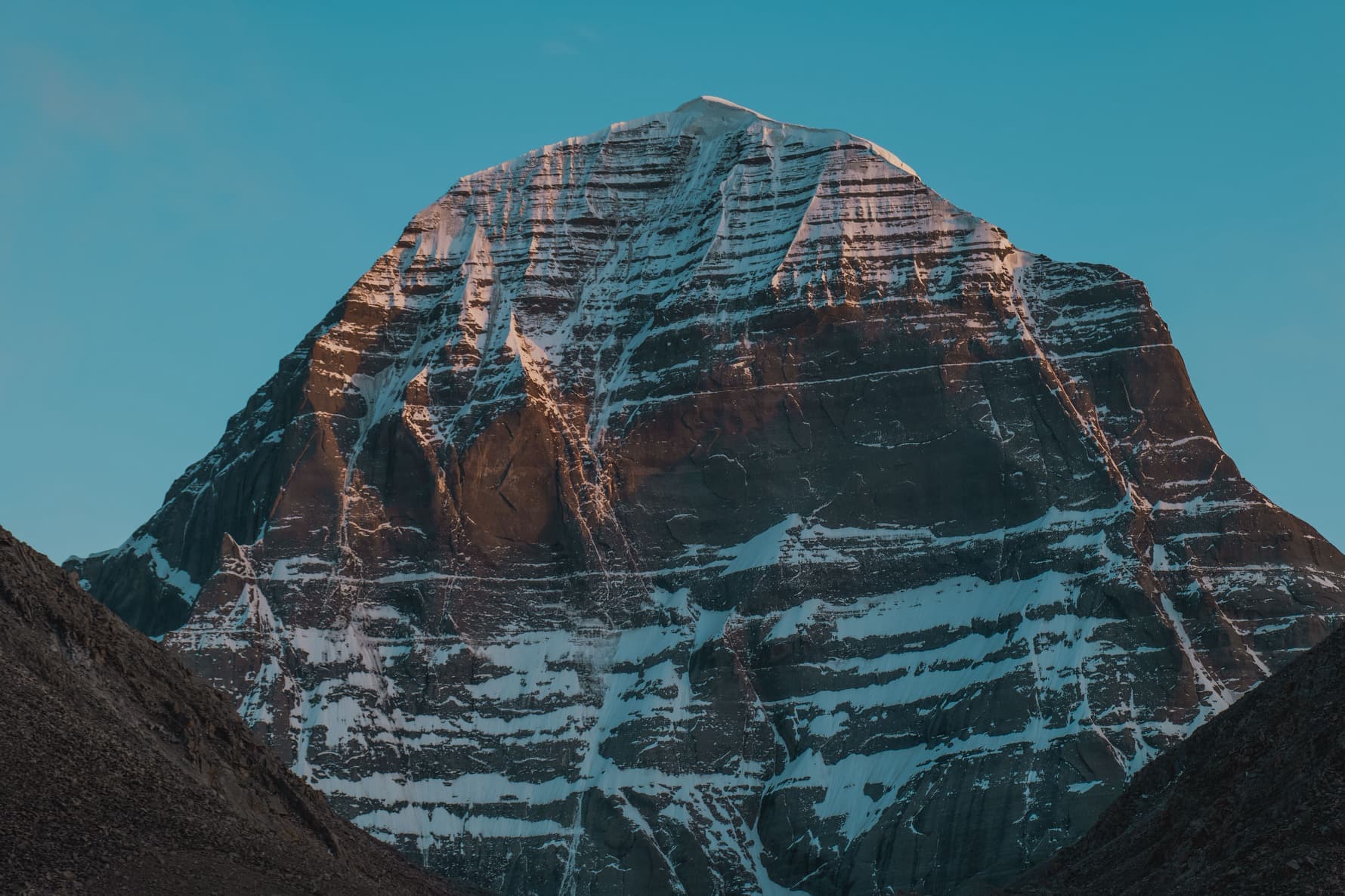
Kora around Kailash 2026

Why go on the kora around Kailash

The kora around the sacred mountain Kailash is both an external journey and an internal path. Many come to see the majestic slopes, but after just a few kilometers, they realize: something greater is happening here than just trekking.
Spiritual significance of the kora
Kailash is revered in Buddhism, Hinduism, Jainism, and Bon traditions. For Buddhists, each circuit around the mountain erases the karmic imprints of a single life; for Hindus, the mountain is the abode of Shiva, a place of power and silence. The path spans about 52 kilometers and is typically completed in three days—plenty of time to release old thoughts, fears, and see oneself anew.
Honestly, at altitude, thoughts slow down. You simply walk step, breath, step, exhale. This is meditation in motion.
Experience of meditation and inner transformation
During the kora, you will pass stupas, prayer flags, and icy streams. Each of these places offers a reason to stop and listen to yourself. At an altitude of 5,630 meters, the Drolma La Pass has thin air, and every emotion feels sharper. Many cry here or, conversely, experience sudden lightness.
I recommend bringing a notebook. The writings during the kora turn out to be remarkably honest.
Jay Shambo Programs
If you are ready for this journey, we offer two routes. Kailash: Sacred Kora from Lhasa is the classic option with acclimatization in Tibet, visits to monasteries, and a gradual ascent. The second option, Kailash through Nepal: Kora with Gosainkunda, includes trekking to sacred lakes and a gentler entry through Kathmandu.
Both programs are designed for you not just to cover the miles but to truly live them.
Tips for Pilgrims
-
Preparation. Start walking at least two months before the trip. Aim for 10–15 km with a backpack 2–3 times a week as a minimum. If you live in flat terrain, incorporate stairs, uphill climbs, any cardio load.
-
Gear. Comfortable shoes should be ones that you've already walked many kilometers in. Warm clothing in layers: thermal underwear, fleece, and a waterproof jacket. Temperatures at altitude can drop to -10 °C even in summer. Bring a lightweight mat for meditation, as sitting on the stones can be cold.
-
Psychological mindset. The kora does not tolerate haste or expectations. Walk with an open heart, without a list of "must-have experiences." Everything will come in its own time, or not come at all, and that too is an experience.
-
Health. If you have chronic illnesses, consult a doctor. Pack a first-aid kit: painkillers, altitude sickness medication (like Diamox), blister patches, antiseptic. At altitude, even a small scratch heals more slowly.
The kora is not a checkbox on a list of achievements. It is an opportunity to meet yourself in the silence of the mountains, in the cold wind at the pass, in fatigue and gratitude for each step.
Preparing for the kora: What you need to know

The kora around Kailash is a test for the body and a gift for the soul. But to undertake it joyfully rather than painfully, preparation is essential. Physically mandatory, psychologically desirable, and practically attentive to detail.
Physical preparation: Training tips
Altitude and distance are the two main challenges. The route runs at elevations of 4,500–5,630 meters above sea level, and even if you are in good shape, your body will react to the thin air.
-
Training. Start at least 8–10 weeks in advance. Walk 3–4 times a week, gradually increasing the distance to 12–15 km. Ideally, carry a backpack weighing 5–7 kg to help your body get used to the load. If possible, hike in the mountains or at least use stairs.
-
Strength exercises. Build strength in your legs and core: squats, lunges, planks. This will help during long ascents and when crossing the Drolma La Pass.
-
Cardio. Running, swimming, cycling—anything that improves endurance and prepares your heart for working at altitude. If you are not used to running, just walk briskly; consistency is key.
-
Acclimatization. Ideally, spend a few days at altitudes of 3,000–4,000 meters before the kora. If this is not possible, try not to fly directly from flatlands to Kailash; acclimatization in Lhasa or Kathmandu is essential.
Psychological readiness and meditative practices
During the kora, there will be moments when your body requests to stop, and your mind wants to turn back. Here, inner silence helps more than willpower.
-
Meditation. Start practicing at least 10–15 minutes a day. Sit down, close your eyes, and follow your breath. There’s no need to "clear your mind"; simply observe your thoughts as they float by like clouds. This skill will be very useful at altitude when you need to calm anxiety or fatigue.
-
Intention. Before the trip, ask yourself: why am I going? Not for social media, not "because it's trendy"—for yourself. Write down your answer. It will become your internal compass.
-
Journal. Keep records before, during, and after the kora. Writing helps to articulate experiences that often remain unspoken at altitude.
Checklist of essentials for the kora
Proper gear ensures comfort and safety. Bring only what you will definitely need.
-
Shoes. Hiking boots with a stiff sole and good ankle support. Be sure to break them in beforehand; blisters on the kora will turn the journey into torture.
-
Clothing. The layering principle: thermal underwear (moisture-wicking), fleece jacket, waterproof jacket and pants. Hat, gloves, and buff. Even in July, it can be freezing at the pass. Bring 2–3 pairs of spare socks.
-
Backpack. 40–50 liters. Weight up to 7–8 kg. Everything else is carried by yaks or support vehicles.
-
Equipment. Sleeping bag (comfortable to -10 °C), foam mat (even if you stay in guesthouses, it’s useful for meditation), flashlight, UV400 sunglasses, sunscreen (SPF 50+), lip balm.
-
First-aid kit. Painkillers (ibuprofen), Diamox or a similar medication (for altitude sickness), blister patches, antiseptic, activated charcoal, elastic bandage. Bring extra if you take regular medications.
-
Miscellaneous. Thermos (tea at altitude is happiness), batteries or a power bank, wet wipes, zip-lock bags (to protect from dust and moisture), notebook and pen.
Preparing for the kora is not just about packing. It’s about tuning yourself to the journey ahead, where every step matters. If you wish to embark on this adventure with an experienced team and carefully planned logistics, check out the program Kailash: Sacred Kora from Lhasa—we’ll take care of the details so you can focus on what matters.
Route logistics: How to organize the trip

The kora around Kailash requires not only inner readiness but also proper organization. The route lies in remote high-altitude areas where you cannot simply "pop into a store" or call a taxi. The better you plan the logistics, the smoother the journey will be.
Options for starting the kora: Lhasa or Nepal
There are two main routes: through Tibet and through Nepal. Each has its own features.
-
From Lhasa. The classic option. You fly into the Tibetan capital, spend 2–3 days acclimatizing, and visit the Potala, Jokhang, and Sera monasteries. Then, you travel west, about 1,200 km, across the Changtang plateau, past Yamdrok Lake and Sakya Monastery. The journey takes 4–5 days in jeeps. This time is for a smooth ascent to altitude and immersion in Tibetan culture.
-
From Nepal. A gentler option for acclimatization. The route starts in Kathmandu, then a transfer to the border, trekking through Gosainkunda (sacred lakes at altitudes of 4,300–4,600 m), and entry into Tibet. This route allows your body more time to adapt, plus you’ll see two countries: Nepal and Tibet. Details can be found in the program Kailash through Nepal: Kora with Gosainkunda.
How to get to the starting point: Transportation options
If from Lhasa: Flights from Moscow via Beijing, Chengdu, or Kathmandu. A visa for China must be arranged in advance, plus a special permit for entry into Tibet (Tibet Travel Permit), which is issued only through a tour operator. Independent entry into Tibet is not allowed.
From Lhasa to Kailash, there is an organized transfer by jeep. The roads are mostly unpaved, with some asphalt, but the quality changes every season. Comfort is minimal, but the views are out of this world.
If from Nepal: It’s easier to fly into Kathmandu (visa on arrival). From there, take a jeep to the border (Kodari or Gyirong), walk across, and meet the Tibetan team. Alternatively, you can first trek to Gosainkunda and then transfer.
In both cases, I recommend allowing an extra day for unforeseen circumstances: roads may be blocked due to landslides, especially during the rainy season (July–August).
On-site logistics: Camping, food, organized groups
Accommodation. There are three main overnight stops on the kora: Darchen (start), Dirapuk (first night), and Zutulpuk (second night). In Darchen, there are simple guesthouses with shared toilets and (sometimes) showers. Along the route, you will either find guesthouses or tents. Conditions are spartan: bunk beds, sleeping bags, minimal amenities. Electricity is not available everywhere, and hot water is a rarity.
Tip: Bring wet wipes and dry shampoo; they can be lifesavers.
Food. The food on the kora is simple: rice, noodles, vegetables, scrambled eggs, tea. Meat is rare (and that's good; heavy food doesn't digest well at altitude). Guesthouses offer a menu, and in tent camps, cooks from the group prepare meals. Water is either boiled or bottled. Drinking raw water, even from streams, is not advisable.
Bring light snacks: nuts, dried fruits, energy bars. At altitude, appetite often decreases, but your body needs energy.Groups. Technically, it is possible to do the Kora independently, but it is challenging: you need permits, a Tibetan guide (a mandatory requirement), transportation, and knowledge of the route. In an organized group, all of this is already arranged, plus medical support, an experienced leader, and an atmosphere of like-minded individuals.
At Jay Shambo, our groups are small, with 6 to 12 participants. This allows us to move at a comfortable pace and pay attention to each person. The program Kailash: Sacred Kora from Lhasa includes all logistics: permits, transport, accommodation, meals, and support. You simply walk, and everything else is organized.
The Kora is not about comfort. However, proper logistics allows you to focus on the journey rather than on everyday difficulties.
Safety and Health on the Kora

The Kora takes place at high altitudes, where the body operates in an unusual mode. Thin air, temperature fluctuations, and physical exertion all require attention to oneself and reasonable caution.
How to Avoid Altitude Sickness and Other Recommendations
Altitude sickness (acute mountain sickness) can affect anyone, regardless of age and physical condition. Symptoms include headache, nausea, weakness, dizziness, and sleep disturbances. It usually starts at elevations above 2,500 meters, peaking at 4,500–5,600.
-
The main rule: ascend slowly. The body needs time to acclimatize, at least 2–3 days in Lhasa (3,650 m) before heading to Kailash. Do not ignore this stage, even if you feel well.
-
During the Kora: Drink plenty of water, 3–4 liters a day. Dehydration exacerbates the symptoms of altitude sickness. Move slowly, breathe deeply. Don’t try to go fast; this is not a competition. Eat, even if you don’t feel like it. Carbohydrates are the best energy source at altitude. If symptoms appear, inform your guide immediately. Mild headaches are tolerable, but if nausea, vomiting, or confusion develops, it’s a signal to descend.
Diamox (acetazolamide) helps speed up acclimatization. Take according to the regimen: 125 mg in the morning and evening, starting one day before ascent. But it is not a magic pill and does not negate the need for a slow ascent.
Other risks: hypothermia (even in summer, temperatures at the pass can be below zero), sunburn (ultraviolet radiation is 1.5 times stronger at altitude), injuries (rocks, slippery trails). Be cautious, especially when tired.
Vaccinations and Medical Insurance: What to Consider
-
Vaccinations. There are no mandatory vaccines, but the following are recommended: hepatitis A and B, typhoid fever, tetanus, and diphtheria. If you plan to trek through Nepal, consider adding Japanese encephalitis (optional). Vaccinations should be done at least a month before the trip.
-
Insurance. Regular travel insurance will not cover high-altitude trekking. You need specialized insurance, covering heights up to 6,000 meters, helicopter evacuation (in case of altitude sickness or injury), and inpatient treatment.
Check the policy carefully. Some insurance companies exclude “extreme types of tourism,” so make sure the Kora is included. The cost of such insurance ranges from 3,000 to 5,000 rubles for 15–20 days. This is not a luxury but a sensible precaution.
Tips for Nutrition and Hygiene While Traveling
Nutrition. At high altitude, the body absorbs food less effectively, especially fatty and heavy meals. Prefer: Hot dishes: soups, porridge, noodles. Carbohydrates: rice, pasta, bread for quick energy. Light proteins: eggs, a little chicken (if available). Avoid raw vegetables, salads, and unverified street food.
Drink only bottled or boiled water. Raw water from streams, even crystal clear, is a source of gastrointestinal infections. Tea and a thermos with hot water are your best friends.
-
Hygiene. Conditions on the Kora are simple, but basic rules still apply: Wash your hands before eating. If there’s no water, use hand sanitizer (alcohol-based, at least 60%). Wet wipes for face, hands, and body. Showers will be rare, get used to it. Brush your teeth only with bottled water. Public toilets are often without doors and with minimal amenities. Bring your own toilet paper, sanitizer, and zip bags for trash (it needs to be taken away with you).
-
First Aid Kit. Basic set: Pain reliever (ibuprofen, paracetamol)
Diamox (for altitude sickness)
Diarrhea medication (loperamide, smecta)
Blister plasters (a must!)
Antiseptic, bandage, elastic bandage, sunscreen SPF 50+, lip balm
If you have chronic conditions, bring your medications with a reserve. Exacerbations occur more frequently at altitude.
Safety on the Kora is not paranoia; it’s about paying attention to yourself. The program Kailash: Sacred Kora from Lhasa includes medical support and experienced guides who know how to act in any situation. But the primary responsibility always lies with you.
Budget for the Kora: How Much Does the Journey Cost

The Kora around Kailash is not one of the cheapest journeys. The remoteness of the region, the need for special permits, and the logistics organization all contribute to the budget. However, if you understand in advance where the money goes, you can plan the trip without unnecessary stress.
Approximate Budget Per Person: Transport, Accommodation, Food
Transportation. Flight from Moscow to Lhasa (via Beijing or Chengdu): 40,000–70,000 rubles depending on the season and time of purchase. In May and September, it’s more expensive; this is the high season. If you fly via Kathmandu: 35,000–60,000 rubles, plus internal flight or transfer to the border of another 5,000–10,000. Transfer from Lhasa to Kailash and back in jeeps: about 30,000–40,000 rubles (included in organized tours; self-rental will be more expensive).
Total for transport: 75,000–120,000 rubles.
Accommodation. In Lhasa (2–3 nights): simple guesthouse 1,500–2,500 rubles/night, mid-range hotel 3,000–5,000. On the route to Kailash (4–5 nights): guesthouses along the road 1,000–2,000 rubles/night. On the Kora (2 nights): tents or primitive guesthouses 500–1,500 rubles/night (often included in tours).
Total for accommodation: 15,000–35,000 rubles for 15–18 days.
Food.
On the Kora and in transit, food is simple: rice, noodles, vegetables, tea. In Lhasa, there’s a wider selection. Breakfast: 200–400 rubles Lunch/Dinner: 400–800 rubles Snacks, water: 200–300 rubles a day
Average budget: 800–1,500 rubles a day, for 15–18 days 12,000–27,000 rubles.
Permits and Visas.
-
Visa for China: about 5,000 rubles (single entry).
-
Tibet Travel Permit (mandatory): 3,000–5,000 (arranged by the tour operator, not issued independently).
-
Alien's Travel Permit (if going to western Tibet): 2,000–3,000.
Total: 10,000–13,000 rubles.
Overall approximate budget: 110,000–195,000 rubles per person. This amount does not include equipment, insurance, and personal expenses.
Hidden Expenses That May Arise
-
Extra Nights. Flights may be delayed, roads may be closed; set aside 1–2 reserve days and 5,000–10,000 rubles for unexpected accommodation and food.
-
Medications and First Aid Kit. If you buy locally, prices are higher. It’s better to bring everything with you: 2,000–3,000 rubles.
-
Tips. In Tibet and Nepal, it is customary to thank guides, drivers, and cooks. Usually 10% of the service cost or 50–100$ for the group for the entire trip.
-
SIM Card and Connectivity. Mobile internet in Tibet is expensive and slow. A SIM card costs 1,000–2,000 rubles, but connectivity is not available everywhere.
-
Souvenirs, Donations. In monasteries, it is customary to leave dana (donation). Souvenirs like flags, figurines, and prayer beads can add another 3,000–5,000 rubles.
Total for hidden expenses: 10,000–20,000 rubles.
How to Optimize Expenses When Planning
-
Buy tickets in advance. 3–4 months ahead, they are cheaper by 30–40%. Keep an eye on airline promotions.
-
Choose package tours. Self-organization will be more expensive: permits, transport, guides.