Kora Around Mount Kailash: A Practical Guide for Pilgrims

Altitude and Route Features

Overview of Mount Kailash’s Altitude
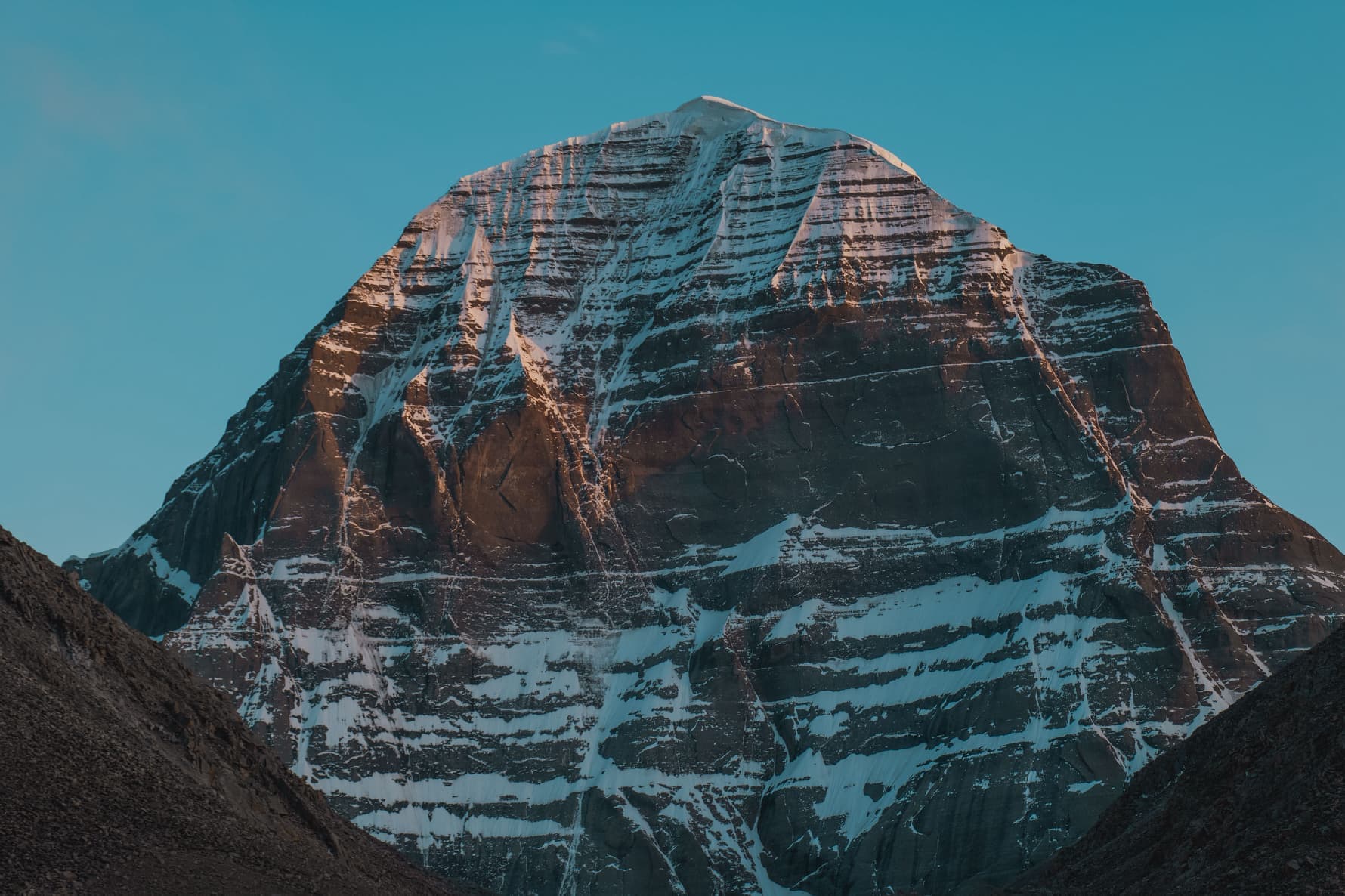
Mount Kailash rises to 6,714 meters — it is one of the most revered peaks on the planet. For Hindus, it is the home of Shiva; for Buddhists, it is the center of the universe; for Bon practitioners, it is the source of spiritual power. The kora around it is not a tourist trek, but a pilgrimage path that millions have traversed over the centuries.
The very height of this sacred peak imposes demands on the route. The kora trail begins at approximately 4,600 meters and ascends to the Dolma La Pass at 5,630 meters. Every meter upward becomes more challenging — the air thins, the heart beats faster, and even experienced trekkers find their breath short.
Understanding this helps set the right mindset: the kora is a test not only for the body but also for the inner readiness to proceed slowly, with respect for the altitude and oneself.
Description of Route Features
The classic kora around Kailash is about 52 kilometers long, which most pilgrims cover in three days. There are options to complete it in two days, but these require serious endurance and experience in high-altitude hiking.
The trail is diverse: dirt sections alternate with rocky outcrops, and some stretches can have snowfields even in summer. The first day involves a gentle ascent along the valley; the second is the hardest, with a significant elevation gain to the Dolma La Pass; the third is a long descent back to the starting point.
Weather at high altitudes can change rapidly and unpredictably. The sun may shine in the morning, clouds may roll in during the day, and by evening, wind or snow may set in. Even in July and August, nighttime temperatures can drop below freezing.
What to Bring
- Layered clothing — thermal underwear, fleece, down jacket
- Waterproof membrane jacket and pants
- Sturdy trekking boots with a rigid sole
- Hat, buff, gloves (better to have two pairs — thin and warm)
- Sunglasses rated category 3–4 and SPF 50 sunscreen
Physically, the route is rated as moderate to above moderate. The challenge does not lie in technical sections — there are none — but in altitude, the length of the transitions, and the necessity of carrying a backpack weighing 5–8 kg (personal items, water, snacks).
Altitude Sickness and Acclimatization
Altitude is the main risk of the kora. Altitude sickness can affect anyone: beginners and those who have trekked in the Himalayas before. Symptoms are familiar to many: headaches, nausea, weakness, insomnia, loss of appetite, and rapid heartbeat.
In practice, I have seen people in excellent physical shape suffer more at high altitudes than those who walked slowly and listened to their bodies. The main rule is not to rush and give your body time to adapt.
How to Minimize Risk
- Allow at least 2–3 days for acclimatization before starting the kora — in Lhasa (3,650 m) or near Lake Manasarovar (4,590 m).
- Drink at least 3–4 liters of water a day — dehydration worsens symptoms of altitude sickness.
- Ascend slowly, taking frequent short breaks.
- Sleep at a lower altitude than you reached during the day (the "climb high, sleep low" rule).
- If you feel worse, inform your guide immediately; don't try to be a hero.
The program Kailash: Sacred Kora from Lhasa is designed with the physiology of altitude acclimatization in mind: we gradually ascend through Shigatse, stop at Lake Manasarovar for two days, and only then begin the kora. This makes the journey safer and more comfortable.
The kora around Kailash is a path to oneself. Altitude, fatigue, and bad weather — all of this is part of an experience that cleanses and reveals inner strength.
Route Options

There are several ways to complete the kora around Kailash, and the choice depends on your experience, time, and which spiritual path resonates more with you.
Main Kora Options
The classic kora is the outer circle, about 52 km long. Most pilgrims complete it in three days, breaking the route into segments of 12–20 km. The pace is relaxed, with stops at sacred sites, stupas, and springs.
There is an option to complete the kora in two days — this requires endurance and the willingness to walk for 8–10 hours with a backpack. Some Tibetan pilgrims do the kora in one day, but for most people, this is physically unfeasible and unsafe at such altitude.
A key point on the route is the Dolma La Pass (5,630 m). The ascent begins early in the morning, usually around 4-5 AM, to traverse the most challenging section before noon and avoid afternoon weather.
Route from Lhasa and Through Nepal: A Comparison
You can start your journey to Kailash in two main ways: via Lhasa (Tibet) or through Kathmandu (Nepal). Both options have their own logic and features.
Route from Lhasa
Pros
- Smooth acclimatization: you gradually ascend from 3,650 m through Shigatse (3,900 m) to Lake Manasarovar (4,590 m).
- Fewer border formalities, simpler logistics within Tibet.
- Opportunity to visit the Sera, Drepung, and Tashi Lhunpo monasteries — important spiritual centers of Tibetan Buddhism.
Cons
- The journey from Lhasa to Kailash takes 4-5 days by land transport (about 1,200 km).
- Requires a Chinese visa and a permit to enter the Tibet Autonomous Region.
Route Through Nepal
Pros
- Visa for Nepal can be obtained upon arrival, which is easier for citizens of many countries.
- Opportunity to combine the kora with trekking to the sacred lakes of Gosainkunda or visiting temples in Kathmandu.
- Picturesque road through the pass at the border with views of the Himalayas.
Cons
- Steeper altitude gain — from Kathmandu (1,400 m) you ascend to the border at 3,800 m in one day, increasing the risk of altitude sickness.
- Border crossing can take several hours, depending on the season and traffic.
- More expensive logistics: permits need to be arranged on both sides of the border.
Each route has its own value. Personally, I recommend the Lhasa option for those who are going to Kailash for the first time: the acclimatization is gentler, and there is less stress from a sudden change in altitude. The route through Nepal suits those who already have experience in high-altitude trekking and want to see more in one trip.
Key Points on the Route
On your way to Kailash and during the kora itself, you will encounter several places that have been revered by pilgrims for centuries.
Lake Manasarovar
One of the most sacred lakes in Asia, located at an altitude of 4,590 m at the foot of Kailash. The water is pure and icy even in summer. Pilgrims perform a small kora around the lake (about 90 km), bathe in its waters for spiritual purification, and meditate on the shore.
We usually stop here for a day or two before beginning the main kora — it helps with acclimatization and sets the tone for the pilgrimage.
Chuku Monastery
The first overnight stop on the kora is usually near this small monastery. Here, you can receive blessings from the monks, leave offerings, and meditate in silence.
Dolma La Pass
The highest point of the kora (5,630 m) and its spiritual center. Tibetans leave prayer flags, stones with mantras, and personal items here — symbolically "leaving" their old lives and being reborn. The air is thin, the wind is strong, but the energy of the place is incredible.
The descent from the pass leads to a small lake called Gaurikund — according to legend, Parvati bathed in it. In summer, it is partially covered with ice, and in winter it freezes completely.
Zutrulpu Monastery
The second (or last) overnight stop on the kora. The name translates to "cave of wonders" — here, according to legend, Milarepa meditated. Inside the monastery, ancient frescoes and footprints of great teachers are preserved on the stones.
When planning your route, keep in mind: the kora is not a race or a fitness challenge. It is a time for inner work, prayer, and contemplation. Every stone, every turn of the path matters.
If you want to undertake this journey with experienced support, check out the program Kailash Through Nepal: Kora with Gosainkunda — where we combine pilgrimage with trekking to sacred sites in Nepal.
Logistics and Transportation

The journey to Kailash begins long before the first step on the kora trail. Logistics, documentation, and choosing the season — all of this directly affects what your experience will be like.
How to Get to Kailash
From Lhasa
The most common and physiologically appropriate option is the land route from Lhasa. The journey takes 4-5 days with stops in Shigatse, Saga, and at Lake Manasarovar. Whether you travel in SUVs or comfortable minibuses depends on the size of the group.
The distance is about 1,200 km, mostly on paved roads, but there are sections of dirt road, especially closer to Kailash. The landscapes are incredible: endless plateaus, passes adorned with prayer flags, herds of yaks, and rare villages at an altitude of 4,500 m.
The advantage of this route is gradual acclimatization. Each night, you sleep a little higher, allowing your body to adapt, thus reducing the risk of altitude sickness.
From Kathmandu Through Nepal
An alternative route is from Kathmandu (1,400 m) through the Girab (Kerung) border checkpoint to the Tibetan side. The road is picturesque but physically more demanding: in one day, you ascend from 1,400 m to 3,800–4,000 m, which places a significant strain on the body.
After crossing the border, it takes another 2-3 days to reach Kailash. A Tibetan permit is required, which must be arranged in advance through a tour operator (you cannot enter Tibet from Nepal independently).
This option is convenient if you plan to combine pilgrimage with trekking in the Kathmandu area or visiting sacred lakes in Nepal.
Documents: Visas, Permits, Medical Certificates
Visa for ChinaFor a trip to Tibet, you need a standard Chinese tourist visa (category L). It can be obtained at the Chinese consulate where you reside, usually taking 2–4 weeks. Required documents include: a passport (valid for at least 6 months), a photo, a completed application form, and hotel or tour reservation confirmation.
Tibet Travel Permit
This is a mandatory document that can only be obtained through an accredited tour operator. It cannot be acquired independently. The processing time is 15–20 days, and a scan of your passport and Chinese visa is required.
The permit is checked when boarding trains or flights to Lhasa, at checkpoints on the way to Kailash, and during hotel check-ins.
Additional Permits
For the area around Mount Kailash (Ngari Prefecture), another regional permit is required — the Alien's Travel Permit. This is arranged by the tour operator along with the main permit.
Medical Certificate
Formally, a medical certificate is not required for a trip to Tibet, but I strongly recommend undergoing a health assessment before high-altitude travel.
- An ECG and a consultation with a cardiologist (elevation puts stress on the heart)
- A complete blood count (to check hemoglobin levels)
- A consultation with a therapist if you have chronic conditions
If you have asthma, hypertension, or heart or lung diseases, consult a doctor. An altitude above 5000 m is a serious challenge for the body.
Insurance
Obtain medical insurance that covers high-altitude treks up to 6000 m. Standard tourist policies typically cover only up to 3500–4000 m. Check if helicopter evacuation is included — this could save a life in the case of severe altitude sickness.
Best Season for Kora
May – September: High Season
The most comfortable time for kora is from mid-May to the end of September. Daytime temperatures range from +10 to +20°C, and nighttime temperatures drop to 0 to -5°C. The trail is free of snow, and the Dolma La pass is accessible without additional gear.
Cons: Many pilgrims (especially in July and August), guesthouses and camps along the route are crowded. Rain and thunderstorms are possible in the late afternoon.
April and October: Off-Season
The weather is less stable, but there are significantly fewer pilgrims. In April, snow still lingers at high altitudes, with nighttime temperatures dropping to -10 to -15°C. October sees a drop in temperatures, and early snowfalls are possible.
These months are suitable for experienced trekkers prepared for changeable weather and harsher conditions.
November – March: Winter Period
Kora in winter is technically possible but extremely challenging: temperatures can drop to -25°C, with snow on the trail and icy winds at the pass. Many guesthouses are closed, and serious winter gear is required. This option is only for well-prepared climbers.
Allocate 3 days of pure time for the kora route, plus 1 spare day (in case of bad weather or fatigue). A complete program with acclimatization, travel, and return usually takes 12–16 days.
The program Kailash: Sacred Kora from Lhasa is designed with all these nuances in mind: we account for acclimatization time, arrange all permits in advance, and choose optimal dates for the season.
Good logistical preparation is half the success. When you know that your documents are in order, the route is well-planned, and the group is safe, you can fully immerse yourself in the pilgrimage.
Budget and Expenses

Honestly: a pilgrimage to Kailash is not a cheap endeavor. The region's remoteness, the need for permits, and thousands of kilometers of ground transport contribute to the budget. Let's break down the main items of expense and hidden costs that are rarely mentioned.
Estimated Budget for the Trip
Organized Tour (12–16 days)
The average cost of a group tour from Lhasa with kora around Kailash is $2000–3500 per person. This typically includes:
- Ground transportation (SUVs/vans)
- Accommodation (hotels in cities, guesthouses during kora)
- Meals (breakfasts, lunches/dinners as per the program)
- All permits and permissions
- Services of a guide and driver
- Entrance fees to monasteries
Not included: international flights, Chinese visa (~$100–150), personal gear, insurance, tips, extra drinks, and personal expenses.
Routes through Nepal are generally more expensive by $300–600 due to additional border formalities and logistics.
Independent Travel: Is It Possible?
Technically, you can do the kora independently if you already have the Tibetan permit and have reached Kailash as part of an organized group. From there, it’s on foot along the trail, with overnight stays in simple guesthouses ($5–15 per night) and meals at tea houses ($5–10 per meal).
But there are nuances.
- Entry to Tibet is only possible with a tour operator; the permit is issued for a group, not an individual.
- Transportation to Kailash (1200 km from Lhasa) is not available by bus; you need to rent an SUV (~$200–300 per day), which is not cost-effective for one person.
- At altitudes above 5000 m, risks are higher if you are going without a group and a guide; assistance in case of altitude sickness may be delayed.
Conclusion: a completely independent kora is only feasible for experienced high-altitude travelers with good health and a readiness for autonomy. For most, a group format is safer and ultimately comparable in price.
Hidden Expenses
Additional Permits and Fees
In addition to the main Tibet Travel Permit, local fees are charged in the Kailash area: entry into the nature reserve ($20), visiting Lake Manasarovar ($15). These are usually included in the tour operator's price, but it's good to confirm in advance.
Medical Insurance
A policy covering altitudes up to 6000 m and evacuation costs between $80–200, depending on the duration of the trip and the insurance company. It’s not worth skimping on this — medical assistance in Tibet is limited, and helicopter evacuation from the Kailash area can cost tens of thousands of dollars without insurance.
Gear
If you don't have suitable clothing and equipment, budget for:
- Trekking boots: $100–250
- Waterproof jacket and pants: $150–400
- Sleeping bag (comfortable to -10°C): $100–300
- Backpack 40–50 liters: $80–200
- Trekking poles: $30–100
Some items can be rented in Kathmandu or Lhasa ($5–15 per day per item), but quality and hygiene are not always up to par.
Tips
In Tibet, it's not customary to tip in restaurants, but it is common practice to tip guides and drivers at the end of the tour. A guideline is $5–10 per day for the guide and $3–5 for the driver per person in the group. This is voluntary, but if the service was good, it’s a sign of respect and gratitude.
Personal Expenses on the Route
Hot tea in a kora guesthouse costs $1–2, instant noodles are $3–5, and charging a phone from a generator costs $2–3. Small expenses add up to $50–100 for a week if you buy snacks and drinks additionally.
Offerings at Monasteries
If you wish to leave offerings (oil for lamps, money in the temple, prayer flags at the pass) — budget $20–50. This is not mandatory, but for many pilgrims, it’s an important part of the journey.
How to Optimize Your Budget
- Choose a group tour — the larger the group, the lower the cost of transport and guide per person.
- Book in advance (3–4 months ahead) — early discounts often apply.
- Bring your own snacks (nuts, bars, dried fruits) — prices on the route are higher.
- Check what is included in the tour: some operators include all meals, while others only include breakfasts; this affects the final amount.
If you're ready to invest in safety, comfort, and a deep experience, check out our programs Kailash: Sacred Kora from Lhasa and Kailash via Nepal: Kora with Gosainkunda. We honestly outline what is included in the cost and what expenses will be additional.
Kora around Kailash is an experience that cannot be measured in money. However, proper budget planning helps avoid stress and fully focus on the pilgrimage.
Group Experience and Safety

Kora around Kailash is not just a physical route but a test of spirit. Over the years of pilgrimage, I have seen people bloom at high altitude, overcoming fears and finding inner strength. I will share the experiences of participants and practical safety tips.
Personal Experiences of Kora Participants
What Pilgrims Say
Many note: the first day of kora is deceptively easy. The trail runs along a valley, with a small elevation gain, and spirits are high. But on the second day, as you ascend to the Dolma La pass, the realization hits — this is serious.
One participant in our group admitted: “I prepared physically, running and strengthening my legs. But I didn't expect that even tying my shoelaces at altitude would be an effort. Every step feels like pushing against resistance.” And that’s normal. Altitude drains energy from everyone, regardless of age or fitness level.
Another experience highlights the importance of inner mindset. A participant who walked slowly shared that the challenge was not only physical but deeply reflective as well.