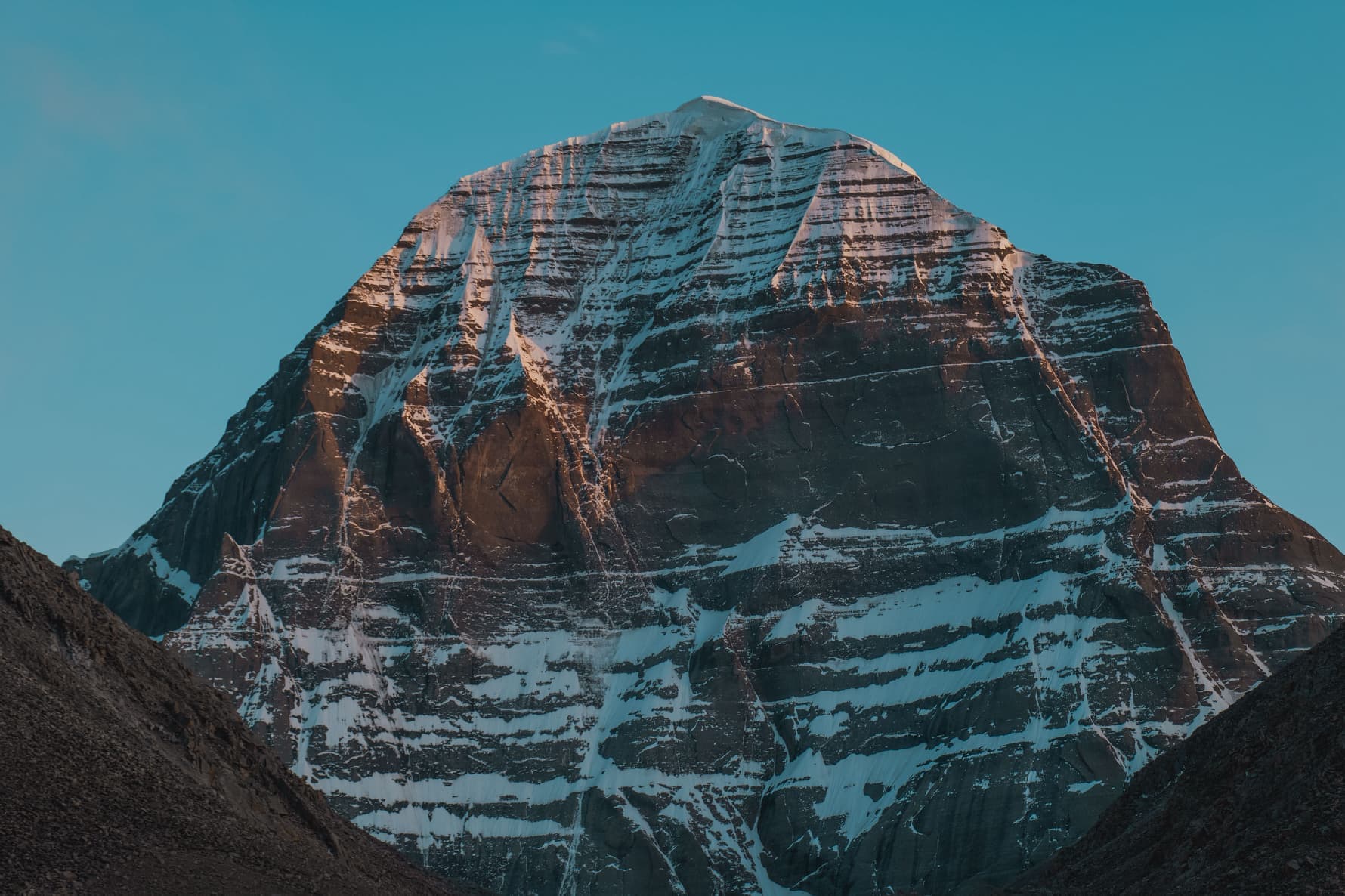
Kailash Kora: How to Complete the 52-Kilometer Route Around the Sacred Mountain

What is the Kora Around Kailash

Kailash Kora is a 52-kilometer circular route around Mount Kailash, which is revered as a sacred peak by Buddhists, Hindus, Jains, and Bon followers. This is not just a trek, but a true pilgrimage, where every step holds spiritual significance.
The mountain stands at an elevation of 6,638 meters above sea level, and the route crosses the Dolma La Pass at 5,630 meters. For many, circumambulating Kailash is a way to purify karma, gain inner awareness, and complete an important life cycle. Pilgrims believe that one kora removes the sins of one life, while 108 koras bring one closer to liberation.
Along the route, you will encounter majestic landscapes — rocky passes, turquoise lakes, ancient monasteries, and prayer flags fluttering in the wind. The atmosphere here is special: silence, thin air, a sense of the presence of something greater than oneself.
Why Go on the Kora
People come here with various intentions. Some seek spiritual purification, others inner peace, while some simply want to test their endurance in one of the most energetically powerful places on the planet.
In our groups, we have seen different people: yogis, practicing Buddhists, and ordinary travelers without religious affiliation. What unites everyone is the desire to experience this journey honestly, completely, and without haste. The kora demands respect and mindfulness — towards oneself, the mountain, and fellow travelers.
At high altitudes, every detail matters. Proper preparation, understanding the risks, and being ready to go at your own pace will help you complete the route with minimal suffering and achieve what you came for.
Cultural Context
Kailash is considered the center of the world in several traditions. Tibetan Buddhists see the mountain as the abode of Demchok, Hindus regard it as the home of Shiva, while Bon followers circumambulate counterclockwise, and others do so clockwise.
During the kora, you will meet local pilgrims — Tibetans, Nepalis, and Indians. They walk barefoot or prostrate every few meters, taking weeks to cover the 52 kilometers. This is not a tourist attraction; it is a living tradition that is thousands of years old. Respect it: do not make noise near sacred sites, do not photograph people without permission, and do not litter.
The kora is not a speed competition. Many complete it in three days, some stretch it to four, while others do half-prostrations and take weeks. Your pace is your own concern; what matters is the sincerity of your intention.
If you wish to complete this route with an experienced guide and in the company of like-minded people, check out our programs Kailash: Sacred Kora from Lhasa and Kailash via Nepal: Kora with Gosainkunda.
How to Prepare for the Trek

Physical Preparation
Kailash Kora is a serious test for the body. The 52 kilometers are at altitudes ranging from 4,600 to 5,630 meters, with elevation changes, rocks, and thin air. If you lead a sedentary lifestyle, start preparing at least two months in advance.
What to Do:
- Cardio 3–4 times a week: running, brisk walking, cycling, swimming. Gradually increase to 40–60 minutes of continuous exercise.
- Long hikes with a backpack: go out for 10–20 kilometers carrying 5–7 kg on your back. This will condition your legs and back for hours of walking.
- Strength exercises: squats, lunges, planks. Strengthen your legs, back, and core as they bear the main load during ascents and descents.
- Breathing exercises: try pranayama or simply breathe deeply and slowly during workouts. This will be useful at high altitudes.
To be honest, many participants arrive without being in perfect physical shape — and still complete the trek. The main thing is not to rush, listen to your body, and feel free to take breaks.
Gear: What to Bring
Proper gear makes the trek more comfortable and sometimes safer. Here is a basic checklist:
Footwear and Clothing:
- Trekking boots with a stiff sole and ankle support, broken in beforehand.
- Thermal underwear (top and bottom), fleece jacket, down jacket or warm coat.
- Windproof and waterproof membrane jacket and pants.
- Hat, gloves, buff or scarf.
- Extra socks (preferably trekking socks, no cotton).
- UV-filter sunglasses, SPF 50+ sunscreen, lip balm.
Backpack and Miscellaneous:
- A 40–50 liter backpack.
- A sleeping bag rated for temperatures down to -10°C (you will be sleeping in guesthouses or monastery houses, which can be cold).
- Trekking poles — they reduce the load on your knees during descents.
- A flashlight or headlamp.
- A thermos or water bottle (at least 1.5 liters of water).
- A first aid kit: blister plasters, pain relievers, altitude sickness medication (Diamox, ibuprofen), antiseptic, elastic bandage.
Do not take excessive items — every gram at high altitude is felt. In our groups, porters help with the main luggage, but you will carry your personal belongings for the day yourself.
Medical Recommendations
Before the trip, undergo a basic medical check, especially if you have chronic heart, lung, or joint conditions. Altitude is a stressor, and it’s better to know your weak spots in advance.
Vaccinations: None are mandatory, but you might consider getting vaccinated for hepatitis A and typhoid if you plan to travel extensively in Tibet and Nepal.
First Aid Kit:
- Altitude sickness medication (Diamox — by doctor's prescription).
- Pain relievers (ibuprofen, acetaminophen).
- Anti-diarrheal tablets (Imodium).
- Plasters, bandages, antiseptic.
- Personal medications if you take anything regularly.
Altitude sickness is a real risk. Symptoms include headache, nausea, weakness, and insomnia. If you feel worse — do not be a hero, inform your guide, and descend to a lower altitude. At high altitudes, honesty with oneself is crucial.
If it’s important for you to complete the route with experienced support and care for your condition, check our programs Kailash: Sacred Kora from Lhasa and Kailash via Nepal: Kora with Gosainkunda.
Best Time for the Kora

The weather around Kailash is unpredictable, but there are periods when the chances of a comfortable trek are higher. The choice of season affects everything — from trail conditions to the number of pilgrims around.
May to Early June
Spring in Tibet is short but pleasant. The snow on the passes has already melted, daytime temperatures rise to +10…+15°C, and at night it’s around 0°C. There are more sunny days than at the end of summer.
During this time, the trail is less crowded than in July and August. Nature awakens: green meadows, the first flowers, and clean air. The downside is that there may still be snow drifts on the northern slopes, but this is rare.
July and August
The most popular season. The weather is warm (up to +20°C during the day), but this is also the monsoon period — it can rain several times a day, especially in the afternoon. The trails can become muddy, and visibility decreases.
On the plus side, major Tibetan festivals (e.g., Saga Dawa) take place during this time, attracting thousands of pilgrims to the kora. The atmosphere becomes special and vibrant. The downside — many people, guesthouses are crowded, and prices are higher.
September to October
Autumn is our favorite season for the kora. The rains end, the sky clears up, and the air becomes crisp. The views of Kailash and the surrounding peaks are the best of the year. Daytime temperatures are +10…+15°C, and at night it’s -5…0°C.
There are fewer people than in summer, but still enough to feel part of the flow of pilgrims. By the end of October, it gets colder and the first snow falls — if you don’t like extreme conditions, it’s better to finish by mid-month.
Winter (November to March)
Winter at Kailash is extremely cold: -20…-30°C, with snow, wind, and icy trails. Most guesthouses are closed. The route is passable, but only for very experienced and prepared travelers. We do not recommend this for first-timers.
Our advice: If you are going for the first time, choose May-June or September-October. There are fewer risks, more comfortable conditions, and a greater chance of completing the route without disruptions.
Logistics and Budget

How to Get to the Starting Point
The kora begins in the village of Darchen, in southwestern Tibet. There are two main ways to get there — through Lhasa or through Nepal.
Through Lhasa:
From Lhasa to Darchen, it's about 1,200 kilometers across the highland plateau. The journey takes 2–3 days by jeep or bus, with overnight stops in Shigatse or Saga. It’s a long journey but provides time for acclimatization.
Along the way, you can see monasteries, Lake Mansarovar, and views of the Himalayas. The journey itself can be considered part of the pilgrimage. Transportation is usually organized by the group; traveling independently is complicated due to permits and road controls.
Through Nepal:
From Kathmandu, you can cross the border at Kodari or Rasuwagadhi, then travel through Tibet to Darchen. This route is shorter but requires separate permits and is often subject to delays at the border. It’s suitable if you’re combining the kora with treks in Nepal.
In our tours, we take care of all logistics — transportation, drivers, and accommodation along the way. You only need to enjoy the view and prepare for the trek.
Trip Budget
The cost of the kora depends on the route, season, comfort level, and group size. Here are approximate figures for 2026:
What’s included in the tour budget (700–1200 USD per person):
-
Transportation from Lhasa or Kathmandu to Darchen and back.
-
Accommodation in guesthouses (simple rooms, shared toilets, sometimes without showers).
-
Meals (breakfasts, lunches, dinners — simple but hearty food).
-
Services of an English or Russian-speaking guide.
-
Permits (Tibet Travel Permit, Alien's Travel Permit, permit to visit Kailash).
-
Porters for general luggage.Additional expenses (200–300 USD):
-
Personal expenses (souvenirs, tea in monasteries, donations).
-
Medical insurance (make sure it covers up to 6000 meters).
-
Visas (Chinese or Nepalese, depending on the route).
-
Additional gear, if you need to buy anything on site.
Prices in Darchen and along the route are higher than in Lhasa — everything is imported. Water 0.5 L — about 1–2 USD, instant noodles — 2–3 USD. Plan your budget with a cushion.
Documents and Permits
A few permits are required for the kora, which are obtained through a tour operator:
- Tibet Travel Permit — the main document for entering Tibet.
- Alien's Travel Permit — for traveling outside of Lhasa.
- Military Permit / Border Permit — for western Tibet and the Kailash area.
You cannot obtain these independently — only through an accredited agency. The process takes 2–3 weeks, sometimes longer, especially in peak season.
What we need from you:
- A scan of your passport (valid for at least 6 months).
- A 3×4 photo.
- A completed application form.
- A Chinese visa (if you're traveling via Lhasa).
We will take care of all the permits — you don’t need to deal with the bureaucracy, just provide the documents on time.
If you want to know more about the program details, check out Kailash: Sacred Kora from Lhasa or Kailash via Nepal: Kora with Gosainkunda.
Risks and Challenges on the Route

Altitude and Mountain Sickness
Altitude is the main challenge of the kora. The route starts at 4600 meters, passing over the Dolma La Pass at 5630 meters. The air there is half as dense as at sea level. The body reacts differently: some may experience a mild headache, while others may have nausea, weakness, or insomnia.
How to Reduce the Risk:
- Acclimatization. Don’t fly straight to high altitude. If traveling via Lhasa (3650 m), spend 2–3 days there, walk around, don’t rush. Make stops on the way to Darchen to allow your body to adjust.
- Drink plenty of water. 3–4 liters per day is not a luxury but a necessity. Dehydration exacerbates symptoms.
- Go slow. Don’t race, don’t force the pace. Maintain steady breathing, take short steps, and take frequent breaks.
- Diamox and other medications. Consult a doctor in advance. Many take Diamox as a preventive measure — it helps, but has side effects.
Symptoms that require descending:
- Severe headache that doesn’t improve with medication.
- Nausea, vomiting.
- Loss of coordination, confusion.
- Pulmonary or cerebral edema (rare but dangerous — immediate descent and hospitalization required).
In our groups, there is always a guide with experience in high-altitude trekking, a first-aid kit, and an oxygen tank in case of emergency. But the main protection is your honesty with yourself. If you feel worse — speak up, don’t endure.
Difficult Terrain
The kora trail is not smooth asphalt. There are rocks, scree, steep climbs and descents, sometimes mud or snow. The section climbing to the Dolma La Pass and descending from it is particularly challenging — slippery boulders and narrow paths.
What Helps:
- Trekking poles. They relieve pressure on the knees and provide support on slippery sections.
- Proper footwear. Boots with a rigid sole and high ankle support. Sneakers are not suitable — high risk of sprains.
- Don’t rush. Every stone requires attention. One misstep can lead to a sprain, bruise, or disrupted journey.
We had a participant in our group who slipped on the descent and sprained their ankle. We had to evacuate them by horse — it’s possible, but expensive and unpleasant. Take care of your legs from the start.
Weather
The weather in the mountains changes quickly. In the morning it may be sunny, and in an hour — windy, snowy, or foggy. Daytime temperatures can reach +15°C, while at night they drop to –5°C. It’s always colder and windier at the pass.
What to Bring:
- Layered clothing. In the morning — a down jacket, during the day — a fleece, and in the evening, put everything back on.
- A waterproof jacket and pants. Rain, snow, wind — anything can happen.
- Sunscreen and sunglasses. At high altitude, UV rays are stronger, and you can get sunburned in just a couple of hours, even in cloudy weather.
Once, we encountered a snowstorm at the pass. Visibility was about five meters, it was cold and slippery. The group huddled together, moving slowly and helping each other. We made it through, but it was tough. Be prepared for such conditions.
Loneliness and Fatigue
Three to four days of walking at high altitude with minimal comfort is a test not just for the body but for the mind. Fatigue, irritability, and the desire to give up can arise. This is normal.
What Helps:
- The group. Support from fellow travelers, evening conversations, knowing that everyone is in the same boat.
- Practices. Meditation, mantras, breathing exercises. Each person has their own way to calm the mind.
- Trust in the process. Remind yourself why you came. The kora is not a race, but a journey.
If you want to trek with experienced guides who understand these challenges and help you navigate them gently, take a look at Kailash: Sacred Kora from Lhasa and Kailash via Nepal: Kora with Gosainkunda.
Frequently Asked Questions about Kora

How to Trek to Mount Kailash?
Start with preparation — physical, logistical, and mental. Train your endurance for 2–3 months: running, hiking with a backpack, strength training. Take care of all documents through a tour operator — you won’t be able to do it on your own.
On-site, follow the pace of the group and the guide's instructions. Don’t rush, listen to your body. Acclimatization is key to success. Drink water, rest, and don’t hesitate to ask for help.
How long does the kora take?
The standard route takes 3 days. Day one — from Darchen to the Dira-puk Monastery (20 km). Day two — ascent to the Dolma La Pass and descent to Zutul-puk (18 km, the hardest day). Day three — return to Darchen (14 km).
It can be stretched to 4 days if you need more time for acclimatization or rest. Some pilgrims perform prostrations and walk for weeks — that’s a different level of practice.
What is the total distance of the kora?
52 kilometers in a loop. This is not a marathon — you walk for several days, with overnight stays, a backpack, at high altitude. The elevation gain is about 1000 meters (from 4600 to 5630 m), with a similar descent.
For comparison: it’s like walking one and a half marathons, but in the mountains and in thin air. Prepare accordingly.
How difficult is the kora?
Moderate difficulty, but with altitude factors. If you are in good physical shape, hike regularly, and are not afraid of long distances — you will manage. The main difficulties are altitude and related risks (mountain sickness, fatigue).
If you have heart, lung, or joint problems — definitely consult a doctor. Altitude does not forgive carelessness.
Why do people undertake the kora around Kailash?
For Buddhists and Hindus, it is a sacred pilgrimage, a way to cleanse karma and move closer to liberation. For others, it’s an opportunity to connect with ancient tradition, test themselves, and find inner silence.
The kora is not a tourist trek. It is a practice, meditation in motion, a dialogue with the mountain and oneself. Everyone comes with their own intention and leaves with their own experience. The main thing is to walk with respect and an open heart.
If you feel ready for this journey, we would be happy to walk it together with you. Check out our programs Kailash: Sacred Kora from Lhasa and Kailash via Nepal: Kora with Gosainkunda — we will take care of the logistics so you can focus on what truly matters.