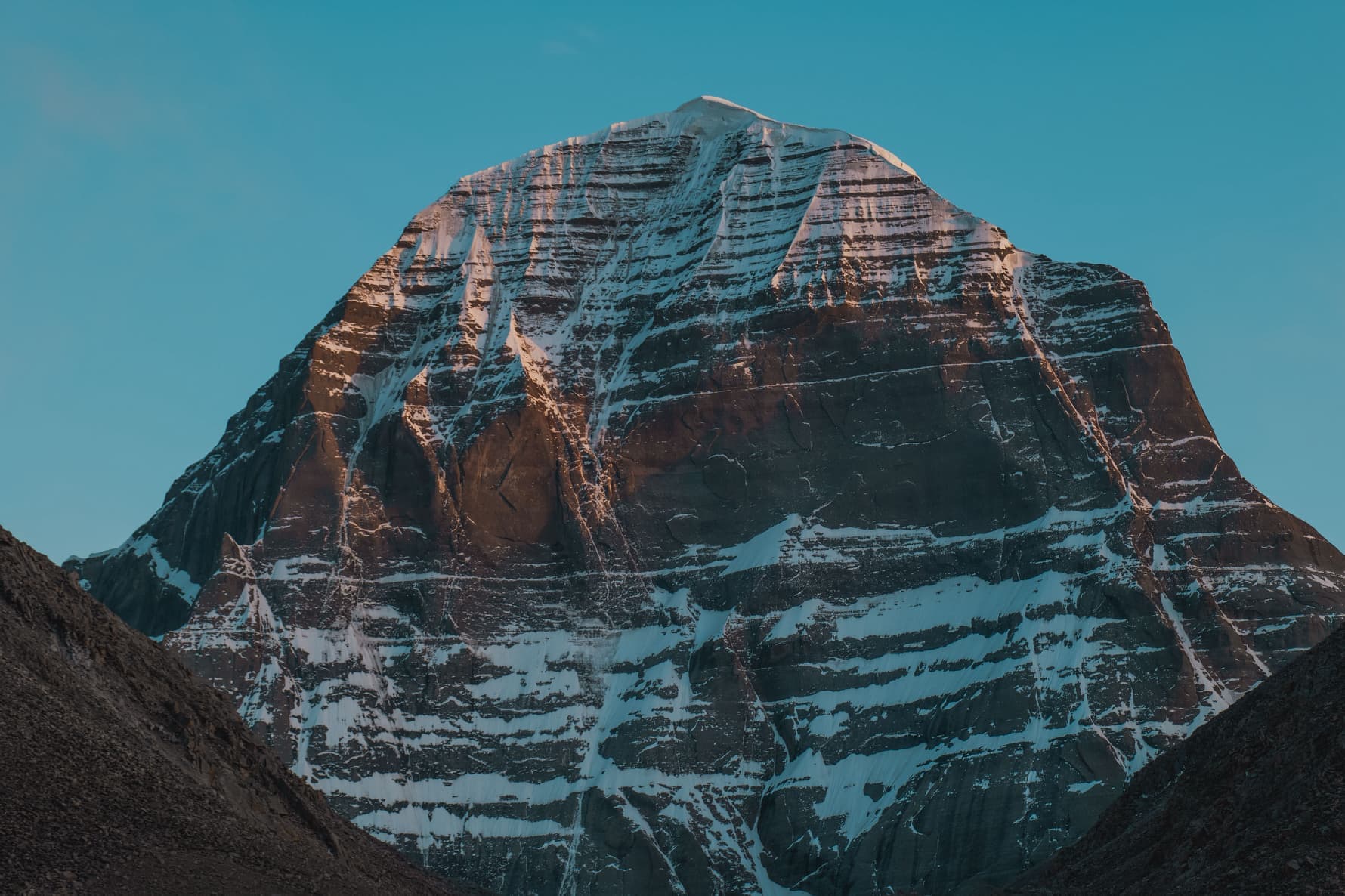
Kailash Season 2026: Landslides and Floods in Nepal. Why the Pilgrimage to Kailash is a Serious Challenge

Introduction: The Significance of the Pilgrimage to Kailash in 2026

Kailash is a mountain that remains the center of the spiritual universe for millions of people. For Buddhists, it is the abode of Buddha Chakrasamvara; for Hindus, it is the throne of Shiva; for Bön practitioners, it is the heart of an ancient tradition. The circumambulation around the mountain is a ritual that erases the boundaries of religions and cultures, uniting all who seek purification and transformation.
In 2026, this pilgrimage became particularly challenging. Nature reminded us that the path to the sacred requires not only sincere intention but also real readiness for the trial.
Cultural and Spiritual Significance of Kailash
Honestly, words about Kailash always seem insufficient. The mountain rises to an altitude of 6638 meters, and each of its slopes is layered with centuries of prayers, hopes, and insights. According to Tibetan cosmology, it stands at the center of a mandala, surrounded by four great rivers of Asia — the Indus, Brahmaputra, Sutlej, and Karnali.
Pilgrimage here is not a tourist walk. It is an inner journey where each step along the 52-kilometer circumambulation route becomes an act of mindfulness. In our groups, we often say, "Kailash calls when you are ready — not before, not after."
Natural Conditions in Nepal
The 2026 season showed how fragile the balance between humans and nature can be. Nepal, one of the main routes to Kailash, faced massive floods and landslides. Rivers overflowed their banks, roads were washed away, and whole sections of trails were submerged or blocked by debris.
Many routes we used before were temporarily closed this year. This affected not only the classic paths but also alternatives — for example, the ascent via Gosainkunda, which usually connects the sacred lake with the trails to Kailash.
Preparation for the Pilgrimage
If you are planning to circumambulate in such changing natural conditions, here are some things to consider:
Check Information Daily
Trail conditions change literally overnight. Confirm with local guides, check with travel agencies, and follow updates from those already on the path. We at Jay Shambo constantly maintain contact with teams on the ground.
Be Flexible
Your route may change — not due to the whims of organizers, but for safety reasons. Accept this as part of the journey: Kailash teaches acceptance.
Allow for Extra Time
Two to three additional days in the schedule is not a luxury but a necessity. Delays due to weather or route changes happen more often than one might think.
Gear and Medical Supplies
Waterproof clothing, reliable trekking shoes, a first aid kit (including altitude sickness remedies), and a supply of energy bars — this is the basic minimum. Double-check everything before departure.
For those seeking safety and support from a professional team, we offer two trusted programs. Kailash: Sacred Circumambulation from Lhasa is a classic route with acclimatization in Tibet, where experienced guides lead you through all preparations and the circumambulation itself. The Kailash via Nepal: Circumambulation with Gosainkunda connects two sacred sites — Gosainkunda Lake and the mountain itself, although in 2026 this path requires special caution due to floods.
Despite the challenges, the pilgrimage to Kailash remains one of the most significant spiritual experiences. It teaches humility, patience, and deep trust — in oneself, the guides, and the mountain itself.
Natural Challenges of the 2026 Season: Floods and Landslides

The 2026 season became one of the most difficult in the last decade. Not due to politics or pandemics, but because of nature, which sent us all a clear signal: the mountains dictate their own rules.
Weather Conditions and Their Changes
Nepal experienced abnormal rainfall this year — rains exceeded the monthly average by 50-60%. These are not just numbers: when we arrived in July with another group, locals said they hadn’t seen such downpours in thirty years.
The climate change we read about in the news ceased to be an abstraction. Glaciers in the Himalayas are melting faster, rivers are filling with meltwater, and then with sudden monsoon rains. The result: mountain streams turn into raging rivers that sweep away everything in their path.
In practice, this means that usual timelines and routes stop working. What was passable in May may become a dangerous gorge with rockfalls and landslides by July.
Impact of Floods on Routes and Safety
When a river overflows its banks, the first thing to suffer is infrastructure. Bridges that have been used for decades can be washed away in a single night. Roads turn into muddy rivers, and trails on slopes become slippery and dangerous.
This season, we witnessed:
Destroyed Crossings
Several key bridges on the approach to Kailash were damaged or completely destroyed. We had to look for detours, which added 1-2 days to the route and required additional physical preparation.
Flooded Road Sections
In some areas, the water rose to knee level, making movement impossible without specialized transport or waiting for the water level to recede.
Rockfalls and Landslides
Saturated slopes lose stability. Rocks can fall unexpectedly, and landslides can block the trail in minutes. We always moved early in the morning when the ground was still frozen and more stable.
Honestly, there were moments when we had to decide whether to go further or turn back. And that's okay. The safety of the group is always more important than ambitions.
Recommendations for Preparing for Possible Difficulties
If you still decide to travel in a season with increased risks, here’s what you should do:
Clothing and Gear
A waterproof jacket and pants are not an option but a basic necessity. Your shoes should not just be trekking shoes but include a Gore-Tex membrane or equivalent. Wet feet at altitude are not just uncomfortable but pose a risk of frostbite and injury.
Food and Water Supplies
Plan for self-sufficiency in case of delays. Energy bars, nuts, dried fruits, water purification tablets — all of this should be in your backpack.
Alternative Routes
Discuss backup options with your guide before starting the journey. If the main route is closed, what to do next? Where to go? How long will it take?
First Aid Kit
In addition to the standard set, bring anti-inflammatory drugs, altitude sickness remedies (like Diamox, dexamethasone as per a doctor’s advice), and elastic bandages. And most importantly — learn how to use them before the trip.
Listen to Guides and Locals
When a Nepali guide says, "It's dangerous today," they're not being overly cautious. They know the mountains inside out. Respect that knowledge.
If reliability and professional support matter to you, I recommend considering Jay Shambo programs. Kailash: Sacred Circumambulation from Lhasa goes through Tibet, where the infrastructure is more stable, and the risks associated with floods are lower. Meanwhile, the Kailash via Nepal: Circumambulation with Gosainkunda route is for those ready for additional challenges but who want to pass through unique sacred sites.
The pilgrimage to Kailash is always a test. In 2026, it became even more serious. But those who completed it say that it is precisely the difficulties that make the experience truly profound.
Logistics of the Pilgrimage: What You Need to Know

The pilgrimage to Kailash is not a weekend hike. It is a journey that requires serious preparation: from documents to psychological readiness. Especially in 2026, when nature added unpredictability to the equation.
Important Aspects of Planning the Route in Unstable Weather Conditions
Keep an Eye on Forecasts, but Don’t Rely Solely on Them
Weather reports for the Himalayas are rarely accurate. Check multiple sources: local websites, satellite data, reports from groups already on the path. We usually use a combination of three to four services and are still ready for surprises.
July and August are peak monsoon months. If possible, plan your trip for September or October: the weather is more stable, rains are less frequent, but it gets cold, so thermal underwear is a must.
Flexibility is Your Main Asset
When I lead groups, I always build in 2-3 reserve days. Not for rest, but in case the route needs to be changed. In 2026, this was useful for almost every group: sometimes we waited for the water to recede, sometimes we detoured around a landslide.
Discuss alternative options with organizers in advance. What to do if a pass is closed? Where to go if the main trail is flooded? A good operator always has a plan B.
Transport: Be Prepared for Changes
Roads in Nepal and Tibet are another story. After rain, sections can be washed away, and what was passable by jeep yesterday may require a foot detour or waiting for equipment today.
Allow time for traffic jams (yes, they can happen in the mountains), for negotiations with drivers, for transport replacements. Patience here is not just a virtue; it’s a necessity.
Tips for Choosing the Right Time for the Pilgrimage and Necessary DocumentsBest Months for the Kora
September and October are the golden months. The rains are gone, the trails have dried, and visibility is excellent. The downside: it's cold, especially at night at high altitudes. Temperatures can drop to -10°C or lower.
May and early June are also a decent window, but there's still a lot of snow, and the passes can be challenging.
July-August is technically possible, but it's a gamble with the weather. If you decide to go during the monsoon, choose the route through Tibet rather than Nepal.
Documents
Here's a basic checklist:
- Passport — valid for at least 6 months after the end of your trip.
- Visa for Nepal — obtained upon arrival in Kathmandu, costing around $50 for 30 days.
- Tibet Permit — arranged through a tour operator, cannot be obtained independently. Requires a copy of your passport, a photo, and an application at least a month in advance.
- Medical Insurance — mandatory with coverage for high-altitude trekking (above 5000 m). Ensure it includes helicopter evacuation — this can save your life on Kailash.
Communication Tools
Mobile connection at high altitudes is rare. Take:
- Satellite phone (can be rented).
- GPS tracker — for safety and navigation.
- Power bank and solar charger — outlets in guesthouses are not always reliable.
Support Through Experienced Guides
Honestly, I wouldn't recommend going to Kailash without professional guidance. Even if you're an experienced trekker, the mountains here can behave unpredictably, and the altitude of 5600+ meters always carries risks.
Our guides at Jay Shambo are not just leaders. They know every turn of the trail, have connections with locals, can provide first aid, and make decisions in critical situations.
If you choose the Kailash via Nepal: Kora with Gosainkunda, you'll be led by a team that has been doing this route for over ten years. They have witnessed rockfalls, avalanches, and sudden storms — and know how to act.
The program Kailash: Sacred Kora from Lhasa goes through Tibet, where logistics are simpler, and risks are lower. This is a good option if you're going to Kailash for the first time or prefer a more controlled environment.
By preparing in advance — document-wise, physically, and mentally — you can focus on what truly matters: the pilgrimage itself, your inner journey, and the encounter with the mountain that transforms people.
Experience of Jay Shambo Tours: Safety and Support

When we talk about safety on Kailash, it's not just a formality. It's a matter of life — quite literally. Altitude, weather, physical exertion: any of these factors can become critical if not taken seriously.
How Our Team Ensures the Safety of Pilgrims
Routes are reviewed every season
After the floods of 2026, we, together with local guides, completely revised the route maps. Where we used to go directly, we now take detours. Where there was a bridge — we look for a ford or arrange a temporary crossing.
We don’t operate on the "as usual" principle. Each group receives updated information about trail conditions relevant at the time of departure.
Equipment is checked twice
Before departure, we hold a briefing where we demonstrate how to properly use trekking poles, how to wear a harness (in difficult sections), and how to pack your backpack to distribute weight.
Each participant receives a list of mandatory gear — from thermal underwear to a flashlight. We ask you to send a photo of your gear in advance so we can make adjustments if something doesn’t fit.
Medical Preparedness
All Jay Shambo guides have undergone first aid training in high-altitude conditions. We always carry:
- Oxygen tanks (in case of acute altitude sickness).
- A first-aid kit with anti-inflammatories, pain relievers, and altitude sickness medications.
- A pulse oximeter to monitor blood oxygen levels.
- A satellite phone for calling for evacuation.
Before starting the kora, we check each participant's pulse and saturation levels. If the readings are below normal, we offer an additional day for acclimatization or adjust the workload.
Mandatory Pre-Trip Examination
We insist: undergo a medical check-up before the trip. An ECG, a general blood test, a consultation with a therapist — that's the minimum. Kailash is not a place for health experiments.
And yes, insurance with high-altitude coverage is mandatory. Without it, we simply won’t take you into the group.
Description of Support at Every Stage of the Journey
Before Departure: Consultations and Preparation
Once you sign up for the group, a coordinator will get in touch with you. They will answer all your questions: from visas to medication lists, from backpack choices to psychological preparation.
We send out a detailed memo outlining everything: what to bring, how to train, and what to expect.
On the Way: 24/7 Support
Our guides accompany you from the first to the last day. They set the pace (slower than you might think is necessary — that’s the right way at high altitude), monitor the group's condition, and organize breaks.
Every morning begins with a brief briefing: what to expect today, how many kilometers to cover, what difficulties to anticipate, and where lunch will be.
Chefs prepare fresh food every day. We take preferences into account: vegetarians, those with allergies, and those avoiding gluten — everyone will be fed deliciously and nutritiously.
On the Kora: Individual Approach
Some walk faster, some slower. We don’t rush the group into a single line. Guides are distributed: one in front, one at the back, one in the middle. This way, no one is left alone on the trail.
If someone starts feeling unwell, we stop. If we need to turn back — we turn back. The kora is not a race; it is a spiritual practice, and it requires respect for oneself and one’s body.
After: Support and Feedback
After returning, we stay in touch. If you have questions, issues, or need advice — reach out. Many participants become part of our community and return for other trips.
Personal Experiences of Previous Season Participants
Anna, participant of Kailash via Nepal: Kora with Gosainkunda, 2025:
“I was afraid I wouldn’t make it. The altitude, the load — it all seemed overwhelming. But the guides literally held my hand. When I felt unwell at the pass, they stopped, gave me oxygen, and waited. Without them, I wouldn’t have made it.”
Dmitry, Kailash: Sacred Kora from Lhasa, 2024:
“Professionalism is felt in the details. How daily life is organized, how the guides communicate, how they respond to emergencies. One of our road sections was washed out, and within two hours, they found an alternative route. No panic, everything was clear.”
We don’t promise that it will be easy. It will be challenging. But we promise that you won’t be alone, that you will be supported, and that you will walk this path with respect — for the mountain, for yourself, for the tradition.
Budget for the Pilgrimage: What to Consider in 2026

The pilgrimage to Kailash is an investment. Not just financial, but also temporal, emotional, and physical. Understanding the real costs helps plan the trip so there are no unpleasant surprises along the way.
Estimated Budget for the Trip, Including Unexpected Expenses
The average cost of the pilgrimage in 2026 is $1800 to $3500. The range depends on the route, level of comfort, season, and whether you’re traveling in an organized group or independently (which, honestly, is risky on Kailash).
Here’s what the budget consists of:
Flight: $700–1500
Depends on your departure city and booking time. From Moscow to Kathmandu or Lhasa, tickets cost on average $900–1200. If you book 3-4 months in advance, you can find cheaper options. Prices go up during the season (September-October).
Visa and Permits: $150–300
Visa for Nepal — about $50. Tibet permit (Tibet Travel Permit) — another $100–150, plus additional permits for Kailash. All is arranged through a tour operator; you can’t do it independently.
Accommodation: $20–120 per night
In Kathmandu or Lhasa — from $30 for a simple room to over $100 for a hotel. On the trek, conditions are modest: guesthouses without heating, shared toilets, sometimes without showers. But the views from the window are priceless.
If you’re traveling with the Kailash: Sacred Kora from Lhasa program, accommodation is included in the package, and you won’t have to search for lodging on-site.
Food: $15–40 per day
In cities, you can eat at local cafes for $5–10 per person. On the trek, food is more expensive: a serving of dal — $8–12, tea — $2–3. If you’re with an organized group, meals are usually included or paid as a separate package.
Transport: $400–800
Domestic transfers, jeeps, buses, sometimes — domestic flights. If you're part of a tour, this is included in the overall cost. Renting a jeep for a group independently will cost about $100–150 per day.
Guides and Porters: $300–700
Guides on Kailash are not a luxury but a necessity. A good guide knows the route, speaks English (and sometimes Russian), and can provide first aid. Porters or yaks will help with heavy backpacks — at high altitude, every kilogram matters.
Insurance