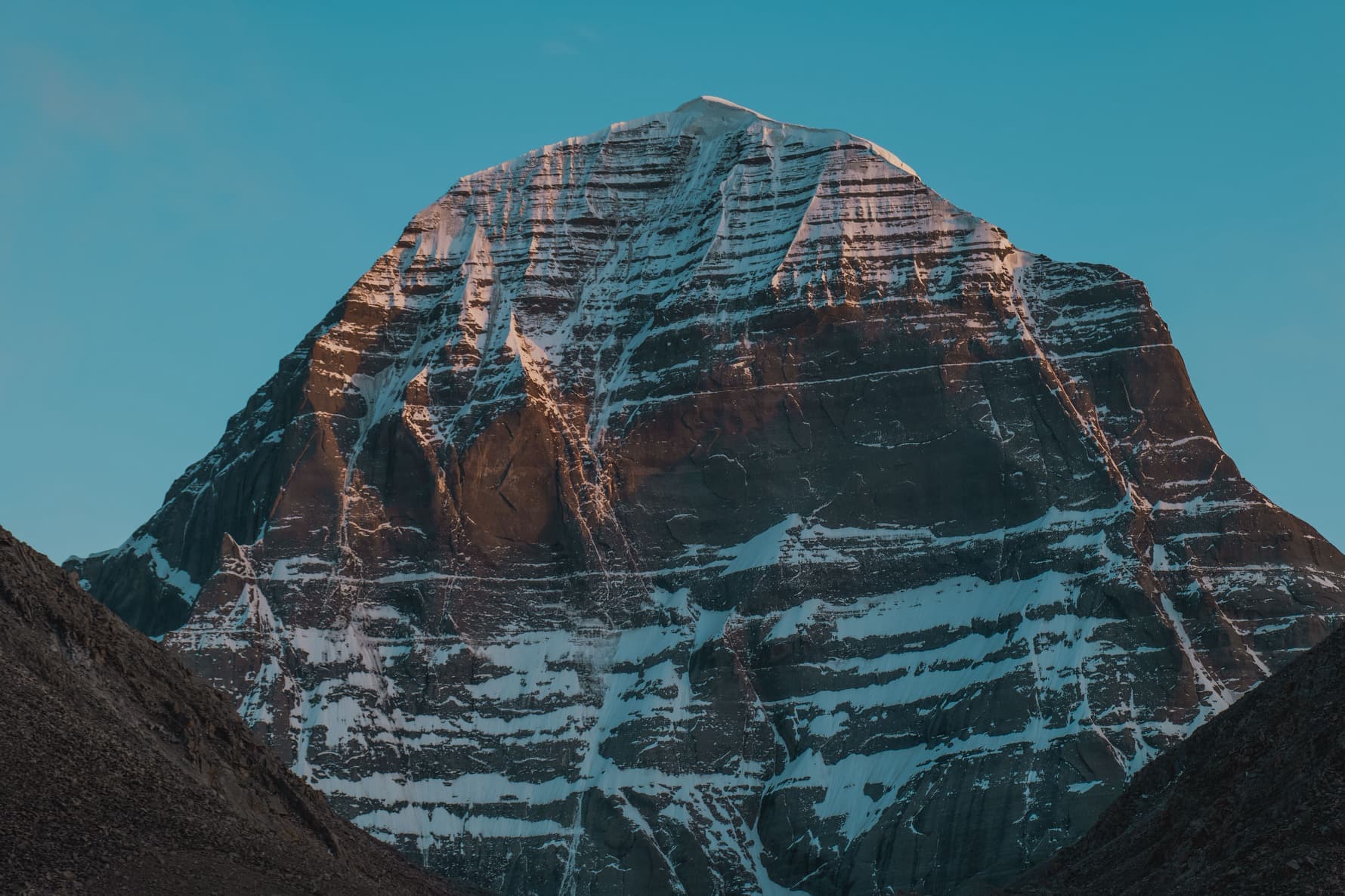
Kailash through Nepal Gosainkunda:
A Journey to the Sacred Mountain

Introduction: Why Visit Kailash through Nepal

Kailash, a sacred mountain for followers of Buddhism, Hinduism, and Jainism, is considered the center of the world and a symbol of spiritual aspiration. Its towering peaks rise to 6,714 meters, surrounded by sacred lands filled with ancient legends and mystical energies. An important stop on the route to Kailash is Gosainkunda Lake, located at an altitude of 4,380 meters. The waters of this lake are believed to possess healing properties, and many pilgrims come here to bathe and seek spiritual purification.
The route to Kailash through Nepal offers a unique opportunity to connect with this sacred atmosphere and immerse yourself in the culture and traditions of the local people. The journey begins with trekking to Gosainkunda, where you can enjoy breathtaking views of the Himalayas. This is not just a path to a mountain; it is a whole journey through picturesque villages, high-altitude pastures, and beautiful lakes.
If you seek something more than just a physical challenge, this route will become a true spiritual practice for you. Along the way to Kailash, you will have the chance to meditate, practice yoga, and deepen your understanding of Buddhist and Hindu teachings. Each step on this path carries the potential for self-reflection and inner growth.
When preparing for the journey, it is important to consider several factors. First, familiarize yourself with altitude acclimatization in advance. It is recommended to spend a few days in Kathmandu to allow your body to adjust to the altitude. Secondly, consider the weather conditions: the optimal time for trekking is from April to October, when the likelihood of precipitation is minimal and temperatures are more comfortable.
Don’t forget to prepare appropriate gear. Comfortable trekking boots, warm clothing, sunscreen, and a first aid kit with essential medications should all be in your backpack. It’s also wise to bring extra food and water, as access to stores may be limited in certain areas along the route.
The uniqueness of the route through Nepal also lies in the opportunity to interact with the locals, learn about their culture and spiritual practices. This will enrich your journey, making it more fulfilling and profound.
If you are interested in this amazing journey, you can learn more about the program Kailash through Nepal: Kora with Gosainkunda. This program offers not only physical activity but also an opportunity for deep spiritual practice, making it an ideal choice for those seeking harmony between body and spirit.
Choosing the route through Nepal is not just a transfer from point A to point B. It is a path that will allow you to rediscover yourself and your spiritual aspirations.
Preparing for the Journey: What to Bring

A journey to the sacred mountain Kailash through Nepal is not just a physical challenge but also a deep spiritual immersion. To make your trip comfortable and safe, it is important to prepare properly. Here are some recommendations for gear and preparation.
Checklist of Essential Gear
- Clothing:
-
Thermal underwear (top and bottom) — to keep warm during cold nights.
-
Comfortable trekking pants — it’s better to choose models with ventilation options.
-
Waterproof jacket — to protect against rain and wind.
-
Warm fleece sweater or jacket — for additional layers.
-
Headgear (hat or bandana) — for protection from the sun and wind.
-
Warm gloves and scarf — especially useful at high altitudes.
- Medical Supplies:
-
First aid kit: pain relievers, antiseptics, bandages, allergy and malaria medications.
-
Acclimatization aids — such as Diamox, if you know you have difficulties with altitude.
-
Band-aids and burn cream — just in case.
- Food and Water:
-
Snacks: nuts, dried fruits, energy bars.
-
Convenient reusable water bottle — preferably with a filter, to ensure clean water on the route.
-
Portable cookware — if you plan to cook over a fire.
The Importance of Acclimatization and Physical Preparation
Do not underestimate the importance of acclimatization, especially at high altitudes where the oxygen level is significantly lower. Start your preparation early: engage in cardio exercises, such as running or swimming, and strengthen your respiratory system. It is important to understand that acclimatization is not just a matter of time: plan for stops at altitude to allow your body to adjust.
It is recommended to spend a few days in Nepal before starting the trek to allow your body to get used to the conditions.
Recommendations for Choosing Shoes and a Backpack
Boots are one of the most important pieces of gear. Choose trekking boots with good cushioning and ankle support. They should be waterproof and breathable. Before setting off, be sure to break them in to avoid blisters.
As for the backpack, choose a model with a volume of 50-70 liters that has a good ventilation system and back support. Make sure the backpack has multiple pockets for easy access to essentials. Also, pay attention to the presence of a rain cover.
If you are interested in this amazing journey, you can learn more about the program Kailash through Nepal: Kora with Gosainkunda. This trip promises not only physical activity but also deep spiritual immersion.
Logistics: How to Get to Kailash through Nepal

A journey to the sacred mountain Kailash through Nepal is not only a physical challenge but also a deep spiritual experience that begins with the very first step. Your route from Kathmandu to Gosainkunda and onward to Kailash requires careful planning to make it as comfortable and safe as possible.
Detailed Route Description
Your adventure begins in Kathmandu. From the capital of Nepal, you will need to cover a distance of 70 km to Gosainkunda. This can be done by bus or taxi. The bus service is quite regular, but keep in mind that the journey can take 3-4 hours depending on road conditions and traffic.
Once you reach Gosainkunda, you can enjoy the stunning natural landscapes before continuing your journey to Kailash. Next, you will need to trek through scenic trails, which will take about 7-10 days depending on your chosen route and pace. It is important to familiarize yourself with the trek conditions in advance and prepare the appropriate gear.
Transportation Options
On your way from Kathmandu to Gosainkunda, there are several transportation options.
-
Buses: The most budget-friendly and popular option. Buses are often crowded, but this is a great opportunity to interact with locals. They depart from the bus station in Kathmandu and run regularly.
-
Taxis: A more comfortable but also more expensive option. For 3,000-5,000 Nepalese rupees, you can get to Gosainkunda. Taxis can be found on the street or through mobile apps.
-
Walking: After Gosainkunda, you will continue on foot. This is the most picturesque way to see the local beauty. Prepare yourself for long hikes — depending on the route, you may need to cover up to 20 km a day.
Tips for Planning Travel Time
-
Advance Booking: If you plan to travel by bus or taxi, it's best to book in advance, especially during peak season (April-October).
-
Extra Days: Plan for a few extra days in case of delays due to weather conditions or difficulties on the route.
-
Early Departure: Set out early in the morning to reach your next destination before dark. Mountain roads can be dangerous after sunset.
-
Acclimatization: Don’t forget about acclimatization at high altitudes. Spend a few days in Gosainkunda to allow your body to adapt before continuing your journey.
If you want to experience the sacred nature of Kailash and witness the beauty of this unique route, we recommend checking out the program Kailash through Nepal: Kora with Gosainkunda. This journey promises to be not only a physical workout but also a path to a deep inner world.
Pilgrimage Experience: What to Expect on the Route

The pilgrimage to the sacred mountain Kailash through Nepal and Gosainkunda is not just a physical challenge but also a profound spiritual journey. Along the way, you will encounter many cultural and spiritual aspects that will make your trip unique.
Cultural and Spiritual Aspects
Kailash is considered a sacred mountain for followers of several religions, including Hinduism and Buddhism. The journey to it begins with understanding and respecting these traditions. In the villages along the route, you will see how locals venerate sacred places, perform rituals, and celebrate their customs. Pay attention to the architecture of temples and statues, which reflect the rich history of the region.It's also important to remember that every action you take along the route can be perceived as significant. Respecting local customs, such as not photographing people without their permission and not disturbing sacred places, will be highly appreciated by the locals.
Respect for Local Customs
Respect is the key word on this journey. Before setting off, it's worth studying the basic customs that will help you establish a connection with the locals. For example, for many communities in Nepal, it is important that you do not show the soles of your shoes when near temples or sacred places. Also, be aware that some sites may only be open to certain groups of people or at specific times.
Don't forget about the importance of "worship" in some communities. This can mean simply expressing gratitude for the help or support you receive along the way.
Unique Moments and Stories
Each participant in the pilgrimage brings their unique story. For example, one of our participants shared how he managed to connect with the locals in one of the villages. He recounted his experience of exchanging gifts and traditional treats, which ultimately led to a warm welcome and unforgettable evenings filled with music and dance.
Another participant remembered how, while passing through Gosainkunda, he felt an incredible peace and tranquility that changed his perspective on life. These moments can become a source of inspiration and deep reflection for you.
If you want to experience the sacred nature of Kailash and immerse yourself in the atmosphere of this unique route, we recommend checking out the program Kailash through Nepal: Kora with Gosainkunda. This journey promises to be not only a physical workout but also a path to a deep inner world.
Every pilgrimage is an opportunity not only to see new horizons but also to look deep within yourself. We hope that your journey to Kailash will be as unforgettable as it has been for many others who have already traveled this route.
Safety: How to
Ensure Your Safety on the Way

Traveling to the sacred mountain Kailash through Nepal and Gosainkunda is not only a physical challenge but also an opportunity to understand yourself and the world around you more deeply. However, as in any journey, there are risks to keep in mind.
Overview of Possible Risks: Altitude Sickness, Wildlife
One of the main risks during a pilgrimage in the high mountains is altitude sickness. Symptoms may include headaches, nausea, and fatigue. To avoid this, adhere to the following recommendations:
-
Gradual Acclimatization: Start at lower altitudes and gradually ascend. Don't rush; give your body time to adapt.
-
Hydration: Drink plenty of water to avoid dehydration. It is recommended to consume at least 3 liters a day.
-
Listen to Your Body: If you feel worse, don't hesitate to descend to a lower altitude.
Additionally, you may encounter wildlife along the route. Be cautious of local animals, such as venomous snakes and wild dogs. Never approach them too closely and try to avoid provoking them.
Tips for Interacting with Locals and Other Pilgrims
Interacting with locals can enrich your journey. Here are some tips to help establish contact:
-
Respect for Culture: Learn a bit about local traditions and languages. Even simple phrases in Nepali or Tibetan can evoke a positive response.
-
Gifts: Light gifts, such as fruits or sweets, can be a good start to communication. This shows your respect and interest in the culture.
-
Listen and Share: Be open to communication, listen to the stories of locals, and share your impressions. This will create an atmosphere of trust and friendship.
Don't forget about other pilgrims as well. They can become your companions on this journey, and shared experiences will make your trip more memorable.
Recommendations for Medical Insurance and Contacting Emergency Services
Before setting off, be sure to obtain medical insurance that covers high-altitude travel. Ensure it includes:
-
Evacuation: In case of emergency, you may require urgent medical assistance, and it's important to know that your insurance covers this.
-
Treatment for Altitude Sickness: Some insurances offer additional coverage for treatment related to acclimatization.
Also, make sure to have contact information for local emergency services handy. In Nepal, this may include:
-
Rescue Service: Usually reachable at 100.
-
Medical Facilities: Familiarize yourself with the addresses of nearby clinics and hospitals along your route.
Remember that your safety is a priority. Plan ahead, follow recommendations, and you'll be able to enjoy every moment of your journey to Kailash.
If you want to experience the sacred nature of Kailash and immerse yourself in the atmosphere of this unique route, we recommend checking out the program Kailash through Nepal: Kora with Gosainkunda. Every pilgrimage is not only an opportunity to see new horizons but also to look deep within yourself.
FAQ

What is the best time to travel to Kailash through Nepal?
The best time to travel to Kailash through Nepal is spring (April-May) and autumn (September-October). During these months, the weather is more stable, and the likelihood of rain is minimal. Summer can be hot and rainy, while the winter months (November-March) are characterized by cold temperatures and snowy conditions, which can complicate the route.
How to prepare for high-altitude acclimatization?
Acclimatization is an important aspect of traveling in high altitudes. Here are some recommendations:
-
Gradual Ascent: Do not ascend more than 300-500 meters per day after reaching an altitude of 3000 meters.
-
Hydration: Drink enough water—at least 3-4 liters a day.
-
Nutrition: Increase your carbohydrate intake, which helps the body adapt to altitude.
-
Physical Preparation: Engage in cardio workouts for several months before your trip.
How long does the route from Gosainkunda to Kailash take?
The route from Gosainkunda to Kailash takes about 10-12 days, depending on your pace and stops. This includes time for acclimatization and rest. It is advisable to plan extra days in case of unforeseen circumstances or delays.
What are the main cultural features of the region?
The Kailash region is a sacred place for Buddhists and Hindus. It's important to respect local traditions:
-
Etiquette: Do not photograph people without their permission, especially during religious ceremonies.
-
Clothing: Wear modest clothing, especially when visiting temples and sacred sites.
-
Donations: Leave small donations at temples, which is welcomed.
Do I need a visa to visit Tibet through Nepal?
Yes, you will need a visa to visit Tibet through Nepal. It is usually obtained in Kathmandu. The following documents are needed:
-
A passport (valid for at least 6 months).
-
Passport-sized photographs.
-
A completed application form.
-
Confirmation of the itinerary (e.g., a tour booking).
What is the cost of traveling and what additional expenses may arise?
The cost of traveling to Kailash through Nepal varies depending on the program and season. On average, it can range from $1200 to $2000. Additional expenses may include:
-
Permits and visas (around $100-200).
-
Medical insurance (from $50).
-
Personal expenses (food, souvenirs, tips).
-
Additional excursions or guide services.
If you want to experience the sacred nature of Kailash and immerse yourself in the atmosphere of this unique route, we recommend checking out the program Kailash through Nepal: Kora with Gosainkunda. This is not just a journey; it is an opportunity to look deep within yourself and discover new horizons.