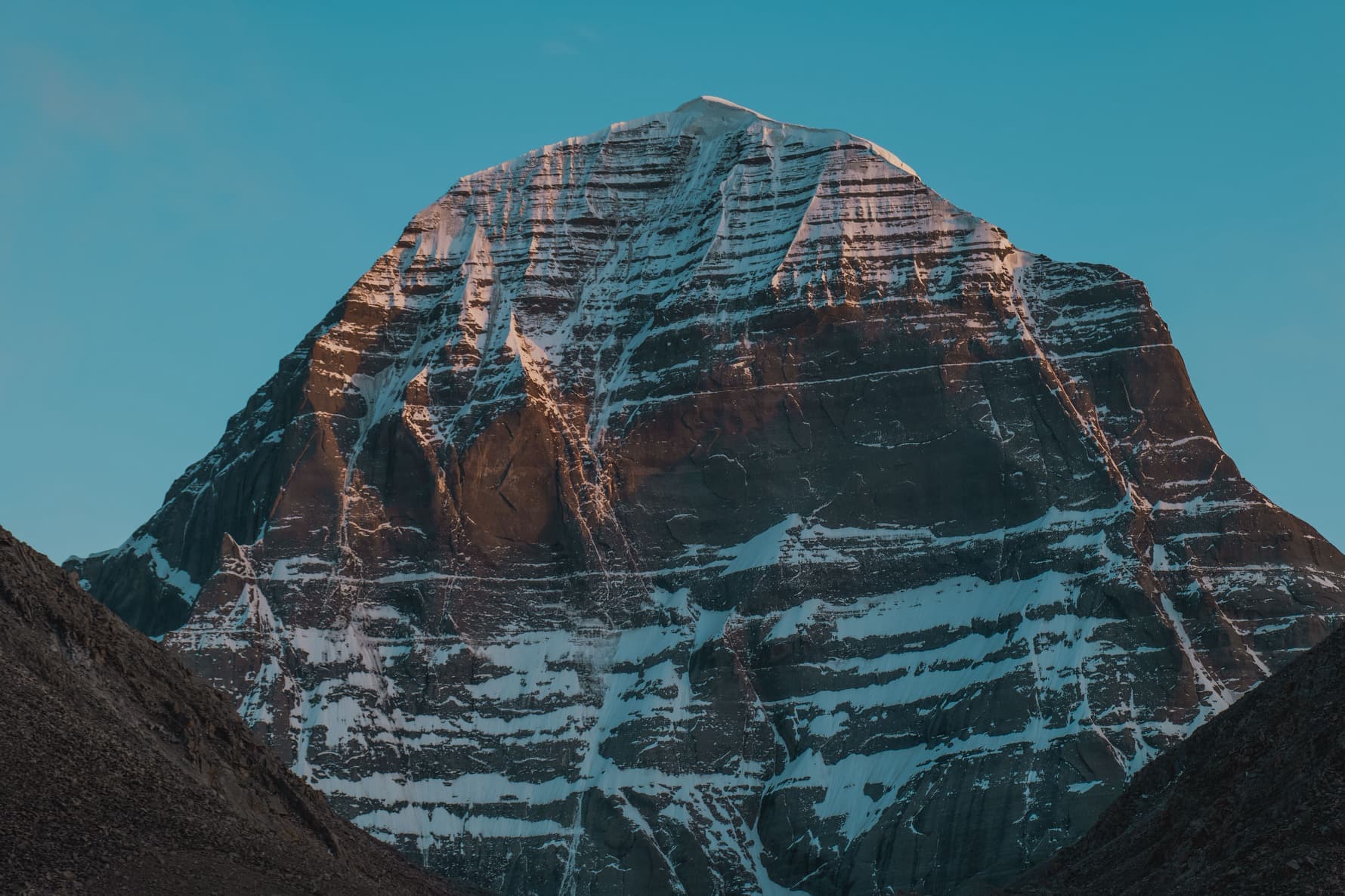
Kailash via Nepal Gosainkunda

The route through Nepal and the high-altitude lake Gosainkunda is one of the oldest paths to Kailash. For centuries, Nepali pilgrims, yogis, and traders have used it; today it remains logistically convenient for those who want to combine trekking in the Himalayas with a kora around the sacred mountain. To be honest, this is not the easiest option; you will spend several days at altitudes above 4000 meters even before reaching Tibet. However, this allows for a smooth acclimatization and you will experience two worlds: the green Nepali valleys and the harsh Tibetan plateau.
In this text, I share the experiences of our groups: how the route is organized physically and logistically, what is needed for visas and permits, what risks to consider, and when is the best time to go. Everything is written for those who are planning their journey for the first time or are choosing between different approaches to Kailash.
Why Nepal and Gosainkunda
Geography and Logistics
Nepal opens the northern border with Tibet at several points; the most well-known for pilgrims is Rasuwagadhi (Kerung). From Kathmandu to the border, it is about 150 km along a mountain highway that the Chinese repaired after the earthquake in 2027. The road is paved but narrow, with winding turns; the journey takes 6–8 hours.
Gosainkunda is a group of sacred lakes at an altitude of 4380 m in Langtang National Park. The trek to them takes 3–4 days from the village of Syabru Besi (accessible by jeep from Kathmandu in 7–9 hours). The lakes are revered by Hindus as the place where Shiva, having swallowed the poison Halahala, touched the earth with his trident and summoned water to cool his throat. For Buddhists, this is also a significant point, with several gompas and stupas around. From the Lauribina La Pass (4610 m), on a clear day, you can see Langtang Lirung (7227 m) and the distant peaks of the Tibetan border.
After Gosainkunda, you can either cross the Gyanja La Pass (5106 m) into the Helambu Valley or return the same way, travel back to Kathmandu, and from there head to the border. In our programs , we usually trek to the lakes, return, allow a rest day in the capital, and then begin the Tibetan part: the border, Kyirong (formerly Kerung), and then through Saga and Paryang to Manasarovar and Darchen.
Advantages of the Route
- Smooth acclimatization. You ascend gradually: Kathmandu 1400 m → Syabru Besi 1460 m → Lama Hotel 2470 m → Gosainkunda 4380 m → descent. By the time you enter Tibet, your body will have already adapted to the lack of oxygen.
- Visa flexibility. Nepali visas for Russians and CIS citizens can be obtained upon arrival at Tribhuvan Airport for 30–50 USD (15/30/90 days). The group Chinese visa is arranged by the receiving party; the permit for Kailash also goes through the Tibetan tour bureau.
- Cultural richness. In the week before the kora, you will see Nepali temples, the stupas of Boudhanath and Swayambhunath, and the living traditions of Newars and Sherpas. This is a gentle immersion before the harshness of Tibet.
- Fewer Chinese bureaucratic risks at the start. It is easier to adjust dates from Kathmandu if flights to Lhasa are canceled or permits are revoked; there is always a ground backup option through Nepal.
Who Is It Suitable For
The trek to Gosainkunda is technically simple (category T2–T3 on the Swiss scale), but it requires the ability to walk on stones, snowfields, and steep ascents. The altitude of 4380–4610 m is already a serious load: 30–40% of newcomers may experience headaches, weakness, or nausea. If you have not been above 3000 m before, it is advisable to undergo a medical examination in advance and bring Diacarb (acetazolamide) for the prophylaxis of altitude sickness.
Physically, expect to walk 5–7 hours a day with a backpack weighing 5–8 kg (heavy items are carried by porters). The trail goes through forests, alpine meadows, and moraines; there are steep steps, sometimes slippery from water or snow. For the kora around Kailash, an additional 52 km over three days and the Dolma La Pass at 5630 m will be added, so the entire route requires good endurance and psychological readiness for discomfort.
Program: From Kathmandu to Darchen
Nepali Part (7–9 Days)
Days 1–2: Kathmandu Adaptation and Culture. Arrival, visa, accommodation in Thamel or the Boudhanath area. Excursion to the Boudhanath stupa (UNESCO site), Shechen and Kopan monasteries, Pashupatinath temple on the Bagmati River (cremations, sadhus, evening aarti). A walk through Durbar Square in Kathmandu or Patan, with its Newari palaces, carved windows, and vibrant medieval atmosphere. In the evening, a briefing on trekking: distribution of TIMS and Langtang permits, equipment check.
Day 3: Transfer from Kathmandu to Syabru Besi (1460 m), 7–9 hours. Departure at 6–7 am by jeep or bus. The Pasang Lhamu highway heads north, bypassing Trishuli Bazar; after Dunche, it becomes a narrow serpentine road along the Bhotekoshi River. During the rainy season, landslides may occur; keep a backup day. Syabru Besi is a village of Sherpas and Tamangs, with two streets lined with lodges, shops, and tea houses. Overnight in a guesthouse, dinner of dal bhat (rice, lentil soup, vegetable curry) is a staple of Nepali trekking.
Day 4: Syabru Besi to Lama Hotel (2470 m), 5–6 hours. The trail enters Langtang National Park (permit is checked at the post) and follows the Langtang River through subtropical forest: oaks, rhododendrons, bamboo. In spring (April–May), everything blooms in reds and pinks—a stunning sight. The elevation gain is gradual, with suspension bridges, and you may encounter langur monkeys and sometimes the Himalayan tahr. Lama Hotel is a group of lodges in the forest; it gets chilly in the evening, so a warm jacket is needed. Overnight in a double room, shared toilet outside, hot shower for an extra charge (200–300 rupees).
Day 5: Lama Hotel to Langtang Village (3430 m), 5 hours. Exiting the forest into the valley, the trail flattens out, surrounded by barley fields and stone walls of corral enclosures. Langtang village was destroyed by an avalanche in 2026; it has now been rebuilt higher up, with new lodges, stupas, and prayer flags. The population is of Tibetan descent (Yolmo) and speaks a Sherpa dialect; homes have altars with thangkas and oil lamps. In the evening, a mild headache is normal; drink 3–4 liters of water and avoid alcohol. Overnight at 3430 m.
Day 6: Langtang to Kyanging Gompa (3870 m), 3–4 hours. A short hike through a wide valley, the final point of the standard Langtang trek. Kyanging Gompa is a monastery of the Nyingma school, with a nearby cheese factory (you can buy yak cheese) and a meteorological station. During the day, an acclimatization hike to Kyanging Ri (4773 m, 2 hours up, with a panorama of Langtang Lirung) or to the Langtang glacier. In the evening, there is a stove in the lodge, milk tea, and card games—a classic atmosphere of a Himalayan base camp.
Day 7: Kyanging to Gosainkunda (4380 m) via Lauribina La (4610 m), 7–8 hours. A long day. The trail turns southwest, ascending to the Lauribina La Pass over moraines and snowfields (trekking poles are essential). From the pass, there are views of Langtang, Ganesh Himal, and sometimes Manaslu. The descent to the lakes is steep, with loose stones. Gosainkunda is the main lake, dark blue in color, surrounded by stone chortens, flags, and a small gompa. In August, during the Janai Purnima festival, thousands of pilgrims from the Kathmandu valley come here. Overnight in a lodge by the lake, temperatures at night can drop to −5 °C, so a sleeping bag rated for −10 °C is essential.
Day 8: Rest Day or Descent. If the group feels well, you can arrange a rest day: walk around the lakes (1.5–2 hours), take a dip (if desired, the water is icy), or sit in meditation. If someone has difficulty acclimatizing, we start the descent the same day to Lauribina or Ghopte (3440 m). In our programs, a backup day is usually included in case of bad weather or fatigue.
Day 9: Return to Kathmandu. Descent to Syabru Besi (possible in a day, but tiring) or Dunche, then jeep to the capital. In the evening, free time, hot shower, dinner in a Thamel restaurant (momo, thukpa, pizza). Rest before the Tibetan part.
Tibetan Part (10–12 Days)
Transfer to the Border. From Kathmandu to Rasuwagadhi (Nepal) takes 6–8 hours. The Friendship Bridge: walk with backpacks across the Bhotekoshi River, where Chinese border guards check passports, visas, and group permits. After that, take Chinese buses or Land Cruisers to Kyirong (3800 m, formerly Kerung) for the first night in Tibet. The town is small, with hotels offering oxygen pillows and restaurants serving Sichuan cuisine. Even after Gosainkunda, many feel a slight fatigue; this is normal, as the altitude is slightly lower, but the dryness of the air and the change in time zone (UTC+6 instead of +5:45) also play a role.
-
Kyirong to Saga to Paryang to Manasarovar to Darchen. This is the classic route we describe in the article How to Get to Kailash. In brief:
-
Kyirong to Saga: ~400 km, overnight in Saga (4500 m), Chinese border checkpoint, permit registration.
-
Saga to Paryang: ~280 km, overnight in Paryang (4600 m), views of Shishapangma (8027 m).
-
Paryang to Manasarovar Lake: ~220 km, stop at Mayum La Pass (5210 m), first kora around the lake or swimming (for those interested), overnight in guesthouses Chiwu Gompa or Horchu.
-
Manasarovar to Darchen (4560 m): ~40 km, base camp for the kora, accommodation in a guesthouse, equipment preparation, briefing.
-
Kora around Kailash (3 days, 52 km).
-
Day 1: Darchen to Dirapuk (5080 m), 20 km, view of the north face of Kailash.
-
Day 2: Dirapuk to Dzutrulpuk (4790 m) via Dolma La (5630 m), 18 km, the most challenging section, descent to Gauri Kunda Lake.
-
Day 3: Dzutrulpuk to Darchen, 14 km, completion of the kora.
Details on physical preparation, equipment, and altitude risks can be found in our materials Kailash Kora: Complete Guide and Lake Manasarovar.
Return Journey. Options: return to Nepal via Kyirong (if you have a multi-entry visa) or through Ali to the west, then by jeep to Kashmir or Ladakh (requires an Indian visa and special permit). Most groups return to Kathmandu, where there are still 2–3 days for rest, shopping, and flying home.
Visas, Permits, and Documents
Nepali Visa
For citizens of Russia, Belarus, Kazakhstan, Ukraine: Visa on Arrival at Tribhuvan Airport or at the land border. Cost: 15 days 30 USD, 30 days 50 USD, 90 days 125 USD.Payment can be made in cash (dollars or euros) or by card. You will need: a passport (valid for at least 6 months), a color photo 3.5×4.5 cm, and a migration card (provided on the plane). If you already have a Chinese visa and plan to return through Nepal, you should obtain a multiple-entry Chinese visa (double-entry) or plan your route differently.
Permits for Trekking
TIMS (Trekkers' Information Management System): Mandatory for all routes in Nepal. The cost for foreigners: FIT (individual trek) is 2000 NPR (~15 USD), and as part of a group through an agency, it is 1000 NPR (~7.5 USD).
It can be obtained at the Nepal Tourism Board office in Kathmandu (Bhrikutimandap) or through an agency in one day. Required: 2 photos, a copy of your passport, a copy of your visa, and the itinerary.
Langtang National Park Permit: 3000 NPR (~23 USD). It is issued either there or at the park entrance (Dunche post). The money goes towards maintaining trails, bridges, and waste removal. The permit is checked at every post; keep it until the end of the trek.
Chinese Visa and Tibetan Permits
Group Visa for Tibet. Individual tourism in the TAR is prohibited; a group application is required for at least 2 people (in practice, tour operators gather groups of 6–12). Documents are submitted by the Tibetan tourism bureau to the Chinese consulate in Kathmandu. The process:
-
45–60 days before the trip, you provide the tour operator with a scanned passport, color photo, and completed application form.
-
The tourism bureau obtains a Tibet Travel Permit (TTP), Alien's Travel Permit, and Military Permit (for the Ngari region, where Kailash is located).
-
10–14 days before the entry date, the consulate issues a group visa sticker for the passport or a separate sheet with photos of all participants (Group Visa).
-
Passports with visas are delivered to your hotel in Kathmandu by courier 2–3 days before departure.
Cost: Visa ~180 USD, permits ~300–400 USD (depending on the season and route). Processing must be done only through an accredited agency; attempts to do it yourself will lead to nothing.
Timing: The process is faster in winter and autumn; in spring (March–May), demand is high, and quotas are limited, so submit your application 2 months in advance. In summer and during political events (anniversaries of uprisings, visits by the Dalai Lama to neighboring countries), the TAR may be closed without warning for 2–4 weeks.
Insurance
Mandatory. Coverage: altitude up to 6000 m, helicopter evacuation (in Nepal and Tibet), medical expenses of at least 50,000 USD, and repatriation.
Recommended companies (based on our groups' experiences): Allianz, ERV, Arsenal (policy "Active Recreation"). Carefully read the exclusions: many policies do not cover high-altitude pulmonary edema if you ascend faster than the recommended pace. Cost ~3–5 USD per day.
Physical Preparation and Acclimatization
Fitness Requirements
The Gosainkunda trek + Kailash circumambulation totals about 100 km on foot over 12–14 days, with 5–6 days spent at altitudes above 4500 m. Average tourist endurance is required: you should be able to walk easily for 5–7 hours with a small backpack without shortness of breath or knee pain. If you haven't exercised in the last six months, start training 2–3 months in advance:
- Cardio: running 5–10 km 3 times a week, cycling, swimming to strengthen the heart and lungs.
- Strength: squats, lunges, and step-ups with a 10 kg backpack to strengthen quadriceps and calves.
- Hiking: weekend trips to the mountains with an elevation gain of 800–1000 m to get used to knee strain and the psychology of long walking.
If you are overweight by more than 15 kg, honestly assess the risks: every kilogram at altitude feels twice as heavy, and your heart will be working at its limit. In such cases, I recommend losing weight first and trying altitudes of 3000–3500 m (for example, in the Elbrus region or Pamir in summer) before attempting Kailash.
Acclimatization Schedule
| Rule: | ascend no faster than 300–500 m in height per night of sleep after 3000 m. Our route follows this: | Day | Overnight Height | Gain |
|---|---|---|---|---|
| 1–2 | Kathmandu | 1400 | m base | |
| 3 | Syabru Besi | 1460 | m +60 | |
| 4 | Lama Hotel | 2470 | m +1010 | |
| 5 | Langtang | 3430 | m +960 | |
| 6 | Kyanjin | 3870 | m +440 | |
| 7 | Gosainkunda | 4380 | m +510 (pass 4610) | |
| 8 | rest | or | descent | |
| 9–10 | Kathmandu | rest | 1400 m -3000 | |
| 11 | Khyiron | 3800 | m +2400 | |
| 12 | Saga | 4500 | m +700 | |
| 13 | Parayang | 4600 | m +100 | |
| 14 | Manasarovar | 4560 | m -40 | |
| 15 | Darchen | 4560 | m 0 | |
| 16–18 | circumambulation | 5080 | → 5630 → 4790 |
After Gosainkunda, you will descend to Kathmandu for 3 days, allowing your body to recover and produce more red blood cells; the second ascent to altitude will be easier. This is called "predacclimatization."
Signs of Acute Mountain Sickness (AMS)
- Mild: headache, slight nausea, weakness, poor sleep. Treatment: stop, do not ascend higher, drink 3–4 liters of water, take Diamox 125 mg in the evening, Ibuprofen for pain. If you feel worse in the morning, descend.
- Moderate: severe headache, vomiting, dizziness, unsteady gait. Immediate descent of 500–1000 m, oxygen, Dexamethasone 4 mg, evacuation to a hospital.
- Severe (HAPE/HACE pulmonary/cerebral edema): cough with pink foam, cyanosis of lips, confusion. This is life-threatening. Descend at all costs + oxygen + helicopter.
In our groups, there is always a pulse oximeter (measures blood oxygen saturation), a first-aid kit with Diamox, Dexamethasone, and oxygen canisters. Guides have completed Wilderness First Aid courses and know the protocols. However, the responsibility for your body lies with you: if you feel unwell, speak up immediately; do not try to be a hero.
Equipment and Clothing
Personal Gear
Backpack: For trekking, 40–50 liters, with a waist belt and chest strap. Heavy items (sleeping bag, down jacket) are carried by a porter; your backpack should weigh ~5–8 kg: water, snacks, first-aid kit, camera, rain cover.
Sleeping Bag: Comfort rating -10…-15 °C (it gets cold at night in the Gosainkunda and Dirapuk lodges). If you don't have your own, you can rent one in Kathmandu (~3 USD/day), but cleanliness is not guaranteed; it's better to bring your own.
Trekking Poles: Telescopic, with rubber tips (metal spikes are prohibited in lodges as they scratch the floor). They reduce 20–30% of the load on your knees when descending; they help maintain balance on passes.
Footwear: Trekking boots with ankle support and Gore-Tex lining. Break them in at home for at least 50 km; otherwise, blisters are guaranteed. For the circumambulation, warmer boots or double-layer socks (thermal + wool) are needed. Spare footwear: lightweight sneakers or sandals for the lodges.
Clothing
Three-Layer Principle:
-
Base Layer (thermal underwear): synthetic or merino wool, moisture-wicking. 2 sets (to wash in lodges).
-
Insulating Layer: fleece jacket or lightweight down vest.
-
Protective Layer: membrane jacket against wind and rain, Gore-Tex or similar.
For bottoms: Trekking pants with removable legs (it’s hot during the day, wear shorts, and in the evening, attach the legs). For the circumambulation: insulated pants or thermal tights under trekking pants.
Down Jacket: Lightweight (300–400 g down), compact. You wear it in the evenings in the lodge and on the Dolma-La pass. Temperatures there can be -10…-15 °C even in summer with the wind.
Headgear: Wide-brimmed hat or cap for sun protection (ultraviolet rays are twice as strong at altitude), fleece or wool hat for evening/night, buff or lightweight balaclava (wind protection on the pass).
Gloves: Thin fleece gloves for trekking + warm windproof gloves (Gore-Tex or with a membrane) for the circumambulation. On Dolma-La, temperatures with wind can be -20 °C; without warm gloves, fingers will freeze in minutes.
Socks: 3–4 pairs of trekking socks (synthetic + merino wool, no cotton as it causes blisters and takes long to dry). One pair of thick wool socks for sleeping in cold lodges.
Gaiters: If you go during the rainy season or early spring, they protect against dirt and wet snow. Usually not needed for the circumambulation in May-June.
Technology and Gadgets
Power Bank: 20,000–30,000 mAh. Charging in lodges is paid (1–2 USD/hour), and electricity is not available everywhere. For the circumambulation, take 2 units as outlets may not be available for 2–3 days (especially in Tibetan guesthouses).
Headlamp: With spare batteries or USB charging. Lodges turn off the lights at 21:00–22:00, and it is impossible to go to the toilet at night without a flashlight.
Camera / Smartphone: Protective case against moisture and dust. Spare memory cards (you can't buy them in the mountains). At altitude, batteries drain faster—keep your devices close to your body for warmth.
Solar Panel (optional): Portable, foldable, 10–20 watts. Useful for the circumambulation if you want to be self-sufficient. In Gosainkunda, it's less critical as there is electricity more often.
First Aid Kit and Hygiene
Medications:* Diamox (Acetazolamide): prevention of altitude sickness, 125–250 mg/day, start one day before ascending. Purchase the prescription medication in Kathmandu (it’s harder to find in Russia).
- Ibuprofen/Paracetamol: for headaches, fever.
- Imodium, Smecta: diarrhea occurs in 30–40% of trekkers.
- Broad-spectrum antibiotic (Ciprofloxacin, Azithromycin) in case of intestinal infection or bronchitis.
- Band-aids: regular and blister plasters (Compeed), at least 10 pieces.
- Elastic bandage: for sprains.
Hygiene:
- Antibacterial hand gel (50–100 ml) as soap is not always available in lodges.
- Wet wipes (2–3 packs) as showers are available every 2–3 days.
- Toilet paper (1 roll) + zip-lock bag (used paper must be carried out, there are no trash bins every 100 meters in the Himalayas).
- Sunscreen SPF 50+ and lip balm with SPF as you can get sunburned at altitude in just 30 minutes.
- Toothbrush, toothpaste, mini soap.
Food and Water
Filter or tablets: Tap water/stream water is not safe to drink due to the risk of giardiasis. Options include: LifeStraw, Sawyer Mini (filters), Aquatabs, SteriPEN (UV purification). Buying bottled water is expensive (1–3 USD/liter) and not eco-friendly (plastic remains in the mountains).
Thermos or thermos bottle: 0.5–1 liter. Hot tea at the mountain passes helps prevent dehydration and hypothermia. Lodges provide hot water for free or for a nominal fee.
Snacks: Nuts, dried fruits, energy bars, chocolate. Lodges serve meals 3 times a day, but between breakfast and lunch, there are 6–7 hours of active walking without snacks, which can be exhausting.
Documents and Money
Originals:
- International passport (valid for at least 6 months).
- TIMS permit (Trekkers' Information Management System, ~20 USD).
- Permit for Langtang National Park (~30 USD) or a Chinese visa for Tibet (arranged through a travel agency).
- Insurance covering helicopter evacuation to at least 6000 m (standard policies do not cover above 4000 m).
Copies: Scans of all documents in the cloud + paper copies in a separate pocket of the backpack.
Cash: Dollars or euros (exchange in Kathmandu for Nepalese rupees). There are no ATMs in the mountains, and cards are not accepted. For 14 days in Gosainkunda, budget ~250–300 USD (lodges, food, tea, charging). For the kora around Kailash, ~500 USD (guesthouses, yak porters, donations to monasteries).
Psychological Preparation: What’s Not Written in the Instructions
Loneliness and Silence
In the mountains, there is no distracting noise: no cars, no crowds, no notifications. Only footsteps, breathing, and the wind. For a city person, the first 2–3 days can feel strange, leading to anxiety and a sense of emptiness. The mind begins to "chew" on unresolved thoughts, old grievances, and unanswered questions. This is normal. Give yourself time: by day 4-5, the silence stops feeling oppressive, and internal clarity emerges.
Tip: Bring a journal. Write down thoughts in the evening at the lodge; it helps prevent obsessing over them during the day while walking.
Discomfort is Part of the Experience
Wet shoes, a cold shower once a week, insomnia at altitude, breathlessness during ascents—this will all happen. Accept in advance that trekking to Gosainkunda or the kora is not a spa retreat. If you set your mind on comfort, every little thing will irritate you. If you accept discomfort as a temporary norm, it will stop being a hindrance.
Technique: When it gets tough, ask yourself: “What of this is actually dangerous?” Cold feet are unpleasant but not dangerous. Breathlessness at 4500 m is normal. If you have a slight headache, drink water and slow down. Panic arises when we confuse discomfort with danger.
Letting Go of Control
In the mountains, you do not control the weather, the pace of acclimatization, or the operation of the lodges. A helicopter may not arrive due to clouds, the pass may be closed by snow, a guide might change the route. Resisting this creates stress. Practice letting go. Plan, but do not cling to the plan.
Common Mistakes of Beginners (and How to Avoid Them)
-
Overestimating physical fitness. “I go to the gym, so I’ll manage.” The gym and altitude of 4500 m are different strains. If you haven't trained cardio and haven’t walked with a backpack, the first days will be very tough.
-
Underestimating the cold. “It’s summer, I won’t freeze.” At 5000 m at night, temperatures can drop to -10 °C even in June. Without a warm sleeping bag and down jacket, you will suffer significantly.
-
Rushing during the ascent. “If I go faster, I can rest earlier.” A pace faster than comfortable = overload for the heart = altitude sickness the next day. The golden rule of altitude: slow but steady.
-
Ignoring symptoms of altitude sickness. “A headache is nothing, it will pass.” If a headache doesn’t go away after drinking water and resting, and nausea begins, it’s a signal to descend. Stubbornness at altitude can end in brain swelling.
-
Saving on gear. Buying a cheap sleeping bag, a “Gore-Tex-like” membrane jacket from the market. In the mountains, this will show: you’ll get wet, freeze, and your shoes will fall apart. Gear is not a place to save money.
Ensuring Safety and Support
When you trek with the Jay Shambo team, you are not alone on the route. Here’s what is included in the support:
- Certified guides with experience in high-altitude trekking, knowledge of the signs of altitude sickness, and first aid skills.
- Constant monitoring of group condition: measuring oxygen saturation (pulse oximeter), adjusting the pace, and, if necessary, unscheduled acclimatization days.
- Communication: satellite phones for emergency evacuation (mobile reception disappears above 3500 m).
- Logistics: pre-booked lodges (no need to search for accommodation in the dark), organization of porters (they carry public gear and part of personal items if needed).
- Cultural context: guides explain the significance of places and rituals, helping interact with locals respectfully.
For the kora around Kailash, coordination with Tibetan authorities, permits, yak porters, and the presence of a lama for rituals is added.
Summary: Your Checklist 6–3 Months Before the Start
✅
- Physical training: 3–4 workouts a week (cardio + strength + walking with a backpack). ✅
- Gear: sleeping bag, trekking poles, shoes (break them in!), membrane jacket, down jacket, thermal underwear. ✅
- Documents: international passport, insurance covering altitude, permits (arranged by the travel agency). ✅
- First aid kit: Diamox, Ibuprofen, Imodium, antibiotics, band-aids. ✅
- Gadgets: power bank 20,000+ mAh, headlamp, water filter. ✅
- Psychological preparation: accept discomfort, let go of control, be ready for silence. ✅
- Booking: contact at least 3–4 months in advance (especially for the kora around Kailash, where there are quotas and visa deadlines).
Remember: trekking to the sacred lake Gosainkunda or the kora around Kailash is not a sporting achievement or a checkbox on the list of "places I’ve been." It is a journey within yourself, where every step teaches patience, every ascent teaches humility, and every pass teaches letting go of unnecessary burdens. Preparing your body and gear is important, but even more crucial is the readiness to meet yourself without filters, in silence and at altitude, where you cannot hide behind routine or distract yourself with trivial matters.
Good luck on your journey. May the mountains embrace you.
Kailash via Nepal Gosainkunda
Introduction to the Sacred Journey

Kailash and Gosainkunda are places of special power that have drawn pilgrims from all over Asia for centuries. This is not tourist exoticism, but living sanctuaries where rituals are still performed, mantras are chanted, and people seek answers to their most personal questions. For many, this journey becomes a turning point: something inside changes, clarifies, or releases.
We have been leading groups on this route for several years, and we see how people return transformed, quieter, calmer, as if shedding unnecessary burdens.
The Significance of Kailash and Gosainkunda in Culture and Religion Kailash is revered in four traditions: Hinduism, Buddhism, Bon, and Jainism. It is considered the abode of Shiva, the axis of the world, a place where heaven touches the earth. Its pyramidal peak is not climbed by mountaineers; the mountain is off-limits for ascents. Gosainkunda is a sacred lake at an altitude of 4,380 meters in the Himalayas of Nepal. According to legend, Shiva struck the slope with a trident to cool his throat after drinking poison to save the world; thus, the water body was born. The water is considered healing; thousands of pilgrims flock here in August for the festival of Janai Purnima. Both places attract not only believers but also those seeking silence, height, and a meeting with themselves. The landscapes here are harsh yet strikingly beautiful.
Main Goals of the Journey: Spiritual Cleansing, Acclimatization, Physical Activity
This route is built on three pillars:
- Spiritual cleansing. The kora around Kailash and rituals at Gosainkunda are not just ceremonies. They provide an opportunity to stop, breathe out, and let go of what has accumulated. In our groups, people often notice: after the kora, it becomes easier to make decisions, anxiety decreases, as if the internal noise has calmed down.
- Acclimatization. Kailash is located at an altitude of over 4,500 meters, and the Drolma La pass reaches 5,630 m. Without preparation, the body simply cannot cope at such heights. The trek to Gosainkunda is an ideal “stepping stone”: you gradually ascend, allowing your body time to adapt, reducing the risk of altitude sickness.
- Physical activity. The route includes multi-day hikes with a backpack, elevation gain, and rocky trails. Stamina is required. Honestly, without it, it will be tough. We recommend starting preparations two to three months in advance: running, squats, long walks with weight—all this will help.
Invitation to Join the Program
If you feel ready, we would be happy to see you in our group. We conduct Kailash via Nepal: kora with Gosainkunda with full support: from logistics and permits to medical assistance and spiritual context. Every stage is thought out, but there is still room for personal experience.- Budget and Practical Aspects: The program cost ranges from $1,200 to $2,000, depending on the season, comfort level, and group composition. Visa for Nepal is obtained upon arrival at Kathmandu airport; for citizens of most countries, it is valid for 30 days and costs around $50.
- Hidden Costs: Meals in Kathmandu (outside the program), personal gear, tips for porters and guides, additional nights if you wish to extend your stay.
- How to Save: Travel in April-May or September-October 2027 when prices are lower, groups are smaller, and the weather is more stable. Book in advance: tickets and accommodation become cheaper three to four months before departure. Bring basic gear from home (trekking poles, thermal underwear) as rentals are more expensive on-site.
This journey will require both physical and internal effort from you. But that’s precisely why it is unforgettable for a lifetime.
Preparing for the Journey

Good preparation is half the success. To approach Kailash through Gosainkunda calmly and without unnecessary stress, it is advisable to gather documents, choose the right time, and understand who you will be traveling with. Below are the things I recommend checking at home.
Necessary Documents: Visas and Permits for Nepal and Tibet
- Visa for Nepal. Obtainable upon arrival at Kathmandu airport; a simple tourist visa for 15, 30, or 90 days. Bring two 3×4 photos and cash in dollars (although cards are accepted, cash is more reliable). You can get Nepalese rupees right at the airport exchange counters near the visa desk.
- Permit for Tibet. This is trickier: entry to Tibet is only possible with a group permit, which is arranged by a tour operator. At Jay Shambo Tours, we take care of this task; you send us a scan of your passport, and we submit the documents to Lhasa and coordinate entry through the Kyirong border crossing. Without the permit, you cannot cross the border, so we take care of it a month to a month and a half before departure.
- Trekking Permits in Nepal (TIMS, national parks). For Gosainkunda, you need a TIMS card and an entry ticket to Langtang National Park. These can be processed in Kathmandu in a day, either by yourself or through us if it’s more convenient to get the package directly.
Choosing Your Route and Timing for the Journey
- Best Time. May and September are classic. In May, the rhododendrons bloom, and in September, the air is clearer after the monsoon, providing excellent visibility. October is also good, but it gets colder in the passes. In winter (December-February), there is a lot of snow, and in summer (June-August), it rains. We guide groups in late spring and early autumn when the weather is more stable and the trails are passable.
- Duration. Typically, the entire route (Kathmandu-Gosainkunda-Kailash Kora-exit through Nepal or Lhasa) takes 12-16 days. If you want to acclimatize more gently, you can add a day or two in Langtang or by the lake. In our program “Kailash through Nepal”, rest days are included so that the body gradually adjusts to the altitude.
- Physical Load. The Gosainkunda trek is of moderate difficulty, with the Lauribina La pass at 4,610 m. The Kora around Kailash is 52 km over three days, with the Dolma La pass at 5,630 m. Basic endurance is required: if you hike at least a couple of times a year, you'll manage. No special mountaineering training is necessary, but regular walks for two months before the trip are very helpful.
Recommendations for Choosing a Company to Organize the Tour
- Experience and Knowledge of the Region. It is important that the guides lead groups specifically through Nepal to Tibet, not just along standard routes from Lhasa. We have accumulated experience crossing through Kyirong; we know where to stop for acclimatization, which guesthouses are reliable, and where to hire porters or yaks. Honestly, on this route, small details matter, from the correct pace to alternative accommodation options.
- What’s Included in the Cost. Check if transfers, accommodation, meals on the trek, permits, guide and porter services are included. In our program, everything is covered except personal expenses and insurance, so you see the final figure right away, without surprises along the way.
- Group or Individual Format. Group tours are cheaper and safer: there is always support, a shared rhythm, and pooled costs for transport and permits. We also organize individual outings, but they require a larger budget and coordination of dates. If you value the company of like-minded individuals, a group of 6-10 people is the optimal option.
- Reviews and Feedback. Read what those who have already completed the route are saying. Pay attention not to general praise but to details: how problems were solved, how flexibly the company responded to changes in weather or participants' well-being. We are open to questions—write, call, and we will discuss your case personally.
Preparing for Kailash is not just about documents and gear. It’s also about mindset: both internal and external. When everything is arranged in advance, in the mountains, there is only walking, breathing, and being present.
If you are ready for this journey, I invite you to join our Kora through Nepal with Gosainkunda. We will take care of the logistics; you focus on your inner space for meeting the mountain.
What to Bring: Packing List

Preparing for Kailash through Nepal with Gosainkunda is a moment when you want to bring everything or, conversely, forget something critical. Honestly: I have seen people lugging an extra five kilos "just in case" and suffering at altitude. And I have seen those who forgot spare socks; wet feet at 5,000 meters turn a day into a trial. Below is what really works in practice, without fluff.
Trekking Gear: Clothing, Footwear, Backpack
- Clothing: Quick-drying t-shirts and thermal underwear (2-3 sets). Wash in the evening, and by morning they’re dry (if the weather is on your side). A lightweight fleece jacket for layering. At altitude, temperatures fluctuate: cold in the morning, hot at noon. A waterproof windbreaker is essential. Rain in Gosainkunda can arrive within ten minutes. Trekking pants, preferably with UV protection as the sun at altitude is harsher than it seems. Merino wool socks, at least three pairs. Wet socks = blisters = pain.
- Footwear: Trekking boots with good ankle support and cushioning. Break them in at home; new boots on the trail will destroy your feet. Sandals or lightweight sneakers for evenings in the lodge. Giving your feet a break is not a luxury.
- Backpack: A main pack of 60-70 liters. Most of the weight will be carried by porters or yaks, but your items should be packed efficiently. A small backpack (20-30 liters) or a waist bag for water, snacks, and documents during day hikes.
Personal Items and Medications: What You Really Need vs. What You Can Leave
- Personal Items: Passport, Chinese visa (group permit), Nepalese visa, insurance—all in a waterproof bag. Credit cards and cash in dollars (minimum $200-300). There are no ATMs in the mountains, and cards cannot be used. Travel-sized toiletries: toothbrush, toothpaste, soap, wet wipes. Water for washing is not always available.
- Medications: Pain relievers like ibuprofen or paracetamol. Headaches at altitude are almost a norm. Altitude sickness medication (acetazolamide/Diamox). Consult your doctor in advance. Insect repellent (for Nepal), sunscreen with SPF 50+. At 5,000 m, ultraviolet rays penetrate deeply. Band-aids, antiseptic, activated charcoal—small things that can save you.
- What You Can Leave: Hairdryer, straightener, heavy books. Electricity is a luxury in lodges, and weight in your backpack is the enemy. Ten changes of clothes. Wash, dry, and wear—it's a simple cycle.
Packing Tips: How to Organize Your Items Effectively
- Packing: Use packing cubes or regular Zip-lock bags to categorize: “top,” “bottom,” “socks,” “medications.” Searching for the right item in the chaos of your backpack in the cold is no fun. Roll your clothes instead of folding them to save space and reduce wrinkles. A reusable water bottle (1-1.5 liters) is essential. Hydration at altitude is not a suggestion; it’s a bodily requirement.
- Budget Tips: Plan your food and water expenses in advance. In Kathmandu, a liter of water costs $0.5; at an altitude of 4,000 m, it’s already $2-3. Bring a filter or purification tablets. Snacks (nuts, dried fruits, energy bars) are your energy reserve. The selection in lodges is modest, and prices rise with altitude. Clarify with Jay Shambo Tours what’s included in the cost (meals, accommodation, permits) to avoid unexpected bills.
- Hidden Costs: Entry to some sacred sites or temples may require a fee ($1-5). It’s a small amount, but it’s better to have cash. Toilets on the route can sometimes be paid ($0.2-0.5). Yes, seriously. Hotels in Kathmandu or Lhasa may charge a tourist tax (usually $1-3 per night). Ask at the reception right away.
Preparation is half the peace of mind on the trek. When things are packed efficiently, you are not distracted by small matters and can focus on what you came for: your inner journey, the silence of the mountains, and the encounter with Kailash.
We invite you to walk this route with us Kailash through Nepal: Kora with Gosainkunda. We will take care of the logistics; you focus on your experience.
Acclimatization: How to Avoid Getting Sick in the Mountains

The trek to Kailash through Nepal and Gosainkunda is a journey where physical exertion goes hand in hand with inner work. Altitude sickness can halt even the most experienced traveler. Therefore, preparation begins long before stepping onto the trail.### Signs of Altitude Sickness and What to Do About It Headache is the first signal. Drink more water and take a break. Do not push yourself. Nausea indicates a lack of oxygen. Rest and avoid heavy meals. General Weakness—if your legs aren't moving, your body is asking for a pause. It's better to wait than to worsen the situation. Drowsiness or Insomnia—your body hasn't adapted yet. Sleep comfortably and do not rush the ascent.
When symptoms worsen, descend to a lower altitude. Stubbornness in the mountains can be dangerous; descending 300–500 meters often alleviates acute symptoms.
How to Prepare for Altitude in Advance
- Gradual Ascent: Spend two to three days at 3000–3500 meters before starting the main route. In our program Kailash through Nepal: Kora with Gosainkunda, we include acclimatization in Kathmandu and on the approach to allow your body to adjust.
- Physical Preparation: Running, swimming, long walks with a backpack. Start moving regularly a month before departure to train your heart and lungs.
- Hydration in Advance: Start drinking more water a week before your flight. Your body will remember the routine.
- Diet: Carbohydrates + protein. Grains, pasta, nuts, dried meat—anything that provides energy without overloading the stomach.
Food and Water in the Mountains Water—3–4 liters per day, at least. At high altitudes, evaporation occurs faster, and thirst is felt later than dehydration sets in. Alcohol and Caffeine—avoid or minimize both. They increase diuresis and put strain on the heart. Light Snacks—nuts, dried apricots, energy bars. Carry them with you and eat every 1.5–2 hours. Fresh Vegetables and Fruits—wherever possible. Vitamins and fiber help your body cope with stress.
Your safety is a priority. Honestly: it's better to take a day off in a lodge than to risk your health for the schedule. Proper acclimatization opens the way to sacred sites and brings you home healthy.
We invite you to join Kailash through Nepal: Kora with Gosainkunda, a route where we have considered every elevation change and built in time for adaptation.
Physical Preparation: Minimum and Optimum

The Kora around Kailash is not a race, but also not a leisurely stroll. In three days, you will walk about 53 km at altitudes from 4700 to 5600 meters, with a backpack and elevation changes. The good news: the route is passable for most healthy people if you have honestly prepared for at least two to three months.
Exercises for Preparing for the Hike
The key is regularity. Better to have three short workouts a week than one heroic session a month.
- Cardio Workouts: running, swimming, cycling, or stair climbing. Start with 30 minutes 3–4 times a week, gradually increasing to one to one and a half hours. Ideally, go out to rough terrain or the mountains at least once a week.
- Strength Training for Legs and Back: squats, lunges, planks. Not necessarily in a gym; bodyweight exercises will suffice. 2–3 times a week for 20–30 minutes. The goal is endurance, not muscle mass.
- Flexibility and Stretching: yoga or simple exercises after running. Your knees, lower back, and calves will thank you on long descents. Just 15–20 minutes two to three times a week is enough.
How to Assess Your Fitness and Preparedness
Before booking your tickets, check yourself.
- Endurance Test: walk 10–15 km on hilly terrain with a 5–10 kg backpack. If you feel confident and have no severe pain the next day, you're on the right track.
- Pulse During Exercise: ensure your heart rate does not exceed 70–80% of its maximum (roughly 220 minus your age). If your pulse doesn’t spike after an hour of walking, your fitness is good.
- Special Tests: if possible, take a VO₂ max test with a sports doctor or at a fitness center. This will give you a real picture of your aerobic endurance. But it’s not mandatory; subjective feelings from training are enough.
Training Recommendations for Different Levels of Preparedness
You are not a professional climber, but you want to complete the Kora without suffering? Here’s a rough plan.
- Beginner Level (occasional exerciser): 20–30 minutes of cardio 2–3 times a week (jogging, brisk walking, cycling). Light strength exercises 1–2 times a week (squats, planks, lunges). Gradually increase time and intensity every two weeks.
- Intermediate Level (regular exerciser but not in the mountains): 30–60 minutes of cardio 3–4 times a week, add hills or stairs. Strength training 2–3 times a week with light weights (dumbbells, kettlebells). Once a week, go for a hike in nature with a 7–10 kg backpack for 3–4 hours.
- Advanced Level (hiking in the mountains, running marathons): 1–2 hours of cardio 4–5 times a week, including trail running. Strength training 3–4 times a week focusing on endurance. Regular hikes at altitudes of 2000+ meters to acclimatize to thin air.
Honestly: if you're already in good shape, just maintain your routine. If you're just starting, give yourself three months to prepare. Don’t chase records: it's more important to arrive at the start healthy and confident.
Ready to challenge yourself at Kailash? Join the program Kailash through Nepal: Kora with Gosainkunda and together with our team, you will walk the path at a comfortable pace, with support at every step.
FAQ

What is the height of Gosainkunda and Kailash?
The height of Gosainkunda is about 4,380 meters above sea level, while Kailash reaches 6,638 meters. These are serious altitudes, so acclimatization and physical preparation are not just recommendations; they are critical for safely completing the route.
How long does the hike to Gosainkunda take?
The hike to Gosainkunda usually takes 2–3 days. The pace depends on your fitness level and well-being. We always recommend allowing time for adaptation and rest, especially if you haven’t hiked at altitude before.
Is it possible to organize transportation from Kathmandu to Kerung?
Yes, we help organize transfers from Kathmandu to Kerung by bus or private car. The journey takes about 7–8 hours. It's best to book in advance to avoid rush before departure.
Where is the best place to stay before the hike to Kailash?
We recommend staying in Kerung: it has both simple hotels and more comfortable options. Pay attention to the proximity to starting points and the availability of stores for buying gear or food.
What is the cost of the tour to Kailash through Nepal?
The cost depends on the program and comfort level. The approximate price is 1,200–1,800 USD per participant (including transport, meals, and accommodation).
Additionally: visa fee (about 50–100 USD), personal expenses for souvenirs and additional services.
We advise checking all details and expenses before booking, so you can accurately plan your budget.
What are the risks and safety measures during the trip?
High altitudes always come with risks associated with altitude, primarily altitude sickness. Here’s what helps minimize danger: Gradual acclimatization: do not ascend too quickly. A first-aid kit with basic medications and altitude sickness remedies. Stay with the group and follow the guide's instructions. Drink enough water and maintain energy levels with regular meals.
Our team accompanies you at every step and is ready to assist promptly if necessary.
We invite you to join Kailash through Nepal: Kora with Gosainkunda and discover this sacred land together.