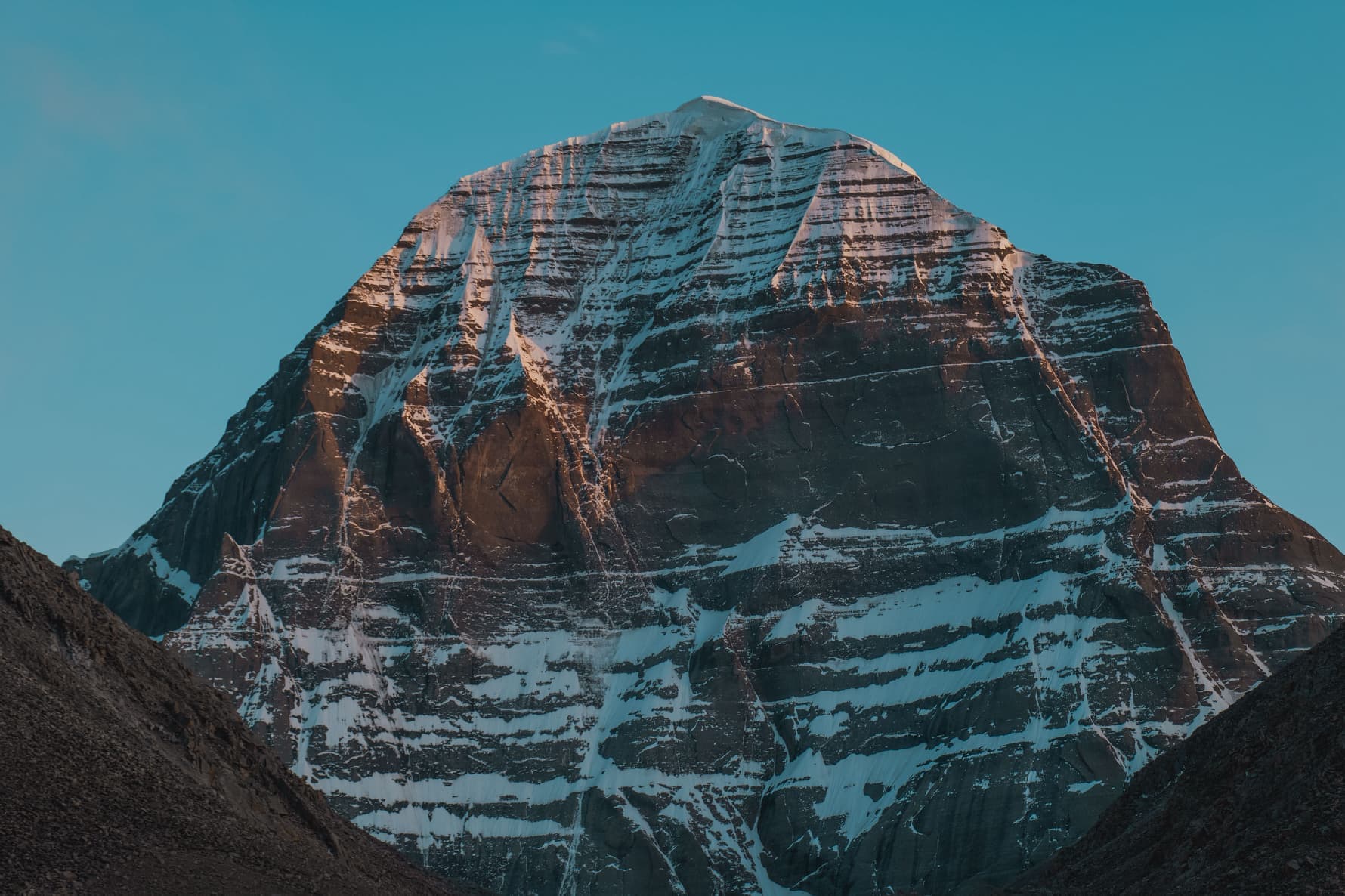
Route Map for the Kora Trek around Kailash + Lhasa: Why it's Beneficial to Trek  the highest and most challenging place. Allow extra time for the ascent; do not rush. The views are worth it, but your body needs time to adapt.
- Lake Manasarovar a sacred place for meditation. Pilgrims spend a day here to reflect on their journey. I advise not to skip it.
- Tarubuna a recovery point. Here you can rest, try local food, and talk to other pilgrims. Use navigation apps or offline maps—signal on the trail can drop, and it is better to be prepared. ### Description of Key Locations and Their Significance Every place here has its own story Sakya Valley is known for its monasteries. If you have time, stop by—the architecture and atmosphere are impressive. Dolma La Pass is a sacred place. Locals believe a deity resides here. The ascent is physically demanding, but the energy is special. Lake Manasarovar is considered healing. Pilgrims bathe here to prepare for spiritual practices. The water is cold, but many say they feel renewed. Tarubuna is a meeting place. Here you will see people from different countries, hear different languages, but everyone shares the same goal. ### How the Map Helps in Planning The map is a working tool. Here’s how to use it Assess your strength knowing the difficulty of sections will help you distribute your load correctly and choose your pace. Plan your stops identify resting places in advance to avoid running out of energy mid-journey. Coordinate with the group if you are not alone, the map can help you agree on the route and avoid misunderstanding. When planning your path, check out [Kailash: Sacred Kora from Lhasa]( or [Kailash via Nepal: Kora with Gosainkunda]( We have designed the routes so you can focus on your inner experience rather than logistics. ## Logistics and Preparation for the Trek . Start preparing your documents 2–3 months in advance. This is not a quick process, and it is better not to leave it until the last moment. ### How and When to Best Plan the Trek The optimal time is April, May, September, and October. During these months, the temperature is comfortable: around +15 °C during the day, and it can drop to −5 °C at night. Rain is rare, and the trails are passable. In summer (June–August) the rainy season. The trails become muddy, visibility decreases, and it is harder to trek. In winter, it is too cold, and some routes may be closed due to snow. Keep an eye on the weather forecast as your departure date approaches—the mountains are unpredictable. ### Packing and Necessary Gear for a Comfortable Journey Basic list Trekking boots comfortable, broken-in, with good ankle support. Thermal underwear several sets to avoid freezing at night. Sleeping bag rated for temperatures down to −10 °C. First aid kit must include altitude sickness medications (Diamox or similar), pain relievers, and band-aids. Rain jacket even in the dry season, the weather can change in an hour. Water and snacks nuts, dried fruits, energy bars. Do not take unnecessary items—every extra kilogram at altitude feels twice as heavy. If you are considering alternative routes, take a look at [Kailash via Nepal: Kora with Gosainkunda]( this offers a different perspective on sacred places, with a different pace and cultural context. ## Safety and Health on the Trek . Ibuprofen or paracetamol (pain relievers). Antihistamines (for allergies). Antiseptic, bandages, and plasters (for cuts and scrapes). Activated charcoal, anti-diarrheal medications. Personal medications if you take anything regularly, bring enough for the entire trip. In our programs [Kailash: Sacred Kora from Lhasa]( and [Kailash via Nepal: Kora with Gosainkunda]( our guides have basic medical skills and are always available. But your medical kit is your responsibility. ## Budget and Cost of the Trek . Total: 100,000–150,000 ₽ per person, depending on your preferences. ### Price Companies Prices in the market vary by 20–30%, but it’s not just about the numbers. Cheap offers often mean inexperienced guides, poor logistics, and a lack of support in emergencies. At , we offer transparent pricing and proven service you know what you are paying for. ### Why Saving on Guides Can Be Risky A guide is not just someone with a map. They are your safety, a connection to the culture, and a help in case of health issues. An inexperienced guide in high-altitude areas is a risk that can cost health or even life. Honestly: we have seen people try to save money and end up spending more on evacuation, treatment, or repeated trips. A good guide is not a luxury but a necessity. Check out [Kailash: Sacred Kora from Lhasa]( or [Kailash via Nepal: Kora with Gosainkunda]( we work in a way that allows you to focus on the journey, not on problems. ## FAQ . There’s no need to rush the altitude requires time for adaptation. ### What documents are needed for a trip to Tibet? Passport (valid for at least 6 months), visa for China, Tibet Travel Permit (obtained through a tour company not available independently). Start preparing 2–3 months in advance. ### What is the height of the passes along the route? From 5,000 to 5,630 meters. The highest is Dolma La Pass (5,630 m). This is a serious load, and physical preparation is essential. ### How is assistance organized in case of unforeseen circumstances? Our guides have experience working in high-altitude areas and basic medical training. They always carry a first aid kit and communication devices to call for help. We also recommend obtaining insurance that covers high-altitude treks. ### Can the route be completed without specific physical preparation? Technically yes, but it will be challenging. Preparation increases the chances of a comfortable journey and reduces risks. Cardiovascular training (running, cycling) a few months before the trip will help significantly. ### Which currency is best to take with you? Chinese yuan (CNY). Exchange some money in advance, and take cash for small expenses in villages. Cards work in large cities, but not always in remote areas. If you have any questions, feel free to write to us we are always ready to help you prepare for this journey.