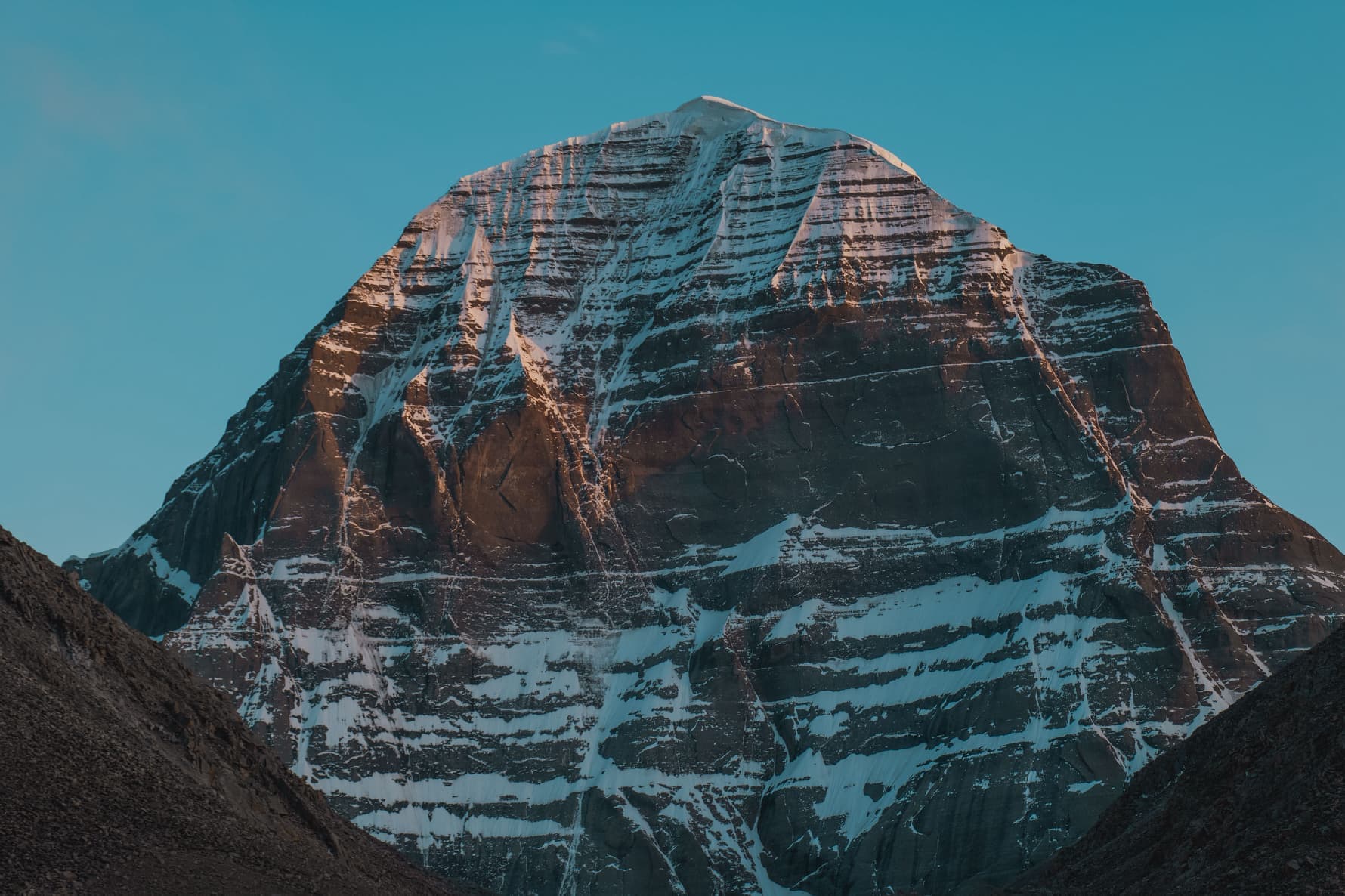
How to Trek to Mount Kailash: A Complete Guide to the Kora

Introduction to the Sacred Kora Around Kailash

Mount Kailash is a sacred place revered in four religions: Buddhism, Hinduism, Jainism, and Bon. The pilgrimage around it, known as the kora, is both a physical journey and a deeply personal spiritual path.
The kora spans approximately 52 kilometers. Every step here is filled with meaning: you pass by monasteries, sacred stones inscribed with mantras, and prayer flags left by other pilgrims. The landscapes range from rugged rocky slopes to verdant valleys near the sacred lakes of Manasarovar and Rakshas Tal.
The Uniqueness of the Kora and Its Cultural Context
The route passes through places of power—lakes, temples, and mountain passes, each surrounded by myths and legends. Local Tibetans and members of the Bon community greet pilgrims with respect, assisting along the route and offering shelter and food in guesthouses.
I must be honest: the trek is physically demanding. The altitude—around 4700 meters in the valley and up to 5630 at the Dolma-La pass—makes its presence felt. The oxygen is noticeably thinner, and each body reacts differently. I've seen well-prepared athletes struggle more than individuals with average fitness who were patient and attentive to their bodies.
Practical Tips and Risks
Before planning your kora, consider a few points:
Altitude. Kailash sits at 4700–5630 meters. Altitude sickness is a real risk. I recommend spending at least 2–3 days acclimatizing in Lhasa or another high-altitude area before starting the trek.
Documents. A special permit from the Tibetan authorities is required for the kora, along with a Chinese visa and a Tibet permit. Processing takes 4–6 weeks, so plan ahead.
Budget. Estimated costs are around $1200–2000 per person, including permits, transfers from Lhasa, guide services, accommodation, and meals along the route. This is the price range for 2026; exact figures depend on the season and group size.
Physical Preparation. Cardiovascular training is advisable 2–3 months before departure: running, swimming, hiking with a backpack. Strengthen your knees and back—there are many descents on rocky terrain.
If you are ready for this experience, I recommend checking out our program Kailash: Sacred Kora from Lhasa. This is not just a trek but an opportunity to walk in the footsteps of pilgrims and see one of the most sacred peaks of the Earth from within.
The Best Time to Undertake the Kora Around Kailash

Optimal Seasons for the Trek: Spring and Autumn
The best time for the kora is in spring (April–June) and autumn (September–October). During these months, the weather is more stable, daytime temperatures are comfortable for walking, and precipitation is minimal.
In spring, the slopes are covered with fresh greenery, the sky is clear, and visibility is excellent. In autumn, the mountains are adorned in golden and red hues, the air is crisp, and sunsets are particularly beautiful.
In summer (July–August), prolonged rains can occur, rivers rise, and trails can be washed out—making them less passable. In winter (November–March), it’s cold, snow covers the passes, and the route is only accessible to the most prepared.
The Impact of Weather Conditions and Altitude on the Perception of the Route
Weather on Kailash can change rapidly. It may be sunny in the morning, then windy and snowy by afternoon. Temperatures at altitudes of 4700–5600 meters range from −5 to +10 °C during the day. At night, it drops below zero even in summer.
Altitude affects everything: breathing, pace, mood. In our group, there were participants who could run half-marathons on flat ground, but on Kailash, they walked slower than anyone else. Others adapted easily. It's individual. The key is not to rush and to listen to your body.
Recommendations for Preparing for Variable Conditions
To make the trek comfortable, keep in mind:
Clothing. Layering is your friend. Base layer (thermal underwear), insulating layer (fleece), wind and water protection (membrane jacket). Be sure to bring a warm hat, gloves, and a neck buff. Trekking boots with good ankle support are essential.
Equipment. Headlamp, first aid kit (for altitude sickness—Diamox, pain relievers, band-aids), water supply (at least 2 liters), snacks (nuts, dried fruits, chocolate). Sunscreen SPF 50+, category 3–4 sunglasses, and a hat with a brim.
Psychological Preparation. The kora is a challenge not only for the body but also for the mind. Be ready for fatigue, cold, and basic conditions. This is part of the experience. Try to set your mindset for contemplation and inner silence—it makes it easier to endure hardships.
By following these tips, you can navigate the route with minimal discomfort and maximum impressions.
If you are ready for this journey, take a look at the program Kailash: Sacred Kora from Lhasa or Kailash via Nepal: Kora with Gosainkunda—this is an opportunity to walk one of the most significant spiritual routes on the planet accompanied by experienced guides.
How Long Does It Take to Complete the Kora Around Kailash?

The kora around Kailash usually takes 3 days. This is the standard pace for most groups. Some complete it in 2 days (Tibetans may do it in one, but this is rare and requires excellent preparation).
Each day, you cover 15–20 kilometers. On flat ground, this sounds easy, but at altitudes of 4500–5600 meters, the body functions differently. The pace is slower, stops are more frequent, and ascents are more challenging.
The Impact of Group Pace and Route
The pace depends on the group's composition. If everyone is roughly at the same fitness level, the trek is comfortable. If there is a wide range of abilities, the group stretches out, and it’s important for the guide or assistant to stay at the back.
There is a classic route (clockwise, as is customary among Buddhists) and alternative options. Some include additional radial routes to monasteries or sacred stones. This increases travel time but enriches the experience.
In practice, I have seen groups complete the kora in 2.5 days, staying in guesthouses at Dirapuk and after the pass. The third day involves descending to the finish. This is optimal for most.
Physical Preparation and Acclimatization
Physical fitness plays a role, but it is not decisive. The main thing is patience and the ability to listen to oneself. I have seen marathon runners give up on the second day, and people without special preparation who moved slowly but steadily to the end.
Acclimatization is critical. Before the kora, I recommend spending at least 3–4 days at altitudes of 3500–4000 meters (Lhasa, Shigatse). Then another 1–2 days at 4500 meters before starting. This significantly reduces the risk of altitude sickness.
On the route, be aware of symptoms: headaches, nausea, dizziness, insomnia. If they worsen—stop, rest, drink water. If it doesn’t improve—descend. Health is more important than the schedule.
Conclusion
The kora is not a race. The goal is not speed but to walk the path mindfully, with respect for the place and for oneself. Don’t rush, look around, talk to fellow travelers, and listen to the silence.
If you want to learn more about how we organize the trek, check out the program Kailash: Sacred Kora from Lhasa or Kailash via Nepal: Kora with Gosainkunda.
This is an opportunity to walk one of the most sacred routes on the planet with people who know this mountain not just from pictures.
Altitude Changes on the Kora Around Kailash

The highest point on the kora is the Dolma-La pass, at 5630 meters above sea level. This is a key point on the route and the most serious test for the body.
The start of the kora is around 4600 meters (Darchen), followed by an ascent to 5000 meters (Dirapuk). The next day involves the climb to the pass, after which there is a descent to 4800 meters (Zutrul Puk), and on the final day—a return to the valley at 4500 meters. The altitude change on the second day can reach 1000 meters up and 800 down—this is a significant load.
Risks Associated with Altitude
Altitude sickness (acute mountain sickness, AMS) is the primary risk. Symptoms include headaches, nausea, weakness, loss of appetite, and insomnia. Ignoring these can lead to pulmonary or cerebral edema—this is a life-threatening condition.
What helps mitigate the risks:
Gradual Acclimatization. Spend at least 3 days in Lhasa (3650 m), followed by 1–2 days at 4000–4500 meters before starting the kora. Don’t rush.
Drink plenty of water. Aim for 3–4 liters a day. Dehydration worsens AMS symptoms. Urine should be light—this is a good sign.
Avoid alcohol and heavy foods. Alcohol impairs blood oxygenation, and fatty foods burden the body. Eat light: porridge, soups, tea.
Listen to your body. If you feel unwell—rest, do not ascend higher. If symptoms worsen—descend. There is nothing shameful in interrupting the trek for health reasons.
Medication. Diamox (acetazolamide) helps with altitude adaptation. Take as directed by a doctor, starting a day before the ascent. Ibuprofen or paracetamol can be used for headaches. All of this should be included in your first aid kit.
Personal Experience of the Group on Acclimatization and Preparation
We always start with acclimatization in Lhasa. The first days involve easy walks around the city, visiting Jokhang and Potala, with no sudden ascents.
Then we head towards Kailash with stops at altitudes of 4000–4500 meters.In one of our groups, there was a participant who ignored advice, didn’t drink water, and was in a hurry. At the pass, he developed a severe headache and nausea.
We had to stop, give him oxygen, and bring him down. He returned to Darchen while the group continued. This was a lesson for everyone — altitude does not forgive carelessness.
In another group, a woman moved slowly, took frequent breaks, drank plenty of water, and ate little by little. She completed the entire route without any symptoms. The secret lies in patience and self-awareness.
At the Dolma-La pass, it is always cold and windy. Even in June, there can be snow. Dress warmly, and don’t linger too long — descending alleviates altitude symptoms the fastest.
If you want to complete the kora safely and with the support of an experienced guide, check out our program Kailash: Sacred Kora from Lhasa or Kailash via Nepal: Kora with Gosainkunda.
We know how to prepare groups for altitude, and we always go at the pace of the slowest participant — health is more important than the schedule.
Permits and Documents for the Kora Around Kailash

The trek around Kailash is not just a spiritual journey but also a logistical task with a lot of paperwork. Without the right documents, you simply won’t be able to enter Tibet. Let's go through what you need and how to prepare.
Overview of Required Permits for the Kora
For the kora around Kailash, several documents are required:
Chinese Visa. A standard tourist visa for the PRC. It is obtained through the consulate or visa center. Processing time is 5–10 working days.
Tibet Travel Permit. The main permit for entry into the Tibet Autonomous Region. It is issued only to tour operators; individual travelers cannot obtain it. It is processed based on an invitation from the operator, a copy of your passport, and visa. Processing time is 2–4 weeks.
Alien's Travel Permit. An additional permit for visiting restricted areas, including Kailash. This is obtained in Tibet, usually in Lhasa or Shigatse. It takes 1–2 days.
Military Permit. Required for some routes, especially those close to the border with Nepal. It is issued along with the Alien's Travel Permit.
All these documents are prepared by the tour operator. Your task is to provide copies of your passport and visa in a timely manner and fill out the required forms. Start preparing at least 2 months before your planned departure date.
Process of Obtaining Visas for Tibet: Document Preparation Tips
Steps to follow:
Step 1. Contact the tour operator organizing the trip. They will submit the application for the Tibet Travel Permit. For this, you need to provide a copy of your international passport (first page) and a photo.
Step 2. After receiving confirmation from the tour operator (usually a scanned copy of the permit), submit your documents for the Chinese visa. You will need: an international passport (valid for at least 6 months), a completed application form, a photo, hotel and flight booking confirmations, and a copy of the Tibet Travel Permit.
Step 3. Obtain your visa. After that, the tour operator will arrange the original Tibet Travel Permit (which will be given to you upon meeting in China or sent by courier).
Step 4. Once in Tibet (usually in Lhasa), the tour operator will issue the Alien's Travel Permit and Military Permit. This takes 1–2 days, so the program always includes time for acclimatization and document processing.
Important: Do not purchase non-refundable tickets until you receive your visa and permit. Chinese authorities can deny a visa for various reasons (political situation, holidays, region closures). It is better to buy tickets that allow for refunds or exchanges.
Recommendations for Interacting with Local Authorities
You will be checked several times on the route: upon entering Tibet, at checkpoints on the way to Kailash, and before starting the kora. These checks are normal, so don’t worry.
Tips:
Always carry copies of your documents. The originals are kept by the guide, but you should have photocopies of your passport, visa, and permits.
Do not photograph military objects, checkpoints, or police officers. This can cause problems.
Be polite and calm. Tibetan and Chinese officers are usually friendly if you follow the rules.
Listen to your guide. They know how to communicate with local authorities and always act as intermediaries. Do not try to resolve issues on your own.
Respect local customs. In monasteries and sacred places, remove headgear (for men), do not make noise, and do not point at statues with your finger. This is not a requirement from the authorities, but a sign of respect that is valued.
Document preparation is routine, but it is essential.
If you want to spare yourself this headache and be confident that everything is arranged correctly, check out our program Kailash: Sacred Kora from Lhasa or Kailash via Nepal: Kora with Gosainkunda.
We handle all the permits and guide you along the route from start to finish — all you have to do is walk and enjoy the views.
Frequently Asked Questions

How to Trek to Mount Kailash?
The trek around Kailash follows a 52-kilometer route, which usually takes 3 days. It is best to start from Darchen — a small village at the foot of the mountain.
I recommend starting with acclimatization in Lhasa (3–4 days), then heading to Kailash, and spending a day or two on-site before starting. The best times are April–June and September–October.
Along the route, you will encounter monasteries, sacred stones with mantras, and prayer flags. Respect local traditions: walk clockwise (as is customary for Buddhists), do not litter, and keep noise to a minimum.
Be sure to take a local guide or join an organized group. Completing the kora independently is technically possible, but without permits and knowledge of the route, it is risky.
What is the Difficulty of the Kora Around Kailash?
The difficulty is moderate, but the altitude makes the trek a serious challenge. The highest point is the Dolma-La pass, at 5630 meters.
The trails are rocky, with steep ascents and descents. Good trekking boots with ankle support and trekking poles for knee relief are necessary. On the second day (the ascent to the pass), the elevation gain is about 1000 meters — this requires strength and patience.
The main challenge is the altitude. There is less oxygen, breathing becomes more difficult, and the pace slows. Altitude sickness can affect anyone. Watch for symptoms: headache, nausea, weakness. If they worsen — stop, rest, and drink water. If it doesn’t pass — descend.
Is Special Preparation Needed for the Trek?
Physical preparation helps, but the main thing is not athletic form, but patience and the ability to listen to your body.
I recommend engaging in cardio exercises 2–3 months before the trip: running, swimming, biking. Long hikes with a backpack weighing 8–10 kg are beneficial — this trains endurance and leg muscles. Strengthen your knees and back — they bear the main load during descents.
Acclimatization is more important than physical training. Even a marathon runner can suffer from altitude sickness if they haven’t spent enough time adapting. Plan for at least 3–4 days in Lhasa before heading to Kailash.
Familiarize yourself with the basics of first aid at altitude: how to recognize altitude sickness, what to do in case of frostbite, how to use an oxygen cylinder (if you take one with you).
How to Organize Transportation to Start the Kora?
Transportation to Kailash is organized through a guide or tour operator. Getting there on your own is difficult — special permits are required, and there are many checkpoints along the way.
The usual route: you fly to Lhasa, spend a few days acclimatizing there, and then the group is picked up in jeeps (Land Cruiser or similar) and taken to Kailash. The journey takes 2–3 days with stops in Shigatse, Saga, and Paryang — this is also part of the acclimatization process.
The distance from Lhasa to Darchen is about 1200 kilometers. The roads are partially paved and partially unpaved. You wouldn’t call it comfortable, but it’s part of the adventure.
Arrange the transfer in advance. Make sure the tour operator has all the necessary permits for travel along the route — some sections may be closed depending on the time of year and the political situation.
What to Bring on the Trek?
Proper gear is key to a comfortable kora experience. Here’s a list of essential items:
Clothing: trekking boots (well-broken in!), thermal underwear, fleece jacket, down jacket or insulated coat, waterproof and windproof jacket, trekking pants, warm hat, gloves, neck gaiter, spare socks (wool or synthetic).
Backpack: 30–40 liters, with a comfortable back and waist belt. Most of the main items are carried by yaks or porters, but you will carry your personal items, water, snacks, and a first aid kit.
Equipment: trekking poles, headlamp, solar charger, and a reusable water bottle.