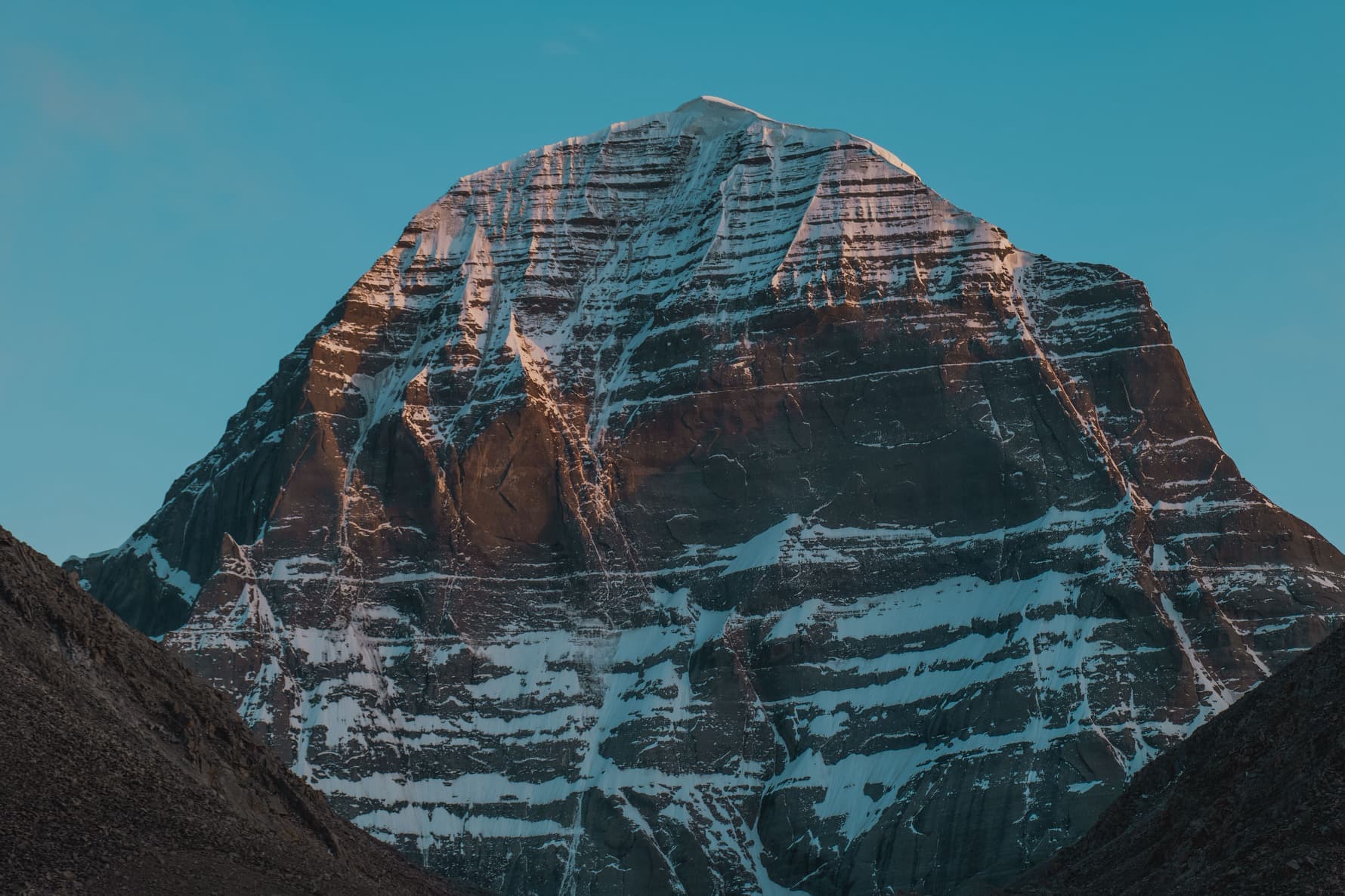
How to Prepare for the Pilgrimage to Kailash:
A Complete Guide from a Practitioner

Introduction: Why Preparing for Kailash is More Than Just Packing a Backpack

When I accompanied a group to Kailash in 2019, one of the participants—a marathon runner with ultra-trail experience—gave up at the very first pass, Dolma-La (5630 m). The problem was not his physical condition; his body simply did not have time to acclimatize to the altitude in 48 hours. In the same trek, a 67-year-old grandmother, who had prepared for six months according to our acclimatization program, completed all 52 km of the kora without serious difficulties. The difference lies in the understanding that Kailash requires not just athletic preparation, but a systematic approach to three dimensions: the body, documents, and psyche.
Three Dimensions of Preparation
That 70% of Pilgrims Ignore
Physical Dimension—it's not about muscular legs, but an altitude-adapted cardiovascular system. At altitudes of 4500–5600 m, the oxygen content in the air drops to 50–60% of sea level. Without acclimatization, even climbing stairs to the second floor can cause shortness of breath and dizziness. Real preparation begins 4–6 months in advance: cardiovascular workouts 3–4 times a week, breathing practices (especially Kapalabhati and Anuloma-Viloma from yoga), and hikes with a backpack weighing 8–12 kg over distances of 15+ km.
Documentary Dimension—Chinese permit, Tibetan visa, group arrangements through accredited agencies. Independent access to Kailash has been impossible since 2015: a guide, driver, and agreed-upon route are required. The processing time for documents ranges from 25 to 45 days depending on the entry point (Lhasa or Nepal). A delay in even one document can derail the entire group schedule.
Mental Dimension—readiness for discomfort, cold (at night, temperatures drop to −15°C even in August), and Spartan conditions in guesthouses, where the toilet is a hole in the floor and the shower works once every three days. Kailash does not forgive ego: I have seen people break down not from altitude but from the inability to charge their phone or buy a latte. The pilgrimage requires acceptance that you are a guest on holy ground, where the rules are dictated not by comfort but by tradition.
Two Routes—Two Philosophies of Preparation
Jay Shambo offers two programs, and the choice between them determines the intensity of preparation:
Kailash from Lhasa—the classic route through the capital of Tibet. Pros: gradual acclimatization (Lhasa 3650 m → Shigatse 3900 m → Saga 4500 m → Darchen 4560 m), cultural immersion through the monasteries of Sera, Drepung, Tashilhunpo. Suitable for those going for the first time and wanting a gentle introduction to altitude. Requires less physical preparation but more time (14–16 days).
Kailash via Nepal with Gosainkunda—a route for the prepared. Starts with trekking to the Gosainkunda lakes (4380 m), then a transfer to Tibet via the Kyirong Pass. Physically tougher: two consecutive treks, sharp altitude changes, fewer days for adaptation. Plus—the opportunity to "boost" altitude adaptation at Gosainkunda before the main kora. Not recommended for those who have never been above 3000 meters.
What Happens to the Unprepared: Three Real Cases
-
Case 1: A 42-year-old man from Moscow, office worker, smoker. Flew to Lhasa, left for Kailash the next day. At an altitude of 5000 m, acute mountain sickness began—vomiting, headache, confusion. Evacuation on an oxygen cushion cost $800 + a ruined pilgrimage.
-
Case 2: A 55-year-old woman, in good physical shape but ignored breathing practices. At Dolma-La, panic attacks began due to hypoxia—the psyche could not withstand the stress from lack of oxygen. Had to turn back 300 meters from the highest point.
-
Case 3: A group of five people without high-altitude experience took a "cheap tour" without acclimatization days. Three did not reach Darchen, one ended up in a hospital in Kathmandu with pulmonary edema.
Preparing for Kailash is an investment of time, discipline, and respect for the mountain. Without it, the pilgrimage turns into extreme survival, where instead of a spiritual experience, you get a struggle with your own body. In the following sections, we will break down each dimension step by step—with checklists, timelines, and specific exercises.
Physical Preparation:
A Real Plan for 3–6 Months

6 Months Before Departure: Cardio Base and Getting Used to Loads
The main mistake is hoping for the gym. Strength training builds mass but does not teach the body to work for 8 hours straight on rocks with a backpack. Kailash requires specific endurance, which can only be developed through cyclical loads with weight.
Weeks 1–8: Foundation
-
Walking 5–7 km, 4 times a week, pace 5–6 km/h. Gradually add a backpack: the first two weeks 5 kg, then 8 kg, by the end of the period—10 kg.
-
Stairs: 15–20 flights per session, 2–3 times a week. Simulates the ascent to Dolma-La, where there is a 500-meter elevation gain without breaks.
-
Running 2 times a week, 5–7 km, low heart rate (130–140 bpm). The goal is not speed but lung volume.
Weeks 9–16: Increasing Volume
-
Weekend hikes: 15 km with a 10 kg backpack, preferably over rough terrain. If you live in a city—parks with hills, promenades with stairs.
-
Interval ascents: 10 minutes of fast walking uphill → 5 minutes of rest, 5–6 cycles. Trains legs for steep sections around Kailash.
-
Check: by the end of the 4th month, you should be able to walk 15 km with a backpack in 3.5–4 hours without shortness of breath or knee pain.
Breathing Practices: Pranayama for Altitude At 5600 meters, there is half as much oxygen as at sea level. The body needs to learn to extract the maximum from each breath:
-
Complete Yogic Breathing: 10 minutes daily—slowly inhale with the abdomen → chest → collarbones, exhale in reverse order. Increases lung capacity.
-
Kapalabhati (fire breathing): 3 sets of 50 sharp exhales through the nose. Cleans the lungs, speeds up gas exchange.
-
Anuloma-Viloma (alternate nostril breathing): 5–7 minutes before sleep. Balances the nervous system—useful during panic attacks from hypoxia.
2–3 Months Before: Altitude Adaptation and Specific Exercises
Mountain Trips—The Only Honest Way If possible, spend 3–5 days at altitudes of 2500–3500 meters. Altai (Aktru, Shavlinskie Lakes), Caucasus (Prielbrusye up to the hut at 3800 m), Nepal (trekking to Everest Base Camp). One day in the mountains replaces a month of training in the city: the body starts producing more red blood cells and learns to function in low oxygen conditions.
An option for the experienced—Kailash via Nepal with Gosainkunda: the first week at altitudes of 4000+ provides adaptation before the main kora.
Hypoxic Masks: Marketing or Benefit? Honestly—the effect is debatable. Masks restrict airflow but do not reduce the partial pressure of oxygen like in the mountains. They work more on psychological resilience: if you train in a mask, you find it easier to endure discomfort from lack of air later. An alternative is breath-holding for 30–60 seconds while running (freediving technique).
Strengthening the Ankles and Knees The trail around Kailash consists of large stones, scree, and icy sections. 80% of injuries are ankle twists and knee pain on descents.
-
Balance on One Leg: 3 sets of 60 seconds on each leg, eyes closed. Complication—stand on a cushion.
-
Pistol Squats: 8–10 repetitions on each leg, 3 sets. Strengthens stabilizers.
-
Weighted Calf Raises: 20 repetitions × 3 sets with a 10–15 kg dumbbell. Protects the Achilles from overload.
-
Eccentric Lunges: slow descents into a lunge (5 seconds down, 1 second up). Prepares knees for the 600-meter descent from Dolma-La.
Checklist One Month Before Departure:
-
✅ 20 km with a 12 kg backpack in 5 hours—without pain
-
✅ 30 flights of stairs in a row—heart rate recovers in 2 minutes
-
✅ Pranayamas daily for at least 15 minutes
-
✅ Trip to the mountains at 2500+ meters (if accessible)
-
✅ Ankle stable on uneven surfaces
Medical Contraindications:
When You Should Not Go to Kailash
Strict Stop List:
-
Cardiovascular diseases: ischemia, arrhythmia, past heart attack (less than 2 years), hypertension above 160/100 without medication control.
-
Pulmonary pathologies: moderate/severe asthma, COPD, history of tuberculosis.
-
Pregnancy at any stage—risks for the fetus are critical.
-
Mental disorders with panic attacks—hypoxia significantly exacerbates them.
Age is Not a Sentence, but a Risk Factor Pilgrims aged 60+ can complete the kora, but under conditions: excellent physical shape, high-altitude experience, slow pace. I saw a 67-year-old man who took three days instead of two—and completed without problems. However, after 55, additional examinations are mandatory.
Examinations Before the Trip (1–2 Months Prior):
-
ECG with exercise (bike ergometry)—will reveal hidden heart problems.
-
Complete blood count (hemoglobin, red blood cells)—low levels = poor altitude tolerance.
-
Spirometry—assessment of lung volume.
-
Consultation with a doctor experienced in altitude medicine (there are sports medicine centers in major cities).Organizers of Jay Shambo programs require a high-altitude clearance certificate — this is not a formality, but a protection for your life. In 15 years, there has not been a single critical evacuation precisely because we filter out the unprepared at the preparation stage.
Documentation Preparation: Visas, Permits, and Bureaucracy of Tibet
Chinese Visa and Tibet Permit: Step-by-Step Guide
-
Main rule: You can only enter Tibet legally as part of an organized group with an accredited travel agency. Independent travel is a myth. An individual Chinese visa does not grant entry to the Tibet Autonomous Region without special permits, which are issued to foreigners only through tour operators.
-
Three mandatory documents:
-
Tibet Travel Permit (TTP) — the main permission for entry into TAR. It is processed by the travel agency through the Tibet Tourism Bureau based on a copy of your passport and Chinese visa. Processing time is 15–20 days after obtaining the visa. Without this document, you will not be allowed on the Kathmandu–Lhasa flight or the train to Golmud.
-
Alien's Travel Permit — permission to move through closed areas of Tibet (the region around Mount Kailash is one of them). It is processed in Lhasa through the Public Security Bureau and is obtained by the group guide. Without this permit, the police will turn you back at checkpoints between Lhasa and Ali.
-
Military Permit — for the Kailash area (border territory with India/Nepal). It is processed simultaneously with the Alien's Permit. Verification takes 1–2 days in Lhasa before departure to Kailash.
Step-by-step algorithm (realistic timeline — at least 60 days before the trip):
-
60 days before: book the tour, send scans of your passport to the tour operator.
-
45 days before: apply for a Chinese group visa through the visa center (Moscow, Almaty, other cities). Processing time is 10–14 working days.
-
30 days before: receive the visa, the tour operator submits documents for the Tibet Travel Permit.
-
10 days before: receive TTP (the original is handed over at Kathmandu airport before boarding or at the train station).
-
In Lhasa (day 1–2): the guide processes the Alien's and Military Permits — the group waits in the hotel.
The organizers of Kailash Sacred Kora from Lhasa build in a time reserve in the program — two days in Lhasa for acclimatization are also used for obtaining permits.
Common reasons for refusals:
-
Mismatch of data in the passport and application (even one letter in transliteration).
-
Passport valid for less than 6 months at the time of departure from China.
-
Late submission of documents (permits cannot be processed "for yesterday").
-
Criminal records related to drugs or political crimes.
-
Journalists and diplomats — entry only with separate approval from the Chinese Ministry of Foreign Affairs.
Important: In 2026, China tightened checks for citizens of NATO countries. If your passport has stamps from the USA/Canada/UK in the last year — the visa processing time increases to 20 days.
Specifics for Russians, Ukrainians, and Kazakhs in 2026
Requirements for the passport:
-
Validity — at least 6 months after the planned return date from Tibet.
-
Two blank pages for visas and stamps.
-
Biometric passport — NOT mandatory, an old-style passport is sufficient.
Route through Nepal: visa nuances
80% of groups to Kailash start from Kathmandu (Kailash via Nepal — a classic route with acclimatization in the Himalayas). The Nepalese visa is issued upon arrival at Tribhuvan Airport for $50 (30 days), requiring only a 3×4 cm photo and $50 in cash. No prior arrangements are needed — it's more convenient and faster than through the consulate.
Life hack: If you are flying through Dubai or Doha with a layover — check if you need a transit visa. For Russians, the UAE grants 96 hours of visa-free transit, Qatar — 72 hours. This can save you $30–70.
Insurance: what to pay attention to
Standard travel insurance does NOT cover heights above 4000 meters. You need a policy with options:
-
✅ Coverage up to 6000 m (Dolma La Pass — 5630 m).
-
✅ Helicopter evacuation from high altitude — minimum coverage of $50,000.
-
✅ Treatment for altitude sickness, including pulmonary/brain edema.
-
✅ Body repatriation (in case of death) — up to $15,000.
Insurance companies: "Ingosstrakh Sport," "AlfaStrakhovanie Extreme," Allianz Worldwide. The cost of a policy for 14 days is 8,000–12,000 rubles. Skimping on this is suicidal: helicopter evacuation from the Kailash area costs $20,000–30,000, and without insurance, you pay out of pocket.
-
Realistic timeline for Russians (Moscow → Kathmandu → Lhasa → Kailash): -
-
Days 1–15: book the tour, send documents.
-
Days 16–30: obtain the Chinese visa.
-
Days 31–45: process the Tibet Travel Permit.
-
Day 46: fly to Kathmandu, obtain the Nepalese visa at the airport.
-
Days 47–48: acclimatization in Kathmandu (altitude 1400 m).
-
Day 49: flight Kathmandu–Lhasa, hand over original permits at check-in.
-
Days 50–51: Lhasa (3650 m), obtain remaining permits, acclimatization.
-
Days 52–59: journey to Kailash and kora.
For Kazakhs: the simplified visa regime with China (visa-free for up to 14 days) does NOT apply to Tibet — a full visa and all permits are required. Don't fall for misinformation on social media.
Checklist of documents for the trip:
-
✅ Passport (original + 2 photocopies of the page with the photo)
-
✅ Chinese visa (sticker in the passport)
-
✅ Tibet Travel Permit (received before boarding the plane/train)
-
✅ Insurance policy (printout + PDF on the phone)
-
✅ Return tickets (for presentation at the border)
-
✅ Cash $300–500 (you can't use cards in Tibet outside Lhasa)
If even one item is not completed — you will not be allowed further than Kathmandu or will be turned back at the Tibetan border.
Gear and Equipment: What to Take and What to Leave at Home

Mandatory Minimum: Clothing, Footwear, First Aid Kit
The principle of layering — the only thing that works at altitude
On the kora around Kailash, temperatures fluctuate from +15°C during the day to −15°C at night. The weather changes in 20 minutes: sunshine turns into snowfall, then clear again. Forget about a down jacket "for all occasions" — you need a system of three layers:
-
Base layer: thermal underwear made of synthetic or merino wool (NOT cotton — it absorbs sweat and freezes). At least two sets: one on your body, the second in your backpack. Cost: 2,000–5,000 rubles per set.
-
Insulating layer: fleece jacket (Polartec 200) + down vest or jacket (fill power from 650). At Dolma La Pass (5630 m) with a wind of 15 m/s, the perceived temperature drops to −30°C.
-
Membrane layer: windproof and waterproof jacket and pants (Gore-Tex or similar). Chinese fakes for 3,000 rubles will get soaked in the first snowfall.
Beginner's mistake: wearing everything at the start of the kora. For the first 2–3 hours, you walk uphill — you will sweat, then freeze. Correct: start in the base layer + fleece, with the rest in your backpack.
Trekking boots: why sneakers are a dangerous idea
90% of the trails around Kailash are rocky scree, mud after rain, and snowy sections at the pass. Sneakers do not support the ankle, get wet in an hour, and the soles slip on rocks. The result: sprains, blisters, frostbite of toes.
What you need:
-
High trekking boots with a membrane (Salomon, Lowa, Scarpa — from 12,000 rubles).
-
Vibram sole with deep tread.
-
Half a size larger than usual (for thick socks + swelling of feet at altitude).
-
Be sure to break them in at home for at least 50 km — new boots on the kora guarantee bloody blisters.
Spare trekking sandals (Teva, Keen) — for camps and river crossings. Weighing 400–500 g, they save your feet after an 8-hour day.
Sleeping Bag and Sleeping Pad: Temperature Regimes
Nights in guesthouses on the kora are unheated rooms for 6–10 people, with temperatures inside −5…−10°C. A sleeping bag rated "to 0°C" means that at zero, you won't die, but you also won't sleep.
Get a sleeping bag with a comfort temperature of −15°C (extreme down to −25°C). Down bags are lighter (900 g), synthetic ones are cheaper (from 6,000 rubles) and are not afraid of moisture. On Kailash via Nepal: kora with Gosainkunda, trekking starts with rains in the subtropics — synthetic is more reliable.
A sleeping pad (foam) with a thickness of 10–12 mm is mandatory: floors in guesthouses are stone, and cold comes from below. Inflatable mats like Therm-a-Rest are more comfortable but weigh 500+ g and can puncture.
First Aid Kit: What Really Saves
Medical assistance on the kora is a monastery "hospital" with aspirin and green antiseptic. The nearest hospital is 300 km away (Darchen or Ali). Your first aid kit is your only chance.
Minimum set:
-
Diamox (acetazolamide) — 250 mg morning/evening for 2 days before gaining altitude. Reduces the risk of altitude sickness by 60%. Prescription medication, buy in advance (120–200 rubles for 30 tablets).
-
Imodium — for diarrhea. Water in guesthouses is questionable, food poisoning can knock you out of schedule for 1–2 days.
-
Blister plasters (Compeed) — 6–8 pieces. Regular adhesive plasters peel off from sweat.
-
Pain reliever — ibuprofen 400 mg (for headaches and joint inflammation).
-
Personal medications — if you take something regularly, bring a 30% surplus.
Do not take antibiotics without indications — at altitude, they hardly work, and side effects can worsen altitude sickness.
Gear Checklist
| Category | Mandatory | Recommended | Excess |
|---|---|---|---|
| Clothing | Thermal underwear (2 sets), fleece, down jacket, membrane jacket, trekking boots | Down pants, spare socks (4 pairs), buff | Jeans, cotton t-shirts |
| Equipment | Sleeping bag -15°C, sleeping pad, backpack 50–60 L, trekking poles | Headlamp, sunglasses (UV400), thermos 0.5 L | Tent (not needed on organized tours) |
| First Aid Kit | Diamox, Imodium, Compeed plasters, ibuprofen, personal medications | Sunscreen SPF 50+, lip balm | Antibiotics, bandaging materials (there is a common first aid kit in the group) |
Technology and Gadgets: What Works at 5600 m
Power banks and chargers: cold kills batteries
At altitudes above 5000 meters, lithium-ion batteries lose 50–70% of their capacity overnight. A phone discharges in 2–3 hours instead of the usual 12. What works:
-
Power bank of at least 20,000 mAh (Anker, Xiaomi). Keep it in your sleeping bag at night — it retains charge longer when close to your body.
-
Solar panel (Goal Zero, 14W) — can go 2–3 days without electricity, the panel provides 50% charge in 4 hours of bright sunlight.
-
Charging in guesthouses: available, but outlets work for 2–3 hours in the evening (generator). There may be a queue of 20 people — arrive early or charge at night in your sleeping bag from the power bank.
Life hack: turn off 4G/5G, leave only 2G for emergency communication. This extends phone battery life by 3 times.
Cameras and Drones: Restrictions on Filming in Tibet
Drones are officially prohibited in Tibet — they are confiscated at the entrance to the region (Lhasa airport, Giron/Kyirong checkpoints). Fines start at $500, deportation. I saw a group have their DJI Mavic confiscated during a luggage check on the bus before entering Ngari — police selectively check backpacks.
Cameras: there are no restrictions, shoot as much as you want. But:
-
At Dolma-La Pass, winds can reach 20 m/s — tripods are useless, shoot with a shutter speed of 1/500 or higher.
-
Buy memory cards in advance (at least 128 GB) — there’s nowhere to buy them in Tibet.
-
Cold kills LCD screens — Sony and Fujifilm work down to -10°C, Canon freezes faster. Keep the camera under your jacket between shots.
Filming restrictions: military sites, checkpoints, police. There are no such restrictions on the kora, but do not film Barkhor Square in Lhasa during patrols.
Satellite Communication and Navigation
On the Kailash Sacred Kora from Lhasa, the routes are organized — you go with a group and a guide. A GPS navigator is not needed, there is only one trail. But:
-
Mobile communication: China Mobile only works in Darchen and Drira-puk Monastery (first overnight). At the pass and the second half of the kora — no signal.
-
Satellite phone (Iridium, Thuraya) — needed only for emergency evacuation. In organized groups, Jay Shambo has one with the guide.
-
Offline maps: Maps.me or Gaia GPS with downloaded tracks — in case you fall behind the group.
Personal Experience: What Broke, What Helped
Broke:
-
The plastic buckle on my Deuter backpack on the 3rd day — it cracked from the cold. I fixed it with tape and straps.
-
The Petzl headlamp (AAA batteries) — died overnight at -12°C. Lithium batteries (Energizer Ultimate) last 60% longer.
Helped:
-
Stanley thermos 0.5 L — hot tea at Dolma-La Pass saved me from hypothermia. Cheap thermoses keep heat for 3–4 hours, Stanley — 10.
-
Trekking poles — relieved my knees on the descent from the pass (800 meters down in 3 hours, the load was brutal).
-
Gaiters for boots — protected against snow and rocks getting inside.
What turned out to be excess: mosquito repellent (there are none at altitudes above 4500 m), a book in my backpack (had no strength to read), a spare pair of jeans (weighing 700 g, never wore them).
Acclimatization: How Not to Get Altitude Sickness
Correct Altitude Gain Schedule
The golden rule of high-altitude acclimatization: no more than 500 meters of altitude gain between overnight stays. This rule is critical on Kailash — the kora starts at 4600 m (Darchen), and Dolma-La Pass is at 5630 m. A sharp increase in altitude in one day can kill 70% of unprepared pilgrims with altitude sickness.
In the program through Lhasa, acclimatization is stretched over 10 days before the kora:
-
Lhasa (3650 m): 3 days for adaptation — Potala Palace, Jokhang and Sera Monasteries. Walk around the city (6–8 km a day), your body gets used to the load at altitude.
-
Gyantse (4040 m): overnight at Pelkor Chode Monastery — plus 400 m from Lhasa.
-
Shigatse (3900 m): a slight descent, allowing the body to "digest" the altitude.
-
Saga (4450 m), Paryang (4600 m): intermediate stops before Darchen (4600 m).
Result: by the start of the kora, you have already spent 10 days living above 3500 m — the risk of AMS drops from 80% to 20–25%.
The route through Nepal (Kailash via Nepal: kora with Gosainkunda) requires a stricter schedule: from Kathmandu (1400 m) you enter Tibet through the Giron/Kyirong checkpoint (2800 m), then immediately to Tingri (4300 m). A jump of +2900 m in two days — therefore, the first 48 hours in Tibet are spent on low activities: light walks, plenty of drinking (4+ liters of water), no ascents.
Critical overnight stays before the kora:
- Tingri (4300 m) — 1 night
- Saga (4450 m) — 1 night
- Darchen (4600 m) — at least 1 night before starting
Trying to skip Darchen in one day and go straight to the kora — this is HACE (brain edema) at the pass with a 60% probability.
Symptoms of Altitude Sickness and Actions
AMS (Acute Mountain Sickness) — a mild form, occurs in 70% at altitudes above 4500 m:
-
Headache (pressing, at the temples) — normal for the first 2 days. Dangerous if the pain does not go away after ibuprofen and worsens by evening.
-
Nausea, loss of appetite — acceptable. Critical if vomiting starts (a sign of edema).
-
Weakness, dizziness when climbing — tolerable. Red zone: inability to walk 50 meters without shortness of breath.
What to do: stop, drink water (1 liter per hour), take 400 mg of ibuprofen. If it doesn’t get better after 2 hours — don’t go higher, descend 300–500 meters. On the kora, this means returning to Darchen or descending from the first overnight (Drira-puk, 5080 m) back down.
HAPE (High Altitude Pulmonary Edema) and HACE (High Altitude Cerebral Edema) — life-threatening forms, develop within 6–12 hours:
HAPE — signs:
-
Cough with pink sputum (blood in the lungs)
-
Gurgling breath, wheezing on inhalation
-
Cyanosis of lips and nails
-
Pulse 110+ at rest
HACE — signs:
-
Severe headache, unrelieved by medication
-
Projectile vomiting
-
Coordination impairment (unable to walk in a straight line)
-
Confusion, delirium
-
Actions: immediate descent of 1000+ meters, oxygen (in the guide's first aid kit), dexamethasone 8 mg intramuscularly. At Dolma-La Pass, this means evacuation by yak down to Drira-puk or calling a jeep from Darchen (costs $300–500, arrival time 2–4 hours). Heroism kills — every year, 2–3 pilgrims die on Kailash from brain edema who "decided to push through."
-
Diamox (acetazolamide): prevention and treatment of AMS
-
Dosage: 125 mg (half a tablet) in the morning and evening, start 1 day before ascending.
-
Side effects: frequent urination (every hour), tingling in fingers, metallic taste in soda. This is normal.
-
When to take: if you have a history of altitude sickness below 4000 m — definitely. If it’s your first time at altitude — start at the first symptoms of AMS (headache + nausea).
-
Contraindications: allergy to sulfonamides, pregnancy, severe kidney failure.
Personal experience: on the kora in 2019, I went without Diamox (testing "pure" acclimatization after 12 days in Lhasa). At Dolma-La (5630 m)
I caught AMS — headache 7/10, nausea, pulse 125. I descended 200 meters, drank a liter of water with glucose, lay down for 40 minutes — it passed. The group that took Diamox crossed the pass without symptoms. Conclusion: the drug works, side effects are tolerable.
Main rule: if your condition worsens — only descend. No "I'll sleep it off" or "I'll take more pills and make it." Altitude does not forgive arrogance. Better to return alive without completing the kora than dead as a hero.
Mental and Spiritual Preparation: Why
You Are Going to Kailash
Mental and Spiritual Preparation: Why
You Are Going to Kailash
Inner Motivation: Tourism vs Pilgrimage
Kailash does not tolerate tourists — only pilgrims. This is the main lesson learned at Dolma-La Pass (5630 m), when physical pain washes away all external polish and only your true motivation remains. The difference in approach defines the experience:
-
A tourist goes for selfies against the backdrop of Kailash, a checkmark on Instagram, a story for friends. The kora is perceived as trekking, altitude as an inconvenience, and the monotony of the route as boredom. Result: disappointment ("expected more"), injuries from haste, altitude sickness from ignoring symptoms.
-
A pilgrim goes to let go of the ego, to hear the silence within, to complete an inner cycle. The kora is a practice of humility: you do not conquer the mountain (that is impossible), you walk around it with respect. Every step is a mantra, every stone on the path is a witness to millennia of prayers.A Real Example of Transformation: A participant in our 2021 tour, a businessman from Moscow, went to Kailash to "fulfill a dream." For the first two days, he was frustrated with the group's pace (too slow!), the lack of showers, and the monotonous food. On the ascent to Dolma-La, he began to experience AMS — an 8/10 headache, unable to walk. He had to stop, lie on the rocks, and take Diamox. He lay there for an hour, looking at the sky, listening to the mantras of the Tibetans. After descending, he said: "For the first time in 15 years, I controlled nothing. And it was a relief." Kailash broke his ego — only gratitude remained.
Managing Expectations is Critical:
-
Kailash is not always "beautiful" in the Instagram sense. The landscapes are harsh: gray-brown slopes, rocks, dust. Postcard views make up 10% of the route; the rest is a monotonous valley.
-
The kora does not have to be a mystical revelation. About 30% of pilgrims do not experience a "wow effect," only physical fatigue and inner silence. This is also a result.
-
Altitude does not inquire about your spiritual level. AMS affects both yogis and atheists. Humility begins with accepting your physical vulnerability.
Practices for Mental Preparation
Start mental preparation 1-2 months before the trip. This is not esotericism but real training for mental endurance: at an altitude of 5000+ m, the brain lacks oxygen, emotions become heightened, and any irritability turns into conflict. Practices help develop resilience:
1. Prostrations — 108 a day for 30 days before the kora
They physically prepare the body for monotonous exertion and mentally for humility. One cycle: stand up, raise your hands, lie on the floor (full prostration), rise. Repeat 108 times (30-40 minutes). Do it in the morning on an empty stomach.
-
Effect: Strengthens knees, back, and shoulders (these tire first on the kora). The brain gets used to repetitive actions — this saves you from mental burnout on the trail.
-
Important: Don’t chase speed; keep your focus on your breathing. If you can’t do full prostrations, do half ones (on your knees, without lying down).
2. Mantra Om Mani Padme Hum — at least 10,000 repetitions before the trip
The classic mantra of Avalokiteshvara, the protector of Tibet. Tibetans repeat it during the kora, using prayer beads (mala, 108 beads). Why practice in advance:
- The mantra is an anchor for attention. On the ascent to Dolma-La, when every step is painful, repeating the familiar rhythm of the mantra shuts down panic and shifts focus from "I can't" to "I keep going."
- How to practice: 10 minutes in the morning and evening, out loud or silently. You can use an audio recording (look for versions by Tibetan monks on YouTube). By the time you leave, you will be in rhythm — at Kailash, the mantra will repeat automatically.
3. Reading texts about Kailash and the philosophy of pilgrimage
Understanding the symbolism of the kora deepens the experience. I recommend:
-
"The Path to Kailash" (Swami Pranavananda) — a classic description of the kora from the perspective of a Hindu pilgrim, 1930s.
-
"Kailash. A Guide for Pilgrims" (Victor Balabanov) — a Russian-language guide with maps, practical advice, and Buddhist symbolism.
-
The Tibetan "Book of the Dead" (Bardo Thodol) — at least the first chapters. The kora symbolizes the symbolic death of the ego and rebirth; the text provides context.
Why read: When you see a field of stones with the clothes of the deceased on the trail (the tradition of "leaving the old life" at Dolma-La), you will understand the depth of the ritual, rather than just photographing a "strange custom."
4. Meditation on Resilience to Discomfort
15 minutes a day: sit in an uncomfortable position (for example, on a hard floor without a cushion), close your eyes, and simply observe the desire to stand up and "fix" the discomfort. Do not move. This is a direct rehearsal for the kora: cold nights in a guesthouse without heating, a hard bed, no shower for 3 days.
-
Personal Experience: Before Kailash: Sacred Kora from Lhasa in 2022, I practiced Vipassana for 30 minutes a day — observing my breath without reacting to thoughts. It worked at the pass: when AMS and panic ("I won't make it") set in, I switched to my breath, slowed my pace, and covered the last 400 meters in 40 minutes instead of the usual 20. But I made it.
-
The Main Thing: Kailash is not a place for ego tourism and hype. It is a mirror in which you will see your weaknesses, fears, and attachments. Prepare not for beautiful photos but for a meeting with your true self — without filters.