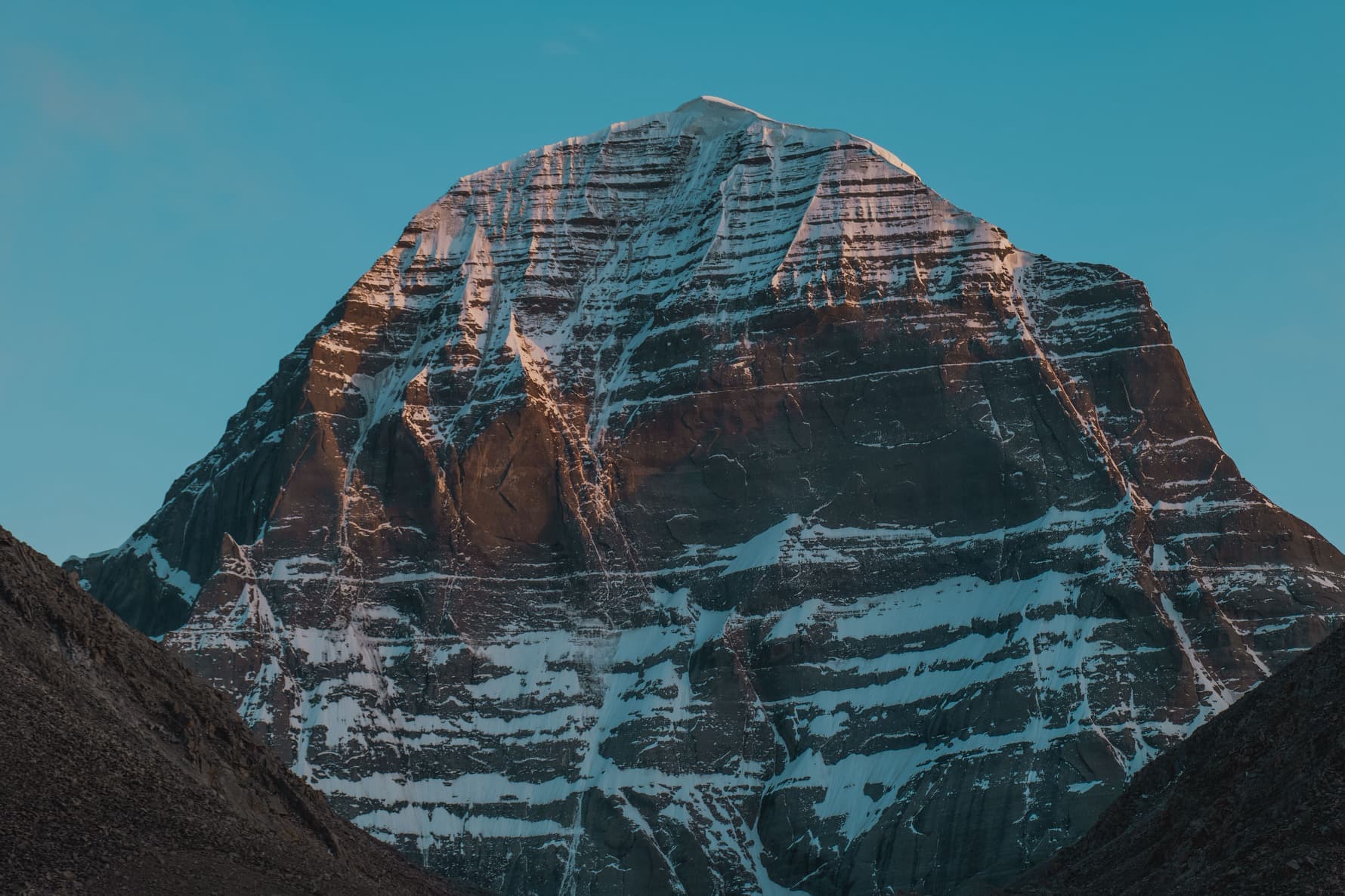
What to Bring for the Trek to Mount Kailash?

The Kora around Kailash is a 52-56 km trek at an altitude of 4600-5600 meters, lasting three days, with overnight stays in guesthouses without heating, sharp weather changes, and minimal civilization. Honestly, a well-packed backpack accounts for half of your comfort. The other half depends on your mindset and acclimatization, but let's talk about the essentials.
Over the years of pilgrimage, I have seen various mistakes: people carried an extra five kilograms "just in case," forgot trekking poles, or brought sneakers instead of boots. Below is a checklist that we provide to guests on Jay Shambo programs to Kailash. Each line has been forged by experience and verified on the route.
Clothing: Layered System and Wind Protection
The weather on the Kora can change within half an hour: in the morning it's -5 °C and sunny, by noon it's +15 °C, and by evening it snows with wind. The principle is layering, which allows you to quickly regulate your warmth.
Base Layer (Thermal Underwear) Top and bottom made of synthetic or merino wool—two sets (one on your body, one in reserve). Cotton is excluded: it gets wet from sweat and does not dry. Breathable trekking socks—3-4 pairs, without cotton. One thicker pair for the Dolma-La pass.
Mid Layer (Insulation) Fleece jacket or pullover, density 200-300 g/m². Lightweight and warms quickly. Insulated jacket (down or synthetic) to wear during breaks and in the evening at the guesthouse. Temperature range -10 to -15 °C.
Outer Layer (Wind and Moisture Protection) Membrane storm jacket (Gore-Tex or similar), windproof, with a hood. Membrane pants or wind-resistant softshell. At the pass, the wind can knock you down; without leg protection, it will be difficult.
Additional Items Warm hat (covers ears) and light balaclava or buff for the pass.
- Gloves: thin fleece + warm ones (windstop or insulated). Hands freeze first. Sunglasses category 3-4 (mountain) as snow can blind you, and you can get a retinal burn. Cap or wide-brimmed hat to protect against the sun in the valleys.
- In practice: in a group, people often take one jacket for all occasions and freeze at the pass. It's better to have two layers (fleece + down jacket) than one bulky "for any weather."
Footwear: Support for the Ankle is Key
Trekking Boots
High (above the ankle), with a stiff Vibram sole, waterproof (Gore-Tex). The Kora involves rocks, scree, and fording streams. Sneakers do not support the foot; you risk twisting your ankle on the descent from Dolma-La.
Make sure to break in your boots at home for at least two weeks, walking on asphalt and stairs. Blisters on the Kora are a direct path to abandoning the route.
Spare Footwear Lightweight sneakers or sandals for evenings in the guesthouse and transfers by jeep. This allows your feet to rest.
Gaiters (Overboots)
Not mandatory, but desirable: they protect against snow, sand, and moisture. It often snows at the pass, and without gaiters, your boots will get wet faster.
Backpack and Carrying System
Volume and Type
40-50 liters, with a rigid back and hip belt. Weight is distributed on the hips, and shoulders do not tire. If you have a porter (yak or person), you can take a 30-35 liter backpack for day items.
Dry bags or waterproof cover are mandatory. A sudden downpour or snow can soak everything in ten minutes.
Small Backpack (10-15 liters)
For documents, water, snacks, and camera. Carry it with you, even if your main backpack is on a yak.
Sleeping Bag and Mat
Sleeping Bag
Comfort temperature -5 to -10 °C (extreme -15 °C). Guesthouses often have mattresses and blankets, but they are thin and often dirty. Your own sleeping bag ensures warmth and hygiene.
Down or synthetic? Down is lighter and warmer, but if it gets wet, it takes a long time to dry. Synthetic is heavier but "forgives" moisture. Both options are suitable for Kailash, as long as the temperature rating is correct.
Mat
Tourist mat (foam pad) or inflatable. A thickness of 10-15 mm insulates you from the cold floor. In guesthouses, mattresses are often just a board with a cloth.
Life hack: Take a thin silk liner for your sleeping bag; it adds 3-5 °C of warmth and is easy to wash.
Trekking Poles: A Necessity, Not a Luxury
Two telescopic poles with carbide tips. They reduce the load on the knees while climbing and provide support against falls when descending. The Dolma-La pass involves a steep climb of 300 meters over rocks at an altitude of 5600 m: without poles, it’s significantly harder.
Tip: Adjust the length at home. For climbing, poles should be slightly shorter (90° angle at the elbow), and for descending, longer.
First Aid Kit and Hygiene
Basic First Aid Kit
- For altitude sickness: Diamox (consult a doctor for the regimen), Aspirin.
- Pain relievers: Ibuprofen, Paracetamol.
- For stomach issues: Smecta, Loperamide, activated charcoal.
- Band-aids: regular and hydrocolloid (for blisters, Compeed).
- Antiseptic: hydrogen peroxide, iodine, bandages, elastic bandage. Sunscreen SPF 50+ and lip balm—lips can crack instantly at high altitudes.
On Jay Shambo's pilgrimage, the guide has a group first aid kit, but personal medications (especially prescriptions) are your responsibility.
Hygiene Wet wipes (1-2 large packs)—there's little water for washing. Dry shampoo—there won't be a shower for three days. Toothbrush, toothpaste (travel size). Toilet paper—it's often not available in guesthouses or runs out.
Antibacterial hand gel.
Gadgets, Documents, and Miscellaneous
Electronics Phone/camera + power bank (20,000 mAh).
Charging may not always be available in guesthouses (generators work for 2-3 hours in the evening). Headlamp—you'll need to get up before dawn; it’s dark in the rooms. Plug adapters (in Tibet, Chinese standards apply, but guesthouses often have universal ones).
Documents International passport (valid for more than 6 months). Chinese visa + Tibet permit (we arrange this; scans are needed in advance). Copies of all documents + two 3×4 cm photos in case of loss. Insurance covering altitude trekking up to 6000 m.
Useful Miscellaneous Thermos 0.5-1 L or insulated trekking bottle—hot tea at the pass is invaluable.
Snack kit: nuts, dried fruits, energy bars, chocolate. Food in guesthouses is simple (rice, noodles, momo), and fast carbs are needed. Earplugs—in rooms with 6-10 people, someone snores. Zip-lock bags for your phone, documents, and small items (protection from moisture and dust). Multi-tool or knife to open cans, cut bandages. Foam seat pad (small foldable) for breaks—rocks are cold.
What NOT to Bring Extra clothing "for change"—there's no place to wash or dry. Two sets of thermal underwear are sufficient. Heavy books, large cameras (unless you're a professional)—every gram is felt at 5000 meters. Expensive jewelry, watches—risk of loss, plus extra weight. Alcohol is contraindicated at high altitudes (it worsens altitude sickness), and it's hard to obtain in Tibet. Canned food, gas canisters—meals are organized; stoves are available in guesthouses (if you cook for yourself).
Packing: How to Distribute Weight
-
In your backpack (if carrying it yourself): Heavy items (sleeping bag, jackets, first aid kit) closer to your back, in the middle section. Light items (clothes) at the bottom and top. Frequently used items (rain jacket, fleece, snacks) in the top flap or side pockets.
-
In your small backpack (always on you): Documents, money, insurance. Water (1-1.5 L), snacks. Camera, power bank, sunglasses. Rain jacket, warm hat.
-
On the yak/porter (if available): Sleeping bag, mat, spare shoes, main clothing. Important: the yak follows a separate route, and you meet in the guesthouse in the evening. Keep what you need during the day with you.
Checklist: Download and Print
Pack your backpack a week before departure, weigh it (optimal 10-12 kg without water), and walk in your boots fully loaded in the park. Here’s the final list:
- Clothing: [ ] Thermal underwear (top + bottom) 2 sets [ ] Trekking socks 3-4 pairs [ ] Fleece jacket [ ] Down/insulated jacket [ ] Membrane storm jacket [ ] Membrane pants [ ] Warm hat, buff/balaclava [ ] Gloves (thin + warm) [ ] Sunglasses (cat. 3-4) [ ] Cap/hat
- Footwear: [ ] Trekking boots (broken in!) [ ] Spare footwear (sneakers/sandals) [ ] Gaiters (optional)
- Gear: [ ] Backpack 40-50 L + cover/dry bags [ ] Small backpack 10-15 L [ ] Sleeping bag (-5…-10 °C) [ ] Tourist mat [ ] Trekking poles (2 pcs.) [ ] Headlamp
- First Aid Kit and Hygiene: [ ] Diamox, Ibuprofen, Smecta, band-aids [ ] Sunscreen SPF 50+, lip balm [ ] Wet wipes, dry shampoo [ ] Toothbrush, toothpaste, toilet paper [ ] Antibacterial gel
- Documents and Electronics: [ ] Passport, visa, permit (copies separately) [ ] Insurance (print + on phone) [ ] Phone, camera, power bank 20,000 mAh [ ] Plug adapters
- Miscellaneous: [ ] Thermos/bottle, snacks (nuts, bars) [ ] Earplugs, zip bags, multi-tool [ ] Foam seat pad
Where to Buy and How to Check
- Don't skimp on the "big three": boots, sleeping bag, membrane jacket. These are the foundation of comfort and safety. The rest can be simpler.
- Boots: try them on in the store in the evening (your feet swell a bit), walk around for 15 minutes. Your toes should not touch the front on descents.
- Sleeping Bag: unfold it, climb inside right in the store to check the length and width. A compression bag should be included.
- Membrane: hold the sleeve under a faucet (weak stream)—water should bead up and not absorb.
If you have doubts about your choices, feel free to write to us (contact details on the Jay Shambo website), and we will suggest specific models based on your budget.
Final Advice: Pack Light, but Wisely
Kailash is not Everest, but it's not a walk in the park either. I’ve seen people dragging 20 kg "just in case" and giving up on the second day. And I’ve seen those who went with 8 kg and froze at the pass because they forgot their down jacket.The golden rule: everything you pack must answer the question "why?". If there’s no answer, leave it at home. During the Kora, your legs, lungs, and willpower will carry you, not your backpack.
See you at the foot of the mountain. 🙏
Preparing for the Trek: What to Consider Before the Hike

Kailash is not just a route on the calendar. It’s a journey that requires physical, logistical, and inner readiness. Elevation, weather, and long transitions are real, and it's important to approach them calmly yet seriously. Below are the aspects we pay attention to in Jay Shambo groups when preparing guests for the Kora.
Assessing Physical Fitness Level
Honestly: the Kora around Kailash is accessible to most healthy individuals, but it will be challenging without a minimum fitness base.
- Evaluate your endurance. Ideally, start regular cardio workouts—running, brisk walking, swimming, biking—two to three months before your departure. The load shouldn’t be exhausting; consistency is key.
- Take several long walks with a backpack. 10–15 km over rough terrain with a light load will show how your body responds. Pay attention to your knees, lower back, and breathing.
- If possible, train in the mountains. Any elevation (even 1,500–2,000 m) will signal your body to adapt. However, if there are no mountains nearby, it’s not critical; acclimatization will occur in Tibet.
Route Research: Features and Challenges
The Kora is 52–56 km over three days (sometimes two), with an ascent to the Dolma-La Pass (5,630 m). The route is not technical but requires attention.
- Familiarize yourself with the map and elevation profile. We send guests the route plan in advance; it’s helpful to know where the climbs are, where the overnight stays will be, and where you can rest.
- Consider the weather. From June to September, it can be warm during the day (up to +15 °C), but at night and at the pass, temperatures drop to −5 to −10 °C. Snow and rain can happen at any moment, even in summer.
- The route is not technically difficult, but elevation matters. At Dolma-La, the air is half as dense as at sea level. The pace is slow, and stops are frequent; this is normal.
The Importance of Acclimatization Before the Hike
Altitude sickness is not a myth. At 4,000–5,000 m, your body functions differently, and it needs time.
- Plan for three to four days of acclimatization. In our programs (Kailash: Sacred Kora from Lhasa, Kailash via Nepal: Kora with Gosainkunda), we specifically structure the schedule to ensure a smooth ascent: Lhasa (3,650 m), Shigatse, Saga, and only then Darchen.
- Drink plenty of water, move slowly, and don’t overeat. These are three simple rules that work. Alcohol and sleeping pills should be avoided at high altitudes.
- Monitor for symptoms. A mild headache on the first day is normal. But if nausea, severe dizziness, or shortness of breath at rest develops, you need to stop, rest, or descend. We always have oxygen and communication with the guide.
How to Properly Plan Your Trekking Budget
Kailash is not a cheap destination, but it is transparent if you break down the expenses.
- Main expenses (if traveling independently): Visa for Tibet and permit: $100–150 (only arranged through an agency). Accommodation: $20–50 per night (guesthouses in Lhasa, simple hotels in Darchen). Food: $10–30 per day (depends on appetite and choice from momo to restaurants). Transport: renting a jeep with a driver from $150–200 per day (shared among the group). Guide and porters on the Kora: $50–100 per day.
- Additional costs: Insurance covering altitude up to 6,000 m: mandatory. Cost starts at $50 for two weeks. Equipment rental (sleeping bag, trekking poles): if you don’t have your own, another $30–50.
- Contingency fund: $200–300. This is practical for medications, an extra night in a hotel, souvenirs, or tea in a guesthouse.
If you choose an organized tour, most of these items are already included in the price, and you only need to budget for souvenirs and tips.
Preparing for the Kora is the time when you are already beginning your journey. At Jay Shambo, we help guests navigate this stage gently: we send checklists, consult on equipment, and tailor the acclimatization pace. If you want us to handle the logistics while you focus on the pilgrimage itself, check out our programs. We’ve been leading groups since 2008 and know the route not just from maps.
Clothing and Footwear for Trekking

The right gear is not a matter of fashion. It’s what protects you from the cold, wind, and unexpected snowstorms at an altitude of 5,600 meters. I’ve seen how people in the group suffered due to poorly chosen jackets or lightweight sneakers, and how much easier it was for those who were prepared. Here’s what works in practice.
Layering Clothing: Thermal Underwear, Fleece Jacket, Outer Shell
Layering is your main ally. At Kailash, temperatures can drop from +15 during the day to −10 within an hour, and it's easier to take off an extra layer than to freeze.
- Thermal underwear: choose synthetic or merino wool; they wick moisture and dry quickly. Cotton absorbs sweat and cools the body, which is unsuitable.
- Fleece jacket: lightweight, warm, and moisture-resistant. I recommend a density of 200–300 g/m²; this will be enough for the morning chill and evenings in the guesthouse.
- Outer shell: waterproof membrane jacket with a hood. The wind at Dolma-La cuts through, and without good protection, you will feel every gust.
Honestly, it’s better to take one extra layer than to be short; there are no shops on the Kora.
Footwear: Trekking Boots vs. Sneakers
Boots are fundamental. The Kora traverses rocks, snow, icy streams, and your ankles need protection.
- Trekking boots: high, with a stiff Vibram sole, waterproof (Gore-Tex or similar). They support your foot, prevent ankle twists on slippery rocks, and protect your toes on descents.
- Sneakers: can be used as camp shoes or for short walks, but they are not suitable for the Kora—no support, they get wet, and they cool your feet.
Break in your boots at home in advance, at least a month before. Blisters on the second day of the Kora are not an adventure; they are torture.
Accessories: Hats, Gloves, Sunglasses
Small items that become critical at high altitudes.
- Hat: one warm fleece or wool hat for the cold, one lightweight with a brim for sun protection. The sun at Kailash burns even through clouds.
- Gloves: two pairs. Thin fleece for walking, thick waterproof for the pass and snow. Hands get cold quickly, and without gloves, you won’t be able to hold trekking poles properly.
- Sunglasses: category 3–4 protection, with side shields. The reflection on snow and ice is such that you can get a retinal burn—snow blindness—in just an hour. This is no joke.
Packing Clothing: How to Avoid Losing Space and Weight
Porters or yaks carry the main luggage, but your daypack should be lightweight and comfortable.
- Roll your clothes: this takes up less space and prevents wrinkles. Arrange layers by day—morning, daytime, evening.
- Compression bags: excellent for compressing down jackets and sleeping bags, saving up to 30% volume. I use them for spare clothes that go in the main bag.
- Minimize duplicates: one warm jacket instead of two light ones, one pair of trekking pants with zip ventilation instead of shorts and pants separately.
The lighter your backpack, the easier it is to breathe at altitude. This has been verified by myself and dozens of groups.
If you are preparing for the Kora with us, we always discuss equipment in detail before departure and assist on the route if something doesn’t fit. Check out our programs Kailash: Sacred Kora from Lhasa and Kailash via Nepal: Kora with Gosainkunda for how we organize logistics and support so you can travel lightly and confidently.
Accessories to Bring Along

Trekking to Mount Kailash is not only a physical challenge but also an opportunity to touch a sacred place filled with spiritual significance. To ensure your journey is comfortable and safe, careful preparation is essential. Let’s discuss the main accessories you should take with you.
Backpack: Volume and Important Features
- Backpack volume: choose a model with a capacity of 50–70 liters. This is the optimal size for long trekking, fitting all essentials, including your sleeping bag and warm clothes.
- Comfort: pay attention to adjustable straps and a waist belt. They will help distribute weight evenly and relieve your back.
- Waterproofing: choose a backpack with a water-repellent coating or one that comes with a rain cover to protect the contents from rain and snow.
Navigation Tools: Maps, GPS, Compass
- Paper map: always take a map of the area. GPS can run out of battery, and signal often disappears in the mountains.
- GPS device: if possible, take a GPS navigator for precise navigation; it’s helpful in challenging sections.
- Compass: don’t forget a compass. A traditional but reliable way to orient yourself that won’t let you down.
Lighting: Flashlight, Spare Batteries
- Flashlight: a compact, lightweight flashlight is essential. Choose models with LED bulbs; they are more efficient and last longer.
- Spare batteries: take several sets. In the mountains, daylight is short, and you’ll need lighting in the dark, especially if heading out on the Kora early in the morning.
Weather Protection: Raincoat, Poncho
-
Raincoat: choose a lightweight and compact raincoat with a hood. It should be long enough to protect not just your upper body but also your backpack.
-
Poncho: consider a poncho as it provides good protection and can be used as a shelter for your backpack.In addition to these accessories, I also recommend considering the following:
-
Sunglasses: will protect your eyes from bright light and ultraviolet rays, which are particularly aggressive at high altitudes.
-
Space-saving: for compact packing, use compression bags and roll your clothes to free up space in your backpack.
With everything prepared, you will be able to fully enjoy your journey to Kailash. If you want to embark on the kora with an experienced guide and a group of like-minded individuals, check out our programs: Kailash: Sacred Kora from Lhasa and Kailash via Nepal: Kora with Gosainkunda — we will take care of the route, logistics, and support along the way.
First Aid Kit and Hygiene Supplies

Essential Medications: What Should Be in Your First Aid Kit
At altitudes above 4000 meters, even minor issues, from scratches to headaches, can disrupt your rhythm. We always ask participants to assemble a personal first aid kit, even if there is a communal one. Here’s a basic set: Pain relievers such as ibuprofen or paracetamol. Headaches, muscle fatigue, and minor strains are common on Kailash. Antihistamines in case of unexpected allergies (dust, plants, unfamiliar food). For stomach upset: activated charcoal, "Smecta," and anti-nausea medication. Water and food in guesthouses can be unfamiliar. Antiseptics: alcohol wipes, iodine, or chlorhexidine. It’s best to treat any scratch immediately. Bandaging materials: sterile bandages, adhesive plasters of various sizes, gauze. Blisters from new shoes are common. For colds and sore throat: lozenges and nasal drops. Nights in guesthouses can be cool, and it’s easy to catch a chill.
If you take any medications regularly, bring extra supplies. There are few pharmacies in Tibet, and the selection is limited.
First Aid: What to Do If Something Goes Wrong
In our groups, there is always a guide who has completed a basic first aid course. However, it’s useful to know the protocol yourself: Assess the condition calmly, without panic. If the person is conscious and can speak, that’s a good sign. Treat the wound: rinse with clean water (bottled), apply antiseptic, and cover with a sterile bandage or plaster. Cold for bruises: if there is ice or snow, wrap it in fabric and apply for 10–15 minutes. This reduces swelling and pain. Do not leave them alone if they experience dizziness, nausea, or weakness; sit them down, give water, and monitor their pulse. If symptoms persist, inform the guide.
Honestly, most cases involve blisters, minor bruises, and fatigue. Serious injuries are rare, but it’s always better to be cautious.
Personal Hygiene: What to Bring to Feel Human
Showers are not available everywhere in guesthouses, and hot water is a luxury. Therefore, it’s wise to think ahead about the minimum hygiene supplies: Toothbrush and toothpaste: compact, travel-sized. You can even bring toothpaste tablets. Wet wipes: plenty. They can substitute for washing when there’s no water. Opt for biodegradable options. Soap or gel: a small bottle, preferably without a strong scent. Eco-friendly options are encouraged. Toilet paper: two to three rolls. It’s often unavailable in public restrooms, especially in hiking conditions. Sunscreen SPF 50+: at altitude, ultraviolet rays are significantly more aggressive. You can get sunburned even on a cloudy day. Lip balm: lips dry out instantly. Choose one with UV protection.
Deodorant, shampoo, and a razor are optional. We don’t judge if you skip shaving for a week. That’s the norm in the mountains.
Waste Disposal: How to Leave No Trace on Sacred Ground
Kailash is a sacred site for four religions. Littering is not only ugly; it’s disrespectful to the place and the people for whom the mountain is alive. We ask everyone to follow simple rules: Take all trash with you. Wrappers, bags, batteries, cigarette butts — everything goes in your backpack to be disposed of in the city. Biodegradable products: soap, shampoo, wipes. They decompose faster and are less harmful to the soil. Use the toilet away from water: at least 50 meters from streams and lakes. Bury waste at 15–20 cm depth. Special waste bags if you’re going to areas without toilets. These can be purchased at trekking stores.
In practice, most participants adapt quickly. We explain this before the start, and people generally understand.
If you want to complete the kora prepared both physically and mentally, take a look at our routes: Kailash: Sacred Kora from Lhasa and Kailash via Nepal: Kora with Gosainkunda. We will take care of logistics, safety, and the atmosphere. You just need to walk.
Food and Drinks for Trekking on Kailash

The kora around Kailash is a serious physical challenge at altitudes of 4600–5600 meters, where every extra kilogram is felt. Properly selected food provides energy without weighing down your backpack and helps combat altitude sickness. Below are practical tips on what to bring and how to store food, allowing you to focus on the journey rather than hunger.
Food Supplies: What to Bring and How to Store Canned Goods: tuna, legumes, condensed milk. High in calories, requires no cooking, but heavy; it’s best to save cans for sections with porters or take the minimum on the kora. Dry Grains: rice, buckwheat, oatmeal, pasta. Cook quickly on a stove and are very filling. Portion them into resealable zip-lock bags: one portion = one meal. Dehydrated Meals: ready-to-eat meals in packets (cereals, soups, stews). Just add boiling water, wait 10 minutes, and dinner is ready. Light but more expensive than regular grains. Storage: airtight zip bags or vacuum-sealed pouches. This keeps food from absorbing moisture, odors, and takes up less space. Get rid of cardboard boxes; they add unnecessary weight.
Packing Food: Tips for Minimizing Weight Pre-portion at home: one bag = breakfast for two or dinner for one person. In the mountains, you won’t need to estimate weights and carry extra. Repack foods from original packaging into lightweight zip bags. Label (name, weight, day of the trek) directly on the bag with a marker. Avoid glass and metal containers where possible. Transfer nut butter into a plastic tube and honey into a soft bottle.
Count by days: three-day kora + reserve for one day of bad weather. An extra 2 kg of food in your backpack can feel like a burden at Dolma La Pass (5630 m).
Water: How to Ensure Adequate Hydration Daily Requirement: 2.5–3.5 liters per person. At altitude, dehydration occurs faster, even if you don’t feel thirsty. Sources: streams and rivers are found throughout the kora route, but the water is icy and often murky from glacial silt. It’s best not to drink it raw. Purification: take a portable filter (Katadyn, Sawyer Mini) or disinfection tablets (Aquatabs, Aquamira). Tablets are lighter, while filters are faster and more reliable. Containers: a soft collapsible bottle of 2–3 liters + a thermos of 0.5–0.7 liters for hot tea. A hydration system is convenient, but the tube can freeze in cold weather; a regular bottle is more reliable. Hot Drinks: ginger tea, cocoa, broth cubes. They warm you, help maintain energy levels, and encourage you to drink more when you’re not inclined to have cold water.
Energy Snacks: What to Bring to the Mountains Nuts and Seeds: almonds, cashews, and trail mix with raisins. High in calories, fats provide long-lasting energy. 100–150 g per day per person. Energy Bars: muesli, protein, nut-fruit bars. Choose those with simple ingredients (honey, nuts, dried fruits), avoiding synthetic additives as the stomach tends to be sensitive at altitude. Dried Fruits: apricots, dates, raisins, figs. Quick carbs, natural sugars, and fiber are easy to chew on the go. Chocolate: dark or milk, in small bars. Lifts your spirits and provides an instant boost, but hardens in the cold — keep it close to your body. Kozinaki, halva, nut butter: calorie-dense, compact, and tasty. They can be spread on crackers or eaten directly from the jar. Crackers, crispbreads, breadsticks: don’t go stale, crumble, and pair well with cheese or spreads. Avoid regular bread as it molds or hardens quickly.
Honestly, during the kora, you tend to want less food than you might think: altitude reduces appetite. But having snacks on hand is a safety net against fatigue during a long ascent. I’ve seen people share their last energy bar at Dolma La, and that helped them reach the night stop.
If you want experienced guides to handle logistics, meals, and support, check out our programs: Kailash: Sacred Kora from Lhasa with full support and Kailash via Nepal: Kora with Gosainkunda, where the pilgrimage route begins with the Himalayan lakes.
What to Bring for the Trekking to Mount Kailash?

What to Bring for the Trekking to Mount Kailash?
The kora around Kailash is not just a regular walk. You will be hiking at altitudes of 4600–5600 meters, staying in basic guesthouses, and crossing the Drolma La Pass. Your gear should be well thought out but not excessive; every extra kilogram is noticeable.Here's a basic list of what experienced participants take with them: Footwear trekking boots above the ankle, pre-broken in, with a stiff sole and Gore-Tex membrane or equivalent. Clothing layered system: thermal underwear (synthetic or merino), fleece jacket, down vest or jacket, wind-and-waterproof membrane jacket and pants. Sleeping bag comfortable down to -10 °C (it can be cold in guesthouses, no heating). First aid kit pain relievers, blister plasters, Diamox or similar for altitude sickness prevention, antiseptic, bandage. Food and water nuts, energy bars, dried fruits; a bottle or hydration pack with a volume of 1.5–2 liters, water purification tablets. Miscellaneous sunglasses (category 3–4), SPF 50+ cream, lip balm, headlamp, trekking poles.
On organized tours meals, accommodation, and logistics are included. However, personal items are your responsibility.
What clothing and footwear should you take with you?
The weather in Tibet is unpredictable: in the morning -5 °C, during the day in the sun +15 °C, and it can start snowing with wind at the pass. The principle is layering and the ability to quickly adjust warmth.
- Clothing layers: Base layer thermal underwear made of synthetic (moisture-wicking) or merino wool (odor-resistant, keeps you warm even when wet). Middle layer fleece jacket or thin down jacket. Choose what feels comfortable at +5…+10 °C while moving. Outer layer membrane jacket and pants (Gore-Tex, Event or similar). Protection from wind and rain is critical at the pass. Additionally, a warm hat, buff or balaclava, gloves (preferably two pairs: thin fleece and thicker windproof ones).
- Footwear:
Trekking boots are the foundation of comfort. Choose models with high tops, stiff Vibram soles, and a membrane. Break them in at home for at least a month; new shoes will rub your feet on the first day.
Two pairs of socks per day (thin + thick trekking socks), made of wool or synthetic materials, without cotton.
Do you need a tent and sleeping bag?
If you are going with us, a tent is not needed for the kora, as overnight stays are organized in simple guesthouses. The conditions are spartan: bunks, mattresses, and a shared outdoor toilet. But this is part of the experience, and honestly, after 12 hours of walking, you fall asleep instantly.
A sleeping bag is mandatory. It’s cold in guesthouses, and blankets may be insufficient (or of questionable cleanliness). Choose a sleeping bag with a comfort temperature down to -10 °C, ideally -15 °C for extra safety. Down bags are lighter, synthetic ones are cheaper and work even when wet.
In our programs, for example, Kailash via Nepal: kora with Gosainkunda, we provide advance information about the overnight stay format and assist with gear selection.
What typical mistakes do beginners make in trekking?
Over the years, I have seen the same mistakes. Here are the most common ones:
- Insufficient physical preparation. Many underestimate the load. The kora is 52 kilometers over three days at altitude. If you don’t regularly walk at least 10–15 km with a backpack, it will be tough. Start training 2–3 months in advance: cardio, stair climbing, weekend hikes with a loaded backpack.
- Overestimating your abilities. "I can manage if others can" is not always true. Listen to your body. Altitude sickness does not discriminate based on fitness level. If you feel unwell, inform the guide immediately; don’t try to be a hero.
- Ignoring the weather forecast. Weather in the mountains can change in half an hour. Always keep your membrane jacket accessible, even if it’s clear in the morning.
- Wearing the wrong footwear. New boots, sneakers, soft boots all lead to blisters and injuries. This has been verified hundreds of times.
- Saving on small things. Good sunscreen, quality eyewear, spare socks are not luxuries. A sunburned face or snow blindness can ruin the entire experience.
What is trekking and how to prepare for it properly?
Trekking is a multi-day hike on nature trails, most often in the mountains. Unlike mountaineering, there is no climbing or specialized gear, just walking, a backpack, and endurance.
- How to prepare:
- Physical preparation. Start 2–3 months in advance. Cardio workouts 3–4 times a week: running, cycling, stair walking. Once a week, take a long walk (15–20 km) with an 8–10 kg backpack. Strengthen your legs, back, and shoulders with squats, planks, and lunges.
- Psychological readiness. Trekking is an exit from the comfort zone. Simple food, cold, fatigue, and lack of a shower. Prepare yourself for this in advance. Many say that this simplicity clears the mind.
- Route study. Understand where you are going. Heights, distances, key points, risks. Read reports, watch videos, ask questions to the organizers. The more you know, the more confident you feel.
- Acclimatization. This is critical for high-altitude routes (like Kailash). You cannot fly to 4000 meters and go straight up. You need 3–5 days for adaptation. We always include this in the program.
How to plan your first mountain hike?
Your first hike can be exciting. Here’s a step-by-step plan:
- Choosing a route. Don’t start with Kailash. First, try something simpler: Crimea, Carpathians, Altai, Nepal (trek to Everest Base Camp). Assess your abilities and see if you enjoy it at all.
- Choosing a company. Going alone for the first time is a bad idea. It’s better to go with experienced friends or an organized group. A guide knows the route, takes care of logistics, and helps in difficult moments. In our groups, there is always support, medical assistance, and an experienced guide.
- Budget calculation. Consider everything: flight, visas, insurance, gear (if you are buying), food, tips for porters. Trekking is not a cheap pleasure, but it’s worth it. On organized tours, most expenses are included in the price, leaving only personal expenses.
- Gear check. Make a list, buy or rent what you need. Check everything at home: shoes, backpack, sleeping bag, clothing. Walk in your boots for at least a week to ensure they don’t pinch anywhere.
- Medical preparation. Get a check-up from a doctor, especially if you have chronic illnesses. Prepare a first aid kit and bring prescriptions for any necessary medications.
- Documents and insurance. Visa, permits (mandatory for Tibet), insurance covering mountain hikes to the required altitude. We assist with the documentation at every stage.
If you are ready for a serious challenge and a spiritual experience, check out our program Kailash: sacred kora from Lhasa. This is a transformative route. Prepare yourself, and you will be ready for an unforgettable adventure.