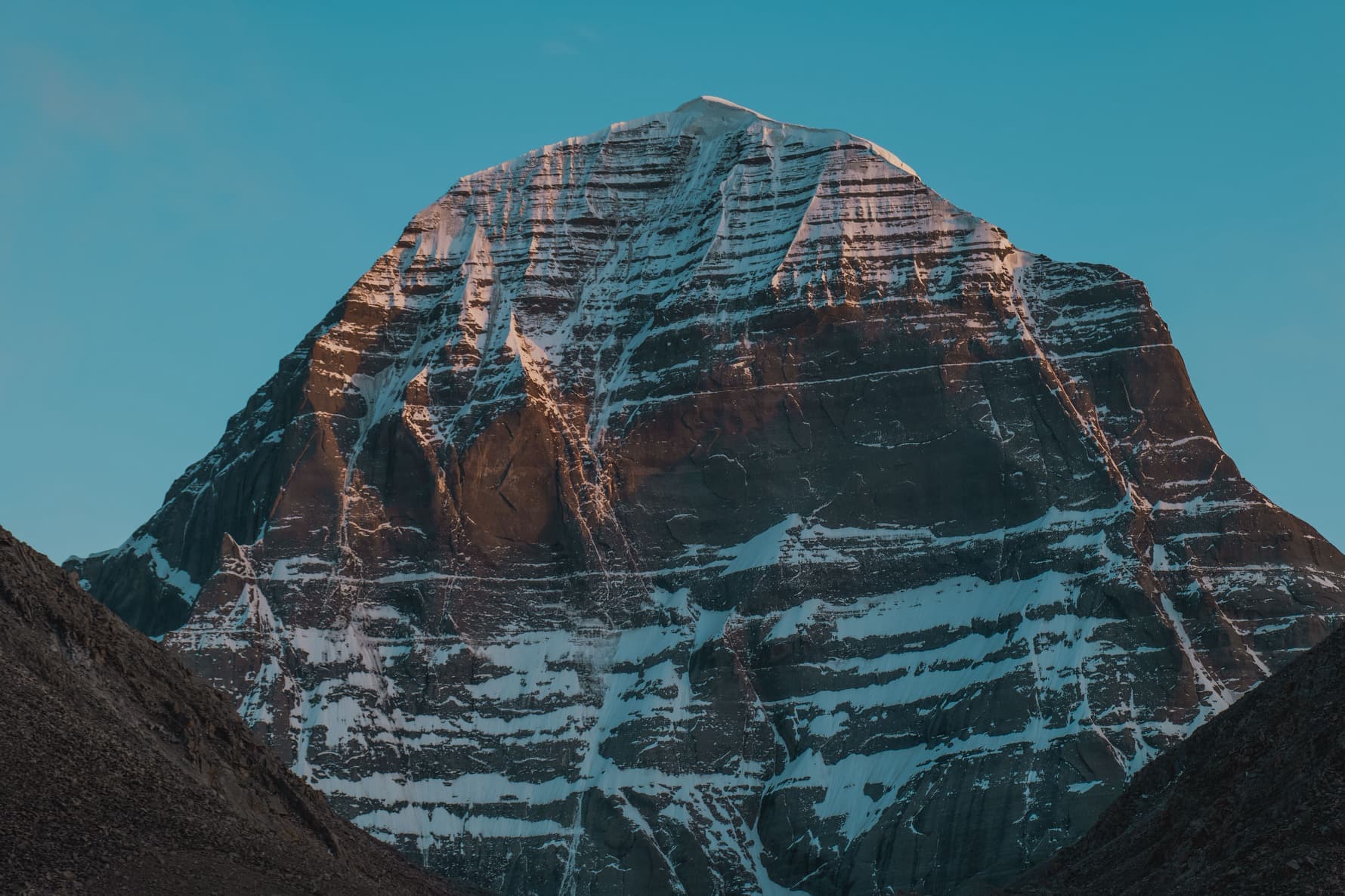
What to Bring for the Circumambulation Around Kailash

The circumambulation around Kailash is not just an ordinary trek. You will spend three days at altitudes of 4600–5630 meters, without ATMs, pharmacies, or communication. What you take, you will carry yourself or entrust to a yak; there will be no way back to the store.
I have seen people freeze in thin jackets, chafe their feet with new boots, or forget their sunglasses, turning the first day into a trial. Conversely, a well-packed backpack makes the journey easier, even if physically challenging.
In this article, you will find a checklist of items based on our experience from pilgrimages to Kailash. Nothing superfluous. Only what truly helps at altitude and what we have tested with groups during the kora.
Why This Packing List Differs from Regular Trekking
Kailash is not the Himalayas or the Alps. The Tibetan plateau strikes with a combination of factors:
- Altitude from 4600 m. Thin air, headaches, breathlessness. An extra kilogram in your backpack feels like three.
- Weather changes within an hour. In the morning +15 °C, by noon snow, at night -10 °C.
- Dryness. Humidity 10–20%. Lips crack, mucous membranes dry out, thirst is constant.
- Extreme UV index. Without clouds, the sun burns in half an hour. Even in the shade.
- No infrastructure. The guesthouse at Dirapuk is a metal shack with bunks. Don’t expect showers, outlets, or Wi-Fi.
Therefore, classic advice like "bring more socks" doesn’t work here. Minimalism is needed, but smart: each item should solve two or three tasks.
Clothing: The Three-Layer Principle + Wind Protection
During the circumambulation, you will be walking for 6–8 hours. Your body warms up, sweats, and then cools down during breaks. If you dress too warmly, you'll sweat and freeze by evening.
Base Layer (Thermal Underwear)
Synthetic or merino wool. It wicks moisture away from the skin. Cotton gets wet and cools you down, so it’s prohibited. Two sets: one on you, the second as a backup (if the first doesn’t dry overnight). Good brands include Craft, Icebreaker, Decathlon Forclaz. The Russian brand Nordski is budget-friendly and effective.
Mid Layer (Insulation)
Fleece jacket or thin down jacket. Wear it during breaks, at the Drolma-La pass, and in the guesthouse at night. If the down jacket has a hood, you can manage without a hat on one of the days. Weight up to 400 g. More is too heavy.
Outer Layer (Wind and Moisture Protection)
Membrane jacket (Gore-Tex or similar). The wind at the pass cuts through. Without protection, the temperature feels 10 degrees lower. A hood is essential, with drawstrings to ensure a snug fit, even if the wind is coming from the side. If you don’t have a membrane, at least a thick windbreaker + rain jacket on top.
Pants
Trekking pants, reinforced at the knees. Best made of softshell that is stretchy, breathable, and partially water-repellent. Jeans, sports pants, or cotton leggings will not do. It’s cold at altitude; the fabric should retain heat and dry quickly. You don’t need a spare (wear one for three days), but thermal leggings underneath are recommended.
Additional Items
- Down vest. Light, 150–200 g. It helps during breaks when a jacket feels too warm but you’re chilly without it.
- Buff or scarf. Covers the neck, nose, and ears. At the pass, when the wind hits your face, the buff turns into a mask.
- Fleece or wool hat. Thin but ear-covering. Essential at night.
- Thin gloves + warm mittens. Your hands freeze in the morning. You’ll take them off by noon. Put them back on in the evening.
Footwear: The Key Factor
I have seen people doing the kora in sneakers. Technically possible if the weather is dry and the feet are strong. But the risk is high: one rock underfoot, one puddle, and you continue in pain or with wet feet.
Trekking Boots
- High, with ankle support. The trail is rocky, without roots or soft earth. It’s easy to twist an ankle.
- Membrane (Gore-Tex). Not for rain (there’s almost none) but to allow the foot to breathe and avoid sweating.
- Broken in beforehand. At least a month before the trip. New boots will cause blisters by the end of the first day.
Examples: Salomon Quest, Lowa Renegade, Merrell Moab. If on a budget, Decathlon Quechua MH500 (personally tested, they hold up).
Trekking Sandals or Crocs
For the guesthouse. Your feet need to rest. After eight hours in boots, this is not a luxury, but a necessity.
Socks
Trekking socks, with cushioning at the heel and toe. Regular cotton socks slip and chafe. Three pairs: one on your feet, one drying on your backpack, and one spare. Merino wool is ideal. No odor even after two days of wear.
Backpack: 40–50 Liters or Yak?
You have a choice: carry everything yourself or give some items to a yak.
If You’re Going with a Backpack
- Volume 40–50 liters. More is too heavy to carry. Less won’t fit your sleeping bag and warm clothes.
- Waist belt and chest strap. The weight should rest on your hips, not your shoulders. This is critical at altitude.
- Rain cover for the backpack. Or an integrated rainfly. Snow can come unexpectedly.
Backpack weight: up to 10 kg for men, up to 7 kg for women. More will be very heavy at altitude.
If Hiring a Yak
Cost is 200–300 yuan (~30–45 USD) for all three days. A yak can carry up to 30 kg.
What to give to the yak: sleeping bag, warm evening clothes, spare shoes, part of the first aid kit, trekking poles (if not used constantly).
What to keep with you: water, snacks, a warm jacket (for breaks), documents, money, a small first aid kit, flashlight, power bank.
Honestly, most participants in our groups hire a yak, and they’re right to do so. The energy saved is immense. At altitude, every extra kilogram takes away your breath.
Sleeping Bag and Sleeping Pad
Guesthouses have blankets, but they are thin, often dirty, and smell. Sleeping in your own sleeping bag is more hygienic and warmer.
Sleeping Bag
Comfort temperature -5…-10 °C. It can get cold at night in the shack, especially if the wind is blowing. Down is lighter (800–1000 g), synthetic is slightly heavier (1200–1500 g), but cheaper and more moisture-resistant. If you’re hiring a yak, weight is not critical. If carrying it yourself, every 200 grams count.
Sleeping Pad (Mat)
Thickness 1.5–2 cm. The bunks are hard and cold. Without a mat, you won’t sleep well. An inflatable one is lighter (300–400 g) but can puncture. A foam one (Eva) is heavier but reliable. It attaches to the outside of the backpack and doesn’t take up space inside.
First Aid Kit: What You Might Really Need
There are no pharmacies on the kora. There’s no doctor in the guesthouse either. Everything you need, you must bring with you.
Essential Minimum
- Diamox (acetazolamide). For altitude sickness. Start taking it a day before the kora and continue during it. Check the dosage with your doctor.
- Pain reliever: ibuprofen (for headaches, muscles, joints).
- For diarrhea: Loperamide or Enterofuril. Stomach issues can occur from water, food, or stress. Medical band-aids + Compeed gel (for blisters). Elastic bandage if you twist your ankle. Activated charcoal / Smecta in case of poisoning.
- Cold remedy: powders like Theraflu (you might get a chill at night).
Useful but Not Essential Moisturizing eye drops (like "Artificial Tears") for dryness at altitude. Nasal spray with sea water as the mucous membranes dry out, making breathing harder. Vitamins (magnesium, B6) support heart and vessels at altitude. Elastic knee supports if you have knee issues. The descent from the pass is steep.
Important note: if you have chronic illnesses or take medications regularly, bring enough for the entire journey plus two or three extra days.
Hygiene and Skin Protection
There will be no shower on the kora. Three days. You can wash yourself at most with a pot of warm water (if you ask in the guesthouse).
Minimal Hygiene Wet wipes (2–3 packs of 20). To wipe your face, neck, hands. After using the toilet. Antibacterial hand gel will be useful before meals. Travel-sized toothpaste + brush. Toilet paper of your own. Guesthouses may not have it. A small microfiber towel (30×50 cm) dries in a couple of hours.
Skin Protection
- Sunscreen SPF 50+. Essential. Face, neck, ears, lips. You can burn even on a cloudy day.
- Lip balm with SPF. Lips crack by the second day due to the very dry air. Hand cream as the wind dries the skin to cracks.
Water and Food
Water
There are streams on the kora, but drinking from them directly is risky. Guesthouses provide boiling water (thermos for free or 5–10 yuan).
What to bring: 1-liter thermos to fill with boiling water in the morning, drink warm water throughout the day (cold water at altitude can cause stomach cramps). Bottle / soft bottle 0.5–1 L of regular room temperature water. Filter straw (Sawyer Mini / LifeStraw) or purification tablets in case you need to collect water from a stream.
Norm: 2–3 liters per day. Thirst is stronger at altitude, even if it’s not hot.
Food
Guesthouses serve food: rice, noodles, momo (Tibetan dumplings), scrambled eggs. But the choices are limited, and portions small. Bring your own snacks.
What to bring for three days: Energy bars (6–9 pcs), nuts, dried fruits, honey. Quick energy. Chocolate is better dark; it doesn’t melt in the backpack (milk chocolate melts in the sun). Nuts and dried fruits (300–500 g) are calorie-dense, light, and long-lasting. Crackers, biscuits if your stomach doesn’t tolerate local food. Tea bags / instant coffee since guesthouses provide boiling water, but the tea there is either absent or not tasty. Electrolytes (powders like Regidron) restore salt balance. This is important at altitude.
Do not take: Perishable products (sausages, cheese will spoil). Heavy canned goods. Too sweet (excess sugar can cause nausea at altitude).
Electronics and Documents
Phone and Charger
There is no mobile service on the kora (except for a small section at the beginning). Wi-Fi is only available in Darche (before the kora) and afterwards. Power bank 10,000–20,000 mAh for camera, phone, flashlight. Charging cables, it’s better to bring two (one may break). Guesthouses may have outlets, but they don’t always work. Plan for autonomy.
Photo and Video Camera
If you take one, remember: batteries drain faster in the cold. Keep spare ones under your jacket (to keep them warm).### Headlamp Headlamp hands-free. Many start at the Drolma La pass in the dark (around 4-5 AM). Bring spare batteries (alkaline ones perform better in the cold than regular ones).
Documents and Money Passport in a waterproof case or zip-lock bag. Chinese visa is required to enter Tibet. The Tibet Travel Permit is arranged by an agency, always keep it with you. Cash in yuan (500–1000) for yaks, snacks, and tea. Cards do not work.
Trekking Poles: To Bring or Not?
Short answer: yes, bring them.
Poles reduce up to 30% of the load on your knees, especially when descending from the Drolma La pass (1000 meters down, steep rocks). Telescopic, lightweight (up to 500 g per pair). With shock absorbers (for a softer descent). If you don’t want to carry them the whole way, give them to the yak, you can take them back before the pass.
Alternative: buy a bamboo stick in Darchen (10–20 yuan), but it's heavy and only one.
Sunglasses: Don't Forget
At an altitude of 5000 m, UV radiation is twice as strong as at sea level. Snow reflects 80% of light. Without sunglasses, you risk getting a corneal burn (snow blindness), which is painful, dangerous, and takes several days to heal.
Requirements for sunglasses: Protection category 3–4 (dark lenses, nearly black). Side protection as light can hit from the sides. Strap for securing as wind can blow them away.
It's wise to bring spare glasses (in case the main ones break).
Packing and Weight Distribution
Even the right items can be packed incorrectly, making your journey difficult.
Principles of Backpack Packing
-
Heavy items closer to the back, in the center (water, first aid kit, power bank). This prevents weight from pulling you backward.
-
Light and bulky items at the bottom and top (sleeping bag, jacket).
-
Items needed quickly in outer pockets or on top (snacks, lip balm, glasses).
-
Tents are not needed (you'll sleep in guesthouses on the kora).
Compression Bags
You can compress your sleeping bag and down jacket by half, freeing up space.
Items You Don’t Need (But Many Bring)
Spare shoes (other than sandals for the guesthouse). More than two changes of underwear. Books, laptops. Hairdryer, straightener, cosmetics (except for the minimum). Large towels.
Rule: if in doubt, don’t take it. On the kora, less is more.
Checklist: Print and Mark
To ensure you don’t forget anything, here’s a final list all in one place. You can save or print it.
Clothing Thermal underwear (2 sets)
Fleece jacket or light down jacket Waterproof jacket with a hood Trekking pants (softshell)
Thermal leggings Down vest Buff / scarf Fleece hat Thin gloves + mittens Trekking boots (broken in)
Sandals / crocs for the guesthouse Trekking socks (3 pairs)
Gear 40–50 L backpack (with rain cover)
Sleeping bag (comfort -5…-10 °C)
Camping mat (1.5–2 cm)
Trekking poles Sunglasses (category 3–4)
Water and Food 1 L thermos 0.5–1 L bottle Water filter straw or tablets Energy bars (6–9 pcs)
Chocolate Nuts, dried fruits (300–500 g)
Crackers / biscuits Tea, coffee (packets)
Electrolytes (powders)
Hygiene and Protection Wet wipes (2–3 packs)
Antibacterial gel Toothpaste + brush Toilet paper Microfiber towel Sunscreen SPF 50+ Lip balm with SPF Hand cream
First Aid Kit Diamox Ibuprofen Loperamide / Enterofuril Adhesive bandages (regular + gel)
Elastic bandage Activated charcoal / Smecta Cold remedy Eye drops Nasal spray Personal medications (if any)
Electronics and Documents Phone Power bank 10,000–20,000 mAh
Charging cables (2 pcs)
Headlamp + batteries Passport (in a waterproof case)
Tibet permit Cash in yuan (500–1000)
Where to Buy If You Forgot or Broke Something
In Darchen (the village before the kora): Trekking poles, raincoats, gloves, hats are available in tourist kiosks along the main street. Prices are higher than in Kathmandu or Chengdu, but there is a selection. Quality is average (Chinese replicas of brands).
- In Lhasa / Kathmandu / Chengdu: If you are flying through these cities, it's better to buy there. Stores like Kailas (Chinese brand), The North Face, Decathlon. Prices are lower, quality is higher.
- On the kora itself: There is nothing. The nearest store is in Darchen, 30 km back.
Personal Advice: Check Your Gear a Week Before
Don’t pack your backpack the day before departure. A week before: Wear your boots on a walk to ensure they aren't tight. Spread out the entire list on the floor to visually notice what’s missing. Weigh your backpack; if it’s over 10 kg (for men) or 7 kg (for women), remove something. Check your first aid kit for expiration dates and package integrity.
And remember: on the kora, it’s more important to have the right items than a lot of them. Three warm layers, good boots, water, and minimal food are enough to traverse the path calmly and safely.
How We Help with Preparation
When you book a Kailash Pilgrimage with us, a month before departure we send a detailed checklist tailored to the season (spring, summer, fall requirements vary slightly).
There is always a spare first aid kit, oxygen cylinders, and extra band-aids in the group. If you forget something, we will help as much as we can. But don’t rely solely on this—you are walking the kora yourself, and your comfort depends on your preparation.
In Short: The Essentials
- Clothing: three layers (thermal underwear, fleece, membrane), warm hat, gloves, buff.
- Footwear: broken-in trekking boots + sandals for the guesthouse.
- Backpack: 40–50 L, weight up to 10 kg. Or hire a yak; it’s normal.
- Sleeping Bag and Mat: your own, clean, warm (comfort down to -10 °C).
- First Aid Kit: Diamox, pain reliever, diarrhea medication, band-aids.
- Water: 1 L thermos + 0.5 L bottle. Norm is 2–3 liters per day.
- Food: bars, nuts, chocolate—light and high-calorie.
- Sun Protection: SPF 50+ cream, lip balm, category 3–4 sunglasses.
- Electronics: power bank, headlamp, phone.
- Documents: passport, permit, cash in yuan.
The kora around Kailash is a test not only of spirit but also of body. Proper preparation makes the journey safe, and the impressions bright. Don’t skimp on gear, and don’t overlook the details. Each item in this list is the result of someone else's experience, sometimes painful. You can get it right from the start.
If you have any questions regarding packing, feel free to reach out. I have done this kora multiple times and will be happy to help.
What to Bring for the Kora Around Kailash
Preparation for Trekking Mount Kailash

General Information about the Kora: Purpose and Significance for Pilgrims
The kora around Mount Kailash is both a physical challenge and a spiritual practice. For Buddhists, Hindus, Jains, and followers of the Bon tradition, the mountain remains a sacred point of the universe; completing the circuit is an act of reverence, purification, and liberation from past karma.
Honestly, I have seen people come to the kora with different intentions: some sought answers, while others walked for the sake of walking, and each found their own meaning. The focus here is not speed, but readiness to meet both the mountain and oneself.
Physical Preparation and Acclimatization Are Important Aspects
To ensure the kora is an experience rather than a struggle for survival, start preparing 2–3 months in advance: Cardiovascular training 3–4 times a week: running, swimming, cycling, elliptical. The goal is endurance, not records. Strength training for legs and back: squats, lunges, planks. At the Drolma La pass (5,630 m), each step requires effort; muscles need to be ready. If possible, practice ascending to altitudes of 2,500–3,000 m: your body will remember the condition and adapt faster.
Acclimatization on-site will take 3–5 days, sometimes a week. Drink 3–4 liters of water a day, eat small portions, and don’t rush your ascent. We always allow for extra days in our groups—they save both health and mood.
Recommendations for Medical Assessments Before the Trip
Before a high-altitude trek, get a basic check-up: Consultation with a therapist: ECG, blood test, blood pressure check. Contraindications include severe hypertension, heart failure, and exacerbations of chronic illnesses. Medical insurance covering up to 6,000 m and helicopter evacuation (communication on Kailash is not available everywhere, but it’s better to be safe). Vaccinations: if you are flying through Nepal or India, ensure that your basic vaccines (Hepatitis A, Tetanus) are up to date.
If you take medication regularly, bring a supply for the entire trip plus a week. There are no pharmacies at high altitude.
Links to Jay Shambo Programs for Acclimatization Support
We design our routes to allow the body to adapt to altitude without stress: Kailash: Sacred Kora from Lhasa is a program with a gradual gain in height, acclimatization in Lhasa and at Lake Manasarovar, supported by experienced guides. Kailash via Nepal: Kora with Gosainkunda is a route through the sacred lakes of Nepal, with an extra week for adaptation before the kora.
Preparing for Kailash takes time, but with the right approach, the journey becomes not just a challenge but a profound step towards oneself.
Clothing and Footwear for Trekking

Preparing for the kora around Kailash requires special attention to the choice of clothing and footwear. The weather in Tibet can change in half an hour—sunshine in the morning, wind during the day, and it may even snow in the evening, even in July. I have seen people in cotton sweatshirts freezing at the Drolma La pass while it was warm in the valley. Therefore, your gear is not a formality; it is the basis of your comfort and safety.### What clothing to choose for various weather conditions Thermal underwear should be lightweight, breathable, made from synthetic materials or merino wool. Cotton is not suitable as it absorbs moisture and takes a long time to dry. Fleece jacket serves as a warm mid-layer. Opt for a model with a zipper to quickly adjust your temperature while ascending. Windproof jacket is best if it's membrane-based (like Gore-Tex or a similar material) and has a hood. It will protect against wind, rain, and wet snow. Pants should be lightweight, water-repellent trekking pants. Models that can be converted into shorts are convenient, but at higher altitudes, full-length pants are often worn. Headwear should include a sun hat or bandana during the day (the sun here is intense) and a warm hat for the evening. A wool balaclava will be useful at the pass.
The importance of a layered clothing system
Layering is not just a trendy term; it's the only way to comfortably complete the kora. In practice, it looks like this: Base layer (thermal underwear) wicks moisture away, keeping you dry. Mid-layer (fleece, lightweight down jacket) retains heat. Outer layer (membrane jacket) blocks wind and precipitation.
When you’re going uphill, you can remove the fleece to avoid sweating. Once you’ve stopped for a break, put on your jacket immediately to prevent getting cold. In our groups, we always remind participants of this before heading out: it's better to change clothes a few extra times than to deal with a cold at an altitude of 5,600 m.
Choosing footwear: trekking boots and spare pairs
Trekking boots should be high (providing ankle support), waterproof, and with a stiff Vibram sole. Make sure to break them in at home for at least a week; new boots can cause blisters on the first day. Spare pair of lightweight sneakers or sandals is ideal for camp and guesthouses. Your feet need a break after 8–10 hours in boots. Socks should be trekking socks made of merino wool or synthetics. Bring 3–4 pairs: one on your feet, one drying, and one as a spare. Cotton socks lead directly to blisters.
Honestly, I have never seen anyone regret investing in quality boots. However, I have seen people with cheap “pseudo-trekking” sneakers asking for band-aids by the second day.
Recommendations from our guides
We always advise testing your gear beforehand by going to the mountains for a weekend or at least walking around the city for a few hours. This way, you’ll understand what pinches, what rubs, and what is unnecessary. A few more details: Gloves and scarf even in July at the pass can be cold. Lightweight fleece gloves weigh almost nothing but save your fingers. Gaiters (protection from snow and mud) are optional but helpful after rain or on snowy sections. A thermos isn’t clothing, but on a cold day at high altitude, a sip of hot tea is priceless.
If you want to complete the kora without issues, plan your wardrobe so that each layer is lightweight, compact, and serves its purpose. We support participants throughout the route, but your comfort begins with the right backpack.
Programs with full support and acclimatization: Kailash: Sacred Kora from Lhasa includes acclimatization days and experienced guides to help prepare you for the altitude. Kailash via Nepal: Kora with Gosainkunda features a gradual ascent, with a route designed for your body to adapt.
Preparing for the kora takes time, but with the right gear, the journey around Kailash will become not just a challenge but a true step toward inner strength.
Accessories and personal items

Preparing for the kora around Kailash isn't just about choosing the right clothing and footwear; it also involves carefully assembling accessories and personal items. The right items will help make your journey comfortable and safe.
Essential accessories: hats, gloves, sunglasses
Hat should be lightweight and wide-brimmed to protect your face from the sun. At high altitudes, UV rays are harsher, and without headwear, you can get sunburned in a couple of hours. Gloves are better to bring in several pairs: thin ones for sunny days and warmer ones for cold nights. In our groups, many opt for fingerless gloves, which are convenient for taking photos. Sunglasses should be chosen with high UV protection (category 3 or 4). This is especially important at altitude, where solar radiation increases and reflection off snow can harm your eyes.
Important personal items: documents, money, chargers
Documents make sure you have your passport and copies of your visa; keep them in a waterproof case. It’s best to carry the original and the copy separately. Money take a small amount of cash (yuan); cards may not work in remote areas. Honestly, there are no ATMs on the kora. Chargers don’t forget a power bank for your phone and other devices. Guesthouses sometimes have electricity, but it's not always stable, and at Dolma-La pass, there is no electricity at all.
Tips for choosing a backpack and packing it
Backpack volume for a long hike, an optimal volume is between 50 to 70 liters. It should be spacious enough to fit everything necessary but not too bulky. Comfort choose a backpack with a good ventilation system and back support; this will help avoid fatigue. Make sure to try it on with weight before purchasing. Packing distribute heavier items closer to your back and lighter ones at the top of the backpack. This ensures balance and comfort while carrying. Sleeping bags and clothes are usually placed at the bottom, while water and snacks are kept on top for easy access.
Helpful packing tips from Jay Shambo
By taking care of your comfort and health during the kora, you can take advantage of programs that: Kailash: Sacred Kora from Lhasa includes acclimatization days and support from experienced guides. Kailash via Nepal: Kora with Gosainkunda focuses on a smooth ascent and the opportunity to adapt to the altitude.
Preparing for the kora requires time and attention, but with the right approach, this journey will not only be a physical challenge but also a step towards spiritual self-development.
First aid kit for trekking

The kora around Kailash is a transformative experience. The body endures altitude, cold, and wind; thus, having the right first aid kit isn’t just a formality but a part of respecting the route. Here’s what we recommend taking, based on the experience of dozens of groups.
Essential medical supplies: what to have on hand
- Dressings: sterile bandages, a set of adhesive bandages in various sizes, gauze pads.
- Antiseptics: iodine in a pencil or chlorhexidine is more compact and won't leak.
- Pain relievers: ibuprofen (anti-inflammatory, also helps with headaches) or paracetamol.
- Antihistamines: loratadine or cetirizine in case of an unexpected reaction to dust, grass, or new food.
- Basic kit: scissors, tweezers, elastic bandage (in case of sprains), thermometer.
- Blister plasters: Compeed or similar. Honestly, at altitude, even a small blister can be more distracting than it seems at lower elevations.
Recommendations for acclimatization and general health medications
- Diamox (acetazolamide): classic for preventing altitude sickness; it’s best to start a day before ascending, in consultation with a doctor.
- Glycine or magnesium B6: gently help with headaches, anxiety, and improve sleep in unfamiliar conditions.
- Multivitamins: will help maintain energy, especially if appetite decreases at altitude.
- Probiotics: the stomach often reacts to changes in water and food; it’s better to be prepared in advance.
- Regidron or similar: if you experience digestive issues, it’s important to quickly restore fluid balance.
How to assemble the first aid kit for all group members
If you’re going in a group, it makes sense to distribute weight and duplicate key items:
- Compile a common list: find out if anyone has chronic conditions, allergies, or personal medications.
- Divide among backpacks: adhesive bandages and antiseptics in each bag; heavier items (elastic bandages, spare pain relievers) in 2–3 backpacks.
- Check expiration dates: there are no pharmacies at altitude; expired analgesics won't help.
- Pack securely: use zip-lock bags or waterproof pouches; snow, rain, and condensation are inevitable.
Medical support in Jay Shambo programs
In our groups, there is always a guide who knows the signs of altitude sickness, can provide first aid, and can contact the base if evacuation is needed. Our first aid kit includes oxygen tanks, a pulse oximeter, and a stock of Diamox and pain relievers. Your task is to bring personal items; we’ll take care of the rest.
If you feel unwell, speak up immediately. At altitude, honesty is more important than heroism. We have often adjusted the pace or made unplanned rest days to allow someone to acclimatize comfortably. Your safety is the foundation upon which the entire kora experience is built.
Read more about the routes and how we take care of the group here: Kailash: Sacred Kora from Lhasa and Kailash via Nepal: Kora with Gosainkunda.
Food and drinks for trekking

When preparing for the kora around Kailash, nutrition is one of those things worth considering in advance. At high altitude, the body operates differently: energy is consumed faster, appetite may diminish, and water becomes literally vital. Properly selected food and hydration will help you complete the route with strength and well-being.
What to bring as snacks and lunchHonestly, at an altitude above 4500 meters, you will crave something simple, light, and quick. Here’s what works in practice: Nuts and dried fruits are compact, calorie-dense, and require no cooking. Raisins, dried apricots, almonds, and cashews provide quick energy. Energy bars should be chosen with a natural composition, minimal sugar, and a good amount of protein. Check in advance which flavors you enjoy. Freeze-dried meals are convenient if you have boiling water. They are light and take up little space. But keep in mind: at the Drolma La pass, you likely won’t want to spend much time preparing food. Canned foods like tuna and chicken in small cans are a good source of protein, but they add weight. Fruits like bananas provide potassium (important against cramps), and apples have a long shelf life. Yes, they are heavy, but many people take a couple for the first day.
The main thing is not to take perishable items or those that require complicated cooking. You won’t have a refrigerator or a full kitchen.
The Importance of Hydration: How Much Water to Drink
At high altitudes, dehydration sneaks up on you. The air is dry, your breathing is accelerated, and your body loses moisture faster than at sea level. Drink 2.5–3 liters of water a day, even if you don’t feel very thirsty. Take water purification tablets or a compact filter; there are sources along the route, but not all are safe without treatment. Watch the color of your urine; it should be light yellow. A dark color signals that you need to drink more. Warm drinks help; a thermos with tea or broth not only warms you but is also absorbed more easily than icy water.
In our groups, I always remind everyone: it’s better to stop for a drink than to push yourself to dizziness.
How to Organize Food During the Kora
The kora is not a weekend hike. Three days, high altitude, physical exertion. You need to plan your nutrition so that you don’t carry unnecessary weight while ensuring you don’t go hungry. Make a list in advance; count the number of meals, snacks, and the volume of water. Divide the food by days so it’s easier to access what you need without rummaging through the entire backpack. Consider cooking time; at high altitude, water boils slower, and you might lack the strength for long preparations. Share with the group; if someone brought too much chocolate while another has an extra pack of nuts, exchanging items can lighten your loads and boost morale. Eat a little but regularly; large portions are poorly digested at altitude. It’s better to snack every couple of hours.
In practice, many participants take too much "just in case." Later, they end up having to carry extra or throw it away. Be realistic.
Nutrition in Jay Shambo Programs
We understand that thinking about food in the mountains is an additional burden. Therefore, in our tours, meals are organized: breakfasts, lunches, and dinners are included in the program. You only need to bring your favorite snacks and water.
You can find out more about the fully supported routes here:
Kailash: Sacred Kora from Lhasa
Kailash via Nepal: Kora with Gosainkunda
Your comfort and safety are our priorities at every stage of the journey.
FAQ

What to Take on a Trek to Mount Kailash?
Preparing for the kora requires careful attention. The weight of your backpack is limited; every kilogram feels heavy at altitude. Here’s what you really need:
- Clothing: Light, breathable layers for hot days (it can be +20 °C in the valley). A warm down jacket or fleece for cold nights, down to −10 °C. Waterproof jacket and pants (the weather can change in an hour). Trekking boots with good ankle support for rocky, icy slopes.
- Accessories: A hat or bandana; the sun at 4500–5600 m is intense. Warm gloves and a scarf (especially at Drolma La pass). Sunglasses with UV protection; snow and glaciers can be blinding.
- Gear: A light backpack of 30–40 liters for day hikes. A sleeping bag rated for −15 °C (it gets cool at guesthouses at night). Trekking poles can help protect your knees on descents.
- Personal Items: First aid kit: pain relievers, band-aids, altitude sickness medication (consult your doctor). Sunscreen SPF 50+ and lip balm. Wet wipes and hand sanitizer; showers are not always accessible.
- Food: Nuts, dried fruits, energy bars — lightweight calories in your pocket. Freeze-dried soups or porridge (you can find boiling water in guesthouses).
Honestly, it’s better to leave extra items at base camp. Carry only what you can't do without on the kora.
Gadgets: Minimum Tech, Maximum Benefit
At altitude, electronics can be temperamental; batteries drain faster, and charging options are limited. Phone; there’s not always coverage, but it’s useful for photos and navigation. Power bank with 20,000 mAh; sockets are rare, especially during overnight stays in Dirapuk. Camera; if quality shots are important (phones drain quickly in the cold). Headlamp; for early rises, nighttime restroom trips, and descending at dusk.
Tip: keep your devices under your jacket, close to your body; warmth extends battery life.
Safety and Navigation
The kora follows a marked trail, but it’s easy to get lost in snow or fog. A map or route track in an app (maps.me, OsmAnd) works offline. GPS navigator if you’re going without a guide (though we always recommend having assistance). Whistle in case you get lost or need help.
On our Kailash tours, an experienced guide accompanies you; they know the trail, the weather, and assist with difficult sections.
Weather: Prepare for Contrasts
In one day, you can experience heat, wind, snow, and clear skies. A reusable bottle of 1–1.5 liters; drink often, and get water from streams (purify with tablets or a filter). Sealed bags will protect documents, electronics, and spare clothing from sudden rain. A thermos of 0.5 liters; hot tea at the pass lifts your spirits and warms you.
Temperature: during the day +10…+15 °C, at night down to −10 °C. At Drolma La (5630 m), it can snow even in July.
Documents and Money
Passport, visa, health insurance; keep them in a waterproof case. Cash in yuan; you can buy water, snacks, or rent a horse for the ascent in the valley; cards don’t work. Copies of documents; take photos or print them, and keep them separately.
A typical reserve for unexpected expenses is 500–1000 yuan (horse rental ~600–800 yuan if you run out of strength on the ascent).
Every step to Kailash is not just a physical journey but an internal one as well. We care about your comfort and safety at every stage: we help you gather the right packing list, organize transfers, and select trusted guides. Learn more about our programs Kailash: Sacred Kora from Lhasa and Kailash via Nepal with Gosainkunda.