What to Take with
You on the Kora Around Kailash

Introduction to the Journey to Kailash

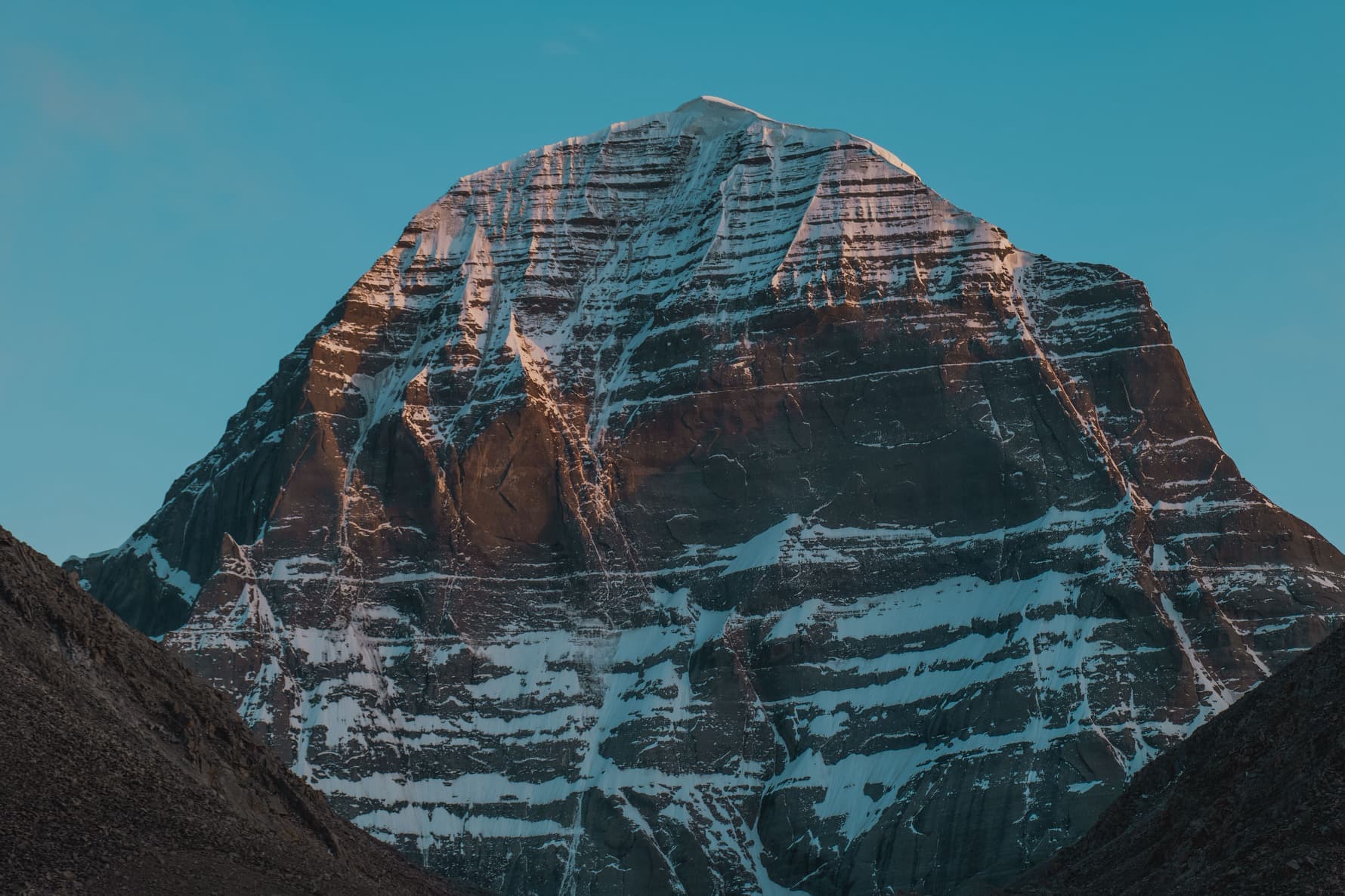
Mount Kailash is one of the most sacred places for Buddhists, Hindus, Jains, and followers of Bon. This peak, standing at 6,638 meters, is considered the abode of the gods, the axis of the world. The pilgrimage around it, known as kora, is a 52-kilometer route that traverses the harsh landscapes of the Tibetan plateau. Here, every step is filled with special meaning: many believe that completing this path purifies karma and brings one closer to liberation.
Kora is not just trekking. It is a test of oneself and an opportunity to look deeper — into one's own heart, into the silence of the mountains, into a tradition that spans thousands of years. But for the journey to be truly blessed, preparation is essential. The right gear, attention to detail, and respect for the place make the difference between a struggle and a transformative experience.
Unique Aspects and Features of the Kora
The kora around Kailash involves altitude, unpredictable weather, and sacred ground beneath your feet. The route ascends from 4,600 to 5,630 meters (Drolma La Pass), and altitude sickness is a real risk. Temperatures can range from -10 to +20 °C throughout the day, and the weather can change in minutes: sun, wind, snow, and back to sun.
Along the way, you will encounter stupas, prayer flags, and stones inscribed with mantras. Pilgrims leave stones along the route — a symbol of prayer, a part of themselves. Respecting the culture and traditions of the locals enriches the experience: a simple gesture — walking around a stupa clockwise — can open a dialogue or simply bring inner peace.
Honestly: preparation for altitude and respect for the place are the two main foundations of the kora. Without them, the route becomes a struggle.
Preparation and Gear:
The Foundation of Your Journey
Choosing the right gear is not a whim but a concern for yourself and the group. Here is a basic checklist that I recommend to every guest:
Footwear
Trekking boots with a stiff sole, good ankle support, and waterproof protection. Be sure to break them in beforehand — blisters at altitude can become a serious problem.
Clothing (Layered System)
— Thermal underwear (synthetic or merino wool).
— Fleece or down jacket.
— Waterproof and windproof membrane jacket.
— Warm hat, gloves (even in summer), buff or scarf.
— Trekking pants, preferably with detachable legs.
Gear
— Sleeping bag rated for temperatures down to -10 °C (even if you are going in summer — nights can be cold).
— Insulating mat (foam or inflatable).
— Trekking poles — reduce strain on the knees, especially on descents.
— A 50–70 liter backpack with a comfortable back and hip belt.
First Aid Kit
— Diamox or a similar medication for altitude sickness.
— Pain relievers, antipyretics.
— Band-aids, gauze, antiseptic.
— Personal medications (if any).
Food and Water
— Light snacks: nuts, dried fruits, energy bars.
— Water filter or purification tablets (water from streams requires treatment).
Tech
— Camera or smartphone (with spare batteries or a power bank).
— Headlamp.
Preparing for the kora around Kailash takes time, but with the right gear and mindset, this journey will become not only a physical challenge but also a profound spiritual experience. If you are ready to take on this challenge, check out our programs: Kailash: Sacred Kora from Lhasa or Kailash through Nepal: Kora with Gosainkunda — and we will support you every step of the way.
Preparing for the Kora: Physical and Psychological Readiness

The kora around Kailash is not only a physical challenge but also an inner journey. To make your time on this path comfortable and meaningful, preparation — of both body and mind — is necessary.
Physical Preparation: Training, Exercises
Start preparing at least 2–3 months before the trip. This is not about breaking sports records, but your body needs to get used to the loads at altitude.
Cardio Training
Running, swimming, cycling — 30–60 minutes, 3–5 times a week. This develops endurance and prepares the cardiovascular system for thin air.
Strength Exercises
Strengthen your legs and core: squats, lunges, planks, abdominal exercises. Strong muscles make ascents easier and protect the joints.
Trekking Walks
Regular hikes are the best preparation. Start with easy routes and gradually increase the difficulty. Hike with a backpack (10–15 kg) to get used to the weight.
Mountain Training
If possible, climb hills or mountains. This helps the body adapt to altitude and pressure changes.
In practice, those who dedicate time to physical preparation feel more confident. They tire less, recover faster, and can focus not on the pain in their legs but on why they came.
Psychological Readiness: Mindset, Meditation
Your inner mindset is just as important as physical fitness. The kora requires calmness, acceptance, and a willingness to let go of expectations.
Define Your Intentions
Why are you going? The answer to this question will help you maintain focus during difficult moments. Some seek purification, others inner peace, and some simply want to touch the sacred. Any intention is valid.
Meditation Practice
10–15 minutes a day is not much, but regular practice calms the mind and teaches you to be present here and now. On the kora, the ability to not escape into thoughts but to feel your step, breath, and the wind will be invaluable.
Visualization
Imagine yourself on the route: you are walking, breathing the thin air, seeing prayer flags. Feel the joy of being here. This strengthens confidence and reduces anxiety about the unknown.
Personal Experience: How Preparation Changes Perception
Over the years, I have seen that those who prepared — both physically and internally — experience the kora in a completely different way. They do not struggle with the route; they walk with it. They have energy left for contemplation, for conversations with fellow travelers, for silence.
One of our group guests shared: “I ran half marathons, thinking that was enough. But at Kailash, I realized: here, speed is not needed, but patience. The meditation I started a month before the trip helped me more than my running shoes.” This is a genuine truth: the kora is not a competition but a dialogue with oneself.
Every effort you make in preparation is a step toward something greater. If you want to walk this path with the support of experienced guides, check out our programs: Kailash: Sacred Kora from Lhasa or Kailash through Nepal: Kora with Gosainkunda. We will be there with you every step of the way.
Essential Gear List for Trekking

The right gear is the foundation of comfort and safety on the kora around Kailash. Here is a detailed list of what you really need to take with you.
Clothing: Layers, Materials, Accessories
A layered clothing system is your main ally in the unpredictable weather of the Tibetan plateau.
Base Layer (Thermal Underwear)
Synthetic or merino wool — lightweight, moisture-wicking, and quick-drying. Cotton is not suitable: it gets wet and does not provide warmth.
Middle Layer (Insulation)
Fleece jacket or lightweight down jacket. They retain heat and do not take up much space in your backpack.
Outer Layer (Protection)
Waterproof and windproof membrane jacket. Pay attention to breathable fabrics (Gore-Tex or similar) and the presence of ventilation zippers under the arms — this helps regulate temperature during active movement.
Accessories
— Warm hat (even in summer — nights can be cold).
— Gloves (better to take two types: lightweight for walking and warm for stops).
— Buff or scarf — protection from wind and dust.
— Sunglasses with UV filter (the sun at altitude is aggressive).
— Cap or wide-brimmed hat for sunny days.
A tip from experience: bring a spare set of thermal underwear. If one gets wet or you want to change, it will save the situation.
Footwear: Choosing Trekking Boots
Footwear is perhaps the most critical element of gear. The right boots will protect your feet and prevent injuries.
Type of Footwear
Trekking boots with a stiff sole and good ankle support. The route has many rocky sections, ascents, and descents — the ankle needs to be protected.
Materials
Ideally, water-repellent leather or synthetic fabrics with a membrane (Gore-Tex). The footwear should breathe but not allow moisture in. Good cushioning in the sole reduces strain on the joints.
Size and Fit
Boots should be half a size to a size larger than usual: at altitude, your feet may swell. Be sure to break in the boots beforehand — walk at least 50–70 km over varied terrain. New boots on the kora are almost a guarantee of blisters.
Additionally
— Trekking socks (synthetic or wool, no cotton).
— Lightweight sandals or sneakers for evening stops — to give your feet a rest after the day's trek.
Gear: Tent, Sleeping Bag, Backpack
Tent
Lightweight (up to 2–3 kg for two), wind-resistant, with a double-layer construction. The double layer protects against condensation and rain. Make sure the tent is easy and quick to set up — after a long day, there is no energy left for complicated structures.
Sleeping Bag
Temperature rating — down to -5…-10 °C (even in summer). Synthetic filling is more reliable than down in wet conditions: it retains heat even if it gets wet. Down is lighter and more compact but requires careful handling.Mat (sleeping pad)
An insulating mat is essential. Foam (light, reliable) or inflatable (more compact, but there is a risk of punctures). The mat protects against cold from below — without it, even the warmest sleeping bag won't help.
Backpack
A volume of 50–70 liters for multi-day trekking. Pay attention to:
— A comfortable back ventilation system.
— Adjustable straps and a hip belt (the main load should be on the hips, not the shoulders).
— External pockets and straps for quick access to items.
The backpack should fit snugly, not "bounce" while walking. Test it with weight before the trip.
Proper gear is not a luxury, but a care for yourself. It allows you to focus on the journey, not discomfort. If you have any questions about choosing gear or want to know what we recommend to our guests, write to us. We are happy to help.
Packing: how to properly pack for the Kora

Packing a backpack for the Kora around Kailash is an art of balancing between the necessary and the excessive. Every extra gram is felt at altitude, but forgetting something important is also a risk. Here are practical tips to help you optimize space and weight.
Optimizing space in the backpack
Compression bags
Use them for clothing and sleeping bags. By compressing items, you free up to 30–40% of the backpack's volume. This makes room for other important items.
Rolling method
It's better to roll clothes into rolls rather than stack them. This takes up less space, reduces wrinkling, and you can find what you need faster.
Categorization
Use separate bags or pouches for:
— Clothing.
— Toiletries.
— Food and snacks.
— Electronics (camera, chargers, batteries).
This simplifies searching and keeps the backpack organized.
External pockets
Place items that you may need quickly in them: rain jacket, flashlight, snack, water bottle. You don't need to unpack the entire backpack every time.
Weight distribution
— Heavy items (sleeping bag, tent) — closer to the back, in the middle of the backpack.
— Light items (clothing) — at the top and on the sides.
— Frequently used items — in the top flap or side pockets.
Proper weight distribution reduces strain on the back and shoulders.
Lightness and compactness: what to leave at home
Honestly: there is no room for excess on the Kora around Kailash. Here’s what you can (and should) leave at home:
Heavy footwear
One pair of trekking boots + light sandals for the camp. Two pairs of heavy boots are excessive.
Excess clothing
Plan for 3–4 outfits that can be mixed and washed. Light layers are better than one heavy jacket.
Unnecessary accessories
Jewelry, extra gadgets (tablet if you have a smartphone), physical books (better to have an e-reader) — all of this adds weight without benefit.
Food packaging
Take freeze-dried foods, energy bars, nuts, dried fruits — light and calorie-dense. Fresh vegetables, canned goods in heavy jars — leave at home.
Cosmetics and hygiene
Minimalism: mini versions of shampoo, toothpaste, soap. Full-size bottles are unnecessary weight.
Tip: before final packing, lay everything out on the floor and ask yourself: "Can I do without this?" If yes — leave it at home.
Individual approach to choosing items
Every traveler is unique, and there is no universal list. Consider your own characteristics:
Level of physical fitness
If you are new to trekking, don't overload your backpack. It's better to take less and comfortably reach your destination than to carry excess and exhaust yourself.
Sensitivity to cold
If you get cold even in warm weather, add an extra layer of thermal underwear or a light down jacket. Your comfort is more important than the perfect weight of the backpack.
Dietary requirements
If you have dietary restrictions (vegetarianism, allergies), bring trusted foods. Yes, this may add weight, but health is more important.
Personal rituals
Some people bring a small figurine, prayer beads, or a notebook for notes. If these items provide you with support — take them. Just make sure they are light and compact.
In practice, I have seen that those who find a balance between the necessary and the personal feel more confident and calm on the Kora. The backpack is not just a load; it is your home for several days. Let it be light, but lived-in.
If you want to learn more about preparing for the Kora, check out our programs: Kailash: Sacred Kora from Lhasa and Kailash via Nepal: Kora with Gosainkunda. We will support you at every step.
Safety while traveling: tips and recommendations

The Kora around Kailash is a path that requires respect for nature and attention to oneself. Safety here is not a formality, but a real concern for your health and experience. Here’s what you need to know.
Risk assessment: altitude, weather, physical load
Altitude
The Kora route passes at altitudes from 4600 to 5630 meters (Drolma La Pass). At this altitude, the air contains about 40% less oxygen than at sea level. Altitude sickness (AMS) is a real risk, with symptoms including headache, nausea, dizziness, weakness, and insomnia.
How to reduce the risk:
— Acclimatization. Spend 2–3 days in Lhasa (3650 m) or Kathmandu (1400 m) with gradual ascents before starting the Kora.
— Drink plenty of water (3–4 liters per day).
— Ascend slowly, don’t rush.
— Listen to your body. If symptoms worsen — stop, rest, or descend.
Weather
In Tibet, the weather changes quickly: sunny in the morning, windy in the afternoon, snow in the evening. In summer (June–September), temperatures range from –5 °C at night to +15 °C during the day. In winter, it can drop to –30 °C.
What to take:
— Waterproof and windproof jacket.
— Warm layers (thermal underwear, fleece, down jacket).
— Sunscreen and sunglasses (the sun at altitude burns skin in an hour).
Physical load
The Kora is 52 km over 2–3 days, with ascents and descents. If you are not physically prepared, every step becomes a challenge.
Preparation:
— Train for at least 2–3 months: cardio, strength training, hiking with a backpack.
— Go on several training treks to understand your capabilities.
What to do in an emergency
Contacts
— Emergency service numbers in Tibet are unstable. The main help comes from your guide or porter.
— Make sure you have contacts for our team and local coordinator.
— A satellite phone or radio (if going independently) is a necessity, not a luxury.
Evacuation routes
— Nearest settlements: Darchen (start/end of the Kora), Dirapuk Monastery, Zutulpuk Monastery.
— In case of serious altitude sickness or injury — immediate descent. This is the only effective treatment for severe AMS.
— Your guide knows alternative routes and points where help can be obtained.
First aid kit
Be sure to take:
— Diamox (acetazolamide) or similar — for prevention and treatment of altitude sickness.
— Pain reliever (ibuprofen, paracetamol).
— Antipyretic.
— Medications for diarrhea and nausea.
— Band-aids (for blisters), bandages, antiseptic.
— Personal medications (if you take anything regularly).
Actions for altitude sickness symptoms:
— Mild form: stop, rest, drink water, take Diamox.
— Moderate form (severe headache, vomiting): stop ascending, if necessary, descend 300–500 meters.
— Severe form (confusion, loss of coordination, difficulty breathing): immediate evacuation down. This is life-threatening.
Experiences from our groups: real stories and lessons
Over the years of conducting groups on the Kora, I have seen various situations. Here are a few lessons shared by our guests:
Story 1: Acknowledging your limits