What is the Tibet Entry Permit

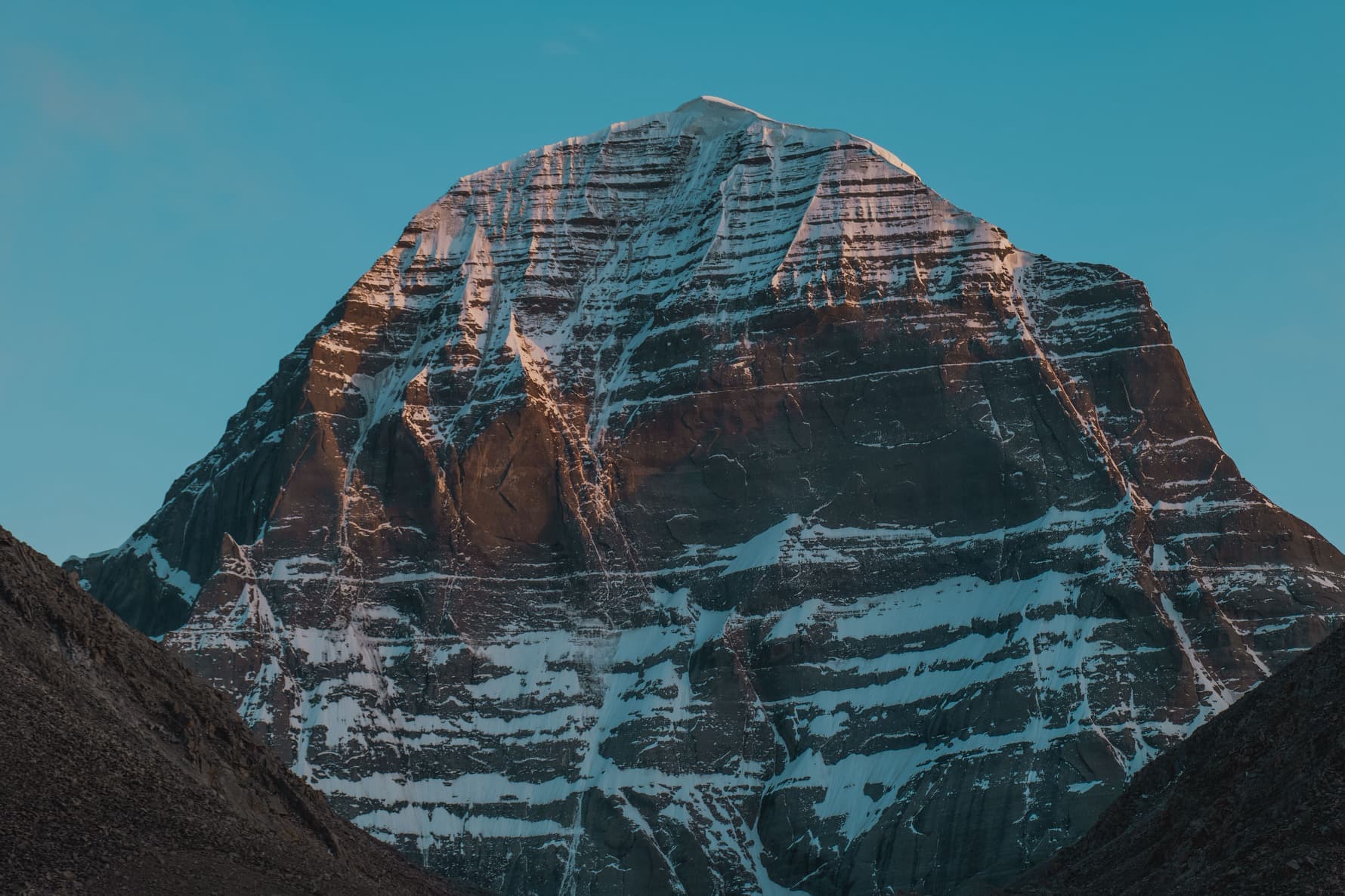
Tibet is a place where ancient traditions meet the majestic landscapes of the Himalayas. But before embarking on a journey to the sacred Mount Kailash or the monasteries of Lhasa, you will need a special document—the entry permit. Without it, even a Chinese visa will not help: the border of the region will remain closed.

The permit is not just a formality. It opens access to routes that would otherwise be inaccessible: the kora around Kailash, high-altitude lakes, and monasteries in the mountains. The political situation in the region requires monitoring of tourist flow, and every foreigner must undergo this procedure.
Why is the Tibet Entry Permit Needed
Without the Tibet Travel Permit (as the document is officially named), you will not cross the border into Tibet, even when you are within China. This applies to all foreigners, regardless of nationality or type of trip, whether individual or group.
In practice, the permit is checked at the airport in Lhasa, upon entering the region by land, and at checkpoints within Tibet. To visit certain areas, such as the Mount Kailash area or the Rongbuk Monastery near Everest, additional permits are required.
Honestly, the process can intimidate many. But if you are traveling with a group, for example, through the programs Kailash: Sacred Kora from Lhasa or Kailash via Nepal: Kora with Gosainkunda, the tour operator takes care of all the paperwork. You just need to provide scans of your documents, and we will handle the rest.
Who Needs to Apply for the Permit
All foreign tourists without exception. Citizens of Russia, Ukraine, Kazakhstan, Belarus, the USA, and Europe fall under the same rule. A Chinese visa is mandatory, but it is not sufficient.
You will need: a valid passport (at least six months until expiration); a Chinese visa (tourist, not transit); a completed application form for the permit; information about your itinerary and dates of stay in Tibet; confirmation of tour booking (independent trips are prohibited).
If you are traveling with us, we prepare the forms and submit the documents to the Tibet Tourism Bureau. You will receive a scanned copy of the permit via email, and the original will be handed to you upon meeting your guide in Lhasa or Kathmandu.
Recommendations for Obtaining the Permit
-
Start at least a month before departure. The processing of applications takes 5–10 working days during the calm season, but from March to May and August to October, the timeframe can extend up to three weeks.
-
Check the current requirements. Rules change: sometimes the region is closed to tourists in February–March (the anniversary of events from 1959), and sometimes additional restrictions are imposed. We monitor updates and notify guests in advance.
-
Trust the professionals with the paperwork. It is impossible to submit documents to the Bureau independently; it can only be done through a licensed tour operator in Tibet. We work with trusted partners in Lhasa who have been preparing permits for our groups for over ten years.

How to Obtain a Permit for Travel to Tibet
The process looks simpler than it seems if broken down into steps.
Step-by-Step Instructions
Step 1. Determine the itinerary and dates. The permit is tied to a specific tour and dates. You will not be able to change the dates or add new cities after receiving the document. Therefore, first, choose a program such as Kailash: Sacred Kora from Lhasa, and then finalize your tickets.
Step 2. Gather the documents. You will need scans of your passport (the page with your photo) and Chinese visa. Plus one color photo 3×4 cm on a light background. If you are a journalist, religious studies teacher, or work in the media, please inform us in advance: special approvals are required for certain professions.
Step 3. Fill out the application form. The tour operator will send you the form. Provide your full name (in Latin letters, as in your passport), birth dates, nationality, occupation, itinerary, and contact details. Mistakes are unacceptable; even an extra letter can lead to a denial.
Step 4. Submit the application through the operator. We send the documents to our partners in Lhasa, who then submit them to the Tibet Tourism Bureau. The processing time ranges from five working days in the low season (November–January) to three weeks in the high season (April–May, August–October).
Step 5. Receive the scanned permit. The completed permit will arrive in your email. You need to print it and take it with you; without the paper copy, you will not be allowed on the flight to Lhasa. The original will be handed over by your guide upon meeting.
Required Documents and Timelines
The complete list: a scan of the first page of the passport; a scan of the Chinese visa; a 3×4 cm photo; a completed application form; a copy of flight tickets to and from Lhasa (or an itinerary through Nepal).
-
Timelines: submit documents at least 20–25 days before departure. If you plan to travel in March–April 2027 or during the October holidays, start the application process two months in advance.
-
Important: the permit is valid strictly for the specified dates. If you miss your flight or are delayed in Tibet, reissuing will be required, which takes another week and incurs an additional fee.

Cost and Timelines for Obtaining the Entry Permit
How much does the permit cost and how quickly can it be obtained are two main questions during the preparation phase.
Cost of Processing
The Tibet Travel Permit will cost between $50 and $100, depending on the route and season. If you need additional permits for Kailash, Everest, the Tsang area, or military zones near the Nepal border, add another $30 to $50 for each.
The cost includes the consular fee, services of partners in Lhasa, and courier delivery of the original (if you are already in China). Usually, tour operators include this amount in the overall tour package. All permits are already accounted for, and no additional payments are necessary.
If you are traveling via Nepal on the route Kailash via Nepal: Kora with Gosainkunda, the processing takes place in Kathmandu. Here the timelines may be slightly longer—up to 12 working days—but the process is simpler: Nepalese agencies respond more quickly to requests.
Time Required to Obtain the Document
The standard timeframe is 5–10 working days. However, there are nuances: during the high season (April–May, September–October), processing can take up to two to three weeks. If your group has more than ten people, an additional 2–3 days are needed for list approval. Chinese holidays (New Year in February, Labor Day, National Day in October) halt the work of agencies, so plan for an extra week.
I recommend submitting documents 30 days before departure. If traveling in March–April 2027, do so 45 days in advance. This provides a buffer in case of delays or the need to correct an error in the application.
Budget Planning Tips
1. Count all permits at once. For the standard route Lhasa-Shigatse-Kailash, you will need the Tibet Travel Permit + Alien's Travel Permit (for the Ngari area, where Kailash is located) + Military Permit (if crossing military zones). In total, about $120–150 per person.
2. Book through an operator. It is impossible to submit documents independently, and "grey" intermediaries may disappear with your money or issue fake papers. We only work with licensed partners whose permits are accepted at any airport and checkpoint.
3. Allow for unforeseen expenses. If you are denied (rare, but it can happen, for example, due to discrepancies in passport data and the application), reissuing will take another week and require a new fee. Plus, potential ticket rescheduling.
4. Consider visa costs. A Chinese visa for Russians costs about $125 (30-day single-entry) plus a service fee for the visa center. If flying through Kathmandu, a Nepalese visa is available upon arrival for $30.
Prepare in advance, and both your finances and nerves will remain intact.

Who Needs to Obtain the Tibet Entry Permit
In short: all foreigners without exception. I will explain in detail who exactly falls under this rule and if there are any special cases.
Categories of Travelers Requiring the Permit
Foreign Citizens. Anyone who does not hold Chinese citizenship. Russians, Ukrainians, Kazakhs, Belarusians, Europeans, Americans, Australians—one rule applies to all. Even if you have ethnic origins from Tibet, but your passport is from another country, a permit is mandatory.
Groups and Individual Tourists. Traveling alone in Tibet is prohibited. You must be part of an organized tour with a licensed guide. But even if you are a "group of one," a permit is still required.
Crossing the Border. Traveling from Nepal to Tibet through the Kodari-Zhangmu or Gyirong-Rasuwagadhi checkpoints? The permit must be obtained in advance in Kathmandu. Flying to Lhasa from Beijing, Chengdu, or Shanghai? The permit must be in hand before boarding; without it, the ticket will not be activated.
Journalists, Researchers, Diplomats. For these categories, the procedure is more complex and takes longer. Journalists need a special invitation from the Tibet Information Office, scholars from the hosting organization (university, institute), and diplomats require approval through the Ministry of Foreign Affairs of China. Processing times range from one to three months. If you fall into this category, please notify the tour operator in advance.
Conditions and Exceptions
Chinese Citizens.
Citizens of the PRC (including residents of Hong Kong and Macau) can travel in Tibet without a Tibet Travel Permit. However, they need a domestic passport (居民身份证) and, for certain areas, a pass from local authorities. This does not apply to foreigners, even if you have a residence permit in China.A visa does not replace a permit.
A standard tourist visa for the PRC allows entry into the country, but not into the Tibet Autonomous Region. You need both documents. Verification occurs at flight registration: airline staff will ask to show both the visa and the permit scan.
Temporary regional closures.
Every year from February to early March, Tibet is closed to tourists (the anniversary of the 1959 uprising and the events of 2008). Exact dates are announced a month in advance, but it usually spans from February 20 to March 15-20. During these weeks, permits are not issued at all. If you are planning a trip in spring 2027, choose dates after March 25.
Additional permits for remote areas.
The Ngari region (where Kailash is located), Shannan prefecture, the border with Nepal and Bhutan, and the Everest Base Camp all require separate permits in addition to the main Tibet Travel Permit. We arrange these concurrently with the main document, but keep in mind: each requires time and an additional fee.
Summer and autumn seasons.
In July–August and September–October, the flow of tourists in Tibet reaches its peak. The queues for permit processing grow, and timelines increase. Submit your documents in June for an August trip, and in August for an October circumnavigation of Kailash.
If you are traveling with Jay Shambo, we factor all these nuances into the preparation schedule and warn about possible delays in advance.

Is it possible to travel in Tibet independently?
No. The rules of the Tibet Autonomous Region are clear: foreigners must travel as part of an organized tour with a licensed guide. Independent travel is legally prohibited.
Rules and restrictions
You will not be able to: arrive in Lhasa and freely move around the city without an escort; rent a car and go to Lake Namtso or Rongbuk Monastery; stay in a guesthouse or hostel—only in hotels accredited to receive foreigners; buy a ticket for an intercity bus or train within Tibet without permission.
At each checkpoint (there are dozens on the region's roads), your Tibet Travel Permit and the presence of a guide will be checked. If you are traveling alone or without an accompanying guide, you will be turned back, fined, or deported.
Why so strict?
Tibet is a politically sensitive area. After the events of 1959 and 2008, the Chinese government limited foreign access to control information flow and prevent "unauthorized contacts" with the local population. This is a reality that must be acknowledged.
What is allowed.
You can freely walk around Lhasa within the permitted zones (Barkhor, Potala, parks), visit open monasteries, and take photos (except of military objects and checkpoints). However, going outside the city, overnight stays on the way, and visiting closed temples are only allowed with a guide and the appropriate permits.
Recommendations for organizing group tours
If the group format confuses you, here is what you should know.
A "group" can consist of just one person.
Yes, this is more expensive (the guide and vehicle are fully charged), but legally you are still considered a "group tour." We organize such trips if you want an individual pace or specific dates.
The optimal group size is 6-10 people.
Fewer people are more expensive (fixed costs for transport and guide are divided among all), while more people lose intimacy and make it harder to synchronize the rhythm. In the programs Kailash: Sacred Circumambulation from Lhasa, we gather groups of 8-12 people so that everyone feels comfortable, while the cost remains reasonable.
Choose an experienced guide.
Not just a translator, but someone familiar with Buddhist culture, mountain routes, and acclimatization features. Our guides have decades of experience with circumambulations around Kailash; they know where it is safe to stop at an altitude of 5600 meters, how to properly enter a temple, what can be photographed, and what cannot.
Prepare for altitude.
Lhasa is located at 3650 m, and the Dolma La Pass on the circumambulation is at 5630 m. Altitude sickness is not a myth. Before your trip, consult a doctor, take Diamox or a similar medication, and plan acclimatization days. We specifically include a gradual ascent in the Kailash via Nepal: Circumambulation with Gosainkunda itinerary through Gosainkunda Lake (4380 m) and the Khyiron Valley, allowing your body to adapt.
Respect traditions.
Tibetans are deeply devout people. Circumambulate stupas and monasteries clockwise, do not photograph monks without permission, remove your shoes before entering a temple, and do not touch religious objects with your hands. The guide will remind you of all the rules, but basic respect is something you should bring with you.
Trust the operator.
Permit processing, hotel bookings, coordination with authorities, and logistics in the mountains all require connections and experience. We have been working with partners in Lhasa and Kathmandu for over ten years, know how to handle emergencies (closed roads, changes in regulations, sudden checks), and guarantee that your trip will go smoothly.
The journey to Kailash is not just a route. It is an internal experience that transforms. Allow professionals to remove bureaucratic barriers so you can focus on what truly matters.

FAQ
Who needs a permit to travel to Tibet?
All foreign citizens without exception. Citizens of Russia, Ukraine, Kazakhstan, Belarus, European countries, the USA, and Australia are subject to the same rule. A Chinese visa is mandatory, but it is not enough: a separate Tibet Travel Permit is needed. Citizens of the PRC (including Hong Kong and Macau) can travel in Tibet with an internal passport, without additional permits.
How much does a permit to travel to Tibet cost?
The Tibet Travel Permit will cost between 50-100 US dollars. If you need additional permits for the Kailash region (Alien's Travel Permit), Everest Base Camp, or military zones on the border with Nepal (Military Permit), add another 30-50 dollars for each. The cost of all permits is already included in the total price of the tour; no additional payments are necessary.
How to obtain a permit to travel to Tibet?
You will need: a scan of the first page of your passport (valid for at least 6 months); a scan of your Chinese visa; a colored photo 3x4 cm; a completed application form with your itinerary and dates; copies of flight tickets or confirmation of entry through Nepal.
You submit documents through a licensed tour operator; it is impossible to do this independently. Processing takes 5-10 business days in the low season, up to three weeks in high season (April-May, August-October). Submit your documents at least 30 days before departure. If traveling in March-April 2027, submit them 45 days in advance.
Where to obtain a permit?
The permit can only be processed through a tour operator that has partners in Lhasa or Kathmandu. It cannot be obtained independently at a consulate or upon arrival.
If you are flying to Lhasa from Beijing, Chengdu, or another Chinese city, the documents are submitted to the Tibet Tourism Bureau in Lhasa; the tour operator's partners do this for you. The completed permit scan will be sent to your email, and you print it out to present at flight registration. The original will be handed over by the guide upon meeting you at Lhasa airport.
If you are traveling through Nepal (route Kailash via Nepal: Circumambulation with Gosainkunda), processing occurs in Kathmandu and may take a bit longer (up to 12 business days), but the procedure is the same.
We work with trusted partners in both directions. We prepare all permits for our guests, track the application status, and provide originals at the beginning of the tour. You only need to send us the document scans on time; we take care of the rest.
The path to Kailash begins with proper preparation. Take care of your documents in advance, and the sacred mountains of Tibet will unfold before you without obstacles.