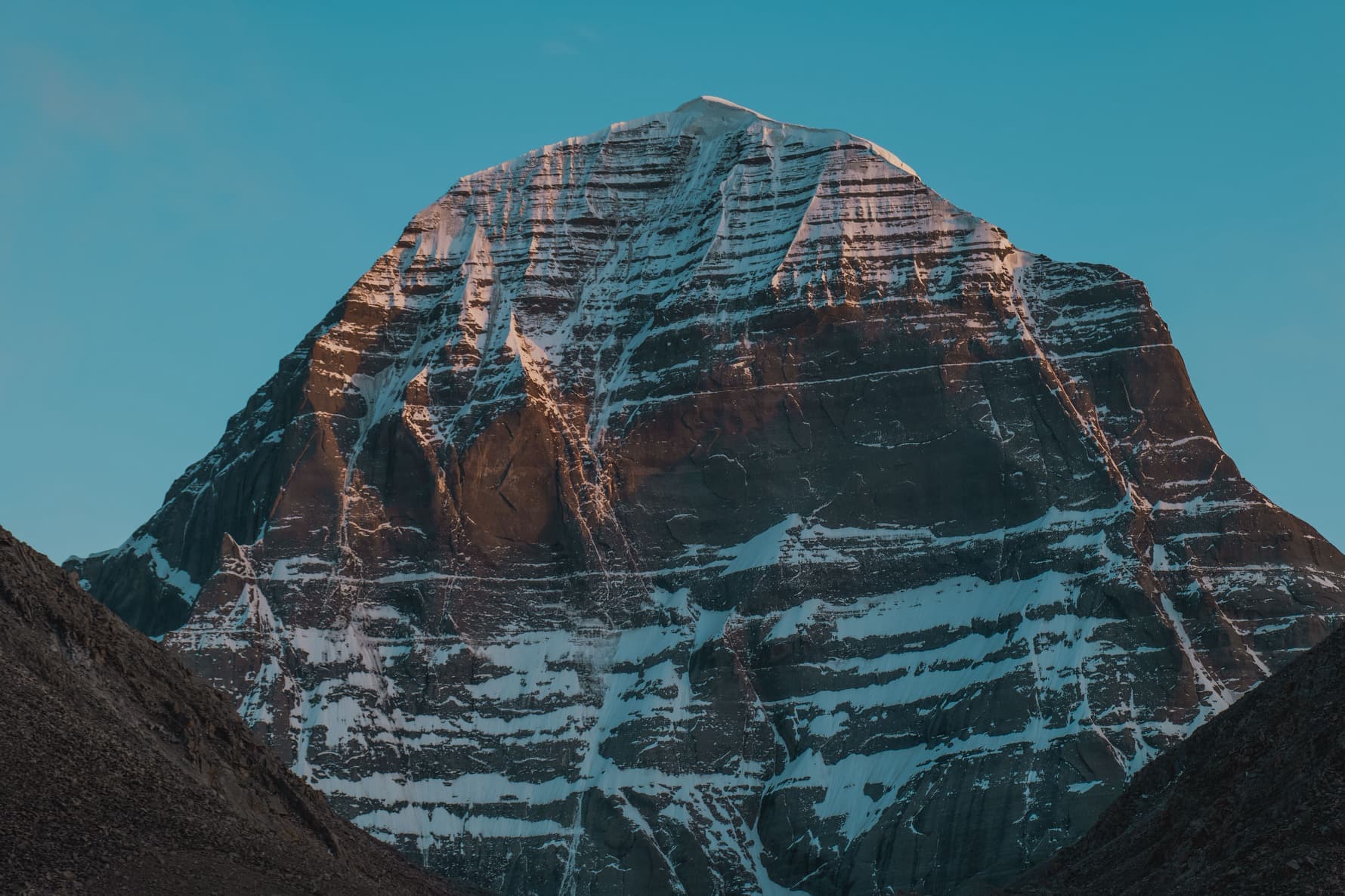
Acclimatization Before the Kailash Circuit

Why Acclimatization is Necessary

Acclimatization is the body's adaptation to thin air and low pressure. The circuit around Kailash takes place at altitudes of 4500–5630 meters; without preparation, the risk of altitude sickness is very high. I have seen people lose consciousness at the Drolma-La Pass simply because they rushed and did not give their bodies time to adjust.
How Altitude Affects the Body and Mood
At altitudes above 3000 meters, there is less oxygen in each breath — the heart beats faster, breathing becomes more frequent, and the brain receives less nourishment. Physically, this manifests as:
-
Altitude sickness — headache, nausea, dizziness, and in severe cases, pulmonary or cerebral edema.
-
Fatigue — even slow walking requires effort, as if walking on sand.
-
Mood changes — irritability, anxiety, sleep disturbances; all of these are consequences of the brain's oxygen deprivation.
The reaction is individual: some people handle 4000 meters easily, while others struggle at 3000. Age, gender, and fitness level do not guarantee easy adaptation — listening to your body is more important than any predictions.
What Proper Acclimatization Provides
Proper preparation transforms the circuit from a trial into a profound experience. Here’s what works in practice:
-
Gradual ascent. The classic rule: above 2500 meters, ascend no more than 300–500 meters per day (based on where you sleep). Even if you ascend higher during the day, you need to sleep lower. "Climb high, sleep low" — the golden rule of Himalayan guides.
-
Rest and hydration. Drink 3–4 liters of water a day, even if you don’t feel thirsty. Dehydration exacerbates symptoms. Rest days are not a luxury but a necessity: after every 2–3 days of ascent, you need a day at the same altitude.
-
Listen to your body without heroism. If a headache persists — descend 300 meters. If you feel nauseous — take a break. There is no place for pride in the mountains; I know cases where stubbornness cost lives.
-
Physical preparation before the trip. Cardiovascular exercises (running, swimming, cycling) for 2–3 months before the trip strengthen the heart and lungs. Hiking with a backpack on hills prepares your legs and mind for long treks.
-
Allow time in your itinerary. Better to have 2–3 "extra" days for acclimatization than to be evacuated from the circuit. In our programs Kailash: Sacred Circuit from Lhasa and Kailash via Nepal: Circuit with Gosainkunda, the schedule is designed to allow the body to adapt — without haste, with care for each participant.
Proper acclimatization not only protects health — it opens up space for what you are traveling for: silence, meditation, and a meeting with yourself at the foot of the sacred mountain.
How to Prepare for Acclimatization

Preparation for the circuit begins long before departure — at home, in everyday life. The stronger the base, the easier it is for the body to cope with altitude.
Physical Preparation
Start regular training 2–3 months before the trip. You don’t have to become a marathon runner — endurance and the habit of exertion are what matter.
-
Cardio. Running, swimming, cycling — 3–4 times a week for 40–60 minutes. If you can’t run, brisk walking uphill (on a treadmill with an incline or stairs) will suffice. The goal is to train your heart to work efficiently.
-
Leg and core strength. Squats, lunges, planks. The circuit around Kailash is 52 kilometers with a backpack, part of it over rocks and snow. Strong legs and back will relieve stress on the joints.
-
Hiking with a backpack. If possible, head to the mountains or hills on weekends. 10–15 kg on your back for 4–6 hours of walking is excellent practice. You’ll also check your gear and footwear.
Honestly: if you haven’t trained — you will still make it, but it will be harder. Physical preparation provides a reserve of strength that translates into comfort and safety at altitude.
Nutrition and Hydration
-
Before the trip. Eat a varied diet, including complex carbohydrates (grains, whole grain bread, rice), protein (meat, fish, legumes), vegetables, and fruits. A week before departure, avoid alcohol and heavy fatty foods — let your body enter the trip "clean."
-
At altitude. Carbohydrates are the main fuel. Oatmeal, rice, pasta, dried fruits, nuts. Fats and proteins are harder to digest but necessary — light soups, boiled meat, cheese. Eat often, in small portions; at altitude, appetite often decreases, but calories are needed.
-
Water. 3–4 liters a day is not an exaggeration. At altitude, moisture evaporates quickly, even if you’re not sweating. Herbal tea, warm water with lemon and honey — good options. Avoid large amounts of coffee and strong tea: caffeine dehydrates.
Medications for Preventing Altitude Sickness
-
Consult a doctor before the trip. This is essential. A good therapist (ideally one familiar with mountain medicine) can help you choose a regimen.
-
Diamox (acetazolamide). A standard medication for prevention: it speeds up acclimatization and reduces the risk of edema. The usual regimen is 125 mg twice a day for 1–2 days before ascent and during the ascent. There are side effects (tingling in fingers, change in taste of carbonated drinks), but they are harmless.
-
Dexamethasone. A hormonal medication for emergencies (severe altitude sickness, brain edema). Take it only as prescribed by a doctor or guide if there is a threat to life and descent is impossible.
-
First aid kit. Pain relievers (ibuprofen, paracetamol), anti-nausea medication (cerucal), diarrhea medication, blister plasters, antiseptic. If you have chronic illnesses — bring your medications with a supply.
In our groups, the guide always carries a complete medical kit, but having a personal supply provides peace of mind. And once again: do not self-medicate at altitude. If in doubt, ask the guide.
Stages of Acclimatization: What to Expect

Acclimatization is not a one-time event but a process stretched over several days. Understanding the stages will help you relate more calmly to what is happening in your body.
Acclimatization Schedule
-
First day at altitude (3500–3800 m). The body begins to react: pulse slightly elevated, breathing more frequent, mild headache by evening — this is normal. Drink water, rest, do not overexert yourself. Sleep may be restless (periodic breathing — the body is learning to breathe in new conditions).
-
Days 2–3 (3800–4300 m). Ascend no more than 300–500 meters per day. If you feel good — take short walks, but sleep at the same altitude or lower. The headache should pass; if it worsens — this is a signal to stay at the current altitude for another day.
-
Days 4–6 (4300–4800 m). The body adapts: more red blood cells are produced, capillaries expand. You will notice that breathing has become easier. Physical activity (light walks) accelerates adaptation — "climb high, sleep low."
-
Before the circuit (4500–5000 m). 1–2 days before starting the circuit — take a rest day at this altitude. A short acclimatization walk (ascend 200–300 meters and return) helps finalize the body's adjustment.
Haste kills acclimatization. Every extra day at an intermediate altitude is an investment in comfort and safety on the circuit.
Key Points on the Route Around Kailash
-
From Lhasa. Lhasa (3650 m) — an ideal starting point: 2–3 days to explore the city, temples, and get used to the altitude. Then transfer to Shigatse (3900 m) — another day. Next, Lake Manasarovar (4500 m) — 1–2 days. Here, the altitude is already felt, but the body is ready. Kailash: Sacred Circuit from Lhasa is built precisely on this logic.
-
Via Nepal. Kathmandu (1400 m) — flight or transfer to Simikot (2950 m) — several days of trekking through Gosainkunda (4300 m) to Kailash. Gradual ascent on foot is gentler on the body than a sudden drive. The program Kailash via Nepal: Circuit with Gosainkunda allows time to adapt while moving.
-
On the circuit itself. Darchen (4560 m) — the starting point. Dirapuk (4920 m) — first overnight stop. Drolma-La Pass (5630 m) — peak altitude, the most challenging section. Zutulpuk (4790 m) — second overnight stop. Return to Darchen. Three days, 52 km — the culmination of the journey.
Practical Tips at Altitude
-
Listen to your body. Mild shortness of breath while walking is normal. Severe headache, vomiting, confusion — signs of severe altitude sickness, immediate descent is needed.
-
Move slowly. "Pole-pole" (Swahili for "slowly-slowly") — the mantra of mountain guides. The slower you go, the less strain on the heart and lungs. There’s no one to overtake, no need to rush.
-
Breathe deeply. The "pressured exhale" technique: inhale through the nose, exhale through pursed lips (as if blowing out a candle). This increases pressure in the lungs and improves gas exchange.
-
Dress in layers. Weather at altitude can change in minutes. Thermal underwear, fleece, waterproof jacket — take off and put on as needed to avoid sweating and getting cold.
-
Avoid alcohol and sleeping pills. Alcohol dehydrates and worsens acclimatization. Sleeping pills suppress the respiratory center — dangerous at altitude.
Every step on the circuit is a physical effort and a spiritual practice. Proper acclimatization gives the body resources and the spirit freedom to meet Kailash.
Risks and How to Avoid Them

High altitudes do not forgive carelessness. But if you know the signs of danger and act in time, most problems can be avoided.
Symptoms of Altitude Sickness:
When to Sound the Alarm
-
Mild altitude sickness (AMS). Headache, mild nausea, fatigue, dizziness, sleep disturbances. Occurs in 50–75% of people at altitudes above 3500 m. It usually resolves on its own within 1–2 days if ascent is halted.What to do. Stop, do not ascend higher. Drink water, rest. Ibuprofen alleviates headaches. If you do not feel better after a day or if it worsens — descend 300–500 meters.
-
High-altitude pulmonary edema (HAPE). Shortness of breath at rest, cough with pink froth, bluish lips, weakness. This is life-threatening. It is rare but progresses quickly.
-
What to do. Immediate descent is the only salvation. Oxygen, if available. Nifedipine (tablet under the tongue) as a temporary measure. Call for evacuation if possible.
-
High-altitude cerebral edema (HACE). Severe headache, vomiting, coordination disturbances (unsteady gait), confusion, hallucinations. Extremely dangerous, can lead to coma and death.
-
What to do. Urgent descent, dexamethasone (8 mg immediately, then 4 mg every 6 hours), oxygen. This is not negotiable — you must descend immediately, even at night.
I have never seen severe mountain sickness in our groups — because we do not rush, monitor each person's condition, and if something goes wrong, we change the plan. Your health is more important than the schedule.
Hypothermia and Frostbite
It is cold at high altitudes (at night on Drolma La it can be –15°C), and the wind increases heat loss. Hypothermia and frostbite are real risks.
-
Signs of hypothermia. Shivering, sluggishness, slurred speech, apathy. In severe cases — loss of consciousness.
-
Prevention. Layered clothing: thermal underwear, fleece, down jacket, membrane jacket and pants. Hat (30% of heat is lost through the head), gloves, warm socks, spare mittens. Do not allow clothing to get wet — wet fabric cools much faster.
-
Frostbite. White, numb areas of skin (most often fingers, toes, nose, ears). Reversible in the early stages.
-
What to do. Gradually warm (put hands under clothing against the body), provide warm drinks. Do not rub with snow (myth!), do not warm by the fire. In cases of deep frostbite — evacuation.
Overexertion and Injuries
Altitude reduces endurance — what was easy at lower elevations requires effort here. Overexertion leads to injuries (sprains, strains, fractures) and exhaustion.
-
How to avoid. Walk slowly. Use trekking poles (they relieve knee strain on descents). Watch your feet — rocks, ice, roots. Do not hesitate to ask for a stop if you are tired.
-
If you get injured. Stop, provide first aid (immobilization, cold, pain relief). Assess whether you can walk on your own or need help. The guide is always nearby, but know the base yourself.
Water and Food: Hygiene at High Altitude
Diarrhea at altitude is not just an inconvenience, but a risk of dehydration and disruption of acclimatization.
-
Drink only boiled or filtered water. Even if the stream looks clean — it may contain giardia and other parasites. Water purification tablets (chlorine, iodine) or a filter are essential in your backpack.
-
Wash your hands. Use hand sanitizer or soap before eating. Do not eat unwashed fruits or raw vegetables at roadside cafes.
Safety is not paranoia, but respect for the mountains and for yourself. We create conditions, but your attentiveness to your condition is key.
Logistics: How to Organize a Trip in 2026

Kailas is not a mountain you can just arrive at and go for a walk. Tibet requires permits, organization, understanding of seasons and budget. Let's break it down.
When to Go: Seasons and Weather
-
May — early June. Spring in Tibet, snow melts, passes open. Daytime temperatures +10…+15°C, nighttime around 0°C. Rain and snow are possible. Fewer tourists, fresh landscapes — but the weather is unpredictable.
-
July — August. Peak season. Warm (+15…+20°C during the day), but this is the monsoon season — rain, mud on the trails, clouds obscure views. Most pilgrims (Tibetans, Indians, Western groups). If you enjoy socializing and are not afraid of rain — a good time.
-
September — October. The best season, in my opinion. Clear weather, stable temperatures (+10…+15°C during the day, –5…0°C at night), clear skies, Kailas reveals itself in all its glory. Less rain, comfortable walking. Popular time — book in advance.
-
November — April. Winter. Cold (down to –20°C at night), snow, many roads are closed, Drolma La pass is dangerous. For experienced winter trekkers — a powerful experience, but extreme.
-
Conclusion for 2026: plan your trip for late September — early October. This is the golden time.
What to Bring: Gear
-
Clothing. Thermal underwear (top and bottom), fleece jacket, down jacket, membrane shell jacket and pants. Trekking pants, warm socks (3–4 pairs), hat, buff, gloves, and spare mittens. Spare underwear.
-
Footwear. Trekking boots with a stiff sole, broken in (!) before the trip. Sandals or sneakers for camp.
-
Backpack. 40–50 liters for personal items (main luggage is carried by transport). Trekking poles.
-
Sleeping bag. If staying in guesthouses — comfort at +5°C is sufficient. If in tents (rare) — comfort at –10°C.
-
Electronics. Flashlight with spare batteries, power bank (solar panel is useful but not mandatory), phone, camera. There is electricity in Tibet, but not everywhere and not always.
-
First aid kit. See the section on medications above. Plus: sunscreen SPF 50+, lip balm, blister plasters.
-
Documents. Passport, visa, permits (arranged by the operator), insurance covering high-altitude trekking.
-
Miscellaneous. Water bottle (1–1.5 L), filter or purification tablets, toilet paper, wet wipes, earplugs (it can be noisy at night in guesthouses), book or notebook.
Budget: Guidelines for 2026
-
Flight. Moscow — Kathmandu or Delhi — from €400 to €800 round trip (depends on the season and airline). Domestic flights (Kathmandu — Lhasa or Delhi — Lhasa) — another €200–400.
-
Tour. Program with Jay Shambo — from $1200 to $2000 for 10–14 days, including transport in Tibet, guesthouses, meals (basic), guide, permits. This is for groups of 4–8 people; individual tours are more expensive.
-
Visa and permits. Chinese visa (if entering through Lhasa) — about $150, Tibetan permit and Kailas permit — another $200–300 (included in the tour cost).
-
Food and other expenses. The tour cost includes basic meals (breakfasts, dinners), but lunches and snacks are at your expense. Plus tea, souvenirs, donations at monasteries — budget $300–500.
-
Insurance. Covering high-altitude trekking up to 6000 m and evacuation — about €100–200.
-
Total: $2500–4000 per person for the entire trip (excluding personal expenses for gear if you are buying new).
This is not a budget trip, but an investment in an experience that will change you. We at Jay Shambo strive to maintain a balance between reasonable pricing and quality — without compromising on safety and comfort.
Why a Reliable Organizer is Important
Tibet is a closed territory. You cannot enter on your own: permits are only issued through licensed agencies. Plus logistics (transport, guesthouses in remote areas), knowledge of the language, culture, and medical support.
What working with Jay Shambo provides:
-
Experience. I have personally led groups to Kailas more than 15 times, know every section, every guesthouse, every risk.
-
Safety. The route is designed for acclimatization, the guide monitors the group's condition, there is communication and an evacuation plan.
-
Care. We do not rush, do not cram groups to 20 people. We have 4–8 participants, with whom we can talk, share, and support each other.
-
Cultural context. Kailas is not just a mountain, it is a sacred place. We help understand its meaning, interact respectfully with locals, and not be a "tourist with a camera," but a pilgrim.
The programs Kailas: Sacred Circumambulation from Lhasa and Kailas through Nepal: Circumambulation with Gosainkunda are the result of years of practice, not just a route on paper.
Kailas awaits you. But you need to come prepared.